


EPA's first Iowa detonation lab results find no lead in drinking water sources
The first results cover water supplies only. Soil, dust and tap water results, which would show whether lead reached homes and yards, are still pending.

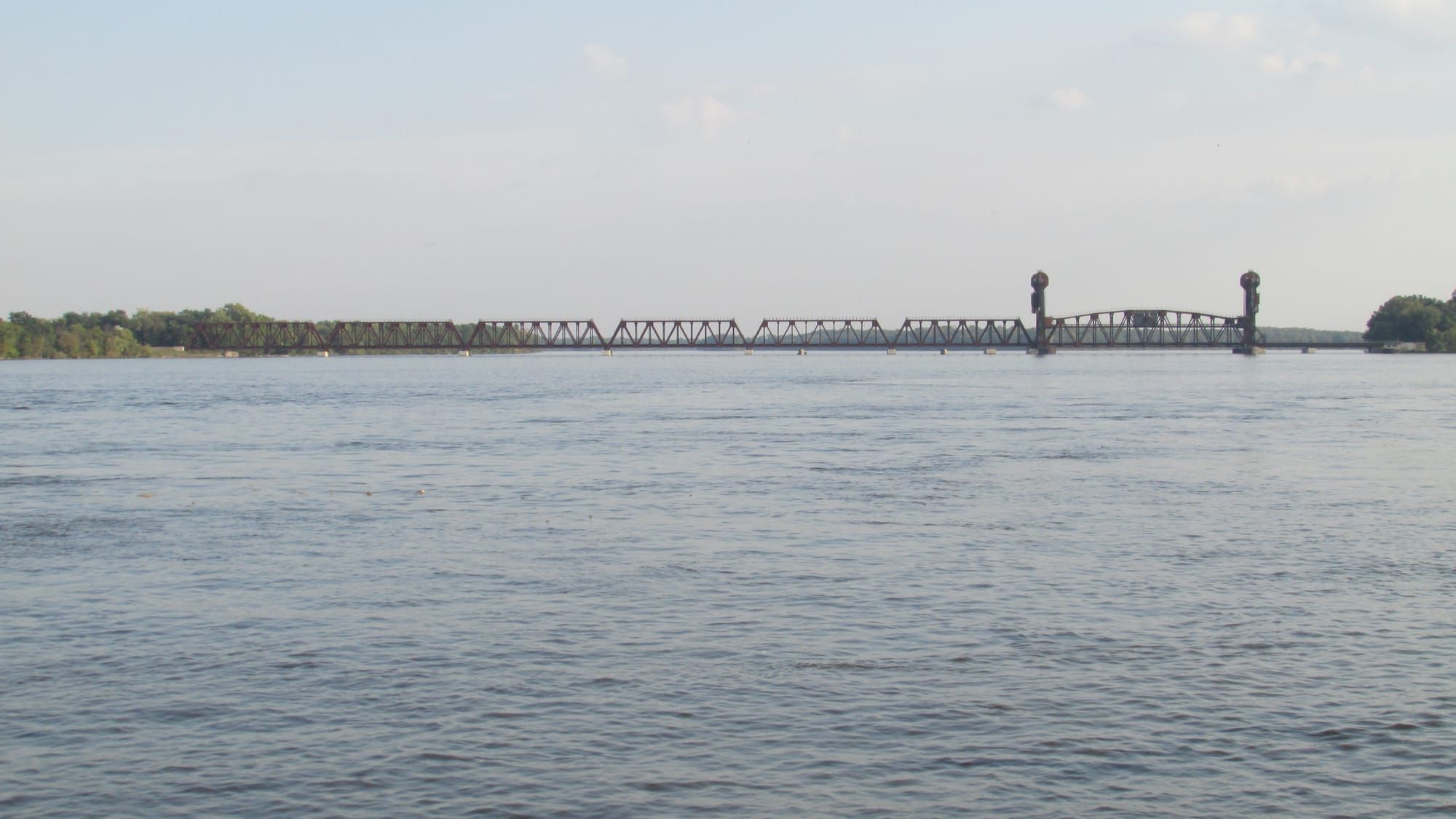
The Mississippi at Burlington, near the ammunition plant; the EPA tested rivers and lakes that supply drinking water in Iowa, Illinois and Missouri. Photo, September 2016: Chris Light / Wikimedia Commons / CC BY-SA 4.0
Who covered this
The story so far
The Army's plan to detonate lead azide in Iowa
On this page · sections
The short version
- The EPA found no lead in 38 samples taken from public water supplies after the Army's Iowa detonation.
- Water is only one way lead could reach people, and results for soil, dust and tap water are not out yet.
- The EPA will post those results online as labs confirm them, and the Army must then propose a plan for any cleanup.
Documents in this story · 2
- EPA Releases Initial Water Source Lab Results Indicating Wednesday's Controlled Detonation in Iowa Did Not Result in An Elevation of Lead in Water Bodies that Serve as Sources of Drinking WaterU.S. Environmental Protection Agency · Press release · Nov. 28Open Archived
- Iowa Army Ammunition Plant Response Data Viewer (epa.gov/IowaData), checked 8:30 a.m. ET Nov. 28U.S. Environmental Protection Agency · Web pageOpen Archived
The first lab test results since the Army's Iowa detonation found no lead in 38 samples from public water supplies, the EPA said Saturday. The samples included both treated drinking water and untreated water at the intake.
The agency concluded that Wednesday's blast did not raise lead levels in the rivers and lakes that supply drinking water. But results for soil, dust and tap water are still pending. Fair Witness reported Thursday that air monitors had found no lead and that lab results were still to come.
Why it matters to you
Lead is especially dangerous to children and pregnant women, the Associated Press reported in a story The Independent ran. Once it settles in the environment, it does not break down. If your water comes from a public system in the area, Saturday's results are the first lab evidence on whether the blast reached the sources those systems draw on. They found no lead.
What they can't show is whether lead dust settled on yards, playgrounds and homes, which matters most for families with young children. The EPA says it will post the soil and dust results at epa.gov/IowaData as labs confirm them.
What the EPA's Iowa detonation lead test results show
The water results rest on a before-and-after comparison. Before the blast, the EPA sampled 35 untreated drinking-water sources in Iowa, Illinois and Missouri to set a baseline. Four of them already had low levels of lead, from 1.13 to 2.12 parts per billion, including Mark Twain Lake in Missouri. All four were below the EPA's action level of 15 parts per billion for drinking water, the point at which water systems must act to cut lead.
The EPA said those traces predate the detonation, and none of the four sites sat where the plume actually traveled. The agency said it cannot determine where that older lead came from.
The EPA said its monitors recorded zero airborne lead for 30 straight hours after the detonation. Crews have now collected more than 3,200 air, water, soil and dust samples, about half before the blast and half after. They have gone back to 187 buildings tested beforehand, plus 27 sites that include public parks with playgrounds, schools, daycares and churches.
"We will continue to provide updates in the coming days," the agency said in a post on X that AP quoted, as lab results on the rest of the samples come back.
Soil results aren't in the EPA's release
Outlets didn't agree on what the EPA had released. Reuters' headline said the first soil and water tests showed negligible contamination. Its story said results from 88% of post-blast samples showed lead in soil, water and drinking supplies no higher than before. NewsNation reported that the EPA had not yet released soil results.
The EPA's own release reports lab results only for drinking-water sources, along with the air monitors' readings. It uses the 88% figure for something else: the share of homes sampled before the blast that crews had sampled again afterward. It says the agency is still preparing to validate and release data on soil, dust and water from taps. On the EPA's online data viewer, the soil, dust and tap water layers were still marked "Data Pending" at 8:30 a.m. ET Saturday.
Why the water results are only part of the answer
Independent experts have said air readings were of limited value, and that the real measure of fallout would come from water, soil and surfaces, Reuters reported. The Army's projections before the blast, Reuters added, showed lead dust could settle as far as 40 miles southwest of the plant, into northern Missouri. U.S. and Iowa agriculture officials estimated that about 350 farms might be affected.
We will continue to provide updates in the coming days
Questions about the Army's handling
The water results don't settle questions about how the Army handled the stockpile. Residents and some elected officials have criticized the Army for not being more open and for giving little notice once it knew the explosive was unstable, AP reported. The Army has said a March inspection found the lead azide barrels close to exploding on their own. By then, it said, it was too late to move them safely or neutralize them with chemicals, Reuters reported. Inside the Trump administration, officials are asking who failed to raise the problem with senior leaders sooner, CBS News reported, citing people familiar with the matter. We found no public response from the Army to the criticism over notice as of 9 a.m. ET Saturday.
What we don't know yet
The EPA has not yet reported whether lead dust from the blast reached homes, schools or farms. The soil and dust samples will answer that, and the agency hasn't said when they will be posted.
Tap water is the other gap, because the EPA's results from household taps are still being prepared. The permit requires the Army to propose a plan and schedule for any cleanup, as Fair Witness reported Thursday, and these results will show whether there is anything to clean up.
Whether the Army will answer the criticism over notice is also open.
How coverage differs
Whether soil results were out depended on the outlet. Reuters told readers the first soil tests were in and showed negligible contamination; NewsNation said the EPA hadn't released them, which matches the agency's own release.
If you read the left 3 of 21 outlets
You got the water news, with caveats.
If you read the center 2 of 12 outlets
Your two outlets disagreed on soil.
If you read the right 1 of 21 outlets
You had the wire story only.
Sources
Left
3 of 21 left-leaning outlets we track reported this
- CNN: Preliminary tests show no lead in water bodies near Iowa detonation, EPA says, Nov. 28
- CBS News: Iowa detonation testing results show no increase in levels of lead in drinking water, EPA says, Nov. 28
- The Independent (AP copy): EPA says no rise in contamination after Army detonates lead azide stockpile in Iowa, Nov. 28
Center
2 of 12 center outlets we track reported this
Right
1 of 21 right-leaning outlets we track reported this
Primary
- U.S. Environmental Protection Agency: EPA Releases Initial Water Source Lab Results Indicating Wednesday's Controlled Detonation in Iowa Did Not Result in An Elevation of Lead in Water Bodies that Serve as Sources of Drinking Water, Nov. 28 · Archived copy
- U.S. Environmental Protection Agency: Iowa Army Ammunition Plant Response Data Viewer (epa.gov/IowaData), checked 8:30 a.m. ET Nov. 28 · Archived copy
This article was produced by AI under our Editorial Standards. Corrections are reviewed before they go live.
How coverage differs
Keep reading
The newest U.S. stories.
The Fair Witness Daily
Every morning around 7 a.m. Eastern, seven days a week.
Saturday’s editionFree
In Saturday’s Daily
Then the Spin Meter: one divided story, set side by side as the left, center and right told it.
Free. One email a day.
Unsubscribe in one click. Already a member? Sign in

















Discussion
Any free account can join the discussion.