


Latest updates
Stories that changed after we published.
News keeps moving. When a story develops, we add a dated note at the top of the article saying what changed and where the new facts came from. When we get something wrong, we correct it the same way.
Recently updated
Newest change first. Times are Eastern.
-
Nov 18
2:15 PMUpdatedWorld
Iran fires on U.S. air base in Kuwait and at Bahrain after U.S. strike on Qeshm
Iran's first attack on Kuwait in two months widens a weeklong exchange of fire, and Washington has not said how it will answer.
What changed
A U.S. defense official told The Hill on Wednesday that Iran's attacks had no impact on U.S. interests, and referred further questions to Kuwait and Bahrain. As of 2:30 p.m. ET Wednesday, we found no statement from U.S. Central Command on the Kuwait attack itself.
-
Nov 18
11:53 AMUpdatedWorld
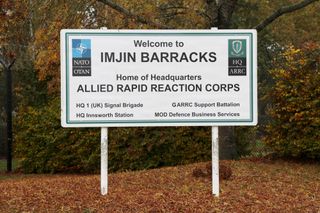
US Army soldier arrested in UK on suspicion of spying for Russia
The soldier, who has not been named or charged, was assigned to a NATO headquarters built to respond quickly to crises.
What changed
this story has developed. Read the latest: Britain hands Army officer accused of spying for Russia to U.S. military.
-
Nov 18
11:40 AMUpdatedWorld
U.S. strikes Iran's Qeshm Island after third Iranian attack on Bahrain, officials say
It is the U.S. reply to Iranian attacks that ended a two-month lull, and Iran's next move will show whether the exchange keeps going.
What changed
this story has developed. Read the latest: Iran fires on U.S. air base in Kuwait and at Bahrain after U.S. strike on Qeshm.
-
Nov 18
11:39 AMUpdatedU.S.
White House counsel warns Oversight Democrats their probes could be criminal
The letter escalates a fight over how far Congress can dig into the Trump administration once Democrats take over in January.
What changed
this story has developed. Read the latest: Garcia tells Vance, Trump's sons and others to preserve records for House probes.
-
Nov 18
11:15 AMUpdatedU.S.
Mullin defends flying government plane to LSU-Texas game a day after FAA ground stop
His department says he paid his way, but federal rules can set that at a coach fare, and no one has said what he paid.
What changed
Mullin defended the trip again at a House Homeland Security Committee hearing on Wednesday, telling critics on the panel that "you would have called it a campaign event," HuffPost reported. He said the trip had been planned for weeks, and he said posters shown by Rep. Bennie Thompson, the…
Edge of Frame · Center
-
Nov 18
11:14 AMUpdatedWorld
Trump will meet Xi and Putin together Thursday to discuss nuclear arms, White House says
No treaty has capped the world's two largest nuclear arsenals since February, and Trump wants China in whatever replaces it.
What changed
Trump arrived in Shenzhen on Wednesday, and Xi greeted him on the tarmac, Fox News reported. Fox said Xi has rarely, if ever, met a visiting leader at the airport; a senior Chinese official, Cai Qi, welcomed Putin when he landed earlier that day. Putin and Xi held talks on Wednesday, and Kremlin…
-
Nov 18
11:14 AMUpdatedU.S.
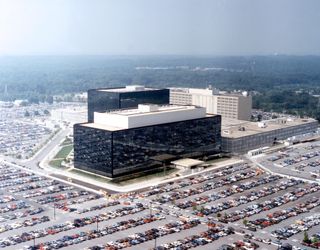
NSA's classified network goes down; White House says no sign of a cyberattack
The intelligence agency's internal system for sharing secrets failed in a week of U.S. tech outages, and Democrats want a briefing.
What changed
As of 11:30 a.m. ET Wednesday, we found no statement from the NSA that its classified network was fully back, and no outlet we track had reported that it was. We found no new detail on the outage from the agency or the White House.
-
Nov 18
11:14 AMUpdatedTechnology
Apple outage: company says an internal update hit iCloud, Apple Pay and App Store
Many services were back by afternoon, but Apple's status page for app makers still listed key tools as down Tuesday evening.
What changed
As of 11:15 a.m. ET Wednesday, Apple's status page for app makers still listed App Store Connect as down for all users, with no time given for a fix. By then it had been down more than 23 hours. We found no new statement from Apple.
-
Nov 18
8:41 AMUpdatedCulture
Pope Leo returns to Chiclayo, Peru, the diocese he led as bishop, for an outdoor Mass
The first U.S. pope returned to the city where he was made a bishop, about a month after surgery for lung cancer.
What changed
this story has developed. Read the latest: Pope Leo says no to married priests for now, details his lung cancer surgery.
-
Nov 18
8:17 AMUpdatedU.S.
New Orleans tanker crash: Coast Guard cites loss of steering; everyone accounted for
No one died when a tanker struck a docked riverboat. Investigators now want to know why a ship guided by a river pilot lost control.
What changed
As of 8:30 a.m. ET Wednesday, we found no new word from the city, the Coast Guard or the safety board on when the riverboat will be moved or the river fully reopened. We also found no public reply to the crew members' lawsuit from the tanker's owner or manager.
-
Nov 18
8:17 AMUpdatedU.S.
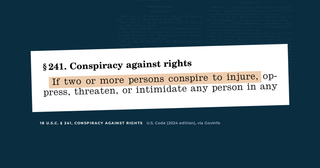
U.S. attorney tells Sen. Elizabeth Warren to preserve records over planned Trump probes
A federal prosecutor is citing criminal civil-rights laws against a senator's planned probes, before Democrats take control of Congress in January.
What changed
Sen. John Cornyn, a Texas Republican, said it was a "bad idea" for Reitz to send his letters to Democrats in Congress, The New York Sun reported Tuesday. Cornyn spoke to the Sun as he left the Capitol late Monday. Reitz told the Sun he is not threatening anyone with charges. He said he sent letters…
-
Nov 18
8:16 AMUpdatedWorld
Trump opens Asia trip in Manila with Quad talks and a Thailand trade statement
The statement Trump signed with Thailand names none of the tariff cuts or farm purchases he described, and the final deal is still unsigned.
What changed
Trump said Wednesday that the U.S. and the Philippines had made a new trade deal, which he called "a true landmark" in a Truth Social post, but he gave no details, The Hill reported. At a state lunch at the presidential palace, Trump said the two had "consummated a very big trade deal," UPI…







-
Nov 18
12:35 PMUpdatedWorld
Iran fires on U.S. air base in Kuwait and at Bahrain after U.S. strike on Qeshm
Iran's first attack on Kuwait in two months widens a weeklong exchange of fire, and Washington has not said how it will answer.
- Iran fired drones at a Kuwaiti air base that hosts U.S. forces and at Bahrain early Wednesday, after a U.S. strike on Qeshm Island.
- It was Iran's first attack on Kuwait in more than two months, pulling a second country that hosts U.S. troops into the fight.
- The U.S. hasn't said whether it will strike back, and Iran's army chief warned that any new attack would get a harsher answer.
- Associated Press, via HuffPost: Iran Widens Gulf Attacks, Firing On A US Air Base In Kuwait And At Targets In Bahrain, Nov. 18
- Associated Press: Iran widens Gulf attacks, firing on a US air base in Kuwait and at targets in Bahrain, Nov. 18
- CNN: Iran widens Gulf attacks after US strikes missile launch site, Nov. 17–18 (headline only; text unavailable)
- BBC News: Kuwait says it repelled first Iranian attack in two months after US strikes island, Nov. 18
- UPI: Iranian forces target U.S. military facilities in Kuwait amid escalation, Nov. 18
- NewsNation: Iran fires on US base in Kuwait and Bahrain after US strikes missile site, Nov. 18
- The Hill: Iran attacks US air base in Kuwait, Nov. 18
- U.N. Security Council: Resolution 2817 (2026), S/RES/2817, Mar. 11 · Archived copy
- U.N. Photo: Security Council adopts Resolution 2817 (vote record), Mar. 11 · Archived copy
- Kuwait army General Staff post on X, Nov. 18, as quoted by Fox News above
- Kuwait foreign ministry statement, Nov. 18, as reported by the AP and Gulf News above
- Bahrain Defence Force and Interior Ministry statements, Nov. 18, as reported by the AP and BBC News above
- Iranian army statement and Maj. Gen. Amir Hatami's remarks, Nov. 18, as reported by BBC News and Press TV above
- Statement by a U.S. official on the Qeshm strike, Nov. 17, as quoted by Fox News above
-
Nov 18
6:49 AMUpdatedU.S.
Mullin defends flying government plane to LSU-Texas game a day after FAA ground stop
His department says he paid his way, but federal rules can set that at a coach fare, and no one has said what he paid.
Edge of Frame · Center
- Homeland Security Secretary Markwayne Mullin flew a government plane to the LSU-Texas game the day after the FAA's nationwide ground stop.
- DHS says the law requires him to fly government planes and he pays for personal trips, but rules can set that at a coach fare.
- No one has said what he repaid or whether the trip was approved in advance, and Democrats take the Senate in January.
- RecordMullin's full "Squawk Box" interview (video)CNBC · Web page · Nov. 17Open Archived
- RecordReimbursement to the Government for Government aircraft travel (Legal Information Institute)41 CFR 301-10.264 · Web pageOpen Archived
- RecordAuthorization of Government aircraft travel (Legal Information Institute)41 CFR 301-10.262 · Web pageOpen Archived
- RecordDefinitions of "full coach fare" and "required use travel" (Legal Information Institute)41 CFR 300-3.1 · Web pageOpen Archived
- RecordSigns contract to build four U.S. Coast Guard Arctic Security CuttersBollinger Shipyards · Web page · Dec. 29, 2025Open Archived
- RecordFinalizes U.S. Coast Guard contract to begin production on the Arctic Security Cutter programBollinger Shipyards · Web page · July 2Open Archived
- ABC News: Mullin defends taking government plane to LSU-Texas game after nationwide ground stop, Nov. 17
- USA Today: Mullin flew to football game less than 24 hours after FAA ground stop, Nov. 17
- The Guardian: Markwayne Mullin defends private-jet trip to football game as millions hit by flight delays, Nov. 17
- Associated Press (via PBS NewsHour): Mullin defends use of government plane to attend football game after ground stop, Nov. 17
- CNN: Markwayne Mullin flew to a football game while Americans struggled with FAA ground stop, Nov. 17 (headline only; text unavailable)
- New York Post: Markwayne Mullin took his government plane to LSU-Texas game as thousands were stranded in FAA ground stoppage, Nov. 17
- Fox News: Mullin took government plane to LSU-Texas football game with Americans stranded in wake of FAA outage, Nov. 17
- The Daily Caller: Markwayne Mullin defends taking government jet to LSU game while Americans were stranded, Nov. 17
- CNBC: Mullin's full "Squawk Box" interview (video), Nov. 17 · Archived copy
- 41 CFR 301-10.264: Reimbursement to the Government for Government aircraft travel (Legal Information Institute) · Archived copy
- 41 CFR 301-10.262: Authorization of Government aircraft travel (Legal Information Institute) · Archived copy
- 41 CFR 300-3.1: Definitions of "full coach fare" and "required use travel" (Legal Information Institute) · Archived copy
- Bollinger Shipyards: Signs contract to build four U.S. Coast Guard Arctic Security Cutters, Dec. 29, 2025 · Archived copy
- Bollinger Shipyards: Finalizes U.S. Coast Guard contract to begin production on the Arctic Security Cutter program, July 2 · Archived copy
-
Nov 17
6:39 PMUpdatedTechnology
Apple outage: company says an internal update hit iCloud, Apple Pay and App Store
Many services were back by afternoon, but Apple's status page for app makers still listed key tools as down Tuesday evening.
- Apple said an internal update it made caused Tuesday's outages of iCloud sign-in, Apple Pay, the App Store and other services.
- Users filed thousands of complaints about iCloud sign-outs and Apple Pay, and Apple said the cause was not a cyberattack.
- Apple's status page for app makers still listed App Store Connect, the tool they use to manage apps, as down Tuesday evening.
-
Nov 17
6:32 PMUpdatedWorld
U.S. strikes Iran's Qeshm Island after third Iranian attack on Bahrain, officials say
It is the U.S. reply to Iranian attacks that ended a two-month lull, and Iran's next move will show whether the exchange keeps going.
- U.S. fighter jets struck a Revolutionary Guard missile launch site on Iran's Qeshm Island on Tuesday, U.S. military officials said.
- It was the U.S. reply to Iran's three drone attacks on U.S. targets in Bahrain since Friday, which ended a two-month lull.
- We found no response to the strike from Iran's foreign ministry or Revolutionary Guard by early Tuesday evening, and no Central Command announcement.
- CNN: US carries out 'self-defense' strikes on Iranian missile launch site, Nov. 17
- Associated Press: A 2-month lull ends with Iran's third strike on US targets in Bahrain, Nov. 17
- Associated Press, via HuffPost: Iran Widens Gulf Attacks, Firing On U.S. Air Base In Kuwait And At Targets In Bahrain, Nov. 18
- Associated Press, via the New York Post: US launches attack on Iran's Qeshm Island in retaliation to regime's 'aggression', Nov. 17
- Fox News: US carries out self-defense strike on IRGC missile launch site on Qeshm Island, Nov. 17
- Fox News: Bahrain intercepts Iranian drones targeting US radar after 2-month lull in Gulf strikes, Nov. 17
- The Washington Times: Iran expands counterstrikes following U.S. attack on missile site, Nov. 18
- Just The News: US conducts self-defense strike on Iranian missile launch site on Qeshm Island, Nov. 17
- The National Desk: Iran targets US radar facility in Bahrain in third attack in recent days, Nov. 17
- Stars and Stripes (the military's independent newspaper): US quietly strikes Iranian island in Strait of Hormuz as Trump weighs next steps, Nov. 3
- Euronews (European broadcaster): Iran warns of "new battlefield" after reported US strike on Qeshm, Nov. 3
- Iran International (London-based Persian-language channel): US strikes Qeshm Island after Iran drone attack on American base in Bahrain, Nov. 17
- U.S. Central Command: U.S., Partner Forces Defend Against Aggressive Iranian Behavior, June 2, 2026 (DVIDS) · Archived copy
- U.S. Central Command post on X on the Bahrain drones, Nov. 17, as quoted by The National Desk and UPI above
- Statement by a U.S. military official on the Qeshm strike, Nov. 17, as quoted by Fox News and CNN above
- Islamic Revolutionary Guard Corps statement on the Bahrain attacks, as quoted by the AP above
- Qatar foreign ministry statement on X, Nov. 17, as reported by Fox News above
-
Nov 17
6:28 PMUpdatedEconomy
Nvidia beats forecasts in its first earnings report since Jensen Huang's exit
The AI chipmaker's sales doubled, but investors still don't know who will lead it, and the SEC is reportedly investigating.
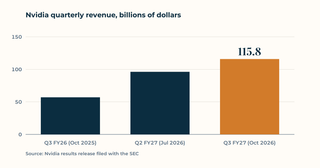
- Nvidia's quarterly sales doubled from a year ago to $115.8 billion, beating forecasts, in its first report since Jensen Huang resigned as CEO.
- Nvidia is one of the world's most valuable companies, and many index funds and 401(k) plans hold its stock.
- Huang is set for an interview with three House committees on Dec. 1, and Nvidia still has only an interim CEO.
- ReleaseResults release for the third quarter of fiscal 2027, filed with the SEC as an exhibit to Form 8-KNvidia · Press release · Nov. 17Open Archived
- RecordNVIDIA Announces Financial Results for Third Quarter Fiscal 2027Nvidia · Web page · Nov. 17Open Archived
- RecordNVIDIA Board of Directors Establishes National Security and Export Control Oversight CommitteeNvidia · Web page · Nov. 17Open Archived
- CBS News: Nvidia records strong growth in first earnings report without Jensen Huang, Nov. 17
- The Guardian: Nvidia doubles quarterly revenue in first earnings since Jensen Huang's resignation, Nov. 17
- Axios: Nvidia posts strong earnings amid Jensen Huang exit, reported SEC probe, Nov. 17
- Axios: "We will remain thoughtful": Nvidia says it will continue to backstop AI ecosystem, Nov. 17
- Reuters: Nvidia forecasts quarterly revenue above estimates in first report since Huang's exit as CEO, Nov. 17
- Reuters: Nvidia board says it does not intend to reinstate Jensen Huang as CEO, Nov. 17
- The Hill: Nvidia reports strong third quarter after Huang departs, Nov. 17
- Reuters: Nvidia stops shipping US-approved AI chips to China, Nov. 18
- The Hill: Huang agrees to testify before Senate Banking panel, Nov. 17
- Fox Business: Nvidia releases quarterly earnings after Jensen Huang's resignation as CEO, Nov. 17
- New York Post: Nvidia projects $130B in Q4 earnings as chip giant exceeds expectations despite Jensen Huang scandal, Nov. 17
- New York Post: SEC probing Nvidia after Jensen Huang's shock exit over sex scandal with alleged Chinese spy: sources, Nov. 17
- Nvidia: results release for the third quarter of fiscal 2027, filed with the SEC as an exhibit to Form 8-K, Nov. 17 · Archived copy
- Nvidia: NVIDIA Announces Financial Results for Third Quarter Fiscal 2027, Nov. 17 · Archived copy
- Nvidia: NVIDIA Board of Directors Establishes National Security and Export Control Oversight Committee, Nov. 17 · Archived copy
-
Nov 17
3:22 PMUpdatedU.S.
NSA's classified network goes down; White House says no sign of a cyberattack
The intelligence agency's internal system for sharing secrets failed in a week of U.S. tech outages, and Democrats want a briefing.
- The National Security Agency's classified internal network went down Tuesday, and officials said they saw no evidence of a cyberattack.
- It is the system NSA staff use to share secrets, and it failed during a week of outages that grounded flights and slowed banks.
- The NSA hasn't said whether the network is fully back, and Democrats want the administration to brief Congress.
- CNN: Highly classified US national security communications network goes down, sources say
- CBS News: NSA's classified internal network goes down, sources say
- NBC News: Classified NSA network went down, but no indication it was an attack, sources say
- Politico: Lawmakers want answers from the Trump administration on recent tech outages
- Newsweek: NSA Network, Apple Services Reported Offline as Mass Outages Continue
- UPI: Reports: Highly classified National Security Agency network goes down
- Reuters: Highly classified US national security communications network is down, CNN reports
- The Hill: Jeffries demands high-level briefing on rash of recent outages
- Fox News: NSA's highly classified communications network disrupted by widespread outage
- Fox Business: Jay Clayton says no cyberattack behind tech outages (for the Update)
- New York Post: Classified US communication network back up after outage hit system
- The Daily Caller: NSA's classified network goes dark as US systems crumble
- Just The News: NSA outage was just a software update, WSJ report
- Al Jazeera, Qatar government-funded news network: NSA attributes US network outage to routine 'maintenance' activities (for the Update)
- Government Executive (2000), federal workforce news site: NSA confirms "serious computer problem"
- Route Fifty (2000), government technology news site, from Government Computer News: NSA puts system back online
-
Nov 17
3:17 PMUpdatedHealth
US loses measles elimination status after 26 years, PAHO says
The finding that measles spreads here again means the U.S. must now stop the spread for a full year to win the status back.
Spin Meter: how each side framed it · 4/5 - The Pan American Health Organization said Tuesday that measles spreads continuously in the U.S., Mexico and Bolivia again, ending their elimination status.
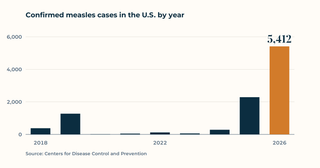
- The U.S. had held the status since 2000, and this year's 5,412 cases are the most since 1991.
- The U.S. must now show a full year without a chain of spread to win it back.
- RecordMeasles cases and outbreaksCDC · Web page · Nov. 13Open Archived
- RecordPAHO urges countries to step up efforts to stop measles outbreaks and move towards elimination in the AmericasPAHO · Web page · Nov. 17Open Archived
- RecordMeasles and Rubella Elimination Regional Monitoring and Re-Verification Commission to hold sixth annual meeting in NovemberPAHO · Web page · Oct. 14Open Archived
- RecordPAHO calls for regional action as the Americas lose measles elimination statusPAHO · Web page · Nov. 10, 2025Open Archived
- Fox News: Measles comeback rattles officials as US reportedly loses major public health designation (Nov. 14, since updated)
- New York Post: US officially loses measles elimination status after 26 years
- Just The News: U.S. loses measles elimination status after surge in cases (Nov. 14)
- The National Desk: The U.S. loses measles elimination status after death count rises to 10 in 2026 (Nov. 14)
- CNBC: U.S. officially loses measles elimination status amid ongoing outbreaks (business news network)
- CDC: Measles cases and outbreaks, Nov. 13 · Archived copy
- PAHO: PAHO urges countries to step up efforts to stop measles outbreaks and move towards elimination in the Americas, Nov. 17 · Archived copy
- PAHO: Measles and Rubella Elimination Regional Monitoring and Re-Verification Commission to hold sixth annual meeting in November, Oct. 14 · Archived copy
- PAHO: PAHO calls for regional action as the Americas lose measles elimination status, Nov. 10, 2025 · Archived copy
-
Nov 17
12:34 PMUpdatedU.S.
Trump says U.S. takes reported Iran dirty bomb plot seriously; Iran calls it baseless
The White House says there is no credible threat, and the officials behind the report disagree on whether Iran could carry it out.
- CNN reported that U.S. intelligence shows Iran drawing up plans for a possible dirty bomb or chemical attack on senior officials in Washington.
- Trump said the U.S. takes it very seriously, while the White House said there is no credible threat to the homeland.
- Iran denies the report, and Trump says he will press China's Xi Jinping to help end the war when they meet later this week.
- CNN: US intel indicates Iran developing plans to potentially detonate a dirty bomb in Washington, sources say, Nov. 16
- The Guardian: Trump claims US is 'looking into' Iranian bomb plot in Washington despite 'no credible threats', Nov. 17
- CNN: Iranian-American gets 25 years in plot to kill Saudi ambassador, May 30, 2013
- USA Today: Trump says US taking 'seriously' threat of Iran using dirty bomb in DC, Nov. 17
- CNN: Trump says Iran could pay major price if it carries out dirty-bomb plan, Nov. 17 (for the Update)
- Fox News: Trump warns Iran about reported plot against admin officials: 'We take it very seriously', Nov. 17
- The Washington Times: Trump says U.S. is looking into possible Iran plot against Washington, Nov. 17
- New York Post: Trump responds to reported 'dirty bomb' threat from Iran: 'They happen to be crazy', Nov. 17
- The Daily Wire: Trump Responds To Report Of ‘Dirty Bomb’ Threat From Iran, Nov. 17 (for the Update)
-
Nov 17
12:29 PMUpdatedWorld
Part of Crimean Bridge collapses after Ukrainian strike as Russia hits Kyiv's bridges
Each side hit bridges it calls military routes, two days before Trump meets Putin and Xi in China.
- A Ukrainian strike early Tuesday dropped part of the Crimean Bridge's road section into the sea, while Russian missiles closed two of Kyiv's bridges.
- Each side calls the other's bridges military routes, and the strikes came two days before Trump meets Putin and Xi in China.
- Estimates for when cars can cross the Crimean Bridge again range from a month to more than a year.
- RecordTelegram statement on the Crimean Bridge strike, Nov. 17 (in Ukrainian)General Staff of Ukraine's Armed Forces · Web pageOpen Archived
- RecordTelegram post on the Crimean Bridge operation, Nov. 17 (in Ukrainian)Volodymyr Zelenskyy · Web pageOpen Archived
- RecordTelegram post on the Kyiv bridges and power grid, Nov. 17 (in Ukrainian)Volodymyr Zelenskyy · Web pageOpen Archived
- RecordTelegram post on talks with U.S. and European negotiators, Nov. 16 (in Ukrainian)Volodymyr Zelenskyy · Web pageOpen Archived
- RecordTelegram list of overnight strike targets, Nov. 17 (in Russian)Russian Defense Ministry · Web pageOpen Archived
- RecordTelegram post on the first attack on the bridge, Nov. 16 (in Russian)Sergei Aksyonov, Moscow-installed head of Crimea · Web pageOpen Archived
- RecordTelegram post on the second attack on the bridge, Nov. 16 (in Russian)Sergei Aksyonov · Web pageOpen Archived
- RecordTelegram post on deaths in the Lenin district, Nov. 17 (in Russian)Sergei Aksyonov · Web pageOpen Archived
- RecordTelegram post on rail and ferry service, Nov. 17 (in Russian)Sergei Aksyonov · Web pageOpen Archived
- RecordTelegram post on hits to the Northern and Southern bridges, Nov. 16 (in Ukrainian)Vitali Klitschko · Web pageOpen Archived
- RecordTelegram post on water and heating outages, Nov. 16 (in Ukrainian)Vitali Klitschko · Web pageOpen Archived
- RecordTelegram post on the Southern Bridge partly reopening, Nov. 17 (in Ukrainian)Vitali Klitschko · Web pageOpen Archived
- RecordTelegram post on the Northern Bridge partly reopening to public transport, Nov. 17 (in Ukrainian)Vitali Klitschko · Web pageOpen Archived
- BBC News: How the attack on Putin's prized Crimean Bridge unfolded, Nov. 17
- Reuters: Ukraine strikes Crimean bridge for second day as Russia pounds Kyiv bridges, Nov. 17
- UPI: Crimea cut off after Ukraine strikes on Kerch Bridge, Nov. 17
- Newsweek: Videos show Putin's prized bridge in flames as Russia vows to rebuild, Nov. 18
- General Staff of Ukraine's Armed Forces: Telegram statement on the Crimean Bridge strike, Nov. 17 (in Ukrainian) · Archived copy
- Volodymyr Zelenskyy: Telegram post on the Crimean Bridge operation, Nov. 17 (in Ukrainian) · Archived copy
- Volodymyr Zelenskyy: Telegram post on the Kyiv bridges and power grid, Nov. 17 (in Ukrainian) · Archived copy
- Volodymyr Zelenskyy: Telegram post on talks with U.S. and European negotiators, Nov. 16 (in Ukrainian) · Archived copy
- Russian Defense Ministry: Telegram list of overnight strike targets, Nov. 17 (in Russian) · Archived copy
- Sergei Aksyonov, Moscow-installed head of Crimea: Telegram post on the first attack on the bridge, Nov. 16 (in Russian) · Archived copy
- Sergei Aksyonov: Telegram post on the second attack on the bridge, Nov. 16 (in Russian) · Archived copy
- Sergei Aksyonov: Telegram post on deaths in the Lenin district, Nov. 17 (in Russian) · Archived copy
- Sergei Aksyonov: Telegram post on rail and ferry service, Nov. 17 (in Russian) · Archived copy
- Vitali Klitschko: Telegram post on hits to the Northern and Southern bridges, Nov. 16 (in Ukrainian) · Archived copy
- Vitali Klitschko: Telegram post on water and heating outages, Nov. 16 (in Ukrainian) · Archived copy
- Vitali Klitschko: Telegram post on the Southern Bridge partly reopening, Nov. 17 (in Ukrainian) · Archived copy
- Vitali Klitschko: Telegram post on the Northern Bridge partly reopening to public transport, Nov. 17 (in Ukrainian) · Archived copy
-
Nov 17
9:02 AMUpdatedWorld
Trump opens Asia trip in Manila with Quad talks and a Thailand trade statement
The statement Trump signed with Thailand names none of the tariff cuts or farm purchases he described, and the final deal is still unsigned.
- Trump began his Asia trip in Manila on Tuesday, meeting Quad leaders and signing a trade statement with Thailand's prime minister.
- The statement says talks are nearly done but names no tariff cuts or purchases, while Philippine police arrested about 300 protesters before he arrived.
- Trump met Marcos on Wednesday before heading to China for Thursday's meeting with Xi and Putin.
- RecordJoint Statement on an Agreement Between the United States of America and the Kingdom of Thailand on Reciprocal TradeThe White House · Web page · Nov. 17, 2026Open Archived
- ReleaseQuad Leaders' Summit Joint Press ReleaseThe White House · Press release · Nov. 17, 2026Open Archived
- RecordJoint Statement by President Trump and Prime Minister Anutin Charnvirakul of Thailand on a Framework for an Agreement on Reciprocal Tradepresidency.ucsb.edu · Web page · Oct. 26, 2025Open Archived
- The Guardian: Hundreds arrested in anti-Trump protests in Philippines amid anger over Iran war and AI pact
- The Guardian: 'Peace through strength': Albanese and Trump hail progress on Quad alliance
- CBS News: Trump arrives in Asia ahead of summit with Putin and Xi, possible meeting with Kim Jong Un
- CBS News: Protests flare in Philippines over Trump's visit and planned AI hub
- Associated Press, via the New York Post: Trump arrives in Philippines to kick off Asia trip ahead of historic three-way nuclear talks with Xi and Putin
- Reuters: Trump to kick off Asia trip with Quad talks in Manila ahead of China visit
- The Hill: Trump touts 'landmark' trade deal with Philippines, Nov. 18
- UPI: Trump heads to China after announcing 'very big trade deal' in Manila, Nov. 18
- UPI: Trump arrives in Philippines ahead of meeting with Xi, Putin in China
- Newsweek: Why Donald Trump's AI Pax Silica Project Prompted Protests in Philippines
- The Nation (Thailand): Anutin and Trump expected to confirm progress in Thai-US trade talks (Bangkok English-language newspaper)
- GMA News: Trump: US expanding defense cooperation with the Philippines (Philippine broadcaster)
- The White House: Joint Statement on an Agreement Between the United States of America and the Kingdom of Thailand on Reciprocal Trade, Nov. 17, 2026 · Archived copy
- The White House: Quad Leaders' Summit Joint Press Release, Nov. 17, 2026 · Archived copy
- Joint Statement by President Trump and Prime Minister Anutin Charnvirakul of Thailand on a Framework for an Agreement on Reciprocal Trade, Oct. 26, 2025 (joint statement, as archived by the American Presidency Project) · Archived copy
-
Nov 17
12:17 AMUpdatedEconomy
AAA forecasts a slight dip in Thanksgiving travel after three record years
Gas and plane tickets cost more than last year, but AAA still expects roads and airports to be nearly as crowded as in record years.
Edge of Frame · Right
- AAA expects 81.5 million Americans to travel for Thanksgiving, about 121,000 fewer than last year.
- Gas and plane tickets cost more, but roads and airports should be nearly as crowded as the record years.
- The travel week runs Nov. 24 to 30, and the heaviest traffic out of town is expected Tuesday and Wednesday afternoons.
- ReleaseThanksgiving Travel Expected to Dip Slightly Compared to Last YearAAA · Press release · Nov. 16, 2026Open Archived
- ReleaseFor the First Time Since July, National Average Drops Below $4AAA · Press release · Nov. 12, 2026Open Archived
- RecordGas Prices, national averageAAA · Web page · Nov. 16, 2026Open Archived
- Associated Press: AAA forecasts another busy, but not quite as busy, Thanksgiving travel week, Nov. 16
- CBS News (AP copy, counted as AP): Thanksgiving travel likely to dip a bit due to costs of gas and plane tickets, AAA says, Nov. 16
- USA Today: Gas prices are falling. Why Thanksgiving travel may still dip, Nov. 16
-
Nov 16
6:09 PMUpdatedTechnology
Chase outage: bank blames software bug as customers at other banks report trouble
Chase says customers can still reach their money, but a delayed payment or Zelle transfer could cost you a late fee.
- JPMorgan Chase said a software bug in its own systems slowed some customer transactions on Monday, and customers at other big banks also reported trouble.
- Chase said customers kept access to their money, but delayed payments and transfers can still bring late fees.
- Chase said Monday evening that transactions were posting normally again, but it has not explained what the bug was.
- CBS News: Major U.S. banks report widespread service outages
- The Guardian: Customers report difficulty accessing online services at major US banks
- NBC News: Chase says transactions back to normal after outage online and at some branches
- AP, via HuffPost: Customers report account access issues with nation's largest banks
- New York Post: JPMorgan Chase says in-house software issue impacted service, and possibly other banks
- The Washington Times: Chase, J.P. Morgan, Bank of America among multiple banks facing outages
- Fox News: America hits a tech wall as outages cripple email, ground flights and disrupt major banks
- Fox Business: Chase online banking outage hits thousands as transactions delayed
The short version
Iran fired drones at a U.S. air base in Kuwait and at Bahrain early Wednesday, local time, widening its Gulf attacks a day after the U.S. struck Iran's Qeshm Island. Kuwait and Bahrain said their air defenses stopped the attacks.
It was the first attack on Kuwait in more than two months, and it pulls a second country that hosts U.S. troops into the fight. Fair Witness reported Tuesday that U.S. jets hit a Revolutionary Guard missile site on Qeshm after Iran's third drone attack on Bahrain since Friday. Iran says its recent attacks answer U.S. drone surveillance flights and a strike on Iranian communications towers.
Why it matters
More U.S. forces are on the way. President Donald Trump has sent mixed signals, calling new strikes highly unlikely while sending a third aircraft carrier and thousands more troops. For your wallet, the effect so far is small: Brent crude, the global benchmark, slipped slightly to about $93 a barrel Wednesday, as the International Energy Agency said supply now exceeds demand.
What Iran says it hit at Kuwait's Ali Al Salem Air Base
Iran's army said its drones targeted U.S. Patriot air defense systems and drone and missile launch platforms at Ali Al Salem Air Base. Press TV, Iran's state-run English-language channel, carried the army's claim that the strike destroyed Patriot systems and launch pads. No other source we read confirmed any damage.
Kuwait tells it differently. Its army said on X that explosions people heard were air defenses intercepting hostile drones, and it did not report any damage or casualties. Its foreign ministry condemned the repeated attacks as "criminal," saying they threatened the country's security.
The base has been hit hard before. Earlier in the war, Iran struck Ali Al Salem at least 30 times and damaged or destroyed at least 15 aircraft hangars, the AP reported. The war began when the U.S. and Israel attacked Iran in late February.
Iran also warned of more. Its army chief, Maj. Gen. Amir Hatami, said that if attacked again, Iran will answer "in a stronger, more crushing way and without geographic limitations."
What Resolution 2817, cited by Kuwait, demands of Iran
Kuwait's foreign ministry answered in legal terms. It said the attacks broke U.N. Security Council Resolution 2817 and reserved its right to self-defense, Gulf News, a Dubai newspaper, reported.
The Security Council adopted it on March 11 by a 13-0 vote, with China and Russia abstaining. Its text "demands the immediate cessation of all attacks by the Islamic Republic of Iran" on six Gulf states and Jordan. It also affirms their right to self-defense under the U.N. Charter.
What it leaves out matters as much. It names no sanctions, no deadline and no way to enforce the demand, and its last line only keeps the matter on the council's agenda. So Kuwait is pointing to a finding that Iran broke international law, not to a penalty.
The Gulf Cooperation Council, the six-nation regional bloc, blamed Iran for the escalation, and Saudi Arabia condemned the attacks. Qatar, which has mediated indirect talks between Iran and the U.S., called them a dangerous escalation.
Bahrain's fourth attack in six days, and a missing sailor
Bahrain, home to the U.S. Navy's Fifth Fleet, has now reported four attacks in six days. Early Wednesday, its Interior Ministry sent two alerts telling people to take shelter, then an all-clear. Its military said it stopped a number of attacks but gave no word on damage or casualties.
The fighting has reached the shipping lanes too. The UAE's state oil company, ADNOC, said one crew member is missing and 11 were hurt after one of its tankers was attacked Tuesday in the Strait of Hormuz. Iran said two tankers and a gas carrier hit naval mines.
U.S. Central Command, which runs American forces in the Middle East, did not immediately respond to Fox News Digital, and the U.S. military did not immediately respond to the AP. We found no public response from Central Command on the Kuwait attack as of 11:55 a.m. ET Wednesday. On Tuesday, after the Qeshm strike, an official said the command "remains highly vigilant and fully postured to protect Americans across the region."
demands the immediate cessation of all attacks by the Islamic Republic of Iran
What we don't know yet
Will the U.S. strike back for the attack on Kuwait, as it did after Iran's third attack on Bahrain? Central Command hasn't said, and Trump's mixed signals leave it open.
We also don't know what, if anything, the drones hit; no independent account has settled Iran's claim against Kuwait's. ADNOC said a search for its missing sailor was under way.
Peace talks are deadlocked. Whether Iran's next move is another drone launch or a return to talks will decide if this week's exchange keeps widening.
Sources
Left
2 of 13 left-leaning outlets we track reported this
Center
4 of 9 center outlets we track reported this
Right
2 of 12 right-leaning outlets we track reported this
Other reporting
Primary
This article was produced by AI under our Editorial Standards. Corrections are reviewed before they go live.
How coverage differs
Free with a Fair Witness account
See how left, center and right covered this story
A free account shows where the coverage agrees and where it splits, what each side played up and played down, and, when one side's outlets missed a story, who missed it.
The short version
Documents in this story · 6
Homeland Security Secretary Markwayne Mullin took a government plane to the LSU-Texas football game on Saturday, the day after the FAA's nationwide ground stop. On Tuesday he defended the trip on CNBC. "We still got to live our life," he said.
The trip, first reported by the New York Post, came while airlines were still canceling thousands of flights. It also put Mullin in the stadium box of a shipbuilding executive whose company holds a $2.2 billion contract with his department. His department says he flew by the rules and paid for the trip himself. But those rules can set the payment at the price of an airline ticket, and no one has said what he paid.
Why it matters
Taxpayers own the planes that cabinet officers like Mullin must fly, and federal travel rules decide how those officers' personal trips are approved and how much of the cost comes back. The questions about this trip turn on those rules, on its timing and on whose box he sat in.
How Mullin's government plane trip to the LSU game unfolded
The FAA lifted the nationwide ground stop at 8:15 p.m. ET Friday, Nov. 13, after more than four hours. That evening, Mullin had stood beside Transportation Secretary Sean Duffy at a White House briefing, telling Americans they faced no immediate threat.
On Saturday afternoon he attended the Secretaries' Cup, the yearly game between the Coast Guard and Merchant Marine academies, at Audi Field in Washington. Then he flew to Baton Rouge, Louisiana, for the night game at Tiger Stadium. That day, nearly 7,000 flights were canceled as airlines worked through the backlog, the Post reported.
Mullin spent part of the game in the private box of Ben Bordelon, chief executive of Bollinger Shipyards, a Louisiana company that has worked with the department for decades. Bordelon played football at LSU, and his son plays on the current team, USA Today reported. Bollinger did not respond to a request for comment from the Post.
What Mullin told CNBC
Mullin answered questions about the trip on CNBC's "Squawk Box" on Tuesday morning, pressed by host Joe Kernen. "We would have never went if the airways weren't completely open," he said, adding that they had been open for 21 hours.
He flies government planes, he said, because he must stay in contact around the clock, every day of the year. House Majority Leader Steve Scalise of Louisiana gave him the tickets, he said, and he paid for them. A source familiar with the matter told ABC News he paid full market value. The trip itself came about, he said, because his 12-year-old great-niece, an LSU fan, had never been to a game.
On Bordelon, Mullin said he had never met or spoken with him before that night, and that the shipbuilding deal predates him. "That contract was awarded before I was secretary," he said.
His department backed him. Mullin is "required by law to travel on a government airplane," a spokesperson said, to keep secure communications and to be ready to keep the government running in an emergency. Any flight not tied to his job, the spokesperson said, he pays for himself, and he follows all ethics rules.
What the travel rules require him to repay
The rules behind that statement are federal regulations, and they draw a line most reports didn't explain. An official like Mullin is a "required use" traveler: someone who needs a government plane for 24-hour secure communications, security or a national emergency.
When such an official takes a wholly personal trip, the official must pay "the full coach fare for the entire trip." That is the price of a coach seat on a scheduled airline, as the rules define it, not the cost of flying a government jet and its crew. If a trip mixes work and personal stops, the official pays only the extra coach fare the personal part added.
The rules also say each required-use trip should be approved in advance, in writing, by the agency's top lawyer or a deputy. For an agency head like Mullin, the exception is when the president has already decided that all of his travel, or certain kinds of it, counts as required use. Nor is it clear that the trip was wholly personal. Mullin told CNBC that "we actually had an issue that we had to deal with at the same time," USA Today reported. He didn't say what it was or how it tied to the trip.
Whose contract it was
Mullin's account of the contract matches the record, with one addition. Bollinger announced in December 2025 that it would build four Arctic Security Cutters, icebreaking ships for the Coast Guard. Mullin became secretary in March.
The final contract terms came on July 2, 2026, after Mullin took office, and Bollinger's announcement quoted him praising the program. The Bollinger deal is worth $2.2 billion for four ships, part of $3.3 billion for six cutters with a Finnish builder, gCaptain reported. Reports differed on the number. The Post described the $2.2 billion contract as one for six icebreakers, while Fox News said four.
We would have never went if the airways weren't completely open.
What we don't know yet
No one has said what Mullin paid for the flight or whether DHS counted the trip as wholly personal, the two answers that decide what the rules required. DHS also hasn't said whether its top lawyer approved the trip in advance, or whether a standing order covers all of Mullin's travel. Bollinger hasn't commented either.
It is also unclear whether any lawmaker will ask the department's inspector general to review the trip. Senate Democrats are pressing the administration for answers on the ground stop itself, the AP reported, and Democrats take the Senate majority in January, when they could call hearings.
The case each side makes
Mullin and DHS: a required plane, a paid-for trip
Mullin's case is that he broke no rule and that a cabinet officer still has a family life. The law requires him to fly government planes, he paid for the trip and the tickets, and he flew only after the airspace had been open for most of a day. "We still have family, friends," he said, but also work to do every day.
On Bordelon, his case is that there was no tie between them. He said he had never met or talked with Bordelon before the game, and the contract was first awarded under a previous secretary. His department says he follows all ethics requirements.
Schumer: a sign of corruption
Senate Democratic leader Chuck Schumer said the trip shows what voters rejected in this month's midterms. He wrote on social media that the "arrogance and stink of corruption" were a big reason Republicans lost, The Oklahoman reported.
The paper reported that he also promised Democrats would clean up this kind of conduct when they take over Congress. We found no other named lawmaker's statement on the trip as of 5:45 a.m. ET Wednesday.
Sources
Left
6 of 13 left-leaning outlets we track reported this
Center
1 of 9 center outlets we track reported this
Checked, no report found as of 5:50 a.m. ET Nov. 18: Reuters, BBC News, The Christian Science Monitor, Newsweek, UPI, NewsNation, +2.
Right
4 of 12 right-leaning outlets we track reported this
Other reporting
Primary
This article was produced by AI under our Editorial Standards. Corrections are reviewed before they go live.
How coverage differs
Free with a Fair Witness account
See how left, center and right covered this story
A free account shows where the coverage agrees and where it splits, what each side played up and played down, and, when one side's outlets missed a story, who missed it.
The short version
Apple said an internal update it made, not a cyberattack, caused Tuesday's Apple outage, which signed people out of iCloud and disrupted Apple Pay, the App Store and other services. By afternoon, the company said many of its systems were running again.
Some took much longer. Apple's own status page listed iCloud sign-in as disrupted for some users until 4:15 p.m. ET. As of 6 p.m. ET, its page for app makers showed App Store Connect, the tool they use to manage their apps, still down for all of them.
Why it matters to you
A sign-out from iCloud on Tuesday may have been Apple's fault, not a problem with your password. Apple's status page shows whether sign-in is affected, so check it before you start resetting your account. A card in your wallet is a backup if your phone payment fails at a register.
How the Apple outage spread
Trouble began late Tuesday morning. Users said their iPhones and Macs logged them out of iCloud, then failed to verify them when they tried to sign back in. Others reported trouble activating devices or getting the App Store to load and download apps.
Apple Pay drew even more reports than iCloud. Downdetector, a site that collects complaints from users, logged about 2,300 Apple Pay reports in the U.S. around 12:20 p.m. ET. Reports about iCloud peaked near 1,800, though both figures count complaints, not people affected.
At first, Apple's status page told a calmer story. It listed services as working even as complaints mounted, UPI reported. Around 1 p.m. ET, it flagged iCloud sign-in, saying "All users are affected," and by 1:02 p.m. it had added an AppleCare outage.
Then Apple gave its explanation. In an emailed statement, the company said "an internal update caused some outages this morning" and that it was working to bring the rest back.
What Apple's status pages show
Apple's status records, read directly, give the clearest timeline we found. The consumer page dates the trouble to 11:15 a.m. ET, when AppleCare purchases on devices stopped working for all users. The App Store outage ran from 11:45 a.m. to 3 p.m. ET. iCloud sign-in had problems, and iCloud Mail and iCloud.com were slow, until 4:15 p.m. Apple's tools for schools and businesses had problems from 1:40 to 5 p.m.
The developer page shows the longest damage on the business side. App Store Connect went down at 11:50 a.m. ET and was still listed as out at 6 p.m. ET. The Developer ID Notary Service, which checks Mac apps before they can be shared, was listed as out until 7:10 p.m. ET.
One gap stands out. Apple's page has a line for Apple Pay, but it listed no problem with it on Tuesday, even though Apple Pay drew more user reports than iCloud did. Apple hasn't explained the difference.
an internal update caused some outages this morning
The latest in a string of tech failures
Apple's outage followed a week of U.S. tech failures. A Microsoft 365 outage knocked out Outlook last week, and an FAA ground stop halted flights Friday. On Monday, United Airlines delayed departures and a Chase software bug slowed payments. The NSA's classified network went down Tuesday too.
Companies and officials have said the Microsoft, FAA, United and Chase failures weren't linked to cyberattacks. Apple's own trouble isn't new either. It confirmed a separate iCloud outage on Nov. 10 that hit Mail, Calendar and sign-in, The Washington Times reported.
What we don't know yet
What did Apple's internal update change, and why did it reach so many services at once? Apple hasn't said. The answer would show whether one change can knock out sign-in, payments and app sales together.
We also don't know when App Store Connect will be fully restored, or how many people were affected. Reports that some Apple stores and offices had technical problems are unconfirmed by Apple. The status pages should show the next change first.
Sources
Left
5 of 13 left-leaning outlets we track reported this
Center
3 of 9 center outlets we track reported this
Right
7 of 12 right-leaning outlets we track reported this
This article was produced by AI under our Editorial Standards. Corrections are reviewed before they go live.
How coverage differs
Free with a Fair Witness account
See how left, center and right covered this story
A free account shows where the coverage agrees and where it splits, what each side played up and played down, and, when one side's outlets missed a story, who missed it.
The short version
U.S. fighter jets struck a Revolutionary Guard missile launch site on Iran's Qeshm Island on Tuesday, two U.S. military officials told Fox News. The officials called it self-defense, and it came hours after Iran's third drone attack on U.S. targets in Bahrain in five days.
The strike is the U.S. answer to attacks that ended a roughly two-month lull in Iran's strikes on its Gulf neighbors. Bahrain is home to the U.S. Navy's Fifth Fleet, and Iran's drones since Friday have been aimed at U.S. radars there. That makes Iran's answer to this strike the thing to watch, because it will show whether the exchange stops here or the war starts up again.
What U.S. officials said about the Qeshm strike
Everything the U.S. has said so far comes from officials who didn't give their names. "The strike was in response to IRGC aggression targeting U.S. personnel and assets," one said in a statement reported by Fox News. The IRGC is Iran's Islamic Revolutionary Guard Corps, its most powerful military force. A U.S. military official gave Reuters the same account and no more detail. An official also said the jets used precision munitions on the site.
The target matters because of where it sits. Qeshm is the biggest island in the Persian Gulf, and Stars and Stripes describes it as central to Iran's efforts to control shipping through the Strait of Hormuz.
On the Iranian side, a local official, Ahmad Nafisi, said the strike caused no damage to homes, businesses or infrastructure, according to the Associated Press. Iranian media described the target as an air defense missile launcher, Iran International, a London-based Persian-language channel, reported. We found no public response from Iran's foreign ministry or the Revolutionary Guard to the strike as of 5:45 p.m. ET Tuesday.
Iran's leaders have warned about Qeshm before. After a reported U.S. strike on the island on Nov. 2, parliament speaker Mohammad Bagher Ghalibaf said any U.S. mistake would open "a new battlefield in the war."
Iran's third attack on Bahrain in five days
Tuesday's drones were aimed at a radar at Bahrain's Sheikh Isa Air Base, Iran's military said. Bahrain said its air defenses stopped them. U.S. Central Command, which runs American forces in the Middle East, said in a post on X that the drones were "intercepted without any damage to U.S. equipment or injury to American personnel."
Iran had targeted an early-warning radar in Bahrain on Friday and a radar at a U.S. helicopter base on Sunday. Fair Witness reported Sunday's attack and Bahrain's appeal to the U.N. Security Council. Iran says it is hitting back for U.S. attacks on its communications towers and for U.S. drone flights over its territory. Its Revolutionary Guard warned that using regional bases against Iran "will not go unanswered."
Qatar, which has been mediating between the two sides, condemned Iran's attacks as a breach of Bahrain's sovereignty. The attack came as a third U.S. aircraft carrier, the USS Theodore Roosevelt, arrived in the region.
The strike was in response to IRGC aggression targeting U.S. personnel and assets.
How the Qeshm strikes became public without an announcement
When U.S. forces hit Qeshm in June, Central Command said so itself. It put out a public release saying U.S. forces had carried out "self-defense strikes on an Iranian military ground control station on Qeshm Island." That was during a ceasefire, and the command named the target and said no Americans were hurt.
This month, U.S. word of the strikes has come only through officials and the president. When U.S. jets hit Qeshm on Nov. 2, the command issued no statement, and officials said they kept the strikes quiet so as not to signal a return to full-scale fighting. President Donald Trump later called that strike a "minor attack, it wasn't a war." Tuesday's strike follows the same pattern: the self-defense wording came from officials who weren't named, and we found no release from the command as of 5:45 p.m. ET. CNN wrote that the strikes appear similar to others near the strait that U.S. officials have called defensive, not a major escalation.
What we don't know yet
We don't know whether Iran will hit back for the Qeshm strike. Its Revolutionary Guard has struck back after earlier U.S. strikes, and another drone attack on Bahrain would tell you the exchange is still running. We also don't know what was hit on Qeshm, beyond the officials' description and a local official's word that homes, businesses and infrastructure weren't damaged.
Trump's next decision may matter more. CNN reported that he is still weighing whether to resume full combat if Iran rejects U.S. demands, with Democrats set to take control of Congress in January. Whether Central Command will put its name to Tuesday's strike, and when, is also open.
Sources
Left
2 of 13 left-leaning outlets we track reported this
Center
3 of 9 center outlets we track reported this
Right
5 of 12 right-leaning outlets we track reported this
Other reporting
Primary
This article was produced by AI under our Editorial Standards. Corrections are reviewed before they go live.
How coverage differs
Free with a Fair Witness account
See how left, center and right covered this story
A free account shows where the coverage agrees and where it splits, what each side played up and played down, and, when one side's outlets missed a story, who missed it.
The short version
Documents in this story · 3
Nvidia's quarterly sales doubled from a year ago to $115.8 billion, beating Wall Street's forecasts in the chipmaker's first earnings report since Jensen Huang resigned as chief executive. Its forecast for the next quarter, $130 billion, also came in above analysts' estimates.
The numbers landed on a day that showed how much is still unsettled at the company. Interim CEO Colette Kress, who is also still chief financial officer, said in the release, "Our momentum is real." Hours earlier, the board had created a new committee to oversee export controls. And minutes before the results came out, reports surfaced that the Securities and Exchange Commission is investigating the company.
Why it matters to you
Nvidia is one of the most valuable companies in the world, worth roughly $3.8 trillion before Tuesday's report. If you own a stock index fund or a 401(k), you very likely own a piece of it. Its shares had fallen 24% since the start of November as the Huang scandal added to worries about the tech industry. That made these results a test for a big part of many retirement accounts.
The first answer was calm. The stock rose about 2% in after-hours trading, according to Axios, and CBS News later put the gain at nearly 4%. Shareholders also get a date: Nvidia will pay its next dividend of 25 cents a share on Dec. 23 to everyone who holds the stock on Dec. 2.
Data centers drove Nvidia's earnings
Almost all of the money came from one place. Sales of chips and systems for data centers, the warehouse-sized computer farms that run AI, reached $107.6 billion, up 110% from a year earlier. That is about 93 cents of every dollar Nvidia took in. Kress said its newest chip system, Vera Rubin, was off to a very fast start, and the company called its rollout the fastest in its history.
Analysts had expected nearly $109 billion in revenue, according to FactSet, so Nvidia beat that by nearly $7 billion. Profit rose 105% to $65.3 billion. Nvidia kept about 75 cents of every sales dollar after the cost of making its products.
The forecast carries two details worth reading closely. Nvidia said it is counting on no data center sales in China, where U.S. export rules limit what it can sell. And its release notes that the quarter it is forecasting includes an extra week, so the $130 billion is not a like-for-like comparison with the quarter just reported.
Why Nvidia's profit per share is $2.70 or $2.68
The reports we read that gave Nvidia's profit per share put it at $2.68, but its release gives two figures, and both are right. It reports $2.70 under standard accounting rules, known as GAAP, and $2.68 on an adjusted basis that leaves out some items. Analysts had expected about $2.48, according to the data firm LSEG. By either measure, Nvidia beat.
The two-cent gap tells you something about how Nvidia now makes money. The biggest item the adjusted figure strips out is about $1.8 billion in gains on shares Nvidia owns in other companies. Smaller costs, such as a legal settlement, run the other way. Over the first nine months of Nvidia's fiscal year, such gains came to about $25.5 billion, up from $3.4 billion a year earlier.
Those stakes have grown fast. Nvidia's holdings in companies whose shares don't trade publicly rose from about $22 billion in January to about $66 billion at the end of October. Nvidia has put billions into cloud providers, suppliers and AI startups, Reuters reported. Investors want to know whether the next CEO will keep financing customers, a practice critics call circular, Reuters said.
A board without Huang, and a reported SEC probe
Huang resigned on Nov. 12 after reports of extramarital affairs, including one with a woman U.S. officials reportedly believe is a Chinese intelligence asset. On Tuesday he said in his first statement that he would return as CEO if the board asked. The board's chair, Harvey Jones, said Tuesday that it does not intend to reinstate him, Reuters reported.
The board also set up a National Security and Export Control Oversight Committee, led by director Suzanne Nora Johnson. It will oversee the company's export compliance and meet at least four times a year. Jones said Nvidia is "committed to working constructively with government and industry partners." The move came a day after the Commerce Department issued a rule meant to close a route Chinese firms could use to reach top U.S. chips abroad.
Our momentum is real.
The SEC has opened a civil investigation of Nvidia, The Wall Street Journal reported Tuesday afternoon, according to Axios. The New York Post, citing its own sources, said the probe will focus on whether Nvidia's disclosures misled investors. An SEC spokesperson declined to comment, and Nvidia did not immediately respond to Axios's request for comment.
What we don't know yet
The SEC has not confirmed any investigation, and we don't know whether or how Nvidia will answer the reports. If they are right, it is not yet clear which disclosures the agency is examining or how long that could take.
Tuesday's earnings call began at 5 p.m. ET, after this article was first written; the Update note above has what Jones and Kress said on it. Tech analyst Gene Munster predicted on X that it would be the call "we'll likely get the least information from," Axios reported. Axios said it was watching for any new detail on the CEO search or the investigations. Beyond the call, Huang's transcribed interview with three House committees, set for Dec. 1, may be the next time anyone hears his account under questioning.
Sources
Left
4 of 13 left-leaning outlets we track reported this
Center
2 of 9 center outlets we track reported this
Right
2 of 12 right-leaning outlets we track reported this
Primary
This article was produced by AI under our Editorial Standards. Corrections are reviewed before they go live.
How coverage differs
Free with a Fair Witness account
See how left, center and right covered this story
A free account shows where the coverage agrees and where it splits, what each side played up and played down, and, when one side's outlets missed a story, who missed it.
The short version
The National Security Agency's classified internal network went down Tuesday, and officials said they saw no evidence of a cyberattack. As of 11:30 a.m. ET Wednesday, the agency had not said whether the network was fully back.
The network is how people inside the nation's largest intelligence agency share classified information with each other. It failed at the end of a week in which outages grounded flights, slowed banks and knocked out email. Officials say there is no sign a coordinated cyberattack caused any of them. Even so, Democrats in Congress want the administration to explain them.
How the NSA network outage unfolded
CNN first reported the outage Tuesday morning, citing people familiar with the matter. The system is known as NSA Net, or NSANet. The agency told staff to arrive at staggered times while it worked out how big the problem was.
The schedule, called "Code Gray," applied to non-emergency staff at the agency's headquarters at Fort Meade, Maryland. The agency didn't want large numbers of employees logging on at once while the network was struggling, sources told CBS News. Fox News put that number at tens of thousands of employees. CBS News also reported that some work was being shifted to other NSA sites around the country.
A person familiar with the matter described an "intermittent outage" to Fox News. That person said the agency had not lost critical communications and had backup facilities to keep working.
What officials say caused it
The fullest explanation so far came in a statement that Newsweek and CBS News attributed to an NSA spokesperson and NBC News to a U.S. official. "The National Security Agency experienced temporary degradation during scheduled routine maintenance," the statement said. It added that some internal systems were affected but that critical work continued, backed by several layers of redundancy.
Other accounts point the same way. Two sources told CBS News the outage came from routine system patching, the regular installing of software fixes, though they said the exact circumstances were unclear. The Wall Street Journal reported that a software patch temporarily disabled the system, according to Just The News. NBC News, citing two people and a senior U.S. cybersecurity official, reported no sign of an attack and no sign the outage affected the NSA's work. Still, a source told The New York Times that the network had been unstable for weeks, UPI reported.
White House spokesperson Lauren Bis told Newsmax, "We see no evidence that this was a cyberattack," and said there was no crisis, UPI reported. Homeland Security Secretary Markwayne Mullin spoke about the week's outages as a whole. "I can tell you with complete certainty that we are not under attack," he said, Just The News reported. President Donald Trump, asked about the outages during his trip to the Philippines, said, "It's life, it's life."
When the NSA's network failed in 2000
On Jan. 24, 2000, the NSA's systems at Fort Meade went down, and it took about 72 hours to rebuild them. The agency said then that the failure did not affect intelligence collection but did slow the processing of it.
A few weeks later, the director at the time, Lt. Gen. Michael Hayden, described the failure in a speech at American University. "Due to a software anomaly, our aging communications infrastructure failed," he said. Recovery took thousands of work hours and $1.5 million, he said.
This time, officials have pointed to routine maintenance. But Emily Harding, a former CIA analyst now at the Center for Strategic and International Studies, told NBC News that government systems are outdated and need investment. She also said their backups mean an outage like this won't stop security work.
Democrats press for a briefing on the string of outages
House Democratic Leader Hakeem Jeffries of New York wants the administration to brief Congress on all of the recent failures. He asked for classified briefings for the Gang of Eight, the top congressional leaders and intelligence committee heads, and for rank-and-file members of both parties. "These developments are troubling," he said at a press briefing in the Capitol on Tuesday. He said it was unclear whether the failures were all about infrastructure or whether something hostile was involved.
Lawmakers across Capitol Hill are asking for a briefing, Politico reported. A Microsoft outage cut off Outlook last Thursday, and the FAA ordered a nationwide ground stop Friday. A software bug at Chase and a United Airlines outage followed Monday.
We see no evidence that this was a cyberattack.
The administration's answer so far is that the failures are separate. On Monday, Mullin said the government's cybersecurity agency had found the earlier outages unrelated, the Daily Caller reported. Jeffries said a conversation with Transportation Secretary Sean Duffy left him without firm answers about the cause.
What we don't know yet
The NSA hasn't said whether NSANet is fully working again, or when staff will return to normal hours. A New York Post headline updated Tuesday afternoon said the network was back up, but its story doesn't say so. How long the network was down is unclear too. The agency did not immediately respond to requests for comment from Reuters and Politico. Its statement to Newsweek gave no time for a full return to service.
Nor is it clear whether shifting tasks to other sites slowed any intelligence work. We found no public response from the White House to Jeffries' request for briefings as of 5:15 p.m. ET Tuesday.
Sources
Left
4 of 13 left-leaning outlets we track reported this
Center
4 of 9 center outlets we track reported this
Right
7 of 12 right-leaning outlets we track reported this
Other reporting
This article was produced by AI under our Editorial Standards. Corrections are reviewed before they go live.
How coverage differs
Free with a Fair Witness account
See how left, center and right covered this story
A free account shows where the coverage agrees and where it splits, what each side played up and played down, and, when one side's outlets missed a story, who missed it.
The short version
Documents in this story · 4
The United States has lost the measles elimination status it held for 26 years, the Pan American Health Organization said Tuesday. Measles is once again considered endemic here, which means the virus spreads continuously inside the country.
PAHO, the World Health Organization's office for the Americas, made the same finding for Mexico and Bolivia. Its director, Jarbas Barbosa, told a news briefing that an expert commission had found that "endemic measles transmission has now been reestablished in Bolivia, Mexico and the United States." It recommended withdrawing their status, "a recommendation which I have accepted," he said.
Fair Witness reported last week that the panel was meeting in Washington and how its test works. Outlets had been reporting the decision since Friday, when the Wall Street Journal first reported PAHO's letter to the administration, but Tuesday was the first time PAHO said it on the record.
Why it matters to you
Most Americans are protected. Two doses of the measles, mumps and rubella (MMR) shot are about 97% effective, and adults born before 1957 are considered immune. Now that measles spreads here again, though, CNN reported that a few groups could use another shot.
If you got only one dose before 1989, when the U.S. moved to two, you may want a second. People who got the early killed-virus vaccine, used from 1963 to 1968, may also want another shot. In outbreak areas, some babies can get an early dose between 6 and 11 months old. If you aren't sure what you had, ask your doctor.
What losing measles elimination status changes
The Associated Press called the declaration largely symbolic, with few practical effects. Public health experts had expected the announcement. The Centers for Disease Control and Prevention has counted 5,412 confirmed cases this year, the most since 1991. States have reported 10 deaths, while the CDC's own count is six.
The status turns on one test: whether a single chain of the same strain has spread for 12 months or more. The Hill reported that the U.S. reached that mark in January. A senior administration official told Reuters that an outbreak in Utah, which began in June 2025, was key to the finding. In a letter to the administration, PAHO also urged the U.S. to step up vaccination, the official said.
Barbosa spoke of the ruling as a problem for the whole region. "These figures are a serious warning for our region," he said. Canada lost its status last year, and he said it has made strides since in stopping the spread.
How Washington and its critics responded
The Department of Health and Human Services said in a statement that it would keep working to "close vaccination gaps, strengthen outbreak response, and protect Americans from measles." It said Health Secretary Robert F. Kennedy Jr. and CDC Director Erica Schwartz still recommend the MMR shot as the best way to prevent the disease. Schwartz told Reuters last week that the CDC would keep doing "the same exact thing" if the status was lost. Kennedy has said that vaccination rates were falling before Trump's second term, and the CDC gave states $100 million for measles work in August and September.
Critics say that isn't enough. Noel Brewer, a University of North Carolina professor whose committee presented U.S. data to PAHO, told the AP that "the federal government has had such a ho-hum response." Sen. Ron Wyden, an Oregon Democrat, blamed what he called a campaign by people who put their own greed ahead of children's health. Kindergarten MMR coverage fell from 95% in 2019-20 to 92% in 2025-26, below the level that usually stops spread.
How the commission reached its decision
PAHO's eight-member commission met behind closed doors from Nov. 10 to 13. It weighed genetic testing of the virus, vaccination rates, how well states track cases and how they respond to outbreaks. PAHO's notice for the meeting says no single source of evidence decides a country's status. It also says the commission's final report, published later, is the official record.
To win the status back, a country has to show the spread was broken for at least 12 consecutive months. Canada shows how long that can take: a year after its own loss, it was still the only country PAHO classified as endemic when the meeting was announced in October. For the U.S., the next step comes sooner. PAHO expects it to submit a corrective action plan in the coming weeks, CNBC reported.
endemic measles transmission has now been reestablished in Bolivia, Mexico and the United States
What we don't know yet
The commission's full reasoning, including which chains of spread it counted, isn't public yet. PAHO's written statement Tuesday confirmed the decision for all three countries but did not include the commission's report. We also don't know what the U.S. corrective action plan will contain or when it will be filed.
The death toll is unsettled, too. The CDC is declining for now to record some of Pennsylvania's deaths, the BBC reported, and hasn't said when its count will match the states'. Whether Kennedy or the CDC will hold a briefing on the ruling is also open; the AP said none was scheduled this week. And no one has said when the last chain of spread will end, which is when the yearlong clock to win back the status would start.
Sources
Left
10 of 13 left-leaning outlets we track reported this
Center
4 of 9 center outlets we track reported this
Right
4 of 12 right-leaning outlets we track reported this
Other reporting
Primary
This article was produced by AI under our Editorial Standards. Corrections are reviewed before they go live.
How coverage differs
Free with a Fair Witness account
See how left, center and right covered this story
A free account shows where the coverage agrees and where it splits, what each side played up and played down, and, when one side's outlets missed a story, who missed it.

The short version
President Donald Trump said Tuesday that the United States is "looking into" a report that Iran is drawing up plans for a possible dirty bomb attack in Washington. Iran's government called the report baseless.
CNN broke the story Monday night. Citing seven U.S. officials, it said new intelligence shows Iran developing plans to target senior Trump administration officials with a dirty bomb or a chemical weapon in the capital. Those officials called the planning a way for Iran to keep its options open, not a sign that an attack is near. So the administration is sending two messages at once. The president says he takes the report seriously, while his spokesperson says there is no credible threat.
Why it matters to you
A dirty bomb is not a nuclear bomb. It wraps radioactive material around ordinary explosives, and that changes what the real danger is. The Nuclear Regulatory Commission, which oversees nuclear safety, says most such devices would not release enough radiation to kill people or make them severely ill. In its words, "the conventional explosive itself would be more harmful to people than the radioactive material."
The commission says the main goals of such a weapon are spreading contamination and anxiety. Its general advice on radiation is to spend less time near it, move away and not breathe it in.
What Trump and the White House said about the dirty bomb report
Trump took questions on Tuesday in Manila, where he met the leaders of Japan, India and Australia at the start of his Asia trip. He nodded when a reporter asked whether Iran was planning a dirty bomb in Washington. Asked whether an attack was close, he said Iran would pay "a price the likes of which no country has ever paid before" if there was one. He added that he hoped there wasn't, but "we take it very seriously because they happen to be crazy."
His White House sounded calmer. Spokesperson Lauren Bis said officials are watching every possible threat, but that there are "no credible threats to the homeland" right now. The nation's top intelligence office declined to comment to CNN.
How solid is the intelligence?
CNN's sources were not named, and they did not agree with one another. Two of them said the plotting was very specific, naming locations and targets. They said officials had met several times in the past week to plan a response. One said officials are still debating whether Iran has the people in place to carry out such an attack. One source said U.S. intelligence had picked up Iranian chatter claiming bomb materials were already hidden inside the country. Officials are divided on whether to believe it.
A second stream of intelligence points to troops, not the capital. CNN reported it concerns possible chemical attacks on U.S. troops in the Middle East. Several officials told CNN those troops lack the gear and training to protect themselves.
How Iran answered the report
Iran rejected the report on two fronts. Foreign Ministry spokesperson Esmaeil Baghaei said in a statement that the war's instigators were "manufacturing and disseminating baseless allegations" to justify more attacks. Reuters said he posted the denial on X on Tuesday. Separately, a spokesperson for Iran's mission to the United Nations told CNN that Iran "categorically rejects and unequivocally refutes the false and fabricated allegations" about chemical weapons. That spokesperson did not address the dirty bomb claim directly.
no credible threats to the homeland
How the war and earlier plots led here
The United States and Iran have been at war since February, when U.S. and Israeli strikes killed Iranian leaders, including Supreme Leader Ali Khamenei. Last week Trump ended negotiations with Iran and pulled Vice President JD Vance off the talks, as Fair Witness reported. U.S. officials have accused Iran of plotting killings on American soil before. In 2013, a U.S. court sentenced a man to 25 years for a plot to kill the Saudi ambassador in Washington. He pleaded guilty and said he conspired with members of the Iranian military, and Iran denied any involvement. CNN's report also recalled a 2024 murder-for-hire plot against Trump.
The threats have already changed how some officials live. Treasury Secretary Scott Bessent moved onto a military base this month, as Fair Witness reported. Fox News reported that Secretary of State Marco Rubio and Defense Secretary Pete Hegseth have moved to Fort McNair in Washington. Not all of those moves came from the same threats, Fox said, and some followed concerns about political violence at home.
What we don't know yet
We don't know how far Iran's planning went, or whether the people or materials CNN's sources described exist. Officials told CNN they are split on both points, and none of CNN's sources has spoken on the record. CNN said it is not clear whether the top lawmakers who get secret briefings heard about this threat.
Congress also faces a deadline on a tool used to spot plots. CNN reported that a surveillance law that lets officials collect foreigners' communications expired in June. Orders approved before then run out in March 2027 unless Congress acts. Sooner than that, Trump said he will press Chinese President Xi Jinping to help end the war when the two meet later this week. That meeting is the next public chance to see whether the threat changes Washington's approach.
Sources
Left
3 of 13 left-leaning outlets we track reported this
Center
4 of 9 center outlets we track reported this
Right
6 of 12 right-leaning outlets we track reported this
This article was produced by AI under our Editorial Standards. Corrections are reviewed before they go live.
How coverage differs
Free with a Fair Witness account
See how left, center and right covered this story
A free account shows where the coverage agrees and where it splits, what each side played up and played down, and, when one side's outlets missed a story, who missed it.

The short version
Documents in this story · 13
A Ukrainian strike early Tuesday dropped part of the Crimean Bridge's road section into the Kerch Strait, the second night in a row Ukraine hit Russia's link to occupied Crimea. Overnight, Russian missiles hit two of Kyiv's main bridges over the Dnipro River.
Videos and photos geolocated by NBC News show a section of the bridge in the water. The strikes cut the road across the strait and snarled traffic in Ukraine's capital two days before President Donald Trump meets Russian President Vladimir Putin and Chinese President Xi Jinping in China. Fair Witness reported Monday on the first strike, when Russia said the damage was minor and cars were crossing again later that day.
How the Crimean Bridge's road section came down
Ukraine's General Staff said in a statement that the arch and span of the road section collapsed and that no vehicle can cross. It said the railway section is still standing, though its arch is damaged. Ukrainian President Volodymyr Zelenskyy said the strike was the seventh stage of an operation that ran for several weeks. In the earlier stages, he said, Ukrainian forces knocked out air defenses, radars and jamming equipment.
The BBC verified a video filmed from a Flamingo missile as it closed on the bridge's steel arches. Daylight images showed about 660 feet of roadway pulled into the sea, the BBC reported. Fire Point, which makes a cruise missile used in the strike, put the figure at nearly 900 feet and said one of the bridge's two arches had fallen.
Russian officials have not described the damage in detail. Sergei Aksyonov, the Moscow-installed head of Crimea, suspended traffic after the second attack. By Tuesday morning he said trains were running again and that people without cars could take the ferry. He also said a drone attack in Crimea's Lenin district killed two people.
Russia's Investigative Committee opened a terrorism case and said the structure was damaged. Kremlin spokesman Dmitry Peskov called the damage "insignificant," according to the AP, and said the bridge "will be rebuilt, and it will be even better than before," the BBC reported.
Zelenskyy tied the strike to Russia's own attacks. Russia hits Ukraine's infrastructure, including its bridges, every day, he said. "War will always return to where it began," he wrote, in Ukrainian.
Russia's strike on Kyiv's Dnipro bridges
Kyiv Mayor Vitali Klitschko reported hits on the Northern and Southern bridges late Monday, and water and heating outages in parts of the city soon after. Traffic on both bridges was suspended while the damage was assessed, he said. Zelenskyy said four ballistic missiles struck the Southern Bridge and three struck the Northern. Ukraine's emergency service said at least two people were killed in Kyiv.
Losing them matters because the two bridges link the city's east and west banks. Klitschko said the strike also partly damaged the metro. By Tuesday morning, the Southern Bridge had partly reopened in one direction, from the left (east) bank to the right (west) bank, for vehicles up to 10 metric tons. The other direction stays closed.
Each side calls the other's bridge a military route
Russia's Defense Ministry listed both Kyiv bridges among its targets. In its own statement, it called the Southern Bridge a route for military cargo by road and rail, and the Northern Bridge a route for weapons and military vehicles.
Ukraine's General Staff made the mirror case. It called the Crimean Bridge the main artery for fuel, ammunition, equipment and troops headed to Crimea and southern Ukraine. Reuters described a smaller role: the bridge is now used mainly by residents and visitors, because Russia's military can rely on a land corridor through occupied southern Ukraine.
Even so, losing the road matters. The BBC reported that the ferry across the strait has limited capacity, and that wreckage may block the shipping channel to Russian-held ports on the Sea of Azov.
War will always return to where it began.
What we don't know yet
No one knows yet how long the Crimean Bridge's road will stay closed. Russian military blogger Alexander Kots said cars won't cross for a month. An engineer at the consulting firm COWI told the BBC that restoring full road traffic will take more than a year. Russia has given no estimate. The Kremlin said Putin had been informed.
Nor is it known when Kyiv's Northern Bridge will reopen to cars, or when the Southern Bridge will carry traffic both ways. Engineers were still checking the damage Tuesday morning.
The strikes also hang over Thursday's meeting in China. Trump said Monday the war would come up. "We'll talk about my favorite subject, Ukraine," he told reporters. Peskov did not rule out a link between the attacks and the summit, ABC News reported. The same day, U.S. envoys Steve Witkoff and Jared Kushner joined Ukrainian and European negotiators in talks online, and Zelenskyy said a coalition of Ukraine's allies will meet next in Berlin.
Sources
Left
6 of 13 left-leaning outlets we track reported this
Center
4 of 9 center outlets we track reported this
Right
2 of 12 right-leaning outlets we track reported this
Primary
This article was produced by AI under our Editorial Standards. Corrections are reviewed before they go live.
How coverage differs
Free with a Fair Witness account
See how left, center and right covered this story
A free account shows where the coverage agrees and where it splits, what each side played up and played down, and, when one side's outlets missed a story, who missed it.
The short version
Documents in this story · 3
President Donald Trump opened his Asia trip in Manila on Tuesday, meeting Quad leaders and signing a statement with Thailand that calls a trade deal nearly finished but names no tariffs or dollar figures.
The Manila stop opens a week that also takes Trump to China. Trump met Philippine President Ferdinand Marcos Jr. on Wednesday before heading to Shenzhen for Thursday's first three-way meeting with Chinese President Xi Jinping and Russian President Vladimir Putin. The Manila leg also drew protests, and police there arrested nearly 300 people in the days before he landed, the Guardian reported.
Why it matters to you
If you farm or sell to farmers, the Thailand deal is the part to watch. Trump said Thailand would buy more American farm goods and drop tariffs, which are taxes on imports, on U.S. exports. As structured, the deal would have Thailand buy an extra $2.6 billion in U.S. farm products, The Washington Times reported. The United States is Thailand's largest export market, taking about a quarter of its shipments this year. None of these terms appears in the statement the two leaders signed, so nothing changes at the border yet.
The trip matters for your safety in a wider way, too. Thursday's meeting in Shenzhen is expected to center on nuclear weapons, and Fair Witness reported last week that no treaty now limits the U.S. and Russian arsenals. The Manila meetings with U.S. allies come first.
What Trump and Thailand actually signed
Trump and Thai Prime Minister Anutin Charnvirakul signed the joint statement on the sidelines of the summit of the Association of Southeast Asian Nations, or ASEAN, a bloc of 11 countries. The statement says the two governments have "reached substantial conclusion in their negotiations" on a reciprocal trade agreement. Each side will now start its own internal steps toward signing the deal and putting it into force. The statement does not mention tariffs, farm goods or any dollar amount.
Trump went further when he spoke in Manila. He said Thailand would end tariffs on U.S. exports and remove other barriers on cars, medical devices, drugs, ethanol and poultry, The Washington Times reported. He said the final deal would be done soon. "This is an incredible victory for both countries," Trump said. Neither leader said what, if anything, the United States would give in return, the Times reported.
Thailand's government has described the statement in smaller terms. Its Cabinet approved the text last week as a political declaration of progress that "will not constitute the signing of the final trade agreement," The Nation reported. The draft named no tariff rate, the paper said.
Where the $2.6 billion farm figure comes from
The figures reported on Tuesday are not new. In October 2025, Trump and Anutin issued a joint statement setting out a framework for the same deal. In it, Thailand said it would end tariff barriers on about 99% of goods and buy about $2.6 billion a year in U.S. farm goods. It also listed purchases of $5.4 billion a year in energy and 80 American aircraft.
So the farm figure described as extra on Tuesday matches the yearly figure from that framework, and the purchases are still described as future deals. What changed this week is how close the deal is. Both governments now say the text is close, and both have started the steps to sign it. The rules on what Thailand pays, and what America charges on Thai goods, will be in the final agreement, not in Tuesday's statement.
Trump meets the Quad in Manila as protesters march
The Quad brings together the United States, Japan, Australia and India. Tuesday's meeting was its first leaders' gathering in two years and Trump's first, Reuters reported. A Japanese official had said maritime security, export limits, critical minerals and artificial intelligence could come up. China has long objected to the group as an effort to box it in, though members say it is aimed at no single country. Trump praised the group and announced an $85 million investment in AI software, CBS News reported. The leaders later issued a joint press release on the meeting.
Outside the summit, protesters burned effigies of Trump and faced police carrying shields and batons, and police said some officers were hurt, the Guardian reported. The marchers object to the Iran war's effect on fuel prices and to Pax Silica, a U.S.-led plan to build chip and critical-mineral supply chains outside China. Arrest counts differ: the Guardian put the total near 300 over several days, while Newsweek cited reports of more than 300 on Sunday alone.
Much of the anger centers on one site. Under Pax Silica, a hub of more than 4,000 acres is planned north of Manila, at New Clark City in Tarlac province. Critics say it would displace farmers and the Indigenous Aeta people and strain water supplies. A State Department spokesman said the Philippines proposed the site and will decide whether to go ahead.
What we don't know yet
No one outside the two governments knows yet what tariffs and purchases the final Thailand deal will contain. Until it is signed and published, it isn't clear whether Thailand will drop tariffs on nearly all U.S. goods, what rate America will charge on Thai goods, or whether the $2.6 billion is new money. Neither side has said when the signing will happen.
The Quad's joint release gives no dollar amount for its AI project. So we don't know yet how much money will go to it. Marcos and Trump met Wednesday, and protest organizers had planned another march that day toward the presidential palace. Whether the Pax Silica hub goes ahead is a separate question, one the State Department says is for the Philippines to decide.
The case each side makes
The governments: deals and an alliance
Trump and his hosts present the visit as proof that partnership pays. The White House has described the Quad as "a partnership of action, tackling the region's toughest challenges," spokesperson Olivia Wales said Friday. Trump said the Thailand deal was good for American farmers, and he described AI as the "greatest opportunity for economic growth since the Industrial Revolution," CBS News reported.
Marcos backs the Pax Silica hub on the same grounds. "It will bring quality jobs to our people," he said in his July address to the nation, Newsweek reported. His government says the project could create 100,000 to 130,000 jobs. Police Gen. Jose Melencio Nartatez Jr. told officers to show restraint and respect peaceful protest.
This is an incredible victory for both countries.
The protesters: sovereignty and the cost of war
Protest leaders say the Marcos government is tying the country too closely to Washington. Teddy Casiño, one of those leaders, urged the Marcos administration to "stop being a puppet of Donald Trump," the Associated Press reported. Renato Reyes blamed Trump for a war that drove Philippine fuel prices to record highs, and he called Monday the biggest single day of arrests since Marcos took office in 2022, the Guardian reported.
Communities near the planned hub make a narrower case about land and water. "Pax Silica is just for the U.S. It's not for us," said Maninging Vilog, a teacher who speaks for Aeta communities, CBS News reported. Amnesty Philippines said anyone held only for peaceful protest should be freed. "Authorities must explain the specific grounds for each arrest," its director, Ritz Lee Santos III, told the Guardian.
Sources
Left
6 of 13 left-leaning outlets we track reported this
Center
5 of 9 center outlets we track reported this
Right
6 of 12 right-leaning outlets we track reported this
Other reporting
Primary
This article was produced by AI under our Editorial Standards. Corrections are reviewed before they go live.
How coverage differs
Free with a Fair Witness account
See how left, center and right covered this story
A free account shows where the coverage agrees and where it splits, what each side played up and played down, and, when one side's outlets missed a story, who missed it.
The short version
Documents in this story · 3
AAA expects slightly fewer Americans to travel for Thanksgiving this year, which would end a run of three record holidays that began in 2023. Its Thanksgiving travel forecast, released Monday, puts the count at 81.5 million people, about 121,000 fewer than last year.
That drop is tiny, about 1 traveler in 670, and it covers anyone going at least 50 miles from home between Nov. 24 and Nov. 30. AAA tied it partly to cost. Gas and plane tickets both cost more than a year ago, after a year in which the war with Iran pushed fuel prices up, so the trip itself is where you will feel the difference.
Why it matters to you
If you are driving, you will pay more to fill the tank than last Thanksgiving. Regular gas averaged about $3.81 a gallon on Monday, up from about $3.07 a year earlier. That is above the highest price ever recorded on Thanksgiving Day, $3.58 in 2022. If prices hold, this Thanksgiving would set a new record at the pump.
Timing your trip can save you hours. INRIX, a traffic data firm, expects Tuesday and Wednesday to be the busiest days for leaving and Sunday and Monday for coming home, according to the AAA forecast. It expects the worst roads from 2 p.m. to 8 p.m. on Tuesday, Nov. 24, and from noon to 7 p.m. on Wednesday. Its best times to leave are before 1 p.m. on Tuesday or before noon on Wednesday, and it expects little traffic on Thanksgiving Day itself. If you are renting a car, Hertz expects Tuesday and Wednesday to be its busiest pickup days.
Flyers face the bigger jump. Round-trip domestic flights booked through AAA average about $800 a ticket, 17% more than last year. AAA suggests checking airports a bit farther from home, which it says could save money.
Where the AAA Thanksgiving travel forecast sees fewer people
Most of the drop is on the road. AAA expects about 72.9 million people to drive, down from 73.1 million last year, and it blamed part of that on gas prices that set monthly records in August, September and October. Even so, nearly 9 in 10 holiday travelers will still go by car.
Air travel barely moves. AAA projects about 5.96 million people on domestic flights, a 0.2% decline, or about 12,000 fewer than last year. Orlando, Fort Lauderdale and Miami top the list of places AAA members are flying.
The only group growing is everyone else. About 2.6 million people are expected to take buses, trains and cruises, up about 4%. AAA said many people use the long weekend for a longer vacation, including a cruise.
Stacey Barber, vice president of AAA Travel, said the change is too small to feel. Travelers "won't notice much of a difference on the roads and at the airports," she said in the AAA release, because the numbers remain near record levels.
What is pushing the cost up
Fuel is the thread running through both the car and the plane numbers. On Feb. 28, the day the United States first struck Iran, gas averaged about $2.98 a gallon. It then spent much of the year above $4. Last Thursday, the national average fell below $4 for the first time since July, helped by cheaper crude oil and winter-blend gas. Patrick De Haan, who leads fuel analysis at GasBuddy, a price-tracking app, expects more relief this week but not a return to last year's prices, USA Today reported.
Airlines pass their fuel costs on to you. Airfares were more than 22% higher in September than a year earlier, according to government price data, and carriers also raised fees for checked bags. American Airlines' finance chief, Devon May, has said fares will probably stay about where they are even if fuel gets cheaper.
Those prices are not landing on everyone the same way. A Visa analysis of September card spending found that spending on holiday flights fell from a year earlier in every income group except households earning more than $200,000, the AP reported.
won't notice much of a difference on the roads and at the airports
A forecast made before the ground stop
The numbers tell you what AAA expected weeks ago, not what happened last weekend. The forecast was prepared the week of Oct. 12, the AAA release says. That was a month before the FAA halted every departure in the country last Friday, as Fair Witness reported. On Monday, a separate United Airlines outage delayed flights across that airline's network.
The release also explains what the forecast measures: domestic leisure trips of 50 miles or more. S&P Global Market Intelligence, which builds the model for AAA, feeds it data on jobs, household wealth, interest rates and travel prices. AAA warns against comparing its numbers with TSA screening counts, which take in every passenger, including business and international travelers. Other forecasts measure other things, too. Airlines for America, the airline industry's trade group, expects U.S. carriers to serve more passengers over the same week, the AP reported, though it wasn't clear whether that count includes international flights.
As for the ground stop, AAA doesn't expect it to keep many people home unless it happens again, spokesperson Aixa Diaz said, according to the Associated Press. In an email, she wrote that "it takes a lot to keep holiday travelers home."
What we don't know yet
No one knows yet whether last Friday's ground stop and Monday's United outage will keep holiday travelers home. AAA's forecast came before both. Transportation Secretary Sean Duffy and FAA chief Bryan Bedford said they expect flights to be back to normal well before the holiday rush. Whether stranded travelers book fewer trips will show up only in the real counts.
Gas prices could still fall before Thanksgiving Day, Nov. 26. If the national average drops under $3.58, the holiday would not set a pump record after all. Flight bookings were running about 1.6% behind last year in late October, according to the travel data firm Cirium, so late bookings will decide how full planes are.
Sources
Left
4 of 13 left-leaning outlets we track reported this
Center
3 of 9 center outlets we track reported this
Right
1 of 12 right-leaning outlets we track reported this
Checked, no report found as of 8:25 a.m. ET Nov. 17: Fox News, New York Post, The Daily Wire, The Washington Times, The Daily Caller, Just The News, +5.
This article was produced by AI under our Editorial Standards. Corrections are reviewed before they go live.
How coverage differs
Free with a Fair Witness account
See how left, center and right covered this story
A free account shows where the coverage agrees and where it splits, what each side played up and played down, and, when one side's outlets missed a story, who missed it.

The short version
A software bug in JPMorgan Chase's own computer systems caused Monday's Chase outage, the bank said, slowing some customers' payments and drawing thousands of complaints. Customers at Bank of America, Wells Fargo, U.S. Bank and other large banks also reported trouble reaching their accounts online.
The reach of the trouble matters because of Chase's size. It is the nation's largest bank, with about 94 million U.S. customer relationships, NBC News reported. The bank said it was working to fix the problem by the end of the day, and by Monday evening it said transactions were posting normally again.
Why it matters to you
Chase said customers "still have access to their accounts and funds." But a payment that takes longer than usual can still cost you. A rent check, a bill on autopay or a Zelle transfer that lands a day late can bring a late fee. If you sent or expected money Monday, check that it arrived.
A security expert told CBS News that affected customers should screenshot failed transactions and error messages and ask the bank to reverse any fees the outage caused. She also urged customers to ignore emails about the outage that they didn't expect, which she warned might be scams.
Federal law gives you a firmer tool if a transfer goes wrong. Under Regulation E, the rule for electronic payments, you have 60 days after your statement is sent to report a wrong or missing transfer. The bank then has 10 business days to look into it. If it needs longer, up to 45 days, it must put the disputed amount back in your account while it finishes.
What the bank says caused the Chase outage
In a statement Monday, Chase said a temporary issue was tied to "a software bug in on-premise hardware systems." That means computers the bank owns and runs, not ones it rents from a cloud company. A spokesperson said it was a technical bug, not a cyber issue, the Associated Press reported. CNBC reported, citing a source, that there was no sign of bad actors and no sign that one bug was hitting several banks at once.
Some customers opening the Chase app saw a notice that some services weren't available. The trouble also reached some branches. NBC News reported that the outage affected in-person branch services and that some customers reported trouble withdrawing money. At one Washington, D.C., branch, a teller told Fox Business that the problems began around 10 a.m. and cleared just after 3 p.m. A branch manager said ATMs were working normally.
Why other banks showed up as down
The other banks' names came mostly from Downdetector, a website that collects complaints from users. Its numbers are reports, not a count of people affected. By about 2 p.m. ET, nearly 4,800 users had reported problems with Chase. The Washington Times counted more than 2,000 at Bank of America and close to 1,000 each at U.S. Bank and Wells Fargo.
Chase offered its explanation for those reports. Other lenders may have been affected when Chase was party to a transaction with them, the bank said, adding: "This is not a systemic issue." Chase made the same point in a social media post, CBS News reported.
Some of the complaints involved Zelle, and the payment service said it was working normally. "Zelle is not down," the company said, adding that problems at banks may be delaying some payments. Zelle doesn't hold anyone's money; it moves it between banks. Its network is run by Early Warning Services, a company owned by banks including Chase, Bank of America and Wells Fargo. U.S. Bank said its own systems were "not directly impacted," though Zelle payments with other banks could be slow.
Wells Fargo's own site told customers Monday afternoon that online banking wasn't available because of technical issues. But Wells Fargo told Fox Business it was not affected by Monday's events. We found no public explanation from Bank of America as of 5:30 p.m. ET.
The outage came days after a Microsoft 365 outage knocked out Outlook email and a nationwide FAA ground stop halted flights on Friday. NBC News reported there is no evidence the incidents are connected.
This is not a systemic issue.
What we don't know yet
Chase hasn't said what the bug was, which systems it hit or how many customers it touched. Those answers would show how far the delays reached. Chase also hasn't said whether it will refund fees that customers paid because of the delays.
It also isn't clear whether every report at other banks traces back to Chase, or whether Wells Fargo had a problem of its own. Its website and its statement to Fox Business pointed in different directions. We found no statement from the Federal Reserve or the Office of the Comptroller of the Currency, which supervise the largest banks, as of 5:30 p.m. ET. Nor has Chase said whether every payment delayed during the outage has now gone through.
Sources
Left
7 of 13 left-leaning outlets we track reported this
Center
4 of 9 center outlets we track reported this
Right
6 of 12 right-leaning outlets we track reported this
This article was produced by AI under our Editorial Standards. Corrections are reviewed before they go live.
How coverage differs
Free with a Fair Witness account
See how left, center and right covered this story
A free account shows where the coverage agrees and where it splits, what each side played up and played down, and, when one side's outlets missed a story, who missed it.
-
Nov 15
6:19 AMCorrectionU.S.
Peltola unseats Sullivan in Alaska Senate race, AP projects
She passed 50% in the state's newest count, so no ranked-choice rounds are needed, and Democrats will hold 56 Senate seats.
Spin Meter: how each side framed it · 3/5 - Democrat Mary Peltola has won Alaska's Senate race, unseating Sen. Dan Sullivan, the AP projected Tuesday night.
- The state's newest count gives her 50.1% of the vote, so no ranked-choice count is needed.
- Her win gives Democrats 56 Senate seats; the state aims to certify the result on Nov. 25.
- NBC News: Democrat Mary Peltola is likely to win Alaska's Senate race, as vote counting continues, Nov. 14
- NBC News: Why Mary Peltola is on track to win in Alaska, even if ranked choice ballots come into play, Nov. 14
- USA Today: Peltola's lead increases in uncalled Alaska Senate race, Nov. 14
- CBS News: Alaska Senate race unresolved as candidates expect weekslong ballot-counting process, updated Nov. 15
- NBC News: Democrat Mary Peltola flips Alaska Senate seat, defeating GOP Sen. Dan Sullivan, Nov. 17
- CBS News: Peltola wins Alaska 2026 Senate election, CBS News projects, flipping seat for Democrats, Nov. 17
- The Hill: Peltola holds nearly 4-point lead on Sullivan in latest ballot drop, Nov. 14
- Newsweek: Mary Peltola's path to winning Alaska Senate race outright, Nov. 13
- Newsweek: Mary Peltola closes in on 50% threshold in Alaska Senate race, Nov. 15
- BBC: Why midterm votes counting is taking so long in America's largest state, Nov. 13
- BBC: Alaska Senate candidate denies knowing about alleged plot to put two Dan Sullivans on ballot, Oct. 30
- New York Post: Alaska Democrat Mary Peltola nears 50%, declares victory in Senate race, Nov. 14
- The Washington Times: Peltola declares victory in Alaska Senate race, Nov. 14
- The Daily Wire: Peltola inches toward victory as "Decoy Dan" drama deepens, Nov. 13
- Just The News: Democrat Mary Peltola declared winner in Alaska Senate race: AP, Nov. 17
- Fox News: Alaska Senate fight heats up as Sullivan moves to block Peltola lawsuit over rejected absentee ballot records, Nov. 9
-
Nov 13
4:44 AMCorrectionSpin Meter
Spin Meter: Why did the Treasury Secretary leave home? It depends what you read
Every outlet blamed Iran. Only some mentioned a newspaper photo of his house, and only Fox quoted an official saying the threats against him had gone past an advanced stage.
The short version
Democrat Mary Peltola has won the Alaska Senate race, unseating Republican Sen. Dan Sullivan, the Associated Press projected Tuesday night. Her campaign had declared victory days earlier, and the state's newest count puts her just past 50%, so no ranked-choice rounds are needed.
Alaska picks a winner outright only if someone passes 50%, and the AP's call came after the state's Tuesday count put her over that line. Her win gives Democrats 56 Senate seats in the new Congress, which they will control.
Where the Alaska Senate count stands
The state's unofficial count posted Saturday afternoon Alaska time gave Peltola 140,637 votes, or 49.9%, and Sullivan 129,424, or 46%. Two minor candidates, Republican Gerald Heikes and Daniel J. Sullivan Jr., a retired teacher with no party listed, have about 4% between them. That left Peltola about 160 votes short of half.
Peltola's campaign declared victory again late Friday, after a new batch of ballots widened her lead. "There is no mathematical path for Sullivan to win this race," it said in a post on X, as quoted by The Hill. At that point, the Associated Press and Decision Desk HQ had not called the race.
On Nov. 14, NBC News stopped just short of a call. Its Decision Desk rated the race likely Democratic, which meant it was at least 95% sure Peltola would win. That rating was a projection, not a call.
Sullivan's campaign account on X had not posted since Nov. 4, and the New York Post said it could not reach him. On election night he told supporters that he expected to win, Alaska's News Source reported. The next day, his campaign released a memo arguing that the uncounted ballots and ranked-choice rounds favored him. On Nov. 9, it asked to join a lawsuit over rejected absentee ballots and predicted he would win the full count. Last week, it said it awaited a full, accurate count, Newsweek reported.
How ranked-choice voting would have worked
Alaska voters rank their choices. If no one wins a majority of first choices, the last-place candidate is dropped and those ballots move to each voter's next choice, round by round. The state would have run that count on Nov. 18, the same day the last overseas ballots are due; it aims to certify the results on Nov. 25. Alaskans voted again this month to keep the system.
Distance is the main reason the count is slow. Every ballot ends up in Juneau, a capital reachable only by plane or boat, and some arrive from remote villages by floatplane. Mail ballots postmarked by Election Day count if they arrive within 10 days, or 15 from overseas.
There is no mathematical path for Sullivan to win this race.
Sullivan's best hope in those rounds would have been the minor candidates' voters, and the math was against him. An NBC News Decision Desk analysis of the state's ballot records found that more than 45% of voters who picked Heikes, Sullivan Jr. or a write-in ranked neither Peltola nor the senator. Those ballots drop out. NBC estimated that only about 6,600 would move to the two leaders, far fewer than the senator needed to close the gap.
Why the second Dan Sullivan matters less now
The second Sullivan on the ballot has drawn the main legal fight over the result. Before Election Day, the Justice Department sued to block certification if the votes for Sullivan Jr. could have changed the outcome. A federal judge dismissed the case on Nov. 1, and the administration appealed, Newsweek reported. President Donald Trump has called the race rigged and said the minor candidates' votes "should immediately be given to the Real Dan Sullivan." Newsweek noted that his fraud claim is unsupported.
Republican objections rest on two claims: reports that Democratic operatives recruited Sullivan Jr., and Trump's claim that Democrats also backed Heikes. The New York Post described the operatives as close to Peltola. Peltola denied knowing about it. In late October, she said she "knew nothing about any other candidate on the ballot" except herself and the incumbent, and her campaign denied the reports, the BBC reported.
The state's count now answers the lawsuit's test. Peltola's lead of 11,475 votes is more than double Sullivan Jr.'s 4,684, according to the state's Monday summary. It is also larger than his and Heikes's votes added together, about 10,700. So even if every one of those voters had picked the senator instead, Peltola would still lead. If her margin holds, the Justice Department could not make the same case, The Hill reported.
What we don't know yet
The last overseas ballots are due Nov. 18, and the state aims to certify the result on Nov. 25. The state's Tuesday count put Peltola past 50%, so the ranked-choice rounds won't be needed.
We also don't know how Sullivan will respond. He could concede, wait for certification, or challenge the result; the Senate is the final judge of its own members' elections, a law professor told Newsweek. The Justice Department's appeal is still pending. A separate court fight is settled for now: a judge denied the Peltola campaign's request for data on rejected absentee ballots.
Sources
Left
3 of 13 left-leaning outlets we track reported this
Center
3 of 9 center outlets we track reported this
Right
8 of 12 right-leaning outlets we track reported this
Other reporting
This article was produced by AI under our Editorial Standards. Corrections are reviewed before they go live.
How coverage differs
Free with a Fair Witness account
See how left, center and right covered this story
A free account shows where the coverage agrees and where it splits, what each side played up and played down, and, when one side's outlets missed a story, who missed it.
-
Nov 9
8:42 PMClarificationTechnology
AI stocks drive worst market day since April 2025 after Democratic sweep
Investors fear a new Congress and voters' anger over data centers could slow the AI building boom that has powered the stock market.
- CNN: Stock markets plunge as massive tech sell-off wipes $2.5 trillion, Nov. 5
- Associated Press via Spectrum News: S&P 500 drops 4.4% in worst day since 2025 as AI chips slide
- Associated Press via Valley News Live: A brutal sell-off for AI stocks sends Wall Street reeling, Nov. 5
- Associated Press via WCAX: Sanders, Ocasio-Cortez push bill to impose AI data center moratorium, March 25
- NPR via OPB: Data centers are expensive, unpopular, and could be a tipping point in the midterms, April 20
- Associated Press via Chattanooga Times Free Press: AI stocks rebound, and Wall Street nearly returns to where it was before last week's sell-off, Nov. 11
- Reuters via GV Wire: Blue tsunami wipes out $2.5 trillion from Nasdaq
- Reuters via Honolulu Star-Advertiser: Nasdaq heads for correction as AI stocks plunge after midterms, Nov. 5
- investingLive: Nasdaq 100 suffers worst day since 2020 (year-to-date index returns) (cited for market data; not on our outlet panel)
- Reuters via Yahoo Finance: Stocks end higher as CoreWeave results ease AI spending worries, Nov. 11
- Nvidia: NVIDIA Sets Conference Call for Third-Quarter Financial Results, Oct. 28 · Archived copy
- Closing prices and index levels from the exchanges, as reported by the AP and Reuters (above)

U.S. stocks had their worst day in more than a year and a half on Nov. 5, led by a selloff in artificial intelligence and chip stocks. The S&P 500, which tracks 500 large companies, fell 4.4%, the Associated Press reported, its worst day since the "Liberation Day" tariff shock of April 2025.
The drop came two days after Democrats won control of Congress. Some investors fear that new leaders in Washington and in state capitals, along with voters angry about power bills, could slow the building of data centers, the huge computer warehouses that run AI. Those projects have been one of the biggest engines of the stock market's rise.
Why it matters to you
If you have a 401(k), an IRA or a college savings fund, you probably own some of these stocks. Many retirement funds track the S&P 500, so money in one of those funds lost about 4.4% in a single day. A few AI giants make up a large share of that index. A 1% move in Nvidia moves the S&P 500 more than a 1% move in almost any other stock, the AP noted, so their swings hit your savings hard.
One bad day does not decide much for long-term savers, and all the major indexes were still up for the year after the drop. What matters more is whether this turns into a longer slide, and no one knows that yet.
Data centers also matter close to home. Voters in both parties have worried about higher power bills linked to them, the AP reported, and the fight over where they get built is now playing out in town councils, statehouses and Congress.
How the selloff unfolded
The Dow Jones Industrial Average fell 3.4%. The Nasdaq, which is packed with tech companies, fell 5.5% and ended nearly 12% below its October high, the AP reported. Traders call a drop of 10% or more a "correction."
Chip makers fell hardest. Nvidia dropped 9.3% and pulled the S&P 500 down more than any other stock, and Advanced Micro Devices fell 17.3%, the AP said. A group of chip stocks fell 12%, and the 100 biggest Nasdaq companies lost about $2.5 trillion in value, Reuters reported. Some investors moved money into U.S. government bonds, which are seen as safer.
Why did investors sell?
News reports pointed to several reasons, and they don't all point the same way. The AP said Democratic wins raised the chance that state or local governments could pause new data centers. Reuters reported that chipmakers sank on fears of tougher AI regulation after Democratic wins, including in some states that host many data centers.
But Reuters also pointed to worries that have nothing to do with the election. Borrowing costs are high, some smaller AI companies are struggling to raise money, and some investors doubt that the hundreds of billions being spent on AI will pay off. The bank UBS estimated that about 30% of the new data centers planned for 2028 could be at risk if building is paused, Reuters reported.
How data centers became a political issue
The backlash did not start on election night. Over the past year, opposition to data centers became a rare issue that crosses party lines, The National News Desk reported. Candidates in both parties promised to protect neighbors from higher utility bills, water use and noise. New York became the first state to impose a statewide moratorium, a one-year pause on new projects.
In Congress, Sen. Bernie Sanders, an independent, and Rep. Alexandria Ocasio-Cortez, a New York Democrat, introduced a bill in March that would pause new data center construction nationwide until federal safeguards are in place. Most lawmakers in both parties rejected the idea, the AP reported, and Democratic Sen. John Fetterman of Pennsylvania warned it would hand China the lead in AI. The bill has not passed. None of the coverage of the selloff that we read said whether the new Democratic leaders in Congress plan to take it up.
Much of the real fight is local, because towns and counties are often the only ones who can turn a project down, NPR reported. Some communities have packed hourslong meetings to oppose projects, while others have welcomed data centers for the construction jobs and property taxes they bring.
What we don't know yet
We don't know whether Democrats in Congress or newly elected governors will try to limit data center building, or how. A federal pause would need the president's signature. States and towns, which control permits and tax breaks, can act on their own.
We also don't know whether Nov. 5 was the start of a longer slide or a short shakeout. Nvidia reports its quarterly earnings on Nov. 17, a closely watched test of AI demand, and it is now dealing with a board investigation into its CEO, which we covered separately. And a possible December interest rate increase by the Federal Reserve would make borrowing for new data centers more expensive.
The case each side makes
Those who see real risk to the AI boom
Some analysts argue that the selloff made sense. In their view, investors are rethinking how fast and how cheaply AI can be built now that power, permits and money are all harder to come by. Jakub Rochlitz of eToro told Fox Business that the buildout now looks slower and more costly than expected.
Ted Parkhill of Incline Investment Management told Reuters that investors are shifting from AI's promise to its price. Those who share this view say a new political climate, combined with high borrowing costs, gives investors good reason to pay less for future profits that may arrive later than hoped.
Those who see an overreaction
Others say the drop was far bigger than the news behind it. Jed Ellerbroek of Argent Capital Management told Reuters that the selling looked like investors giving up all at once, and that the moves seemed too large.
They point out that no law limiting data centers has passed Congress and that most lawmakers in both parties have opposed a national pause. On this view, a scare about politics knocked prices down faster than the facts justify, and the long-term case for AI spending is intact.
Sources
Left
Center
Right
Primary
This article was produced by AI under our Editorial Standards. Corrections are reviewed before they go live.
How coverage differs
Free with a Fair Witness account
See how left, center and right covered this story
A free account shows where the coverage agrees and where it splits, what each side played up and played down, and, when one side's outlets missed a story, who missed it.
No changes match. Try another filter.