Nov 17
3:17 PMUpdatedHealth
US loses measles elimination status after 26 years, PAHO says
The finding that measles spreads here again means the U.S. must now stop the spread for a full year to win the status back.
Spin Meter: how each side framed it · 4/5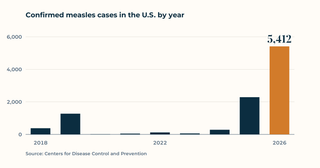
The short version
- The Pan American Health Organization said Tuesday that measles spreads continuously in the U.S., Mexico and Bolivia again, ending their elimination status.
- The U.S. had held the status since 2000, and this year's 5,412 cases are the most since 1991.
- The U.S. must now show a full year without a chain of spread to win it back.
Documents in this story · 4
- RecordMeasles cases and outbreaksCDC · Web page · Nov. 13Open Archived
- RecordPAHO urges countries to step up efforts to stop measles outbreaks and move towards elimination in the AmericasPAHO · Web page · Nov. 17Open Archived
- RecordMeasles and Rubella Elimination Regional Monitoring and Re-Verification Commission to hold sixth annual meeting in NovemberPAHO · Web page · Oct. 14Open Archived
- RecordPAHO calls for regional action as the Americas lose measles elimination statusPAHO · Web page · Nov. 10, 2025Open Archived
The United States has lost the measles elimination status it held for 26 years, the Pan American Health Organization said Tuesday. Measles is once again considered endemic here, which means the virus spreads continuously inside the country.
PAHO, the World Health Organization's office for the Americas, made the same finding for Mexico and Bolivia. Its director, Jarbas Barbosa, told a news briefing that an expert commission had found that "endemic measles transmission has now been reestablished in Bolivia, Mexico and the United States." It recommended withdrawing their status, "a recommendation which I have accepted," he said.
Fair Witness reported last week that the panel was meeting in Washington and how its test works. Outlets had been reporting the decision since Friday, when the Wall Street Journal first reported PAHO's letter to the administration, but Tuesday was the first time PAHO said it on the record.
Why it matters to you
Most Americans are protected. Two doses of the measles, mumps and rubella (MMR) shot are about 97% effective, and adults born before 1957 are considered immune. Now that measles spreads here again, though, CNN reported that a few groups could use another shot.
If you got only one dose before 1989, when the U.S. moved to two, you may want a second. People who got the early killed-virus vaccine, used from 1963 to 1968, may also want another shot. In outbreak areas, some babies can get an early dose between 6 and 11 months old. If you aren't sure what you had, ask your doctor.
What losing measles elimination status changes
The Associated Press called the declaration largely symbolic, with few practical effects. Public health experts had expected the announcement. The Centers for Disease Control and Prevention has counted 5,412 confirmed cases this year, the most since 1991. States have reported 10 deaths, while the CDC's own count is six.
The status turns on one test: whether a single chain of the same strain has spread for 12 months or more. The Hill reported that the U.S. reached that mark in January. A senior administration official told Reuters that an outbreak in Utah, which began in June 2025, was key to the finding. In a letter to the administration, PAHO also urged the U.S. to step up vaccination, the official said.
Barbosa spoke of the ruling as a problem for the whole region. "These figures are a serious warning for our region," he said. Canada lost its status last year, and he said it has made strides since in stopping the spread.
How Washington and its critics responded
The Department of Health and Human Services said in a statement that it would keep working to "close vaccination gaps, strengthen outbreak response, and protect Americans from measles." It said Health Secretary Robert F. Kennedy Jr. and CDC Director Erica Schwartz still recommend the MMR shot as the best way to prevent the disease. Schwartz told Reuters last week that the CDC would keep doing "the same exact thing" if the status was lost. Kennedy has said that vaccination rates were falling before Trump's second term, and the CDC gave states $100 million for measles work in August and September.
Critics say that isn't enough. Noel Brewer, a University of North Carolina professor whose committee presented U.S. data to PAHO, told the AP that "the federal government has had such a ho-hum response." Sen. Ron Wyden, an Oregon Democrat, blamed what he called a campaign by people who put their own greed ahead of children's health. Kindergarten MMR coverage fell from 95% in 2019-20 to 92% in 2025-26, below the level that usually stops spread.
How the commission reached its decision
PAHO's eight-member commission met behind closed doors from Nov. 10 to 13. It weighed genetic testing of the virus, vaccination rates, how well states track cases and how they respond to outbreaks. PAHO's notice for the meeting says no single source of evidence decides a country's status. It also says the commission's final report, published later, is the official record.
To win the status back, a country has to show the spread was broken for at least 12 consecutive months. Canada shows how long that can take: a year after its own loss, it was still the only country PAHO classified as endemic when the meeting was announced in October. For the U.S., the next step comes sooner. PAHO expects it to submit a corrective action plan in the coming weeks, CNBC reported.
endemic measles transmission has now been reestablished in Bolivia, Mexico and the United States
What we don't know yet
The commission's full reasoning, including which chains of spread it counted, isn't public yet. PAHO's written statement Tuesday confirmed the decision for all three countries but did not include the commission's report. We also don't know what the U.S. corrective action plan will contain or when it will be filed.
The death toll is unsettled, too. The CDC is declining for now to record some of Pennsylvania's deaths, the BBC reported, and hasn't said when its count will match the states'. Whether Kennedy or the CDC will hold a briefing on the ruling is also open; the AP said none was scheduled this week. And no one has said when the last chain of spread will end, which is when the yearlong clock to win back the status would start.
Sources
Left
10 of 13 left-leaning outlets we track reported this
Center
4 of 9 center outlets we track reported this
Right
4 of 12 right-leaning outlets we track reported this
- Fox News: Measles comeback rattles officials as US reportedly loses major public health designation (Nov. 14, since updated)
- New York Post: US officially loses measles elimination status after 26 years
- Just The News: U.S. loses measles elimination status after surge in cases (Nov. 14)
- The National Desk: The U.S. loses measles elimination status after death count rises to 10 in 2026 (Nov. 14)
Other reporting
- CNBC: U.S. officially loses measles elimination status amid ongoing outbreaks (business news network)
Primary
- CDC: Measles cases and outbreaks, Nov. 13 · Archived copy
- PAHO: PAHO urges countries to step up efforts to stop measles outbreaks and move towards elimination in the Americas, Nov. 17 · Archived copy
- PAHO: Measles and Rubella Elimination Regional Monitoring and Re-Verification Commission to hold sixth annual meeting in November, Oct. 14 · Archived copy
- PAHO: PAHO calls for regional action as the Americas lose measles elimination status, Nov. 10, 2025 · Archived copy
This article was produced by AI under our Editorial Standards. Corrections are reviewed before they go live.
How coverage differs
Free with a Fair Witness account
See how left, center and right covered this story
A free account shows where the coverage agrees and where it splits, what each side played up and played down, and, when one side's outlets missed a story, who missed it.
Nov 17
12:34 PMUpdatedU.S.
Trump says U.S. takes reported Iran dirty bomb plot seriously; Iran calls it baseless
The White House says there is no credible threat, and the officials behind the report disagree on whether Iran could carry it out.

The short version
- CNN reported that U.S. intelligence shows Iran drawing up plans for a possible dirty bomb or chemical attack on senior officials in Washington.
- Trump said the U.S. takes it very seriously, while the White House said there is no credible threat to the homeland.
- Iran denies the report, and Trump says he will press China's Xi Jinping to help end the war when they meet later this week.
President Donald Trump said Tuesday that the United States is "looking into" a report that Iran is drawing up plans for a possible dirty bomb attack in Washington. Iran's government called the report baseless.
CNN broke the story Monday night. Citing seven U.S. officials, it said new intelligence shows Iran developing plans to target senior Trump administration officials with a dirty bomb or a chemical weapon in the capital. Those officials called the planning a way for Iran to keep its options open, not a sign that an attack is near. So the administration is sending two messages at once. The president says he takes the report seriously, while his spokesperson says there is no credible threat.
Why it matters to you
A dirty bomb is not a nuclear bomb. It wraps radioactive material around ordinary explosives, and that changes what the real danger is. The Nuclear Regulatory Commission, which oversees nuclear safety, says most such devices would not release enough radiation to kill people or make them severely ill. In its words, "the conventional explosive itself would be more harmful to people than the radioactive material."
The commission says the main goals of such a weapon are spreading contamination and anxiety. Its general advice on radiation is to spend less time near it, move away and not breathe it in.
What Trump and the White House said about the dirty bomb report
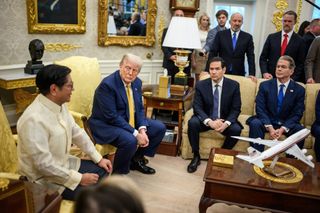
Trump took questions on Tuesday in Manila, where he met the leaders of Japan, India and Australia at the start of his Asia trip. He nodded when a reporter asked whether Iran was planning a dirty bomb in Washington. Asked whether an attack was close, he said Iran would pay "a price the likes of which no country has ever paid before" if there was one. He added that he hoped there wasn't, but "we take it very seriously because they happen to be crazy."
His White House sounded calmer. Spokesperson Lauren Bis said officials are watching every possible threat, but that there are "no credible threats to the homeland" right now. The nation's top intelligence office declined to comment to CNN.
How solid is the intelligence?
CNN's sources were not named, and they did not agree with one another. Two of them said the plotting was very specific, naming locations and targets. They said officials had met several times in the past week to plan a response. One said officials are still debating whether Iran has the people in place to carry out such an attack. One source said U.S. intelligence had picked up Iranian chatter claiming bomb materials were already hidden inside the country. Officials are divided on whether to believe it.
A second stream of intelligence points to troops, not the capital. CNN reported it concerns possible chemical attacks on U.S. troops in the Middle East. Several officials told CNN those troops lack the gear and training to protect themselves.
How Iran answered the report
Iran rejected the report on two fronts. Foreign Ministry spokesperson Esmaeil Baghaei said in a statement that the war's instigators were "manufacturing and disseminating baseless allegations" to justify more attacks. Reuters said he posted the denial on X on Tuesday. Separately, a spokesperson for Iran's mission to the United Nations told CNN that Iran "categorically rejects and unequivocally refutes the false and fabricated allegations" about chemical weapons. That spokesperson did not address the dirty bomb claim directly.
no credible threats to the homeland
How the war and earlier plots led here
The United States and Iran have been at war since February, when U.S. and Israeli strikes killed Iranian leaders, including Supreme Leader Ali Khamenei. Last week Trump ended negotiations with Iran and pulled Vice President JD Vance off the talks, as Fair Witness reported. U.S. officials have accused Iran of plotting killings on American soil before. In 2013, a U.S. court sentenced a man to 25 years for a plot to kill the Saudi ambassador in Washington. He pleaded guilty and said he conspired with members of the Iranian military, and Iran denied any involvement. CNN's report also recalled a 2024 murder-for-hire plot against Trump.
The threats have already changed how some officials live. Treasury Secretary Scott Bessent moved onto a military base this month, as Fair Witness reported. Fox News reported that Secretary of State Marco Rubio and Defense Secretary Pete Hegseth have moved to Fort McNair in Washington. Not all of those moves came from the same threats, Fox said, and some followed concerns about political violence at home.
What we don't know yet
We don't know how far Iran's planning went, or whether the people or materials CNN's sources described exist. Officials told CNN they are split on both points, and none of CNN's sources has spoken on the record. CNN said it is not clear whether the top lawmakers who get secret briefings heard about this threat.
Congress also faces a deadline on a tool used to spot plots. CNN reported that a surveillance law that lets officials collect foreigners' communications expired in June. Orders approved before then run out in March 2027 unless Congress acts. Sooner than that, Trump said he will press Chinese President Xi Jinping to help end the war when the two meet later this week. That meeting is the next public chance to see whether the threat changes Washington's approach.
Sources
Left
3 of 13 left-leaning outlets we track reported this
- CNN: US intel indicates Iran developing plans to potentially detonate a dirty bomb in Washington, sources say, Nov. 16
- The Guardian: Trump claims US is 'looking into' Iranian bomb plot in Washington despite 'no credible threats', Nov. 17
- CNN: Iranian-American gets 25 years in plot to kill Saudi ambassador, May 30, 2013
- USA Today: Trump says US taking 'seriously' threat of Iran using dirty bomb in DC, Nov. 17
- CNN: Trump says Iran could pay major price if it carries out dirty-bomb plan, Nov. 17 (for the Update)
Center
4 of 9 center outlets we track reported this
- Reuters: Trump says US taking seriously report of possible Iranian dirty bomb plot in Washington, Nov. 17
- Newsweek: Trump Says Iran Will 'Pay A Price' If There Was DC Dirty Bomb Plot, Nov. 17
- The Hill: Trump on dirty bomb report: 'We take it very seriously', Nov. 17
- The Hill: Trump says 'we'll wipe them out' if Iran dirty bombs US, Nov. 18 (for the Update)
Right
6 of 12 right-leaning outlets we track reported this
- Fox News: Trump warns Iran about reported plot against admin officials: 'We take it very seriously', Nov. 17
- The Washington Times: Trump says U.S. is looking into possible Iran plot against Washington, Nov. 17
- New York Post: Trump responds to reported 'dirty bomb' threat from Iran: 'They happen to be crazy', Nov. 17
- The Daily Wire: Trump Responds To Report Of ‘Dirty Bomb’ Threat From Iran, Nov. 17 (for the Update)
This article was produced by AI under our Editorial Standards. Corrections are reviewed before they go live.
How coverage differs
Free with a Fair Witness account
See how left, center and right covered this story
A free account shows where the coverage agrees and where it splits, what each side played up and played down, and, when one side's outlets missed a story, who missed it.
Nov 17
12:29 PMUpdatedWorld
Part of Crimean Bridge collapses after Ukrainian strike as Russia hits Kyiv's bridges
Each side hit bridges it calls military routes, two days before Trump meets Putin and Xi in China.

The short version
- A Ukrainian strike early Tuesday dropped part of the Crimean Bridge's road section into the sea, while Russian missiles closed two of Kyiv's bridges.
- Each side calls the other's bridges military routes, and the strikes came two days before Trump meets Putin and Xi in China.
- Estimates for when cars can cross the Crimean Bridge again range from a month to more than a year.
Documents in this story · 18
- RecordTelegram statement on the Crimean Bridge strike, Nov. 17 (in Ukrainian)General Staff of Ukraine's Armed Forces · Web pageOpen Archived
- RecordTelegram post on the Crimean Bridge operation, Nov. 17 (in Ukrainian)Volodymyr Zelenskyy · Web pageOpen Archived
- RecordTelegram post on the Kyiv bridges and power grid, Nov. 17 (in Ukrainian)Volodymyr Zelenskyy · Web pageOpen Archived
- RecordTelegram post on talks with U.S. and European negotiators, Nov. 16 (in Ukrainian)Volodymyr Zelenskyy · Web pageOpen Archived
- RecordTelegram list of overnight strike targets, Nov. 17 (in Russian)Russian Defense Ministry · Web pageOpen Archived
- RecordTelegram post on the first attack on the bridge, Nov. 16 (in Russian)Sergei Aksyonov, Moscow-installed head of Crimea · Web pageOpen Archived
- RecordTelegram post on the second attack on the bridge, Nov. 16 (in Russian)Sergei Aksyonov · Web pageOpen Archived
- RecordTelegram post on deaths in the Lenin district, Nov. 17 (in Russian)Sergei Aksyonov · Web pageOpen Archived
- RecordTelegram post on rail and ferry service, Nov. 17 (in Russian)Sergei Aksyonov · Web pageOpen Archived
- RecordTelegram post on the third attack on the bridge, Nov. 18 (in Russian)Sergei Aksyonov · Web pageOpen Archived
- RecordTelegram post on train service over the Crimean Bridge, Nov. 19 (in Russian)Russian Transport Ministry · Web pageOpen Archived
- RecordTelegram statement on the Neptune strike on the bridge, Nov. 19 (in Ukrainian)General Staff of Ukraine's Armed Forces · Web pageOpen Archived
- ReleaseTranscript of Vladimir Putin's press conference after his visit to China, Shenzhen, Nov. 19 (in Russian)Kremlin · Press releaseOpen Archived
- RecordTelegram post on rail service resuming over the Crimean Bridge, Nov. 19 (in Russian)Sergei Aksyonov · Web pageOpen Archived
- RecordTelegram post on hits to the Northern and Southern bridges, Nov. 16 (in Ukrainian)Vitali Klitschko · Web pageOpen Archived
- RecordTelegram post on water and heating outages, Nov. 16 (in Ukrainian)Vitali Klitschko · Web pageOpen Archived
- RecordTelegram post on the Southern Bridge partly reopening, Nov. 17 (in Ukrainian)Vitali Klitschko · Web pageOpen Archived
- RecordTelegram post on the Northern Bridge partly reopening to public transport, Nov. 17 (in Ukrainian)Vitali Klitschko · Web pageOpen Archived
A Ukrainian strike early Tuesday dropped part of the Crimean Bridge's road section into the Kerch Strait, the second night in a row Ukraine hit Russia's link to occupied Crimea. Overnight, Russian missiles hit two of Kyiv's main bridges over the Dnipro River.
Videos and photos geolocated by NBC News show a section of the bridge in the water. The strikes cut the road across the strait and snarled traffic in Ukraine's capital two days before President Donald Trump meets Russian President Vladimir Putin and Chinese President Xi Jinping in China. Fair Witness reported Monday on the first strike, when Russia said the damage was minor and cars were crossing again later that day.
How the Crimean Bridge's road section came down
Ukraine's General Staff said in a statement that the arch and span of the road section collapsed and that no vehicle can cross. It said the railway section is still standing, though its arch is damaged. Ukrainian President Volodymyr Zelenskyy said the strike was the seventh stage of an operation that ran for several weeks. In the earlier stages, he said, Ukrainian forces knocked out air defenses, radars and jamming equipment.
The BBC verified a video filmed from a Flamingo missile as it closed on the bridge's steel arches. Daylight images showed about 660 feet of roadway pulled into the sea, the BBC reported. Fire Point, which makes a cruise missile used in the strike, put the figure at nearly 900 feet and said one of the bridge's two arches had fallen.
Russian officials have not described the damage in detail. Sergei Aksyonov, the Moscow-installed head of Crimea, suspended traffic after the second attack. By Tuesday morning he said trains were running again and that people without cars could take the ferry. He also said a drone attack in Crimea's Lenin district killed two people.
Russia's Investigative Committee opened a terrorism case and said the structure was damaged. Kremlin spokesman Dmitry Peskov called the damage "insignificant," according to the AP, and said the bridge "will be rebuilt, and it will be even better than before," the BBC reported.
Zelenskyy tied the strike to Russia's own attacks. Russia hits Ukraine's infrastructure, including its bridges, every day, he said. "War will always return to where it began," he wrote, in Ukrainian.
Russia's strike on Kyiv's Dnipro bridges
Kyiv Mayor Vitali Klitschko reported hits on the Northern and Southern bridges late Monday, and water and heating outages in parts of the city soon after. Traffic on both bridges was suspended while the damage was assessed, he said. Zelenskyy said four ballistic missiles struck the Southern Bridge and three struck the Northern. Ukraine's emergency service said at least two people were killed in Kyiv.
Losing them matters because the two bridges link the city's east and west banks. Klitschko said the strike also partly damaged the metro. By Tuesday morning, the Southern Bridge had partly reopened in one direction, from the left (east) bank to the right (west) bank, for vehicles up to 10 metric tons. The other direction stays closed.
Each side calls the other's bridge a military route
Russia's Defense Ministry listed both Kyiv bridges among its targets. In its own statement, it called the Southern Bridge a route for military cargo by road and rail, and the Northern Bridge a route for weapons and military vehicles.
Ukraine's General Staff made the mirror case. It called the Crimean Bridge the main artery for fuel, ammunition, equipment and troops headed to Crimea and southern Ukraine. Reuters described a smaller role: the bridge is now used mainly by residents and visitors, because Russia's military can rely on a land corridor through occupied southern Ukraine.
Even so, losing the road matters. The BBC reported that the ferry across the strait has limited capacity, and that wreckage may block the shipping channel to Russian-held ports on the Sea of Azov.
War will always return to where it began.
What we don't know yet
No one knows yet how long the Crimean Bridge's road will stay closed. Russian military blogger Alexander Kots said cars won't cross for a month. An engineer at the consulting firm COWI told the BBC that restoring full road traffic will take more than a year. Russia has given no estimate. The Kremlin said Putin had been informed.
Nor is it known when Kyiv's Northern Bridge will reopen to cars, or when the Southern Bridge will carry traffic both ways. Engineers were still checking the damage Tuesday morning.
The strikes also hang over Thursday's meeting in China. Trump said Monday the war would come up. "We'll talk about my favorite subject, Ukraine," he told reporters. Peskov did not rule out a link between the attacks and the summit, ABC News reported. The same day, U.S. envoys Steve Witkoff and Jared Kushner joined Ukrainian and European negotiators in talks online, and Zelenskyy said a coalition of Ukraine's allies will meet next in Berlin.
Sources
Left
6 of 13 left-leaning outlets we track reported this
- NBC News: Vladimir Putin's prized bridge is partially destroyed in Ukrainian strike, Nov. 17
- ABC News: Ukraine launches 'unprecedented' strike on Crimean bridge, Zelenskyy says, Nov. 17
- CBS News: Ukraine and Russia trade strikes on key bridges ahead of Putin-Trump-Xi summit, Nov. 17
- CNN: Bridge connecting Russia to occupied Crimea has been hit again, Nov. 18
- ABC News: Crimean bridge attacked for 3rd time in a week, officials say, Nov. 19 (for the Update)
- The Guardian: Ukraine war briefing: Russia asks if Netherlands has joined conflict after Crimea bridge strike, Nov. 19 (for the Update)
- The Guardian: Putin vows 'painful' response to Ukraine's bombing of Kerch bridge, Nov. 19 (for the Update)
- Associated Press, via PBS NewsHour: Kushner says Russia is 'comfortable' with NATO-like security guarantees for Ukraine to end war after Trump talks with Putin, Nov. 19 (for the Update)
Center
4 of 9 center outlets we track reported this
- BBC News: How the attack on Putin's prized Crimean Bridge unfolded, Nov. 17
- Reuters: Ukraine strikes Crimean bridge for second day as Russia pounds Kyiv bridges, Nov. 17
- UPI: Crimea cut off after Ukraine strikes on Kerch Bridge, Nov. 17
- Newsweek: Videos show Putin's prized bridge in flames as Russia vows to rebuild, Nov. 18
- BBC News: Crimean Bridge attacked again, Russian official says, Nov. 18
- Reuters: Ukraine strikes Crimean Bridge for third time in a week ahead of US-China-Russia summit, Nov. 19 (for the Update)
- Reuters: Putin rules out Black Sea, energy truce after Crimea bridge strike, Nov. 19 (for the Update)
Right
2 of 12 right-leaning outlets we track reported this
Primary
- General Staff of Ukraine's Armed Forces: Telegram statement on the Crimean Bridge strike, Nov. 17 (in Ukrainian) · Archived copy
- Volodymyr Zelenskyy: Telegram post on the Crimean Bridge operation, Nov. 17 (in Ukrainian) · Archived copy
- Volodymyr Zelenskyy: Telegram post on the Kyiv bridges and power grid, Nov. 17 (in Ukrainian) · Archived copy
- Volodymyr Zelenskyy: Telegram post on talks with U.S. and European negotiators, Nov. 16 (in Ukrainian) · Archived copy
- Russian Defense Ministry: Telegram list of overnight strike targets, Nov. 17 (in Russian) · Archived copy
- Sergei Aksyonov, Moscow-installed head of Crimea: Telegram post on the first attack on the bridge, Nov. 16 (in Russian) · Archived copy
- Sergei Aksyonov: Telegram post on the second attack on the bridge, Nov. 16 (in Russian) · Archived copy
- Sergei Aksyonov: Telegram post on deaths in the Lenin district, Nov. 17 (in Russian) · Archived copy
- Sergei Aksyonov: Telegram post on rail and ferry service, Nov. 17 (in Russian) · Archived copy
- Sergei Aksyonov: Telegram post on the third attack on the bridge, Nov. 18 (in Russian) · Archived copy
- Russian Transport Ministry: Telegram post on train service over the Crimean Bridge, Nov. 19 (in Russian) · Archived copy
- General Staff of Ukraine's Armed Forces: Telegram statement on the Neptune strike on the bridge, Nov. 19 (in Ukrainian) · Archived copy
- Kremlin: Transcript of Vladimir Putin's press conference after his visit to China, Shenzhen, Nov. 19 (in Russian) · Archived copy
- Sergei Aksyonov: Telegram post on rail service resuming over the Crimean Bridge, Nov. 19 (in Russian) · Archived copy
- Vitali Klitschko: Telegram post on hits to the Northern and Southern bridges, Nov. 16 (in Ukrainian) · Archived copy
- Vitali Klitschko: Telegram post on water and heating outages, Nov. 16 (in Ukrainian) · Archived copy
- Vitali Klitschko: Telegram post on the Southern Bridge partly reopening, Nov. 17 (in Ukrainian) · Archived copy
- Vitali Klitschko: Telegram post on the Northern Bridge partly reopening to public transport, Nov. 17 (in Ukrainian) · Archived copy
This article was produced by AI under our Editorial Standards. Corrections are reviewed before they go live.
How coverage differs
Free with a Fair Witness account
See how left, center and right covered this story
A free account shows where the coverage agrees and where it splits, what each side played up and played down, and, when one side's outlets missed a story, who missed it.
Nov 17
9:02 AMUpdatedWorld
Trump opens Asia trip in Manila with Quad talks and a Thailand trade statement
The statement Trump signed with Thailand names none of the tariff cuts or farm purchases he described, and the final deal is still unsigned.
The short version
- Trump began his Asia trip in Manila on Tuesday, meeting Quad leaders and signing a trade statement with Thailand's prime minister.
- The statement says talks are nearly done but names no tariff cuts or purchases, while Philippine police arrested about 300 protesters before he arrived.
- Trump met Marcos on Wednesday before heading to China for Thursday's meeting with Xi and Putin.
Documents in this story · 3
- RecordJoint Statement on an Agreement Between the United States of America and the Kingdom of Thailand on Reciprocal TradeThe White House · Web page · Nov. 17, 2026Open Archived
- ReleaseQuad Leaders' Summit Joint Press ReleaseThe White House · Press release · Nov. 17, 2026Open Archived
- RecordJoint Statement by President Trump and Prime Minister Anutin Charnvirakul of Thailand on a Framework for an Agreement on Reciprocal Tradepresidency.ucsb.edu · Web page · Oct. 26, 2025Open Archived
President Donald Trump opened his Asia trip in Manila on Tuesday, meeting Quad leaders and signing a statement with Thailand that calls a trade deal nearly finished but names no tariffs or dollar figures.
The Manila stop opens a week that also takes Trump to China. Trump met Philippine President Ferdinand Marcos Jr. on Wednesday before heading to Shenzhen for Thursday's first three-way meeting with Chinese President Xi Jinping and Russian President Vladimir Putin. The Manila leg also drew protests, and police there arrested nearly 300 people in the days before he landed, the Guardian reported.
Why it matters to you
If you farm or sell to farmers, the Thailand deal is the part to watch. Trump said Thailand would buy more American farm goods and drop tariffs, which are taxes on imports, on U.S. exports. As structured, the deal would have Thailand buy an extra $2.6 billion in U.S. farm products, The Washington Times reported. The United States is Thailand's largest export market, taking about a quarter of its shipments this year. None of these terms appears in the statement the two leaders signed, so nothing changes at the border yet.
The trip matters for your safety in a wider way, too. Thursday's meeting in Shenzhen is expected to center on nuclear weapons, and Fair Witness reported last week that no treaty now limits the U.S. and Russian arsenals. The Manila meetings with U.S. allies come first.
What Trump and Thailand actually signed
Trump and Thai Prime Minister Anutin Charnvirakul signed the joint statement on the sidelines of the summit of the Association of Southeast Asian Nations, or ASEAN, a bloc of 11 countries. The statement says the two governments have "reached substantial conclusion in their negotiations" on a reciprocal trade agreement. Each side will now start its own internal steps toward signing the deal and putting it into force. The statement does not mention tariffs, farm goods or any dollar amount.
Trump went further when he spoke in Manila. He said Thailand would end tariffs on U.S. exports and remove other barriers on cars, medical devices, drugs, ethanol and poultry, The Washington Times reported. He said the final deal would be done soon. "This is an incredible victory for both countries," Trump said. Neither leader said what, if anything, the United States would give in return, the Times reported.
Thailand's government has described the statement in smaller terms. Its Cabinet approved the text last week as a political declaration of progress that "will not constitute the signing of the final trade agreement," The Nation reported. The draft named no tariff rate, the paper said.
Where the $2.6 billion farm figure comes from
The figures reported on Tuesday are not new. In October 2025, Trump and Anutin issued a joint statement setting out a framework for the same deal. In it, Thailand said it would end tariff barriers on about 99% of goods and buy about $2.6 billion a year in U.S. farm goods. It also listed purchases of $5.4 billion a year in energy and 80 American aircraft.
So the farm figure described as extra on Tuesday matches the yearly figure from that framework, and the purchases are still described as future deals. What changed this week is how close the deal is. Both governments now say the text is close, and both have started the steps to sign it. The rules on what Thailand pays, and what America charges on Thai goods, will be in the final agreement, not in Tuesday's statement.
Trump meets the Quad in Manila as protesters march
The Quad brings together the United States, Japan, Australia and India. Tuesday's meeting was its first leaders' gathering in two years and Trump's first, Reuters reported. A Japanese official had said maritime security, export limits, critical minerals and artificial intelligence could come up. China has long objected to the group as an effort to box it in, though members say it is aimed at no single country. Trump praised the group and announced an $85 million investment in AI software, CBS News reported. The leaders later issued a joint press release on the meeting.
Outside the summit, protesters burned effigies of Trump and faced police carrying shields and batons, and police said some officers were hurt, the Guardian reported. The marchers object to the Iran war's effect on fuel prices and to Pax Silica, a U.S.-led plan to build chip and critical-mineral supply chains outside China. Arrest counts differ: the Guardian put the total near 300 over several days, while Newsweek cited reports of more than 300 on Sunday alone.
Much of the anger centers on one site. Under Pax Silica, a hub of more than 4,000 acres is planned north of Manila, at New Clark City in Tarlac province. Critics say it would displace farmers and the Indigenous Aeta people and strain water supplies. A State Department spokesman said the Philippines proposed the site and will decide whether to go ahead.
What we don't know yet
No one outside the two governments knows yet what tariffs and purchases the final Thailand deal will contain. Until it is signed and published, it isn't clear whether Thailand will drop tariffs on nearly all U.S. goods, what rate America will charge on Thai goods, or whether the $2.6 billion is new money. Neither side has said when the signing will happen.
The Quad's joint release gives no dollar amount for its AI project. So we don't know yet how much money will go to it. Marcos and Trump met Wednesday, and protest organizers had planned another march that day toward the presidential palace. Whether the Pax Silica hub goes ahead is a separate question, one the State Department says is for the Philippines to decide.
The case each side makes
The governments: deals and an alliance
Trump and his hosts present the visit as proof that partnership pays. The White House has described the Quad as "a partnership of action, tackling the region's toughest challenges," spokesperson Olivia Wales said Friday. Trump said the Thailand deal was good for American farmers, and he described AI as the "greatest opportunity for economic growth since the Industrial Revolution," CBS News reported.
Marcos backs the Pax Silica hub on the same grounds. "It will bring quality jobs to our people," he said in his July address to the nation, Newsweek reported. His government says the project could create 100,000 to 130,000 jobs. Police Gen. Jose Melencio Nartatez Jr. told officers to show restraint and respect peaceful protest.
This is an incredible victory for both countries.
The protesters: sovereignty and the cost of war
Protest leaders say the Marcos government is tying the country too closely to Washington. Teddy Casiño, one of those leaders, urged the Marcos administration to "stop being a puppet of Donald Trump," the Associated Press reported. Renato Reyes blamed Trump for a war that drove Philippine fuel prices to record highs, and he called Monday the biggest single day of arrests since Marcos took office in 2022, the Guardian reported.
Communities near the planned hub make a narrower case about land and water. "Pax Silica is just for the U.S. It's not for us," said Maninging Vilog, a teacher who speaks for Aeta communities, CBS News reported. Amnesty Philippines said anyone held only for peaceful protest should be freed. "Authorities must explain the specific grounds for each arrest," its director, Ritz Lee Santos III, told the Guardian.
Sources
Left
6 of 13 left-leaning outlets we track reported this
- The Guardian: Hundreds arrested in anti-Trump protests in Philippines amid anger over Iran war and AI pact
- The Guardian: 'Peace through strength': Albanese and Trump hail progress on Quad alliance
- CBS News: Trump arrives in Asia ahead of summit with Putin and Xi, possible meeting with Kim Jong Un
- CBS News: Protests flare in Philippines over Trump's visit and planned AI hub
- Associated Press, via the New York Post: Trump arrives in Philippines to kick off Asia trip ahead of historic three-way nuclear talks with Xi and Putin
Center
5 of 9 center outlets we track reported this
- Reuters: Trump to kick off Asia trip with Quad talks in Manila ahead of China visit
- The Hill: Trump touts 'landmark' trade deal with Philippines, Nov. 18
- UPI: Trump heads to China after announcing 'very big trade deal' in Manila, Nov. 18
- UPI: Trump arrives in Philippines ahead of meeting with Xi, Putin in China
- Newsweek: Why Donald Trump's AI Pax Silica Project Prompted Protests in Philippines
Right
6 of 12 right-leaning outlets we track reported this
Other reporting
- The Nation (Thailand): Anutin and Trump expected to confirm progress in Thai-US trade talks (Bangkok English-language newspaper)
- GMA News: Trump: US expanding defense cooperation with the Philippines (Philippine broadcaster)
Primary
- The White House: Joint Statement on an Agreement Between the United States of America and the Kingdom of Thailand on Reciprocal Trade, Nov. 17, 2026 · Archived copy
- The White House: Quad Leaders' Summit Joint Press Release, Nov. 17, 2026 · Archived copy
- Joint Statement by President Trump and Prime Minister Anutin Charnvirakul of Thailand on a Framework for an Agreement on Reciprocal Trade, Oct. 26, 2025 (joint statement, as archived by the American Presidency Project) · Archived copy
This article was produced by AI under our Editorial Standards. Corrections are reviewed before they go live.
How coverage differs
Free with a Fair Witness account
See how left, center and right covered this story
A free account shows where the coverage agrees and where it splits, what each side played up and played down, and, when one side's outlets missed a story, who missed it.
Nov 17
12:17 AMUpdatedEconomy
AAA forecasts a slight dip in Thanksgiving travel after three record years
Gas and plane tickets cost more than last year, but AAA still expects roads and airports to be nearly as crowded as in record years.
Edge of Frame · Right

The short version
- AAA expects 81.5 million Americans to travel for Thanksgiving, about 121,000 fewer than last year.
- Gas and plane tickets cost more, but roads and airports should be nearly as crowded as the record years.
- The travel week runs Nov. 24 to 30, and the heaviest traffic out of town is expected Tuesday and Wednesday afternoons.
Documents in this story · 3
- ReleaseThanksgiving Travel Expected to Dip Slightly Compared to Last YearAAA · Press release · Nov. 16, 2026Open Archived
- ReleaseFor the First Time Since July, National Average Drops Below $4AAA · Press release · Nov. 12, 2026Open Archived
- RecordGas Prices, national averageAAA · Web page · Nov. 16, 2026Open Archived
AAA expects slightly fewer Americans to travel for Thanksgiving this year, which would end a run of three record holidays that began in 2023. Its Thanksgiving travel forecast, released Monday, puts the count at 81.5 million people, about 121,000 fewer than last year.
That drop is tiny, about 1 traveler in 670, and it covers anyone going at least 50 miles from home between Nov. 24 and Nov. 30. AAA tied it partly to cost. Gas and plane tickets both cost more than a year ago, after a year in which the war with Iran pushed fuel prices up, so the trip itself is where you will feel the difference.
Why it matters to you
If you are driving, you will pay more to fill the tank than last Thanksgiving. Regular gas averaged about $3.81 a gallon on Monday, up from about $3.07 a year earlier. That is above the highest price ever recorded on Thanksgiving Day, $3.58 in 2022. If prices hold, this Thanksgiving would set a new record at the pump.
Timing your trip can save you hours. INRIX, a traffic data firm, expects Tuesday and Wednesday to be the busiest days for leaving and Sunday and Monday for coming home, according to the AAA forecast. It expects the worst roads from 2 p.m. to 8 p.m. on Tuesday, Nov. 24, and from noon to 7 p.m. on Wednesday. Its best times to leave are before 1 p.m. on Tuesday or before noon on Wednesday, and it expects little traffic on Thanksgiving Day itself. If you are renting a car, Hertz expects Tuesday and Wednesday to be its busiest pickup days.
Flyers face the bigger jump. Round-trip domestic flights booked through AAA average about $800 a ticket, 17% more than last year. AAA suggests checking airports a bit farther from home, which it says could save money.
Where the AAA Thanksgiving travel forecast sees fewer people
Most of the drop is on the road. AAA expects about 72.9 million people to drive, down from 73.1 million last year, and it blamed part of that on gas prices that set monthly records in August, September and October. Even so, nearly 9 in 10 holiday travelers will still go by car.
Air travel barely moves. AAA projects about 5.96 million people on domestic flights, a 0.2% decline, or about 12,000 fewer than last year. Orlando, Fort Lauderdale and Miami top the list of places AAA members are flying.
The only group growing is everyone else. About 2.6 million people are expected to take buses, trains and cruises, up about 4%. AAA said many people use the long weekend for a longer vacation, including a cruise.
Stacey Barber, vice president of AAA Travel, said the change is too small to feel. Travelers "won't notice much of a difference on the roads and at the airports," she said in the AAA release, because the numbers remain near record levels.
What is pushing the cost up
Fuel is the thread running through both the car and the plane numbers. On Feb. 28, the day the United States first struck Iran, gas averaged about $2.98 a gallon. It then spent much of the year above $4. Last Thursday, the national average fell below $4 for the first time since July, helped by cheaper crude oil and winter-blend gas. Patrick De Haan, who leads fuel analysis at GasBuddy, a price-tracking app, expects more relief this week but not a return to last year's prices, USA Today reported.
Airlines pass their fuel costs on to you. Airfares were more than 22% higher in September than a year earlier, according to government price data, and carriers also raised fees for checked bags. American Airlines' finance chief, Devon May, has said fares will probably stay about where they are even if fuel gets cheaper.
Those prices are not landing on everyone the same way. A Visa analysis of September card spending found that spending on holiday flights fell from a year earlier in every income group except households earning more than $200,000, the AP reported.
won't notice much of a difference on the roads and at the airports
A forecast made before the ground stop
The numbers tell you what AAA expected weeks ago, not what happened last weekend. The forecast was prepared the week of Oct. 12, the AAA release says. That was a month before the FAA halted every departure in the country last Friday, as Fair Witness reported. On Monday, a separate United Airlines outage delayed flights across that airline's network.
The release also explains what the forecast measures: domestic leisure trips of 50 miles or more. S&P Global Market Intelligence, which builds the model for AAA, feeds it data on jobs, household wealth, interest rates and travel prices. AAA warns against comparing its numbers with TSA screening counts, which take in every passenger, including business and international travelers. Other forecasts measure other things, too. Airlines for America, the airline industry's trade group, expects U.S. carriers to serve more passengers over the same week, the AP reported, though it wasn't clear whether that count includes international flights.
As for the ground stop, AAA doesn't expect it to keep many people home unless it happens again, spokesperson Aixa Diaz said, according to the Associated Press. In an email, she wrote that "it takes a lot to keep holiday travelers home."
What we don't know yet
No one knows yet whether last Friday's ground stop and Monday's United outage will keep holiday travelers home. AAA's forecast came before both. Transportation Secretary Sean Duffy and FAA chief Bryan Bedford said they expect flights to be back to normal well before the holiday rush. Whether stranded travelers book fewer trips will show up only in the real counts.
Gas prices could still fall before Thanksgiving Day, Nov. 26. If the national average drops under $3.58, the holiday would not set a pump record after all. Flight bookings were running about 1.6% behind last year in late October, according to the travel data firm Cirium, so late bookings will decide how full planes are.
Sources
Left
4 of 13 left-leaning outlets we track reported this
- Associated Press: AAA forecasts another busy, but not quite as busy, Thanksgiving travel week, Nov. 16
- CBS News (AP copy, counted as AP): Thanksgiving travel likely to dip a bit due to costs of gas and plane tickets, AAA says, Nov. 16
- USA Today: Gas prices are falling. Why Thanksgiving travel may still dip, Nov. 16
Center
3 of 9 center outlets we track reported this
Right
1 of 12 right-leaning outlets we track reported this
Checked, no report found as of 8:25 a.m. ET Nov. 17: Fox News, New York Post, The Daily Wire, The Washington Times, The Daily Caller, Just The News, +5.
This article was produced by AI under our Editorial Standards. Corrections are reviewed before they go live.
How coverage differs
Free with a Fair Witness account
See how left, center and right covered this story
A free account shows where the coverage agrees and where it splits, what each side played up and played down, and, when one side's outlets missed a story, who missed it.
Nov 16
6:09 PMUpdatedTechnology
Chase outage: bank blames software bug as customers at other banks report trouble
Chase says customers can still reach their money, but a delayed payment or Zelle transfer could cost you a late fee.

The short version
- JPMorgan Chase said a software bug in its own systems slowed some customer transactions on Monday, and customers at other big banks also reported trouble.
- Chase said customers kept access to their money, but delayed payments and transfers can still bring late fees.
- Chase said Monday evening that transactions were posting normally again, but it has not explained what the bug was.
A software bug in JPMorgan Chase's own computer systems caused Monday's Chase outage, the bank said, slowing some customers' payments and drawing thousands of complaints. Customers at Bank of America, Wells Fargo, U.S. Bank and other large banks also reported trouble reaching their accounts online.
The reach of the trouble matters because of Chase's size. It is the nation's largest bank, with about 94 million U.S. customer relationships, NBC News reported. The bank said it was working to fix the problem by the end of the day, and by Monday evening it said transactions were posting normally again.
Why it matters to you
Chase said customers "still have access to their accounts and funds." But a payment that takes longer than usual can still cost you. A rent check, a bill on autopay or a Zelle transfer that lands a day late can bring a late fee. If you sent or expected money Monday, check that it arrived.
A security expert told CBS News that affected customers should screenshot failed transactions and error messages and ask the bank to reverse any fees the outage caused. She also urged customers to ignore emails about the outage that they didn't expect, which she warned might be scams.
Federal law gives you a firmer tool if a transfer goes wrong. Under Regulation E, the rule for electronic payments, you have 60 days after your statement is sent to report a wrong or missing transfer. The bank then has 10 business days to look into it. If it needs longer, up to 45 days, it must put the disputed amount back in your account while it finishes.
What the bank says caused the Chase outage
In a statement Monday, Chase said a temporary issue was tied to "a software bug in on-premise hardware systems." That means computers the bank owns and runs, not ones it rents from a cloud company. A spokesperson said it was a technical bug, not a cyber issue, the Associated Press reported. CNBC reported, citing a source, that there was no sign of bad actors and no sign that one bug was hitting several banks at once.
Some customers opening the Chase app saw a notice that some services weren't available. The trouble also reached some branches. NBC News reported that the outage affected in-person branch services and that some customers reported trouble withdrawing money. At one Washington, D.C., branch, a teller told Fox Business that the problems began around 10 a.m. and cleared just after 3 p.m. A branch manager said ATMs were working normally.
Why other banks showed up as down
The other banks' names came mostly from Downdetector, a website that collects complaints from users. Its numbers are reports, not a count of people affected. By about 2 p.m. ET, nearly 4,800 users had reported problems with Chase. The Washington Times counted more than 2,000 at Bank of America and close to 1,000 each at U.S. Bank and Wells Fargo.
Chase offered its explanation for those reports. Other lenders may have been affected when Chase was party to a transaction with them, the bank said, adding: "This is not a systemic issue." Chase made the same point in a social media post, CBS News reported.
Some of the complaints involved Zelle, and the payment service said it was working normally. "Zelle is not down," the company said, adding that problems at banks may be delaying some payments. Zelle doesn't hold anyone's money; it moves it between banks. Its network is run by Early Warning Services, a company owned by banks including Chase, Bank of America and Wells Fargo. U.S. Bank said its own systems were "not directly impacted," though Zelle payments with other banks could be slow.
Wells Fargo's own site told customers Monday afternoon that online banking wasn't available because of technical issues. But Wells Fargo told Fox Business it was not affected by Monday's events. We found no public explanation from Bank of America as of 5:30 p.m. ET.
The outage came days after a Microsoft 365 outage knocked out Outlook email and a nationwide FAA ground stop halted flights on Friday. NBC News reported there is no evidence the incidents are connected.
This is not a systemic issue.
What we don't know yet
Chase hasn't said what the bug was, which systems it hit or how many customers it touched. Those answers would show how far the delays reached. Chase also hasn't said whether it will refund fees that customers paid because of the delays.
It also isn't clear whether every report at other banks traces back to Chase, or whether Wells Fargo had a problem of its own. Its website and its statement to Fox Business pointed in different directions. We found no statement from the Federal Reserve or the Office of the Comptroller of the Currency, which supervise the largest banks, as of 5:30 p.m. ET. Nor has Chase said whether every payment delayed during the outage has now gone through.
Sources
Left
7 of 13 left-leaning outlets we track reported this
- CBS News: Major U.S. banks report widespread service outages
- The Guardian: Customers report difficulty accessing online services at major US banks
- NBC News: Chase says transactions back to normal after outage online and at some branches
- AP, via HuffPost: Customers report account access issues with nation's largest banks
Center
4 of 9 center outlets we track reported this
Right
6 of 12 right-leaning outlets we track reported this
- New York Post: JPMorgan Chase says in-house software issue impacted service, and possibly other banks
- The Washington Times: Chase, J.P. Morgan, Bank of America among multiple banks facing outages
- Fox News: America hits a tech wall as outages cripple email, ground flights and disrupt major banks
- Fox Business: Chase online banking outage hits thousands as transactions delayed
This article was produced by AI under our Editorial Standards. Corrections are reviewed before they go live.
How coverage differs
Free with a Fair Witness account
See how left, center and right covered this story
A free account shows where the coverage agrees and where it splits, what each side played up and played down, and, when one side's outlets missed a story, who missed it.
Nov 16
3:18 PMUpdatedTechnology
Commerce rule targets China's remote access to advanced AI chips abroad
Chinese firms barred from buying top U.S. chips could rent their power in nearby countries' data centers. Washington now wants that route closed.

The short version
- The Commerce Department issued a rule Monday to stop Chinese companies from using advanced U.S. AI chips through data centers in other countries.
- Chinese firms barred from buying the chips could rent their computing power abroad, and the old rules didn't cover that.
- The rule takes effect when published in the Federal Register, and data centers already serving Chinese firms then have 90 days to seek licenses.
Documents in this story · 5
- ReleaseBIS Issues Rule Addressing Remote Access to American Super Intelligence TechnologyBureau of Industry and Security · Press release · Nov. 16Open Archived
- ReleaseInterim final rule, "Addressing Remote Access to Advanced Semiconductors" (RIN 0694-AK50), text as released Nov. 16Bureau of Industry and Security · PDFOriginal Archived
- StatuteRoll call 13, Remote Access Security Act (H.R. 2683)Office of the Clerk, U.S. House · Web page · Jan. 12, 2026Open Archived
- ReleaseSpokesperson Guo Jiakun's regular press conferenceChina's Ministry of Foreign Affairs · Press release · Jan. 14, 2025Open Archived
- ReleaseSpokesperson Guo Jiakun's regular press conferenceChina's Ministry of Foreign Affairs · Press release · Nov. 17, 2026Open Archived
The Commerce Department issued a rule Monday to stop Chinese companies from using America's most advanced AI chips by remote access, through data centers in other countries.
Selling those chips in China has required a U.S. license since October 2022. But a Chinese company could still rent the same computing power from a data center in a nearby country, and the old rules didn't reach that. The rule arrives days after Nvidia co-founder Jensen Huang resigned as CEO under scrutiny for his ties to a former Megaspeed executive. And it lands as President Donald Trump leaves for Asia to meet Chinese President Xi Jinping.
Why it matters to you
The chips at stake power the AI tools many people now use. Washington treats them as a matter of security, not just business. The rule's text says large amounts of computing power could help a rival build better weapons or run cyberattacks. Nvidia and AMD make the chips it covers, and businesses in the five countries it names have bought billions of dollars' worth in recent years.
The rule also leaves some everyday uses alone. It doesn't apply to commercial recommender systems, the software online stores and social media apps use to suggest products and posts. Its target is the training of top AI models.
You can weigh in. Anyone has 60 days to comment at regulations.gov once the rule appears in the Federal Register, the government's daily journal of new rules.
How the AI chip rule closes the remote access gap
The first part covers data centers anywhere in the world. A license is now needed to send advanced chips to a data center that would give large amounts of computing power to firms based in China or Macau. The same goes for other restricted countries, such as Russia, Iran and Cuba. Data centers must check who owns their customers, so a Chinese firm can't get around the rule through a corporate restructuring or spinoff.
The rule sets the line at an amount of computing power it says is enough to train or run advanced AI models. A data center that starts serving such customers later also needs a license, even if the chips arrived before.
The second part names five countries. Shipping advanced chips to Indonesia, Malaysia, Singapore, Thailand or Brazil now needs a license, because the rule calls them "countries which present a higher-than-normal risk of diversion." That requirement doesn't apply to chips bound for companies based in the United States, as long as they file new monthly reports. Countries that tolerate evasion could face import limits or blacklisting of the people involved, the rule says.
The rule also formally scraps the AI Diffusion Rule. That Biden-era plan would have required chip licenses for countries around the world. The new rule's text says "super intelligence" where most people say AI, following an order Trump signed in September.
When does the rule take effect?
Early reports didn't agree. The Associated Press reported that the rule took effect immediately, while The Hill reported that it takes effect in 90 days.
The rule's text explains both. It takes effect the day it is published in the Federal Register. A data center that was already serving Chinese-owned customers before then has 90 days from that date to get a license if it wants to keep doing so. So the rule starts at once, and the grace period covers only business already under way.
Why Commerce moved now
The rule's own announcement points outside Commerce. The Bureau of Industry and Security, the part of Commerce that runs export controls, said the rule was written by and at the direction of the Treasury Department and the National Security Council. NBC News took that as a sign the push came from the wider Trump administration. The bureau said its goal is to make sure existing limits "cannot be circumvented through remote computing arrangements." Commerce had held off on new chip limits for a year.
That delay was the subject of a public fight last week. Treasury Secretary Scott Bessent said only Commerce could act on Megaspeed, the Singapore company at the center of the Nvidia scandal, as we reported. Megaspeed operates data centers in Malaysia and is suspected of diverting Nvidia chips to China. In a statement Sunday, it said it "conducts legitimate and lawful business" and has hired outside lawyers to investigate.
Trump said Monday that his team holds two views on how far to go in limiting chip sales to China. One is not to insult a country the U.S. gets along with. The other is to do whatever it takes. "Can't say either is wrong or right," he told reporters.
Two export-control experts praised the rule. Ryan Fedasiuk, an AI fellow at the Foundation for American Innovation, called it "a long-overdue step in the right direction." Chris McGuire, a Biden administration AI adviser now at the Council on Foreign Relations, called it a major step forward. He said it was the first good-faith effort to close export loopholes in a year and a half.
cannot be circumvented through remote computing arrangements.
How the remote access fight got here
The gap is old. The Biden administration barred Chinese companies from buying top AI chips directly in 2022. Many experts say Chinese firms then moved their computing to data centers in nearby countries, including the five the rule now names.
Biden's answer, five days before he left office, was the AI Diffusion Rule. It would have limited chips for risky countries and required licenses for many sales abroad. Trump's Commerce Department said in May 2025 that it would not enforce that rule, but it never formally withdrew it until Monday.
Congress has pushed too. Rep. Mike Lawler, a New York Republican, wrote a bill to extend export controls to remote access, warning that China could "access our tech through the cloud." The House passed it 369-22 in January.
What we don't know yet
What Beijing will do about the rule is not yet known. Trump and Xi meet Thursday in Shenzhen. On Tuesday, foreign ministry spokesman Guo Jiakun said China would do what is necessary to protect its rights, but he named no steps. When the Biden rule came out in January 2025, Guo accused the U.S. of "politicizing and weaponizing trade and tech issues" and said China would take firm measures.
We found no public response from Nvidia or from data center operators in the five countries as of 6 a.m. ET Tuesday. The bureau hasn't said how many data centers or chips the rule reaches. Its own paperwork estimate expects only about 100 more license applications a year. The rule's text leaves its Federal Register date blank, and Commerce hasn't said when it will run. That date starts both the 60-day and 90-day clocks.
Lawmakers want answers, too. Commerce Secretary Howard Lutnick has agreed to appear before the Senate Banking Committee, and the House Foreign Affairs Committee has asked for testimony from Jeffrey Kessler, who heads the bureau. Their answers may show why the rule took this long and how Commerce plans to police it.
Sources
Left
6 of 13 left-leaning outlets we track reported this
- NBC News: U.S. closes loophole that let Chinese companies use top AI chips in foreign data centers, Nov. 16
- NPR: U.S. tightens controls on remote access to AI technology amid Nvidia fallout, Nov. 16
- Associated Press: Trump administration moves to block China from indirect access to American AI technology, Nov. 16
Center
2 of 9 center outlets we track reported this
Right
2 of 12 right-leaning outlets we track reported this
Primary
- Bureau of Industry and Security: BIS Issues Rule Addressing Remote Access to American Super Intelligence Technology, Nov. 16 · Archived copy
- Bureau of Industry and Security: Interim final rule, "Addressing Remote Access to Advanced Semiconductors" (RIN 0694-AK50), text as released Nov. 16 · Archived copy
- Office of the Clerk, U.S. House: Roll call 13, Remote Access Security Act (H.R. 2683), Jan. 12, 2026 · Archived copy
- China's Ministry of Foreign Affairs: Spokesperson Guo Jiakun's regular press conference, Jan. 14, 2025 · Archived copy
- China's Ministry of Foreign Affairs: Spokesperson Guo Jiakun's regular press conference, Nov. 17, 2026 · Archived copy
This article was produced by AI under our Editorial Standards. Corrections are reviewed before they go live.
How coverage differs
Free with a Fair Witness account
See how left, center and right covered this story
A free account shows where the coverage agrees and where it splits, what each side played up and played down, and, when one side's outlets missed a story, who missed it.
Nov 16
3:15 PMUpdatedU.S.
Supreme Court won't hear challenge to Maryland's 'sensitive places' gun law
Maryland's limits on where permit holders may carry stay in force, but Justice Thomas invited a narrower challenge to laws like it.
The short version
- The Supreme Court on Monday refused to hear a challenge to Maryland's ban on guns in places such as parks, bars, hospitals and transit.
- The ban stays in force, though Justice Clarence Thomas wrote that he doubts many laws like it can survive the court's history test.
- Thomas invited a narrower case, and a New Jersey ruling set for rehearing by a full appeals court could shape the next appeal.
Documents in this story · 5
- RulingSupreme Court order list, Nov. 16, 2026, with Justice Thomas's statement in Novotny v. Moore, No. 25-1324supremecourt.gov · PDFOriginal Archived
- RulingSupreme Court docket No. 25-1324, Novotny v. Mooresupremecourt.gov · Web pageOpen Archived
- RulingStatement on Supreme Court decision leaving gun safety protections in placeMaryland Attorney General Anthony Brown · Web page · Nov. 17, 2026Open Archived
- RulingBrief in opposition, Maryland Attorney General Anthony Brownsupremecourt.gov · PDF · Aug. 17, 2026Original Archived
- RulingU.S. Court of Appeals for the 4th Circuit, Kipke v. Moore, decided Jan. 20, 2026ca4.uscourts.gov · PDFOriginal Archived
The Supreme Court on Monday refused to hear a challenge to Maryland's "sensitive places" gun law, leaving in force the state's bans on carrying guns in parks, bars and hospitals and on public transit.
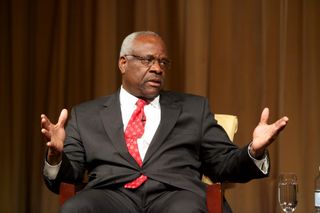
The order was a single line, but Justice Clarence Thomas added a four-page statement. He agreed the court should pass on this case, because it challenged so many different places at once. He also wrote that he is skeptical that each of the laws fits the nation's history of gun rules, and that the court should take up a narrower case. That leaves gun owners and states with a law that stands today and a clear hint about where the next fight may land.
Why it matters to you
Nothing changes for now for anyone with a Maryland carry permit. Permit holders still may not carry a gun at a public demonstration, on mass transit, in places of amusement or in health care facilities. The same goes for places that serve alcohol on site and tens of thousands of acres of state park and forest land.
The case also reaches past Maryland. California, New York, New Jersey and Hawaii have similarly broad restrictions, NBC News reported. By turning the case away, the justices left those states' lists in place too, for now. Thomas spoke only for himself, but his statement points gun-rights lawyers toward a challenge to particular places, such as bars or parks, rather than a whole list.
What the court did, and what Thomas wrote
The case, Novotny v. Moore, joined two lawsuits by Maryland gun owners and gun-rights groups. Among the groups are the Second Amendment Foundation, the Firearms Policy Coalition and Maryland Shall Issue, along with the state's National Rifle Association affiliate. The docket shows the justices put off the petition three times before taking it up at their private conferences on Nov. 6 and Nov. 13.
Thomas's statement explains his vote. Each Maryland law rests on a different history of gun rules, he wrote, so taking them all at once would make the court's review harder. He then listed laws in other states that he doubts can pass the history test: New Jersey's bans at zoos, libraries and state beaches, New York's 20 listed locations and California's 29 gun-free places. "These restrictions stand on questionable historical ground," he wrote.
What his statement was not matters too. It was a statement, not a dissent, and no other justice joined it. No justice recorded a vote to hear the case. The same order list shows how that looks when it happens: in an unrelated California case, Justice Neil Gorsuch said he would grant review and Thomas wrote a dissent that Justice Samuel Alito joined.
How Maryland's "sensitive places" law reached the Supreme Court
The fight began with the court's own 2022 ruling in New York State Rifle & Pistol Association v. Bruen. That decision found for the first time that the Second Amendment protects a right to carry a handgun in public, and it set a new test: a gun law must be consistent with the nation's historical tradition of gun regulation. Thomas wrote that majority opinion.
Bruen ended Maryland's strict rules on who could get a carry permit, so the state, like several others, turned to limits on where permit holders could carry. Maryland's version, signed by Gov. Wes Moore in 2023, added colleges, hospitals, power plants, amusement parks and places selling alcohol or cannabis to older bans at schools, transit and protests. Gun owners sued the day it was signed, targeting 10 categories of places.
A federal trial judge upheld most of the limits but ruled against the bans at demonstrations and at places that serve alcohol. The U.S. Court of Appeals for the 4th Circuit, in Richmond, Virginia, then went further. Its January ruling upheld every challenged place except private property open to the public, where Maryland had barred guns unless the owner allowed them. That one rule is gone, and it was not part of this appeal. In June, the Supreme Court struck down a similar Hawaii rule in a 6-3 decision.
A split ruling left standing
The appeals court decision the justices left in place was closer than its outcome suggests. Of the bans it upheld, the three judges agreed only on those in government buildings, schools and health care facilities, according to the 4th Circuit's opinion. On transit, demonstrations, state parks and forests, museums, stadiums and casinos, and places that sell alcohol, the vote was 2-1, with Judge Agee in dissent each time. Those are most of the places the case was about.
That split lines up with Thomas's point. Two of the places the judges all accepted, schools and government buildings, are on the short list the Supreme Court said in 2008 was not in doubt. None of the places where they split is on that list. Neither are the examples Thomas chose from other states, from zoos to state beaches.
These restrictions stand on questionable historical ground.
What we don't know yet
It is not yet clear which narrower sensitive-places challenge, the kind Justice Thomas urged, will reach the Supreme Court next, or when. In New Jersey, a ruling that upheld many of that state's sensitive-place limits was vacated so the full appeals court could rehear it, and its outcome could shape the next appeal.
We also don't know how many of his colleagues share his doubts. Thomas spoke only for himself, and the court gave no reason for its denial.
The case each side makes
The gun owners and gun-rights groups
The challengers say Maryland used the word "sensitive" to undo what the Supreme Court decided in 2022. After it was forced to issue carry permits, the state listed so many places that a permit holder's ability to carry in public at all is severely limited, they argue. "Maryland simply made those permits useless everywhere," Adam Kraut, executive director of the Second Amendment Foundation, said in a statement.
Their own test is narrow. The only historical exceptions, they say, were places where the state provides its own security, such as courthouses. The nation's founders would have been shocked by a broad ban on guns in crowded places, they argue, according to the Washington Times account of their filings. They also asked the court to step in because lower courts have upheld similar laws for different reasons and for different kinds of places.
Maryland
Brown called the order a victory for public safety in a statement Tuesday and said his office would keep defending the laws. Brown's office argues that each ban fits a long American tradition of keeping guns out of crowded places. In an August brief asking the court not to take the case, the state said any split among appeals courts is minor and outweighed by "vast areas of shared consensus" (brief in opposition). Lower courts should keep working the issue before the justices weigh in, it said.
The state also points to old laws, not only new ones. It cited laws from New Orleans in 1817 and New Mexico in 1853 barring guns at public ballrooms, and an 1870 Texas law on churches and schoolrooms, the Washington Times reported. The challengers' rule that a place counts only if armed guards protect it, the brief says, would turn the history test into a judgment about today's security budgets.
Sources
Left
4 of 13 left-leaning outlets we track reported this
Center
2 of 9 center outlets we track reported this
Right
2 of 12 right-leaning outlets we track reported this
Primary
- Supreme Court order list, Nov. 16, 2026, with Justice Thomas's statement in Novotny v. Moore, No. 25-1324 · Archived copy
- Supreme Court docket No. 25-1324, Novotny v. Moore · Archived copy
- Maryland Attorney General Anthony Brown: Statement on Supreme Court decision leaving gun safety protections in place, Nov. 17, 2026 · Archived copy
- Brief in opposition, Maryland Attorney General Anthony Brown, Aug. 17, 2026 · Archived copy
- U.S. Court of Appeals for the 4th Circuit, Kipke v. Moore, decided Jan. 20, 2026 · Archived copy
This article was produced by AI under our Editorial Standards. Corrections are reviewed before they go live.
How coverage differs
Free with a Fair Witness account
See how left, center and right covered this story
A free account shows where the coverage agrees and where it splits, what each side played up and played down, and, when one side's outlets missed a story, who missed it.
Nov 16
3:12 PMUpdatedU.S.
Supreme Court rejects Trump appeal to cut DEI-related University of California grants
The unexplained order keeps the lower-court rulings in force, so the cut grants stay restored while the researchers' free-speech lawsuit goes on.

The short version
- The Supreme Court declined Monday to hear the Trump administration's appeal over DEI-related grant cuts to University of California researchers.
- Lower-court rulings that the cuts likely violated the First Amendment stand, so about $59 million in grants stays restored while the case goes on.
- Next, Judge Rita Lin in San Francisco must rule on the researchers' request to decide the case in their favor.
Documents in this story · 7
- RulingSupreme Court order list, Nov. 16, 2026No. 26-210 under "Certiorari denied" · PDFOriginal Archived
- RulingSupreme Court docket No. 26-210, Trump v. Thakursupremecourt.gov · Web pageOpen Archived
- RulingPetition for a writ of certiorari, U.S. Solicitor General, Aug. 18, 2026with the 9th Circuit opinion and district court order in its appendix · PDFOriginal Archived
- RulingBrief in opposition, the researcherssupremecourt.gov · PDF · Oct. 19, 2026Original Archived
- RulingReply brief for the governmentsupremecourt.gov · PDF · Oct. 27, 2026Original Archived
- RulingRules of the Supreme Court of the United StatesRule 10 · PDFOriginal Archived
- ReleaseRelease from the researchers' lawyers at Farella Braun + Martel on their July 2026 motions, via Chambers and Partnerschambers.com · Press releaseOpen Archived
The Supreme Court on Monday rejected the Trump administration's appeal over cuts to DEI-related research grants at the University of California, leaving in place rulings that the cuts likely violated the First Amendment.
The order gave no reasons, and no justice noted a dissent. It means the cut grants must stay restored while the lawsuit goes on, the plaintiffs' lawyer told Reuters. The government's petition put what was left on those National Science Foundation and National Endowment for the Humanities grants at about $59 million. The order does not settle the question at the center of the case. Can the government cut off research it has already funded because it rejects the views the work promotes?
Why it matters to you
This order leaves standing an appeals court ruling that matters to anyone with a federal research grant. It says an agency that ends a grant over the views the work expresses is likely breaking the First Amendment. The administration had warned the justices that letting that ruling stand would tie the hands of every future administration that wants to fund work matching its policies.
For researchers across the University of California system, the effect is direct. The class in this case covers UC researchers whose grants were ended under two of President Donald Trump's DEI orders, and the grants still at issue run as late as November 2029. Their money keeps flowing during the case.
For taxpayers and voters, the fight is over who decides which research the public pays for, and whether that can change midway through a project.
What the Supreme Court's order did and didn't decide
The case, No. 26-210, is one line on Monday's order list, among nearly 100 petitions under the heading "Certiorari denied." Certiorari is the court's word for agreeing to review a lower court's decision. Under the court's own Rule 10, that review "is not a matter of right," and it takes four justices to agree to hear a case.
So the court did not say the lower courts were right. It said nothing at all. The same list shows that silence was a choice the justices could have broken. In a separate case over California's implicit-bias training rule for doctors, Justices Clarence Thomas, Samuel Alito and Neil Gorsuch said they would have taken it up, and Thomas wrote a dissent. No justice wrote or noted anything in the grants case.
What survives is an early-stage order, called a preliminary injunction, which keeps things as they are while a case is tried. The 9th U.S. Circuit Court of Appeals upheld it on May 26. The court held that the government had not just chosen which programs to fund. It had instead "terminated individual grants in existing programs based on the perceived viewpoints of individual speakers," the opinion said.
Grants cut by form letter with no reason given are a separate fight. The appeals court said researchers must take those claims, and any bid to recover lost money, to the Court of Federal Claims, which hears money disputes with the government. That challenge is still going.
How the DEI grant cuts reached the Supreme Court
The cuts began with Trump's first week back in office. In January 2025 he signed an order telling agencies to end equity-related grants as far as the law allows, the government's petition says. Grant holders began getting termination letters in April 2025. The researchers' lawyers say the agencies picked grants by searching for words such as "diversity" and "climate change."
Five of the six researchers who first sued work at UC Berkeley. They include a history professor, an environmental researcher and Robert Hirst, who has edited the Mark Twain Project since 1980. The humanities endowment had funded that project without a break since 1967, the district judge noted, until the letters arrived.
In June 2025, U.S. District Judge Rita Lin in San Francisco found the grants were likely ended because of the views the research seemed to express. She ordered them restored and let the case go forward for UC researchers as a group. The Environmental Protection Agency later settled, which left only the science foundation's and the humanities endowment's grants before the justices. The government filed its appeal on Aug. 18, and it was set for the justices' private conference on Friday.
That history also explains two numbers you may see. The researchers' lawyers say the government cut more than $324 million in grants to the system in the first months of 2025, across many agencies. The roughly $59 million is the part this appeal covered: what was left on the science and humanities grants when they were cut.
terminated individual grants in existing programs based on the perceived viewpoints of individual speakers
The justices have not always left grant cuts blocked. In August 2025, they let the administration go ahead with cuts to National Institutes of Health grants, but that ruling rested on procedural grounds, not the First Amendment. Monday's order came three days after the justices agreed to hear Trump's asylum ban case.
What we don't know yet
What happens now to a second order in the same lawsuit, covering UC grants from three more departments, is not yet clear. Judge Lin also blocked cuts to grants from the Transportation, Defense, and Health and Human Services departments, and the government's appeal of that order was on hold while this one was pending.
The free-speech question could also return to the justices by another road. A federal judge in New York reached the same conclusion about humanities grants in May, and appeals are pending in the 2nd Circuit. A split between appeals courts is one of the main reasons the Supreme Court takes a case under Rule 10, and the researchers argued there was no such split yet.
The final ruling in the UC case is still ahead. The researchers asked Judge Lin to decide the case in their favor in July, according to a release from their lawyers, and we found no hearing date. Whether the White House will respond to the order is also open.
The case each side makes
The Trump administration
Solicitor General D. John Sauer, the government's lawyer at the Supreme Court, argues the government has broad discretion over how tax money is spent. He points to two Supreme Court cases, Rust v. Sullivan and National Endowment for the Arts v. Finley, which let the government fund some messages and not others. These grants are highly competitive, his petition says: the humanities endowment funds about 900 of the 5,700 applications it gets each year. Choosing among them means judging what the work promotes.
The administration also says new presidents always bring new priorities. President Joe Biden favored grants that advanced equity, so Trump may lawfully do the opposite, the Justice Department told the court. "The First Amendment is not a ratchet," it wrote in its final brief. Letting the ruling stand, it warned, would send taxpayer dollars to projects promoting DEI. After Monday's order, a department spokesperson told Axios it will keep fighting the lower-court order. We found no public response from the White House as of noon ET Tuesday.
The researchers
Erwin Chemerinsky, dean of the UC Berkeley School of Law and the researchers' lead lawyer at the court, said he was "obviously delighted" by the order. His side agrees Congress may set funding priorities. What it may not do, they argue, is let a president cancel already approved grants because of the views the research seems to hold. They cite the Finley case too, which says that even when it hands out money, the government may not aim to suppress dangerous ideas.
They also stress the cost to people. "Once funds are cut off research must stop," their brief said, warning of closed labs, laid-off staff and graduate students forced to start over. The harm turns into a speech harm, they told the court, when researchers can't publish their work. And no other court had disagreed, their brief said, so the justices had no reason to step in yet.
Sources
Left
6 of 13 left-leaning outlets we track reported this
- NBC News: Supreme Court rejects Trump over academic funding cuts related to DEI, Nov. 16
- Axios: SCOTUS gives DEI a boost after national assault, Nov. 16
- CBS News: Supreme Court rejects case on Trump's bid to cut research grants related to DEI, Nov. 16
- USA Today: Supreme Court won't revive Trump's cuts to DEI research grants, Nov. 16
Center
3 of 9 center outlets we track reported this
Right
3 of 12 right-leaning outlets we track reported this
- The Washington Times: Supreme Court rejects Trump's attempt to block grants for DEI, refuses 'Gays Against Groomers' case, Nov. 16
- Just The News: SCOTUS rejects Trump admin's appeal on ending grants based on DEI, Nov. 16
- Just The News: SCOTUS rejects Trump's effort to cancel academic funding for projects with DEI-aligned policies, Nov. 16
Primary
- Supreme Court order list, Nov. 16, 2026 (No. 26-210 under "Certiorari denied") · Archived copy
- Supreme Court docket No. 26-210, Trump v. Thakur · Archived copy
- Petition for a writ of certiorari, U.S. Solicitor General, Aug. 18, 2026 (with the 9th Circuit opinion and district court order in its appendix) · Archived copy
- Brief in opposition, the researchers, Oct. 19, 2026 · Archived copy
- Reply brief for the government, Oct. 27, 2026 · Archived copy
- Rules of the Supreme Court of the United States (Rule 10) · Archived copy
- Release from the researchers' lawyers at Farella Braun + Martel on their July 2026 motions, via Chambers and Partners · Archived copy
This article was produced by AI under our Editorial Standards. Corrections are reviewed before they go live.
How coverage differs
Free with a Fair Witness account
See how left, center and right covered this story
A free account shows where the coverage agrees and where it splits, what each side played up and played down, and, when one side's outlets missed a story, who missed it.
Nov 16
12:42 PMUpdatedWorld
Ukraine's largest drone attack of the war hits the Crimean Bridge, Russia says
The strikes on Russian fuel sites and a key supply route into Crimea fall between last week's peace talks and Trump's Thursday meeting with Putin.
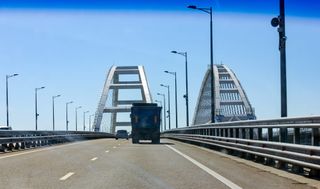
The short version
- Russia says it shot down 1,336 Ukrainian drones overnight, its highest count of the war, as drones hit the Crimean Bridge and southern oil sites.
- The bridge is a key supply route into Crimea, and oil refineries are a frequent target of Ukraine's long-range strikes.
- Damage to the bridge is still unclear, and Trump meets Putin and Xi on Thursday, though U.S. officials say the war won't be the focus.
Documents in this story · 9
- RecordRussian Defense Ministry, Telegram statement on drones intercepted overnight, Nov. 16in Russian · Web pageOpen Archived
- RecordSergei Aksyonov, Moscow-installed head of Crimea, Telegram post on the bridge attack, Nov. 16in Russian · Web pageOpen Archived
- RecordSergei Aksyonov, Telegram post on traffic resuming, Nov. 16in Russian · Web pageOpen Archived
- RecordSergei Sobyanin, Moscow mayor, Telegram post on drones flying toward Moscow, Nov. 16in Russian · Web pageOpen Archived
- RecordGeneral Staff of Ukraine's Armed Forces, Telegram statement on the Azov oil depot, Nov. 16in Ukrainian · Web pageOpen Archived
- RecordGeneral Staff of Ukraine's Armed Forces, Telegram statement on the Ilsky refinery, Nov. 16in Ukrainian · Web pageOpen Archived
- RecordGeneral Staff of Ukraine's Armed Forces, Telegram statement on Russia's overnight drone attack, Nov. 16in Ukrainian · Web pageOpen Archived
- RecordVolodymyr Zelenskyy, Telegram post on Russian strikes on the power gridt.me · Web page · Nov. 15Open Archived
- RecordVolodymyr Zelenskyy, Telegram post on long-range strikes and the Ramstein meeting, Nov. 16in Ukrainian · Web pageOpen Archived
Ukraine launched the largest drone attack of the war overnight into Monday, by Russia's count, and drones struck the Crimean Bridge and oil sites in southern Russia. Russia's Defense Ministry said its air defenses shot down 1,336 drones.
That is the most Russia has reported downing in one night, above a previous record of 1,254 on Oct. 29. The targets matter as much as the count. The bridge is a key route for military and civilian supplies into Crimea, and Russian oil refineries are a frequent target of Ukraine's long-range strikes. The attack came days after U.S.-brokered talks between the two countries in Abu Dhabi, which Fair Witness covered last week.
How the drone attack hit the Crimean Bridge
The bridge links Russia's Krasnodar region to Crimea, the peninsula Russia seized and annexed in 2014. It carries both cars and trains. A drone struck one of its arches at 5:38 a.m. local time, local channels reported, according to The Guardian, and about 2,000 vehicles were reported stuck on both sides.
Sergei Aksyonov, the Moscow-installed head of Crimea, said in a Telegram post that traffic would be limited until about midday. By late morning ET, he said cars were crossing again one direction at a time, and trains were running. "Minor damage is being assessed. Traffic across the bridge continues," Kremlin spokesman Dmitry Peskov told reporters.
Not everyone agrees on what hit the bridge. Russian pro-war commentators said debris from a drone warhead, not a direct strike, caused the damage. Ukraine's security service and military intelligence did not respond to a BBC request for comment. Ukraine had not said it carried out the strike by Monday morning, Newsweek reported.
Ukraine has hit the bridge before. A truck bomb damaged its road section in 2022, and a sea drone struck it the following year. Monday's was the first attack on it since June 3, 2025, Newsweek reported.
Counting the drones on both sides
Russia's counts cover different stretches of time. The Defense Ministry's 1,336 covers one night, over 16 regions and the Azov and Black seas. Officials cited by the BBC gave a 24-hour count of 2,049 drones and four missiles instead. Moscow's mayor, Sergei Sobyanin, said about 600 drones flew toward the capital region between 5 p.m. Sunday and 8 a.m. Monday, Moscow time. Of those, 191 were downed as they neared the city. These are counts of drones Russia says it destroyed, so they don't show how many got through.
Ukraine faced its own barrage. Russian strikes killed at least seven people there and cut power to about 50,000, the BBC reported. Ukraine's military said Russia sent 158 attack drones overnight, with hits recorded at 19 sites. Kyiv had a record 17 air raid alerts in a single day. Ukrainian President Volodymyr Zelenskyy said Russia launched more than 2,300 drones at Ukraine over the past week and has struck the Dnipro region 131 times since September.
Minor damage is being assessed. Traffic across the bridge continues.
Ukraine's campaign against Russian oil sites
The drones also went after fuel. Falling debris started a fire at Ilsky in the Krasnodar region, home to an oil refinery, and injured six people, including children. In the Rostov region, three people were wounded in the city of Azov, its governor said, according to the AP.
Ukraine's General Staff described more damage than Russian officials did. It said its forces hit an oil depot in Azov, close to the main supply hub for Russia's southern army. In a second statement, it said the Ilsky strike hit three crude-oil processing units, the first stage in turning crude into fuel. It said the damage was still being assessed.
Zelenskyy said Sunday that Ukraine's strikes have disabled more than half of Russia's refining capacity. That can't be checked independently, and industry sources told Reuters last week the cut was about 30%, The Daily Wire reported. Russian President Vladimir Putin said in October that the strikes had cost Russia about 1% of its economic output. On Monday, Zelenskyy said Ukraine's long-range strikes are reaching their targets and that he had approved new operations.
What we don't know yet
The extent of the damage to the Crimean Bridge is still unknown. Russia says the damage is minor, while one report cited by The Guardian said an arch was tilted. No independent assessment had appeared as of 11:30 a.m. ET Monday. Ukraine also hasn't taken responsibility for the bridge strike, and it isn't clear whether it will.
Nor is it clear what the attack did to Russia's fuel supply. Local officials rarely give details, so the extent of damage at Ilsky and Azov is unknown.
The diplomacy is unsettled too. President Donald Trump meets Chinese President Xi Jinping and Putin in Shenzhen, China, on Thursday, as we reported last week. U.S. officials say the war won't be the focus of that meeting.
Sources
Left
2 of 13 left-leaning outlets we track reported this
Center
3 of 9 center outlets we track reported this
Right
2 of 12 right-leaning outlets we track reported this
Primary
- Russian Defense Ministry, Telegram statement on drones intercepted overnight, Nov. 16 (in Russian) · Archived copy
- Sergei Aksyonov, Moscow-installed head of Crimea, Telegram post on the bridge attack, Nov. 16 (in Russian) · Archived copy
- Sergei Aksyonov, Telegram post on traffic resuming, Nov. 16 (in Russian) · Archived copy
- Sergei Sobyanin, Moscow mayor, Telegram post on drones flying toward Moscow, Nov. 16 (in Russian) · Archived copy
- General Staff of Ukraine's Armed Forces, Telegram statement on the Azov oil depot, Nov. 16 (in Ukrainian) · Archived copy
- General Staff of Ukraine's Armed Forces, Telegram statement on the Ilsky refinery, Nov. 16 (in Ukrainian) · Archived copy
- General Staff of Ukraine's Armed Forces, Telegram statement on Russia's overnight drone attack, Nov. 16 (in Ukrainian) · Archived copy
- Volodymyr Zelenskyy, Telegram post on Russian strikes on the power grid, Nov. 15 · Archived copy
- Volodymyr Zelenskyy, Telegram post on long-range strikes and the Ramstein meeting, Nov. 16 (in Ukrainian) · Archived copy
This article was produced by AI under our Editorial Standards. Corrections are reviewed before they go live.
How coverage differs
Free with a Fair Witness account
See how left, center and right covered this story
A free account shows where the coverage agrees and where it splits, what each side played up and played down, and, when one side's outlets missed a story, who missed it.
Nov 16
6:27 AMUpdatedU.S.
U.S. attorney tells Sen. Elizabeth Warren to preserve records over planned Trump probes
A federal prosecutor is citing criminal civil-rights laws against a senator's planned probes, before Democrats take control of Congress in January.
The short version
- A federal prosecutor in Texas told Sen. Elizabeth Warren to preserve records tied to her planned probes of people close to President Trump.
- He cited two criminal civil-rights laws against her planned probes, and the White House backed him.
- Warren has until 6 p.m. ET on Nov. 23 to confirm she has kept the material, and she has not answered in public.
Documents in this story · 6
- Statute18 U.S.C. § 241, Conspiracy against rightsU.S. Code, 2024 edition · PDFOriginal Archived
- PostPost on X with his letter to Sen. WarrenU.S. Attorney Aaron Reitz · Post on X · Nov. 15Open Archived
- ReleaseWarren, Garcia, Blumenthal probe top Trump fundraiser Meredith O'RourkeSen. Elizabeth Warren · Press releaseOpen Archived
- ReleaseBlumenthal demands Trump U.S. attorney preserve recordsSen. Richard Blumenthal · Press release · Nov. 11Open Archived
- Statute18 U.S.C. § 242, Deprivation of rights under color of lawLegal Information Institute · Web pageOpen Archived
- RulingEastland v. United States Servicemen's Fund, 421 U.S. 491 (1975)Legal Information Institute · Web pageOpen Archived
A federal prosecutor in Texas has warned Sen. Elizabeth Warren of "significant legal consequences" unless she preserves her records about planned probes of people close to President Trump. His demand cites two criminal civil-rights laws against investigations she has said she will lead.
Aaron Reitz, the U.S. attorney for the Southern District of Texas, sent the letter Sunday and gave Warren until 6 p.m. ET on Nov. 23 to confirm she has kept the material. Warren, a Massachusetts Democrat, is expected to chair the Senate Banking Committee when Democrats take control of Congress in January.
She is the fourth Democrat warned in less than a week, after Sens. Richard Blumenthal and Elissa Slotkin and Rep. Robert Garcia. Three of the four, including Warren's, came from Reitz, a sitting federal prosecutor. The fourth, to Garcia, came from White House counsel Will Scharf, who said House probes could be criminal, as Fair Witness reported Wednesday.
What Reitz's letter to Warren demands
Reitz posted the letter on X with a short message. "Congressional investigations can't be used to punish Americans for exercising their 1A rights," he wrote, using shorthand for the First Amendment. He called the letter his "first arrow shot."
The letter says Warren appears "eager to wield your future gavel like a tomahawk" against Trump's private associates. It also mentions scalps, war cries and smoke signals. Fox News and NBC News both said those words seemed to mock Warren's past claims of Native American heritage, which Trump has used against her for years.
Reitz tells Warren to keep documents and messages tied to what he calls her intent to weaponize congressional investigations, in violation of 18 U.S.C. §§ 241 and 242. A preservation demand is not a subpoena or a court order, and it charges no one with a crime. The letter does not accuse Warren of breaking any law.
Trump reposted the letter on Truth Social later Sunday, and the White House backed it the same day. Communications director Steven Cheung said on X that Warren's plans were "nothing more than an extension of their political witch-hunt."
What Warren said that drew the warning
Reitz's letter cites Warren's Nov. 8 interview on CBS's "Face the Nation." Asked whether she would focus on new laws or on investigations, Warren said she would do both. To companies that profit by cheating families, she said, "you better get ready for some investigations, serious ones." She named no targets beyond anyone who has been cheating, and she criticized a White House that she said dropped cases against donors to Trump's ballroom.
Reitz also cites a letter that Warren, Garcia and Blumenthal sent last week to Meredith O'Rourke, a top Trump fundraiser. It asks about her role in raising more than $800 million for the ballroom and other Trump projects. It also asks whether donors got favors in return. From that context, Reitz wrote, Warren plans to target private individuals close to the president.
Warren has not answered in public. A spokesperson did not immediately respond to a request for comment from NBC News on Sunday night. Fox News and Newsweek said they had also reached out.
Blumenthal, who got his own letter from Reitz last week, called it baseless. "I will not be intimidated," he wrote back, and he told Reitz to preserve his own office's records about the decision.
What the two laws say, and what the Supreme Court said in 1975
Section 241 makes it a crime for two or more people to conspire to threaten or intimidate anyone using a federal right, with up to 10 years in prison. Section 242 covers a single person acting under color of law, meaning with government power, who willfully denies someone their rights. Reitz's theory is that probing Trump's associates could violate their right to associate with him. In an earlier letter to Slotkin, he said such plans seem to have "no legitimate legislative purpose and may therefore be unlawful."
The Supreme Court has heard a version of that argument before. In 1975, a Senate subcommittee subpoenaed the bank records of a nonprofit group, and the group said the subpoena violated its First Amendment rights. The Court ruled for the senators. It held that the Constitution's Speech or Debate Clause, which shields lawmakers' legislative work, is "an absolute bar to interference" once they act within legitimate legislative activity. That last condition is the one Reitz disputes.
Congressional investigations can't be used to punish Americans for exercising their 1A rights.
Fox News said in its own report that legitimate congressional probes generally get Speech or Debate protection, though how far it reaches depends on the facts. Richard Painter, a White House ethics lawyer under President George W. Bush, went further. He called the letter ridiculous and said Reitz should be impeached.
What we don't know yet
Warren hasn't said whether she will confirm by the Nov. 23 deadline, ignore the letter or push back as Blumenthal did. It's also unknown what Reitz would do if she says no, and whether his office has opened a case on any senator it wrote to.
How far the Justice Department stands behind its prosecutor is unclear, too. Attorney General Todd Blanche said last week the department has no criminal investigations into what incoming lawmakers have said. But he also called Reitz a "great U.S. attorney." The new Congress takes over in January, and its first subpoenas could be the first test of how far the department backs Reitz's letters.
Sources
Left
2 of 13 left-leaning outlets we track reported this
- NBC News: U.S. attorney warns Sen. Elizabeth Warren against investigating Trump associates, Nov. 16
- NBC News: Trump official who warned politicians about speech says he's 'looking at' more Democrats, Nov. 16
- NBC News: DOJ has no 'investigations into words' of Democrats, Todd Blanche says, Nov. 12
- CBS News: Transcript of Sen. Elizabeth Warren on "Face the Nation," Nov. 8
- Politico: Federal prosecutor takes aim at Elizabeth Warren's oversight warnings, Nov. 15 (headline only; text unavailable)
- CBS News: Watchdog accuses top federal prosecutor in Houston of breaking ethics rules by threatening Senate Democrats, Nov. 16 (for the Update)
Center
4 of 9 center outlets we track reported this
- Newsweek: U.S. attorney warns Elizabeth Warren over probes of Trump allies, Nov. 15
- The Hill: Texas prosecutor accuses Warren of targeting Trump associates with investigations, Nov. 15
- UPI: Trump admin. warns 4th Democrat over potential oversight probes, Nov. 15
- Reuters: US Justice Department warns Senator Warren over records preservation, Nov. 15
- UPI: Garcia latest Democrat to receive DOJ warning over oversight probes, Nov. 16 (for the Update)
Right
3 of 12 right-leaning outlets we track reported this
- The New York Sun: 'A Bad Idea': Cornyn Criticizes Texas Prosecutor's Legal Threats to Congressional Democrats, Nov. 17
- Fox News: Federal prosecutor warns Sen Warren of 'legal consequences' if records aren't preserved in Trump-linked probes, Nov. 16
- The New York Sun: Accusing Warren of being on 'warpath' with 'tomahawk,' prosecutor demands preservation of records related to Trump probes, Nov. 15
- The Washington Times: Federal prosecutor threatens to investigate Warren over plans to look into companies close to Trump, Nov. 15 (headline only; text unavailable)
Primary
- U.S. Attorney Aaron Reitz: post on X with his letter to Sen. Warren, Nov. 15 · Archived copy
- Sen. Elizabeth Warren: Warren, Garcia, Blumenthal probe top Trump fundraiser Meredith O'Rourke · Archived copy
- Sen. Richard Blumenthal: Blumenthal demands Trump U.S. attorney preserve records, Nov. 11 · Archived copy
- 18 U.S.C. § 241, Conspiracy against rights (U.S. Code, 2024 edition, GovInfo PDF) · Archived copy
- 18 U.S.C. § 242, Deprivation of rights under color of law (Legal Information Institute) · Archived copy
- Eastland v. United States Servicemen's Fund, 421 U.S. 491 (1975) (Legal Information Institute) · Archived copy
This article was produced by AI under our Editorial Standards. Corrections are reviewed before they go live.
How coverage differs
Free with a Fair Witness account
See how left, center and right covered this story
A free account shows where the coverage agrees and where it splits, what each side played up and played down, and, when one side's outlets missed a story, who missed it.
Nov 15
3:23 PMUpdatedWorld
Iran says it targeted a U.S. radar in Bahrain; Bahrain says it destroyed the drones
Sunday's drones were Iran's second attack on Bahrain in three days, and Washington's answer could decide whether regular attacks there return.
The short version
- Iran's Revolutionary Guard said it sent six drones at a U.S. radar in Bahrain on Sunday, and Bahrain said it destroyed them.
- It was Iran's second attack on Bahrain in three days after a lull since September, and followed Trump's remark that the U.S. needs no deal.
- Bahrain has asked the U.N. Security Council to act, and the U.S. military had not commented on Sunday's attack by early afternoon.
Iran attacked Bahrain on Sunday for the second time in three days, and its Revolutionary Guard said six drones targeted a U.S. air-defense radar at Riffa Air Base. Bahrain's military said its air defenses destroyed them before they reached their targets.
The two attacks were Iran's first on Bahrain since September. Bahrain hosts major U.S. bases, including one that was home to the U.S. Fifth Fleet, the Navy force that patrols the Gulf. The attacks come days after President Donald Trump said the U.S. no longer needs a deal with Iran, as Fair Witness reported Thursday. For people in Bahrain, a war that had gone quiet there has returned to their skies.
What Iran and Bahrain said about the drone attack
The Revolutionary Guard, Iran's elite military force, said the attack answered "hostile US actions," in a statement carried by Fars, an Iranian state-affiliated news agency. The statement, also posted by Iran's state broadcaster, said six of its drones targeted the radar at the base.
Bahrain's account is different. The Bahrain Defense Force said its systems intercepted and destroyed the attacks "before they could achieve their objectives." Sirens sounded across Bahrain, and the interior ministry told residents to go to the nearest safe location. No outlet we read reported damage or injuries.
Bahrain's foreign ministry held Iran fully responsible. "The kingdom also rejects the transformation of its territory into an arena for settling scores," it said in a statement. Saudi Arabia, Qatar, Jordan and Egypt condemned the attack and backed Bahrain.
Iran's foreign ministry spokesman, Esmaeil Baghaei, said Iran would keep answering military aggression by the U.S. or any other country. He accused Gulf states of opening their airspace, territory and waters to the forces that attacked Iran. He also rejected their call for compensation for Iranian strikes on their soil. "What about Iran's inherent and legal right to defend itself?" he asked at a news conference on Sunday.
We found no public response from U.S. Central Command, which runs American forces in the Middle East, as of 2:30 p.m. ET Sunday. CNN said it had asked Central Command for comment. On Friday, the command said U.S. forces shot down two Iranian drones headed for Bahrain. It said there were no injuries or damage, and it denied Iran's claim that a U.S. radar had been hit.
How Iran's attacks on Bahrain resumed
The war began in February with joint U.S. and Israeli attacks on Iran. Iran answered with strikes on Gulf states, and it targeted Bahrain again and again until September. A preliminary deal in June to end the war fell apart within weeks, after Iran resumed attacks on shipping and the U.S. restored its naval blockade of Iran's ports.
The kingdom also rejects the transformation of its territory into an arena for settling scores.
The quiet frayed this month with a run of smaller clashes. U.S. warplanes struck an anti-aircraft site on Qeshm Island in the Strait of Hormuz, the narrow sea lane for much of the world's oil. U.S. officials called those strikes limited and defensive, a reply to Iran firing on a U.S. aircraft. Days before Thursday's no-deal remarks, Trump had called the war effectively over after meeting Qatar's prime minister.
Iran is under pressure, too. It has exported almost none of its own oil for more than two months, CNN reported. Over the same weeks, Gulf neighbors' oil exports have climbed back toward prewar levels, which cuts into Iran's leverage.
The U.N. demand Bahrain is citing
Bahrain's foreign ministry called the attack a violation of Security Council Resolution 2817. It asked the council to condemn it and to make Iran comply, Arab Times, a Kuwaiti daily, reported.
Bahrain had introduced that resolution for the Gulf states in March, and it passed with 13 votes in favor as Russia and China abstained. Read directly, the resolution "Demands the immediate cessation of all attacks by the Islamic Republic of Iran" on Bahrain, Kuwait, Oman, Qatar, Saudi Arabia, the United Arab Emirates and Jordan. It also affirms their right to defend themselves under Article 51 of the U.N. Charter. Baghaei cited the same article on Sunday to call Iran's strikes defensive, Al Jazeera, which is funded by Qatar's government, reported. Iran kept attacking Bahrain for six months after the vote, so Bahrain's appeal tests whether the demand carries any weight.
What we don't know yet
Iran and Bahrain give opposite accounts of whether any drone reached the base. Iran says it struck the base, Bahrain says its defenses stopped the attacks, and no independent account had appeared by Sunday afternoon. The same is true of a Guard claim that a mine sank an oil supertanker in the strait, which no one has confirmed.
The U.S. reply is the larger unknown. Central Command hasn't commented on Sunday's attack, and it isn't known whether the U.S. will strike back. That answer could decide whether the attacks stop at two or return to the regular strikes Bahrain saw before September.
We also don't know whether the Security Council will take up Bahrain's request, or when. Russia and China, which abstained in March, can each veto a new resolution.
Sources
Left
3 of 13 left-leaning outlets we track reported this
Center
5 of 9 center outlets we track reported this
Right
2 of 12 right-leaning outlets we track reported this
Other reporting
- Arab Times (Kuwaiti daily): Bahrain condemns Iranian attacks, reserves right to self-defense under UN Charter, Nov. 15
- Al Jazeera (funded by the government of Qatar): Bahrain accuses Iran of attacking its territory to "settle" score with US, Nov. 15
- Arab News Pakistan (an edition of the Saudi-owned Arab News): UN Security Council adopts resolution demanding end to Iran strikes on Gulf states, March 11
Primary
- U.N. Security Council Resolution 2817 (2026), adopted March 11, 2026 (PDF) · Archived copy
- Bahrain Defense Force statement on social media, Nov. 15, as quoted by the BBC and The Washington Times above
- Bahrain foreign ministry statement, Nov. 15, as quoted by The Guardian and Arab Times above
- Islamic Revolutionary Guard Corps statement, Nov. 15, carried by Fars and Iran's state broadcaster (both Iranian state-run or state-affiliated), as quoted by The Hill and Just The News above
- Esmaeil Baghaei, Iranian foreign ministry news conference, Nov. 15, as quoted by CNN and The Hill above
- U.S. Central Command statement on the Nov. 13 drones, as reported by The Washington Times and the BBC above
This article was produced by AI under our Editorial Standards. Corrections are reviewed before they go live.
How coverage differs
Free with a Fair Witness account
See how left, center and right covered this story
A free account shows where the coverage agrees and where it splits, what each side played up and played down, and, when one side's outlets missed a story, who missed it.