


Supreme Court rejects Trump appeal to cut DEI-related University of California grants
The unexplained order keeps the lower-court rulings in force, so the cut grants stay restored while the researchers' free-speech lawsuit goes on.

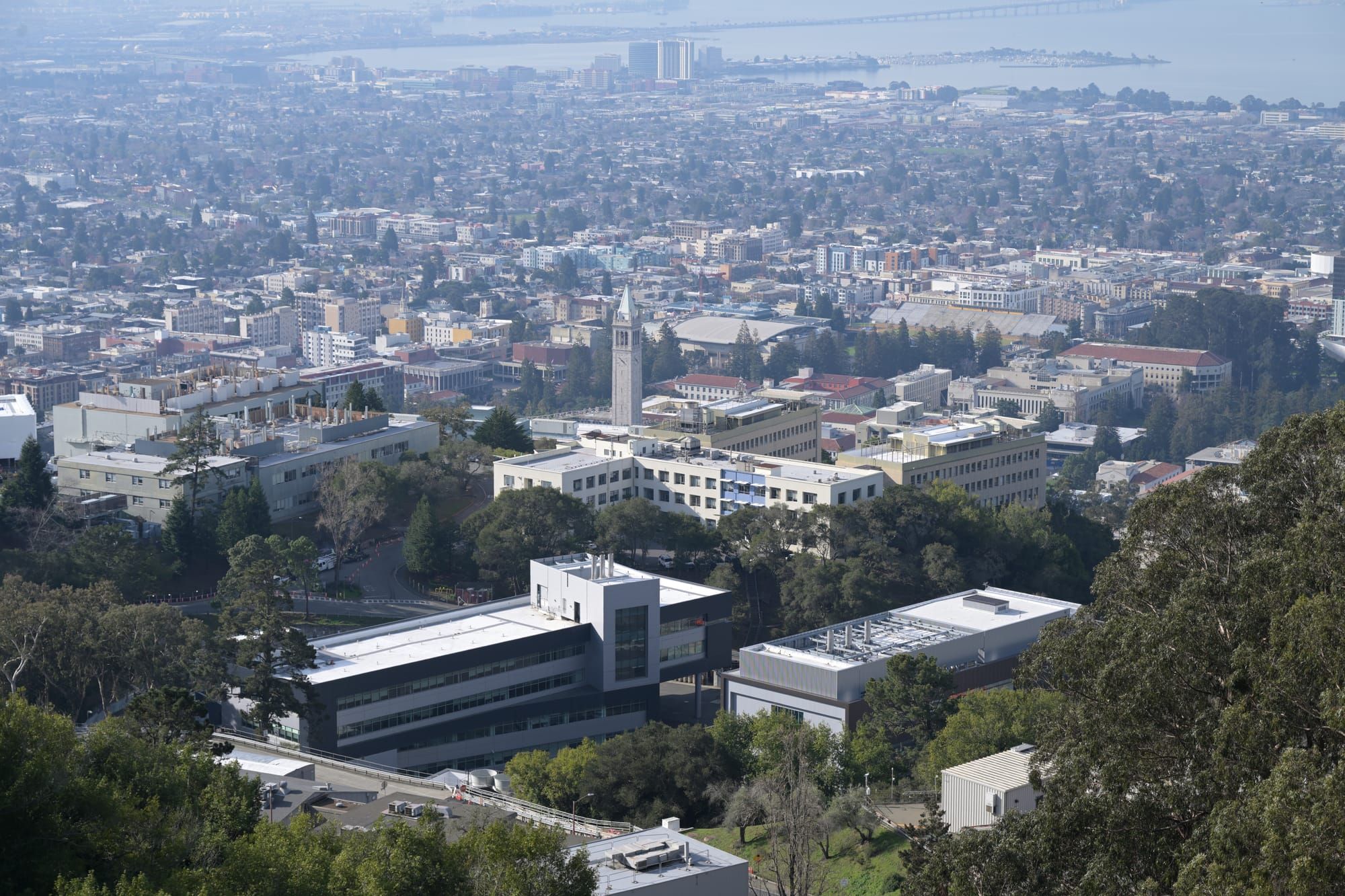
The UC Berkeley campus, where five of the six researchers who first sued over the grant cuts work. Photo, January 2026: 4300streetcar / Wikimedia Commons / CC BY 4.0
Who covered this
On this page · sections
The short version
- The Supreme Court declined Monday to hear the Trump administration's appeal over DEI-related grant cuts to University of California researchers.
- Lower-court rulings that the cuts likely violated the First Amendment stand, so about $59 million in grants stays restored while the case goes on.
- Next, Judge Rita Lin in San Francisco must rule on the researchers' request to decide the case in their favor.
Documents in this story · 7
- RulingSupreme Court order list, Nov. 16, 2026No. 26-210 under "Certiorari denied" · PDFOriginal Archived
- RulingSupreme Court docket No. 26-210, Trump v. Thakursupremecourt.gov · Web pageOpen Archived
- RulingPetition for a writ of certiorari, U.S. Solicitor General, Aug. 18, 2026with the 9th Circuit opinion and district court order in its appendix · PDFOriginal Archived
- RulingBrief in opposition, the researcherssupremecourt.gov · PDF · Oct. 19, 2026Original Archived
- RulingReply brief for the governmentsupremecourt.gov · PDF · Oct. 27, 2026Original Archived
- RulingRules of the Supreme Court of the United StatesRule 10 · PDFOriginal Archived
- ReleaseRelease from the researchers' lawyers at Farella Braun + Martel on their July 2026 motions, via Chambers and Partnerschambers.com · Press releaseOpen Archived
The Supreme Court on Monday rejected the Trump administration's appeal over cuts to DEI-related research grants at the University of California, leaving in place rulings that the cuts likely violated the First Amendment.
The order gave no reasons, and no justice noted a dissent. It means the cut grants must stay restored while the lawsuit goes on, the plaintiffs' lawyer told Reuters. The government's petition put what was left on those National Science Foundation and National Endowment for the Humanities grants at about $59 million. The order does not settle the question at the center of the case. Can the government cut off research it has already funded because it rejects the views the work promotes?
Why it matters to you
This order leaves standing an appeals court ruling that matters to anyone with a federal research grant. It says an agency that ends a grant over the views the work expresses is likely breaking the First Amendment. The administration had warned the justices that letting that ruling stand would tie the hands of every future administration that wants to fund work matching its policies.
For researchers across the University of California system, the effect is direct. The class in this case covers UC researchers whose grants were ended under two of President Donald Trump's DEI orders, and the grants still at issue run as late as November 2029. Their money keeps flowing during the case.
For taxpayers and voters, the fight is over who decides which research the public pays for, and whether that can change midway through a project.
What the Supreme Court's order did and didn't decide
The case, No. 26-210, is one line on Monday's order list, among nearly 100 petitions under the heading "Certiorari denied." Certiorari is the court's word for agreeing to review a lower court's decision. Under the court's own Rule 10, that review "is not a matter of right," and it takes four justices to agree to hear a case.
So the court did not say the lower courts were right. It said nothing at all. The same list shows that silence was a choice the justices could have broken. In a separate case over California's implicit-bias training rule for doctors, Justices Clarence Thomas, Samuel Alito and Neil Gorsuch said they would have taken it up, and Thomas wrote a dissent. No justice wrote or noted anything in the grants case.
What survives is an early-stage order, called a preliminary injunction, which keeps things as they are while a case is tried. The 9th U.S. Circuit Court of Appeals upheld it on May 26. The court held that the government had not just chosen which programs to fund. It had instead "terminated individual grants in existing programs based on the perceived viewpoints of individual speakers," the opinion said.
Grants cut by form letter with no reason given are a separate fight. The appeals court said researchers must take those claims, and any bid to recover lost money, to the Court of Federal Claims, which hears money disputes with the government. That challenge is still going.
How the DEI grant cuts reached the Supreme Court
The cuts began with Trump's first week back in office. In January 2025 he signed an order telling agencies to end equity-related grants as far as the law allows, the government's petition says. Grant holders began getting termination letters in April 2025. The researchers' lawyers say the agencies picked grants by searching for words such as "diversity" and "climate change."
Five of the six researchers who first sued work at UC Berkeley. They include a history professor, an environmental researcher and Robert Hirst, who has edited the Mark Twain Project since 1980. The humanities endowment had funded that project without a break since 1967, the district judge noted, until the letters arrived.
In June 2025, U.S. District Judge Rita Lin in San Francisco found the grants were likely ended because of the views the research seemed to express. She ordered them restored and let the case go forward for UC researchers as a group. The Environmental Protection Agency later settled, which left only the science foundation's and the humanities endowment's grants before the justices. The government filed its appeal on Aug. 18, and it was set for the justices' private conference on Friday.
That history also explains two numbers you may see. The researchers' lawyers say the government cut more than $324 million in grants to the system in the first months of 2025, across many agencies. The roughly $59 million is the part this appeal covered: what was left on the science and humanities grants when they were cut.
terminated individual grants in existing programs based on the perceived viewpoints of individual speakers
The justices have not always left grant cuts blocked. In August 2025, they let the administration go ahead with cuts to National Institutes of Health grants, but that ruling rested on procedural grounds, not the First Amendment. Monday's order came three days after the justices agreed to hear Trump's asylum ban case.
What we don't know yet
What happens now to a second order in the same lawsuit, covering UC grants from three more departments, is not yet clear. Judge Lin also blocked cuts to grants from the Transportation, Defense, and Health and Human Services departments, and the government's appeal of that order was on hold while this one was pending.
The free-speech question could also return to the justices by another road. A federal judge in New York reached the same conclusion about humanities grants in May, and appeals are pending in the 2nd Circuit. A split between appeals courts is one of the main reasons the Supreme Court takes a case under Rule 10, and the researchers argued there was no such split yet.
The final ruling in the UC case is still ahead. The researchers asked Judge Lin to decide the case in their favor in July, according to a release from their lawyers, and we found no hearing date. Whether the White House will respond to the order is also open.
The case each side makes
The Trump administration
Solicitor General D. John Sauer, the government's lawyer at the Supreme Court, argues the government has broad discretion over how tax money is spent. He points to two Supreme Court cases, Rust v. Sullivan and National Endowment for the Arts v. Finley, which let the government fund some messages and not others. These grants are highly competitive, his petition says: the humanities endowment funds about 900 of the 5,700 applications it gets each year. Choosing among them means judging what the work promotes.
The administration also says new presidents always bring new priorities. President Joe Biden favored grants that advanced equity, so Trump may lawfully do the opposite, the Justice Department told the court. "The First Amendment is not a ratchet," it wrote in its final brief. Letting the ruling stand, it warned, would send taxpayer dollars to projects promoting DEI. After Monday's order, a department spokesperson told Axios it will keep fighting the lower-court order. We found no public response from the White House as of noon ET Tuesday.
The researchers
Erwin Chemerinsky, dean of the UC Berkeley School of Law and the researchers' lead lawyer at the court, said he was "obviously delighted" by the order. His side agrees Congress may set funding priorities. What it may not do, they argue, is let a president cancel already approved grants because of the views the research seems to hold. They cite the Finley case too, which says that even when it hands out money, the government may not aim to suppress dangerous ideas.
They also stress the cost to people. "Once funds are cut off research must stop," their brief said, warning of closed labs, laid-off staff and graduate students forced to start over. The harm turns into a speech harm, they told the court, when researchers can't publish their work. And no other court had disagreed, their brief said, so the justices had no reason to step in yet.
Sources
Left
6 of 13 left-leaning outlets we track reported this
- NBC News: Supreme Court rejects Trump over academic funding cuts related to DEI, Nov. 16
- Axios: SCOTUS gives DEI a boost after national assault, Nov. 16
- CBS News: Supreme Court rejects case on Trump's bid to cut research grants related to DEI, Nov. 16
- USA Today: Supreme Court won't revive Trump's cuts to DEI research grants, Nov. 16
Center
3 of 9 center outlets we track reported this
Right
3 of 12 right-leaning outlets we track reported this
- The Washington Times: Supreme Court rejects Trump's attempt to block grants for DEI, refuses 'Gays Against Groomers' case, Nov. 16
- Just The News: SCOTUS rejects Trump admin's appeal on ending grants based on DEI, Nov. 16
- Just The News: SCOTUS rejects Trump's effort to cancel academic funding for projects with DEI-aligned policies, Nov. 16
Primary
- Supreme Court order list, Nov. 16, 2026 (No. 26-210 under "Certiorari denied") · Archived copy
- Supreme Court docket No. 26-210, Trump v. Thakur · Archived copy
- Petition for a writ of certiorari, U.S. Solicitor General, Aug. 18, 2026 (with the 9th Circuit opinion and district court order in its appendix) · Archived copy
- Brief in opposition, the researchers, Oct. 19, 2026 · Archived copy
- Reply brief for the government, Oct. 27, 2026 · Archived copy
- Rules of the Supreme Court of the United States (Rule 10) · Archived copy
- Release from the researchers' lawyers at Farella Braun + Martel on their July 2026 motions, via Chambers and Partners · Archived copy
This article was produced by AI under our Editorial Standards. Corrections are reviewed before they go live.
How coverage differs
Free with a Fair Witness account
See how left, center and right covered this story
A free account shows where the coverage agrees and where it splits, what each side played up and played down, and, when one side's outlets missed a story, who missed it.
Keep reading
The newest stories in U.S., then the rest of the site.
Newest · U.S.
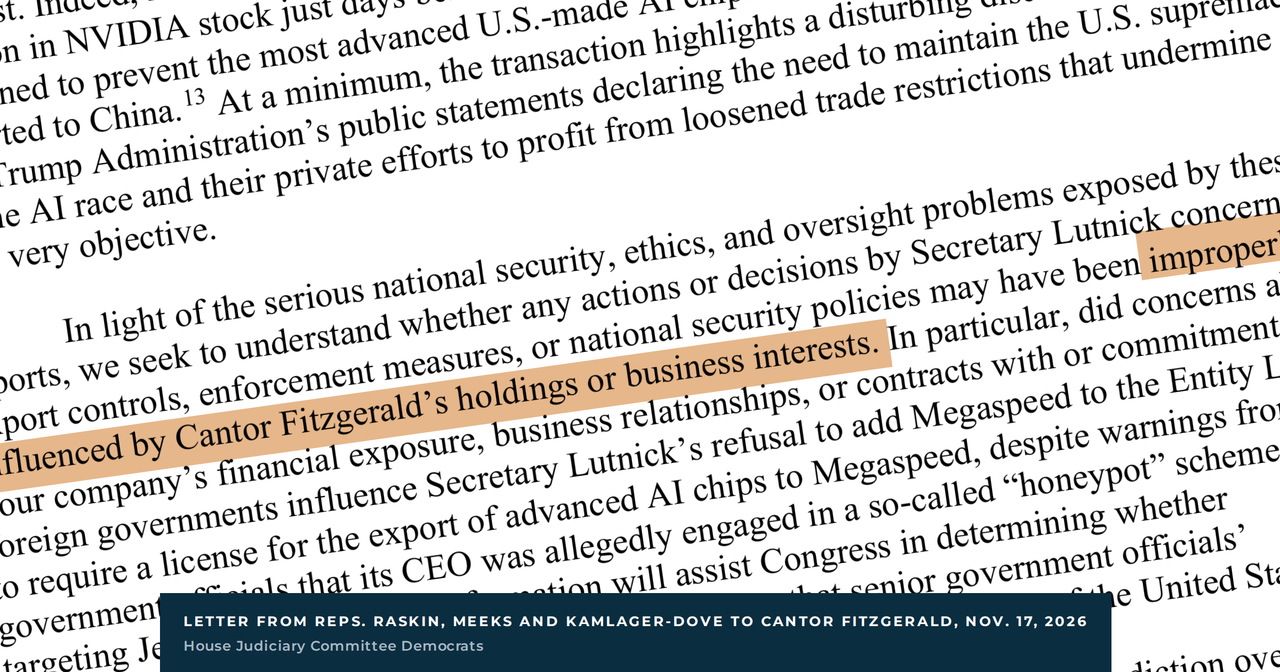
House Democrats seek Cantor Fitzgerald's Nvidia records in Lutnick probe
The letter shows how the House's incoming Democratic chairs plan to test whether Lutnick's handling of Megaspeed was shaped by his family firm's Nvidia stake.
Latest
New stories and updates, newest first. Times are Eastern.
-
Nov 18
2:55 PMUpdated World
Part of Crimean Bridge collapses after Ukrainian strike as Russia hits Kyiv's bridges
Each side hit bridges it calls military routes, two days before Trump meets Putin and Xi in China.
-
Nov 18
11:14 AMUpdated World
Trump will meet Xi and Putin together Thursday to discuss nuclear arms, White House says
No treaty has capped the world's two largest nuclear arsenals since February, and Trump wants China in whatever replaces it.
-
Nov 18
11:14 AMUpdated U.S.
NSA's classified network goes down; White House says no sign of a cyberattack
The intelligence agency's internal system for sharing secrets failed in a week of U.S. tech outages, and Democrats want a briefing.
-
Nov 18
11:14 AMUpdated Technology
Apple outage: company says an internal update hit iCloud, Apple Pay and App Store
Many services were back by afternoon, but Apple's status page for app makers still listed key tools as down Tuesday evening.
-
Nov 18
9:15 AMNew Culture
Pope Leo says no to married priests for now, details his lung cancer surgery
His answer keeps on hold a 2019 proposal from Amazon bishops to make married deacons priests where communities wait years for one.
-
Nov 18
2:16 PMUpdated U.S.
Mullin defends flying government plane to LSU-Texas game a day after FAA ground stop
His department says he paid his way, but federal rules can set that at a coach fare, and no one has said what he paid.
-
Nov 18
2:15 PMUpdated World
Iran fires on U.S. air base in Kuwait and at Bahrain after U.S. strike on Qeshm
Iran's first attack on Kuwait in two months widens a weeklong exchange of fire, and Washington has not said how it will answer.
-
Nov 18
12:41 PMNew World
Britain hands Army officer accused of spying for Russia to U.S. military
The handover moves any prosecution to the United States, where officials have not said whether a military or civilian court would hear it.
Edge of Frame · Right
-
Nov 18
12:30 PMTop story U.S.
Garcia tells Vance, Trump's sons and others to preserve records for House probes
The letters map what Democrats plan to investigate once they take the House in January and gain the power to subpoena.
-
Nov 18
12:25 PMTop story U.S.
House Democrats nominate Hakeem Jeffries for speaker, 251-11, ahead of Jan. 3 vote
Eleven Democrats voted no in a count he asked for. His party's projected majority lets him lose almost 40 votes and still reach 218.
-
Nov 18
11:53 AMUpdated World
US Army soldier arrested in UK on suspicion of spying for Russia
The soldier, who has not been named or charged, was assigned to a NATO headquarters built to respond quickly to crises.
-
Nov 18
11:40 AMUpdated World
U.S. strikes Iran's Qeshm Island after third Iranian attack on Bahrain, officials say
It is the U.S. reply to Iranian attacks that ended a two-month lull, and Iran's next move will show whether the exchange keeps going.
-
Nov 18
11:39 AMUpdated U.S.
White House counsel warns Oversight Democrats their probes could be criminal
The letter escalates a fight over how far Congress can dig into the Trump administration once Democrats take over in January.
The Fair Witness Daily
Get each morning's Spin Meter in your inbox
The Daily leads with the Spin Meter, then the day's explainers. A free account also unlocks every Spin Meter on the site.
Free. Unsubscribe anytime. Already a member? Sign in