


Supreme Court agrees to decide whether Trump's asylum ban at the southern border is legal
The justices' answer, expected by the end of June, will test how far a president can go around procedures Congress wrote into immigration law.

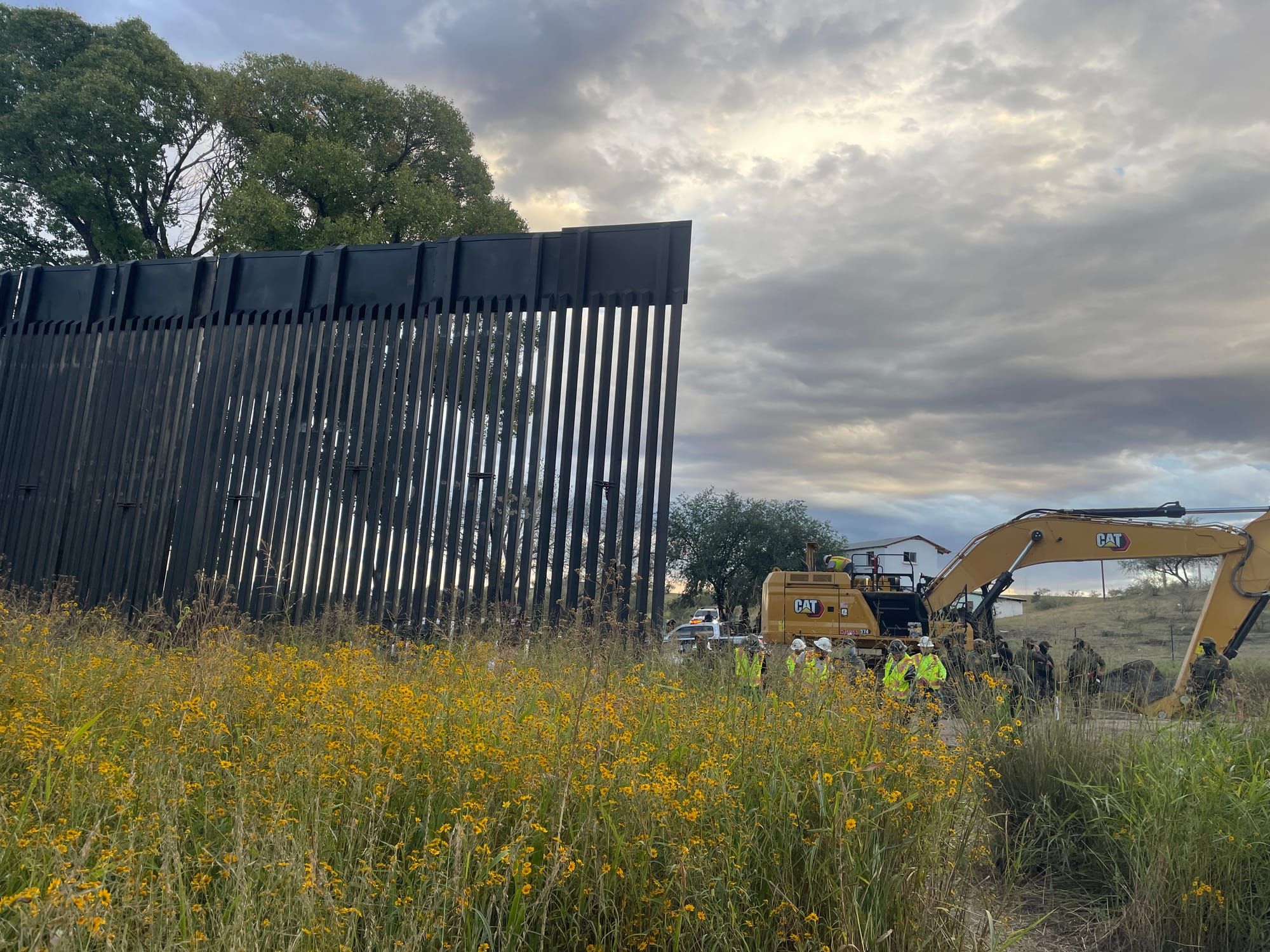
New border wall in the San Rafael Valley, Arizona, a stretch between official crossings of the kind the asylum ban covers. Photo, October 2026: Sarahmirk / Wikimedia Commons / CC BY-SA 4.0
Who covered this
On this page · sections
The short version
- The Supreme Court agreed Friday to decide whether President Trump's ban on asylum for people who cross the southern border between official ports is legal.
- Lower courts found the ban illegal, and the case tests how far a president can override procedures Congress set in immigration law.
- The ban stays in force while the justices decide, and a ruling is expected by the end of June.
Documents in this story · 5
- RulingSupreme Court docket No. 26-239, Mullin v. Refugee and Immigrant Center for Education and Legal Servicessupremecourt.gov · Web pageOpen Archived
- RulingPetition for a writ of certiorari, U.S. Solicitor Generalsupremecourt.gov · PDF · Aug. 24, 2026Original Archived
- RulingBrief in opposition, the challengerssupremecourt.gov · PDF · Sept. 23, 2026Original Archived
- RecordProclamation 10888, Guaranteeing the States Protection Against Invasion, Federal Register, Jan. 29, 2025GovInfo copy · Web pageOpen Archived
- Statute8 U.S.C. 1158, the asylum statuteCornell Legal Information Institute · Web pageOpen Archived
The Supreme Court agreed Friday to decide whether President Donald Trump's asylum ban at the southern border is legal, taking up the administration's appeal after two lower courts ruled against it.
The ban has been in force since Trump's first day back in office, and it stays in force while the justices decide. Their ruling, expected by the end of June, will answer a question that reaches past the border. Can a president set aside a process Congress wrote into law by declaring an emergency? The administration calls the policy one of its most effective border tools. The challengers say it erases protections Congress gave people fleeing persecution.
Why it matters to you
If you have fled danger, or work with people who have, this case decides whether crossing between official ports still lets a person ask for protection. Federal law says anyone who arrives in the United States may apply for asylum, "whether or not at a designated port of arrival" (8 U.S.C. 1158). Since January 2025, immigration officers have used the president's order to remove people who cross illegally without letting them apply.
The case also matters if you care how power is split in Washington, whatever you think about immigration. The justices will decide how far a president can go, on his own, to override rules Congress set. They will also decide whether lower courts may block a policy like this for everyone it covers at once, or only for the people who sue. That second answer could shape future fights over any president's immigration orders.
The ban is still enforced at the border today because the appeals court put its own decision on hold while the Supreme Court reviews it.
What the justices will decide about the asylum ban
The court's order was one line. The justices granted the government's petition "limited to Questions 1 and 2" (Supreme Court docket), out of the three it asked them to take. That choice tells you what the case will and won't be about.
The first question is the big one: whether the order and the rules that carry it out are lawful, as the government's petition puts it. The second is about remedy. A 1996 law bars lower courts from issuing orders that block how the law's removal rules work. The government says that rule forbids the trial judge's order, because it covers a whole class: a group of people joined in one lawsuit, here everyone the ban applies to.
The challengers answer that the 1996 rule doesn't reach this case, because the order rests on other parts of the law. The appeals court agreed. All three of its judges also said the rule doesn't touch the part of the ruling that threw out the government's guidance, according to the challengers' brief. So even a government win on remedy may not settle what happens at the border.
The question the court left out matters too. The government had also argued that the class is too broad, because it includes people not yet in the country who might cross later (petition). By turning that down, the justices kept the case on the policy and the remedy, not on who belongs in the lawsuit.
limited to Questions 1 and 2
How Trump's asylum order reached the Supreme Court
Trump signed the proclamation on Jan. 20, 2025, declaring that "an invasion is ongoing at the southern border" (Proclamation 10888). It suspended the entry of people crossing between ports of entry. It also barred them from the parts of immigration law, asylum among them, that would let them stay. It lasts until the president says the invasion has ended.
Three immigrant-aid groups and 13 people sued in February 2025. The groups are the Refugee and Immigrant Center for Education and Legal Services, Las Americas Immigrant Advocacy Center and the Florence Immigrant & Refugee Rights Project, with American Civil Liberties Union lawyers representing them. In July 2025, U.S. District Judge Randolph Moss, an Obama appointee, ruled that neither the Constitution nor immigration law let the president replace the procedures Congress set.
A divided panel of the U.S. Court of Appeals for the D.C. Circuit upheld that ruling on April 24, 2026. Judges Cornelia Pillard and J. Michelle Childs formed the majority. Judge Justin Walker dissented in part, writing that the president could deny asylum across the board and treat the applications as futile (petition). The full court declined to rehear the case on July 23, and the government appealed on Aug. 24.
The case joins a run of border disputes at the court. In June, the justices backed the government's power to turn away asylum seekers at official crossings that officials judge too crowded. Trump's order also reaches further than the asylum limits President Joe Biden set, Reuters reported. The court will hear a fight over deportations to third countries on Dec. 9, and another over holding immigrants without bond hearings.
What we don't know yet
The court hasn't set a date for arguments. The docket showed none as of 6 a.m. ET Saturday, and Reuters reported that arguments are expected in the coming months. Until the court schedules them, the exact timing of a ruling before the end of June is open.
It is also unclear how the two questions will fit together. The justices could rule on the policy, on the remedy or on both, and each answer could reach different people at the border. A split answer could leave the ban unlawful on paper but limit who can get a court order against it.
The order gave no reason for leaving out the class question, and the statements from the two sides that we found don't say how that changes their cases. The government's next brief will show that, and so will what the justices ask in the courtroom.
The case each side makes
The Trump administration
Solicitor General D. John Sauer, the government's top lawyer at the Supreme Court, told the justices the policy "rests on a commonsense understanding" of the president's power to keep noncitizens out (petition). He points to a law that lets a president suspend the entry of anyone whose entry would harm the country's interests. Asylum is a benefit the government may grant or refuse, he argues. So the president may decide in advance to deny these claims, and need not accept applications that are bound to fail.
His practical case is the border itself. Sauer told the court that border encounters have fallen 93% since the proclamation, to the lowest levels since the 1960s. He called the policy Trump's "main tool" for stopping illegal crossings, The Hill reported. Letting the lower-court ruling take effect, he said, would leave the border open to drug and weapons smuggling and let cartels regain control. Iowa and 21 other states filed a brief backing the government.
The challengers
Lee Gelernt of the ACLU, the challengers' lead lawyer, argues the law is plain. Anyone who arrives may apply for asylum, and Congress listed the exceptions. Any new limits must come through written rules that fit the law, the challengers' brief says. The president, they wrote, may not "invent by fiat a new removal system." They add that past administrations read the law their way for decades, from a 1984 Justice Department opinion through Trump's first term.
They also dispute the government's account of the border. By January 2025, before the proclamation took effect, border apprehensions were already down more than 90% from their peak, the brief says, and any new tools the government wants should come from Congress. Gelernt said in a statement that the president can't override the protections Congress gave people fleeing danger. "We look forward to making our case before the Supreme Court," he said.
Sources
Left
6 of 13 left-leaning outlets we track reported this
- NBC News: Supreme Court to rule on Trump's asylum ban, Nov. 13
- CBS News: Supreme Court takes up case over Trump effort to suspend asylum access at southern border, Nov. 13
- Associated Press: Supreme Court will consider Trump's executive order suspending asylum access at the southern border, Nov. 13
- The Guardian (AP copy): US supreme court agrees to consider Trump's ban on asylum at US-Mexico border, Nov. 13
- USA Today: Supreme Court to weigh in on Trump's asylum ban, one of his top initiatives, Nov. 13
Center
3 of 9 center outlets we track reported this
Right
4 of 12 right-leaning outlets we track reported this
Primary
- Supreme Court docket No. 26-239, Mullin v. Refugee and Immigrant Center for Education and Legal Services · Archived copy
- Petition for a writ of certiorari, U.S. Solicitor General, Aug. 24, 2026 · Archived copy
- Brief in opposition, the challengers, Sept. 23, 2026 · Archived copy
- Proclamation 10888, Guaranteeing the States Protection Against Invasion, Federal Register, Jan. 29, 2025 (GovInfo copy) · Archived copy
- 8 U.S.C. 1158, the asylum statute (Cornell Legal Information Institute) · Archived copy
This article was produced by AI under our Editorial Standards. Corrections are reviewed before they go live.
How coverage differs
Free with a Fair Witness account
See how left, center and right covered this story
A free account shows where the coverage agrees and where it splits, what each side played up and played down, and, when one side's outlets missed a story, who missed it.
Keep reading
The newest stories in U.S., then the rest of the site.
Newest · U.S.
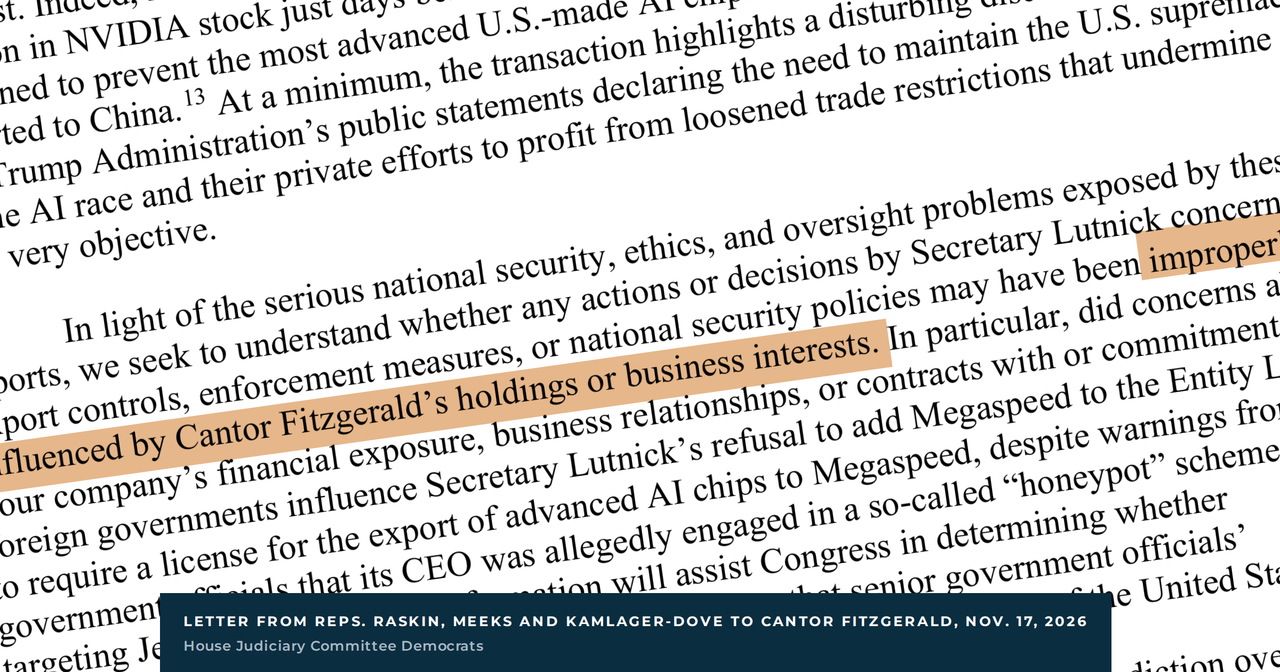
House Democrats seek Cantor Fitzgerald's Nvidia records in Lutnick probe
The letter shows how the House's incoming Democratic chairs plan to test whether Lutnick's handling of Megaspeed was shaped by his family firm's Nvidia stake.
Latest
New stories and updates, newest first. Times are Eastern.
-
Nov 18
3:08 PMTop story U.S.
House Democrats seek Cantor Fitzgerald's Nvidia records in Lutnick probe
The letter shows how the House's incoming Democratic chairs plan to test whether Lutnick's handling of Megaspeed was shaped by his family firm's Nvidia stake.
-
Nov 18
11:40 AMUpdated World
U.S. strikes Iran's Qeshm Island after third Iranian attack on Bahrain, officials say
It is the U.S. reply to Iranian attacks that ended a two-month lull, and Iran's next move will show whether the exchange keeps going.
-
Nov 18
11:39 AMUpdated U.S.
White House counsel warns Oversight Democrats their probes could be criminal
The letter escalates a fight over how far Congress can dig into the Trump administration once Democrats take over in January.
-
Nov 18
11:14 AMUpdated World
Trump will meet Xi and Putin together Thursday to discuss nuclear arms, White House says
No treaty has capped the world's two largest nuclear arsenals since February, and Trump wants China in whatever replaces it.
-
Nov 18
11:14 AMUpdated U.S.
NSA's classified network goes down; White House says no sign of a cyberattack
The intelligence agency's internal system for sharing secrets failed in a week of U.S. tech outages, and Democrats want a briefing.
-
Nov 18
2:55 PMUpdated World
Part of Crimean Bridge collapses after Ukrainian strike as Russia hits Kyiv's bridges
Each side hit bridges it calls military routes, two days before Trump meets Putin and Xi in China.
-
Nov 18
2:37 PMUpdated U.S.
Bessent blames Lutnick's Commerce Department for not blacklisting Megaspeed
The Cabinet split over a chip buyer tied to the Nvidia scandal is a fight over how well the U.S. keeps advanced chips from China.
-
Nov 18
2:16 PMUpdated U.S.
Mullin defends flying government plane to LSU-Texas game a day after FAA ground stop
His department says he paid his way, but federal rules can set that at a coach fare, and no one has said what he paid.
-
Nov 18
2:15 PMUpdated World
Iran fires on U.S. air base in Kuwait and at Bahrain after U.S. strike on Qeshm
Iran's first attack on Kuwait in two months widens a weeklong exchange of fire, and Washington has not said how it will answer.
-
Nov 18
12:41 PMNew World
Britain hands Army officer accused of spying for Russia to U.S. military
The handover moves any prosecution to the United States, where officials have not said whether a military or civilian court would hear it.
Edge of Frame · Right
-
Nov 18
12:30 PMTop story U.S.
Garcia tells Vance, Trump's sons and others to preserve records for House probes
The letters map what Democrats plan to investigate once they take the House in January and gain the power to subpoena.
-
Nov 18
12:25 PMTop story U.S.
House Democrats nominate Hakeem Jeffries for speaker, 251-11, ahead of Jan. 3 vote
Eleven Democrats voted no in a count he asked for. His party's projected majority lets him lose almost 40 votes and still reach 218.
-
Nov 18
11:53 AMUpdated World
US Army soldier arrested in UK on suspicion of spying for Russia
The soldier, who has not been named or charged, was assigned to a NATO headquarters built to respond quickly to crises.
The Fair Witness Daily
Get each morning's Spin Meter in your inbox
The Daily leads with the Spin Meter, then the day's explainers. A free account also unlocks every Spin Meter on the site.
Free. Unsubscribe anytime. Already a member? Sign in