Nov 15
3:21 PMUpdatedWorld
Zelenskyy says Starshield speed limits hurt Ukraine's drone defense; SpaceX denies change
Ukraine says a slower satellite link lets more Russian strikes through before winter, and no one has said on the record who ordered it.

The short version
- Zelenskyy says a speed cap on SpaceX's Starshield service keeps Ukraine's interceptor drones from catching fast Russian attack drones.
- He says it puts Ukraine's power grid at risk before winter, while SpaceX denies making any change.
- Two U.S. senators want Congress to find out who ordered the limits, and Ukraine is pressing Washington and SpaceX to lift them.
Speed limits on SpaceX's Starshield satellite service leave Ukraine's interceptor drones too slow to catch Russia's jet-powered Shahed drones and put the power grid at risk before winter, Ukrainian President Volodymyr Zelenskyy said Sunday.
The drones lose their link above about 100 mph over the front line, he said. SpaceX has denied that it introduced new restrictions or changed anything, and Zelenskyy says Ukraine doesn't believe that. It is the second slowdown in about a month, and who ordered the first one is still in dispute.
Why it matters to you
Starshield is the military version of SpaceX's Starlink internet service, and the U.S. government provides it to Ukraine. The Pentagon has spent billions of dollars on Starlink and Starshield services, Reuters reported. So a dispute over who throttled it is a question about how a service your taxes pay for is being run, and who answers for it.
That is the question two senators want Congress to settle. Sens. Jeanne Shaheen, a New Hampshire Democrat, and Thom Tillis, a North Carolina Republican, said the Pentagon and SpaceX should keep all records and hand over contracts and communications. Both are leaving the Senate at the end of this Congress.
What Zelenskyy says the Starshield speed limit does
Zelenskyy's account has sharpened over four days. On Thursday he wrote that units had seen limits for several days along the whole front and over Russian-held land. "These are not random errors but systematic speed restrictions," he said. Normally the system works at speeds above about 250 mph, NBC News reported.
The gap matters because of what Ukraine is trying to hit. Russia's Shahed drones now include jet-powered models, and Zelenskyy said the cap means Ukraine's systems can't intercept them in time. "This means more Russian strikes get through," he said Thursday. He told reporters Friday that Ukraine's own mid-range strikes on targets in occupied areas were also hurt.
On Sunday he tied it to the grid. Russia launched more than 2,300 drones at Ukraine over the past week, Zelenskyy said. A Russian strike Sunday on the port city of Chornomorsk left about 41,000 customers without power, a regional official said. Zelenskyy said he had told his foreign and defense ministries and his office to work with the U.S. side and SpaceX. "We are counting on these restrictions to be lifted," he wrote.
What SpaceX told Ukraine
Ukraine's Defense Ministry raised the problem with SpaceX directly. As Zelenskyy tells it, the company answered, "We are not imposing any restrictions," and called it some kind of technical issue. He said Ukraine tests the link every day in different directions and gets the same result.
Zelenskyy also made a political point. Limiting the service only over occupied land, he said, means "partially recognising the temporarily occupied territories as not ours." Ukraine suspects the slowdown is a deliberate U.S. tactic to press it for concessions to Russia, The Guardian reported. It coincided with U.S.-brokered talks with Russia in Abu Dhabi. Fair Witness has reported on what Zelenskyy said U.S. negotiators asked him this week.
How we got here: the October slowdown and the blame that followed
This happened once before. In mid-October, Ukrainian officials said Starlink and Starshield were capped at about the same speed, during tension with the Trump administration over Ukraine's strikes on Russian oil refineries. Service came back on Oct. 24.
The accounts of who did it never lined up. Elon Musk, who runs SpaceX, wrote at the time that the U.S. government owns and controls Starshield, so the military or the president decides any limits. Two U.S. officials and a Western official told Reuters the order came from inside the White House. A senior U.S. official answered, "No such request was ever made by the president." President Donald Trump denied a role and said he had told Musk to restore the service.
Secretary of State Marco Rubio pointed the other way. He said the service is governed by a private commercial contract that sets the speeds SpaceX allows. Musk also said last month that SpaceX slowed Starlink because Ukraine broke its terms of service by using it for offensive strikes, The Hill reported.
Why no one has had to answer
The record shows how the question has stalled. After the October slowdown, lawmakers led by Shaheen and Tillis asked the Pentagon's inspector general, its internal watchdog, to investigate. The watchdog declined and sent them to the Air Force and Space Force, calling it a "contractual matter," according to the Center for Strategic and International Studies, a Washington research group. The service Ukraine's drones use may be what government buying records call Starshield running over Starlink, the group wrote, and press reports say it uses SpaceX's regular satellites.
That blurred line lets each side point at the other. Musk says the government sets the limits on a military service, while Rubio says a commercial contract does. Shaheen and Tillis want the Pentagon and SpaceX to turn over the contracts so Congress can see which is right.
What we don't know yet
We still don't know who set the November cap, or whether anyone set it on purpose. SpaceX, as Zelenskyy relays it, calls it a technical problem; Ukraine calls it deliberate. Ukraine's embassy in Washington said Thursday it had no clarification from SpaceX or the Pentagon.
It is also unclear whether Congress will act before the session ends, since the two senators pushing hardest are leaving. Ukraine wants the limits gone before winter, when Moscow has repeatedly targeted the power grid. It has asked both Washington and SpaceX to lift them, and neither has said whether it will.
The case each side makes
Ukraine's government
For Kyiv, the limits are a choice, not a glitch. Zelenskyy says daily tests across the whole front show the same cap, and that it leaves Ukraine's cities more exposed to Russian drones. He says a limit drawn around occupied land treats that land as no longer Ukraine's.
He also frames it as a test of the U.S. as an ally. "It is important to be on the right side of history," he said Sunday, after ordering officials to work with Washington and SpaceX. Shaheen and Tillis back his reading, saying Ukraine's military found the disruptions systematic.
We are counting on these restrictions to be lifted.
SpaceX and Elon Musk
SpaceX's position, as Reuters reported it, is that it imposed no new restrictions and changed nothing in how the satellites work. We found no statement from SpaceX in its own words, or from Musk, on the November slowdown as of 2:30 p.m. ET Sunday. As Zelenskyy relayed it, the company told Ukraine the problem is technical.
Musk's earlier statements set out the company's view of who is in charge. In October he said the U.S. government controls Starshield, so the military or the president sets its limits. He also said SpaceX had slowed the commercial Starlink service because Ukraine used it for offensive strikes, against its terms.
The Trump administration
Asked about the November slowdown on Monday, Trump said he had not heard that the service was limited again. The Pentagon did not immediately respond to a request for comment from Politico. In October, Trump denied a role and said he told Musk to restore the service, and a senior official said the president never asked for a limit.
Rubio's position, stated last month, is that a private contract with SpaceX governs how the service is used and how fast. He had earlier given assurances that Starshield was more under U.S. government control, AP reported.
Sources
Left
6 of 13 left-leaning outlets we track reported this
Center
5 of 9 center outlets we track reported this
- Reuters: Ukraine's Zelenskiy escalates criticism of SpaceX over speed caps
- Reuters (via Defense News): Order to limit Starshield for Ukraine came from inside White House, sources say, Oct. 16
- BBC: Zelensky urges US and Musk to lift Starlink restrictions and be on 'right side of history'
- The Hill: Shaheen, Tillis demand probe into Ukraine Starshield restrictions
Right
2 of 12 right-leaning outlets we track reported this
Other reporting
- Center for Strategic and International Studies: Who controls Ukraine's Starlink access?, Nov. 2 (Washington research group's analysis)
- Politico: Musk brings other tech baggage to China, Nov. 16 (National Security Daily newsletter, cited for Trump's Monday remark)
This article was produced by AI under our Editorial Standards. Corrections are reviewed before they go live.
How coverage differs
Free with a Fair Witness account
See how left, center and right covered this story
A free account shows where the coverage agrees and where it splits, what each side played up and played down, and, when one side's outlets missed a story, who missed it.
Nov 15
12:00 PMUpdatedU.S.
UPS cargo jet and Copa passenger plane collide while taxiing at Miami airport
Controllers had told the UPS crew to give way to the passenger jet, the FAA says, but it hasn't said why the planes met.

The short version
- A Copa Airlines jet with 172 people aboard and a UPS cargo plane collided while taxiing at Miami International Airport on Saturday night.
- Two people had minor injuries, and the FAA says controllers had told the UPS crew to give way to the Copa jet.
- The FAA is investigating and hasn't said when it will report what it finds.
Documents in this story · 2
- ReleaseStatements on aviation accidents and incidents (Nov. 14 Miami statement; Sept. 6 Miami statement)Federal Aviation Administration · Press releaseOpen Archived
- Statute49 CFR 830.2, definitions of aircraft accident, incident, serious injury and substantial damageElectronic Code of Federal Regulations · Web pageOpen Archived
A Copa Airlines passenger jet and a UPS cargo plane collided while taxiing at Miami International Airport on Saturday night, the Federal Aviation Administration said. The wingtip of the Copa Boeing 737 struck the nose of the UPS Boeing 767, and two people had minor injuries.
The Copa flight had just landed from Panama City with 166 passengers and six crew aboard, the airline said. So this was more than a scrape between two empty planes. A jet with 172 people on it was hit on the ground, a day after a nationwide ground stop led to thousands of canceled and delayed flights. As of 11:30 a.m. ET Sunday, the FAA had not said what caused the collision.
How the Miami airport collision happened
The collision came around 9 p.m. local time, as the Copa jet taxied to its gate and the UPS plane taxied out for a flight to Bogotá, Colombia, the FAA said. Its statement also says who was supposed to wait. "Air traffic controllers had told the UPS crew to give way to the Copa flight," it said.
The airport's own statement gave a slightly later time, about 9:15 p.m., and said where it happened. Greg Chin, communications director for the Miami-Dade Aviation Department, said the two planes "made contact with each other at the intersection of two taxiways". Miami-Dade Fire Rescue treated two people at the scene, and neither needed to go to a hospital, he said. Other flights were sent to different taxiways, so the airport kept running.
Copa said the jet, Flight CM427, was a Boeing 737-800 and that its left wingtip was involved. All passengers got off at the terminal, the airline said. UPS said its crew was safe and that it is "committed to working with authorities to determine what happened."
What the pilots said on the radio
Air traffic control audio from just after the impact puts the crews' own words on the record, though no one has explained them yet. In the recording, as CNN reported it, the Copa pilot told the tower that somebody had hit them. When a controller asked the UPS crew whether they had made contact, a UPS pilot said, "we went too far." Later in the exchange, the Copa pilot said the jet seemed to be missing its left wingtip. A crew's words on the radio are not a finding.
Incident or accident: what the federal rules say
The FAA's statement calls this an incident, and in federal rules that word has a specific meaning. Federal rules separate an aircraft accident from an incident. An accident involves a death, a serious injury or "substantial damage" to a plane. A serious injury generally means one that needs more than two days in a hospital, a broken bone or other major harm, and the rule says damage to wingtips doesn't count as substantial.
That is why the details still to come matter. The two people hurt Saturday weren't taken to a hospital, and the Copa jet's damage was to its wingtip. A photo of the UPS jet, as CNN described it, showed its nose crumpled with a large hole, and the NTSB later said the UPS plane had substantial damage. The National Transportation Safety Board, the agency that investigates accidents, led the case in September, when a Boeing 767 carrying Amazon cargo ran off a runway at the same airport. That crash killed five people in a van on the ground. Saturday's FAA statement names only the FAA as investigating, though the agency's statement on the September crash also named only itself.
Is the collision tied to Friday's ground stop?
There's no sign of a link so far. CBS News reported that the two are being treated as separate incidents, according to USA Today. Still, the timing was hard to miss. After the ground stop, some travelers around the country slept on airport terminal floors waiting to be rebooked. FAA Administrator Bryan Bedford said airlines expected to restore full schedules by the end of Sunday.
What we don't know yet
How the planes met after controllers told the UPS crew to give way is still unknown, and so is whether the crew heard and understood that instruction. The FAA is investigating but hasn't said when it will report what it finds.
Nor has any official said what the two people's injuries were. The NTSB has opened an investigation and expects a preliminary report within 30 days, the AP reported. As of 8:10 p.m. ET Sunday, it had not said why the UPS plane didn't stop, and there was no word from Copa or UPS on whether either plane is out of service.
Sources
Left
6 of 13 left-leaning outlets we track reported this
- NBC News: Two people injured after taxiing planes collide at Miami International Airport
- USA Today: Copa Airlines, UPS planes collide at Miami airport, 2 injuries reported
- CNN: Planes collide at Miami runway crossing a day after national grounding
- AP via PBS NewsHour: Federal investigators probe Amazon cargo jet's fiery runway crash that killed 5 in Miami (Sept. 7)
- AP via ABC News: 2 planes collide on the ground in Miami, only minor injuries reported (Nov. 15)
- AP via PBS NewsHour: 2 planes collide on the ground in Miami, only minor injuries reported (Nov. 15, 5:16 p.m. ET)
Center
2 of 9 center outlets we track reported this
Right
4 of 12 right-leaning outlets we track reported this
Primary
This article was produced by AI under our Editorial Standards. Corrections are reviewed before they go live.
How coverage differs
Free with a Fair Witness account
See how left, center and right covered this story
A free account shows where the coverage agrees and where it splits, what each side played up and played down, and, when one side's outlets missed a story, who missed it.
Nov 15
6:30 AMUpdatedWorld
Zelenskyy says U.S. asked if Ukraine would leave Donbas to join NATO
If Washington is now weighing NATO membership for Ukraine, it would reverse its own stance and put America's defense pledge on the table.

The short version
- Zelenskyy says U.S. negotiators asked, for the first time, whether Ukraine would leave the rest of Donbas if it joined NATO.
- Washington has not confirmed it, and NATO membership would bring America's pledge to defend Ukraine.
- Zelenskyy says he would put a full deal to Ukrainians, and Trump is due to meet Putin next week.
Documents in this story · 5
- RecordThe North Atlantic Treaty (Articles 5 and 10)NATO · Web pageOpen Archived
- RecordEnlargement and Article 10 (member countries and how accession works)NATO · Web pageOpen Archived
- RecordBucharest Summit Declaration, April 3, 2008 (paragraph 23)NATO · Web pageOpen Archived
- RecordPutin's meeting with senior staff of the Russian Foreign Ministry, June 14, 2024 (transcript)Kremlin · Web pageOpen Archived
- RecordThe Constitution of the United States, transcript (Article II, Section 2)National Archives · Web pageOpen Archived
U.S. negotiators asked for the first time whether Ukraine would leave the part of the Donbas region it still holds if it joined NATO, Ukrainian President Volodymyr Zelenskyy said in remarks released Saturday.
Washington has not confirmed his account. If it holds, it would reverse the U.S. position, since American officials had said NATO membership for Ukraine was off the table. It would also pair the land Moscow has demanded with the step Moscow calls a red line. Zelenskyy said Ukraine won't give up territory, but he would let Ukrainians decide on a full package of guarantees if the U.S. and its allies spelled one out.
Why it matters to you
NATO membership is a promise of mutual defense. Under Article 5 of the alliance's founding treaty, an armed attack on one member is treated as an attack against them all. If Ukraine joined, the United States would take on that pledge toward a country Russia has been fighting for more than four years.
That pledge can't be made by negotiators alone. Every one of NATO's 32 members must agree to invite a new country and then ratify its entry. In the United States, a treaty change like that needs the approval of two-thirds of the senators present, under the Constitution's treaty clause. So your senators would have a vote on any deal of this kind.
President Donald Trump is set to meet Russian President Vladimir Putin next week alongside China's Xi Jinping, though officials said Ukraine isn't expected to be discussed there. Fair Witness reported on that meeting Friday.
What Zelenskyy says the Americans asked about Donbas and NATO
Zelenskyy spoke to reporters Friday, and his comments were held until Saturday. "What if Ukraine joins NATO? Would Ukraine withdraw from Donbas?" he said the Americans asked, adding that it was the first time it had come up. He did not name who asked.
He took the question as a shift, saying it was why he believed NATO was back on the agenda, while warning that Putin's signals made it a hard conversation. He described no concrete proposal, Newsweek reported, adding that it had asked the State Department for comment.
His answer came with conditions. Ukraine is discussing a package that could include guarantees from NATO and the European Union, a strong army, money for a set period and a plan to rebuild, he said. Any deal would not recognize occupied land as Russian, and he ruled out neutrality, which he said would mean changing Ukraine's constitution. If the U.S. and other allies confirmed such a package, he would ask Ukrainians to decide. "I have no right to make that decision on my own," he said.
What the land would mean
Russia holds about a fifth of Ukraine, including most of Donetsk and Luhansk, the two regions that make up the Donbas. The Institute for the Study of War, a U.S. research group, estimated on Nov. 11 that Russia controls about 80% of Donetsk and nearly all of Luhansk, the New York Post reported.
What remains is ground Russian troops failed to capture. Giving it up would be a small loss in size but a large one as a symbol, the BBC said. In March, Zelenskyy said that leaving would also hand Russia Ukraine's fortified defense lines in the region.
How we got here: Moscow's terms and Washington's earlier no
Moscow has set out its price before. In a June 2024 speech, Putin said Ukraine must pull its troops out of Donetsk, Luhansk, Kherson and Zaporizhzhia. He paired that with a second demand: that Kyiv officially say it abandons its plans to join NATO. Only then, he said, would Russia order a ceasefire and start talks.
The question Zelenskyy describes keeps the first half of those terms and turns the second upside down. Ukraine would give up the land Moscow wants, and in return get the membership Moscow has called its red line. Putin has cited NATO as one reason he launched the invasion in 2022. Kremlin spokesman Dmitry Peskov said in April that Ukraine should already have made the decision to leave the Donbas, Reuters reported.
Washington's line had pointed the other way. In an August 2025 interview with Fox News, Trump ruled out membership. "They're not going to be a part of NATO," he said, Newsweek reported. The alliance itself has said otherwise. At its 2008 summit in Bucharest, leaders wrote that Ukraine and Georgia will become members of NATO without saying when.
The Donbas has come up between Kyiv and Washington before. In March, Zelenskyy said U.S. security guarantees were tied to Ukraine leaving the region. An unnamed U.S. official told Fox News Digital that claim was false.
This week's remarks followed the first three-way talks in months. Russian, Ukrainian and U.S. officials met in Abu Dhabi on Tuesday and Wednesday, as Fair Witness reported, and agreed to swap more than 1,000 prisoners on each side. U.S. envoys Steve Witkoff and Jared Kushner then met Putin in Moscow and Zelenskyy in Ireland, where European leaders named a team for the next round of talks, as we reported Friday.
Zelenskyy's warning about a new European security plan
The United States has raised a new security framework for Europe as part of the talks, and Zelenskyy said Moscow could use it to weaken NATO and redraw borders. "In my view, this can be dangerous," he said. He predicted Putin would raise U.S. troops in the Baltic countries.
Russia's own list points the same way. Its negotiating points, which The Washington Post said it obtained, would pull NATO's forces back to where they stood in 1997, before Poland and the Baltic states joined.
What we don't know yet
Who on the U.S. side asked the question, and whether they put it in the terms Zelenskyy gave, is still unconfirmed. The White House, the State Department and the envoys have not said. A U.S. answer would show whether NATO membership is a real offer or a question tested in passing.
Russia's foreign minister has since dismissed Zelenskyy's comments, and the Kremlin's spokesman has not confirmed or discussed the offer (see the Updates above). A fuller Russian answer would show whether Moscow sees any opening at all. Other allies matter too, since any invitation needs all 32 to agree.
No date is set for the next round of talks, which Kushner said his team is preparing. Zelenskyy has not said when or how Ukrainians would vote, and he said the specifics he needs don't exist yet.
The case each side makes
Ukraine's government
Zelenskyy's case is that Ukraine can't trade land for a promise on paper. Leaving the Donbas, he has argued, would hand Russia fortified lines from which to attack again. Any trade would need firm guarantees first, and the final choice would belong to Ukrainians, not to him.
He also argues the order of steps matters. Russia wants a broad deal on Europe's security first. "This war must be ended first," Zelenskyy said, and he said Putin's offer of a local truce in Kostiantynivka showed Moscow could not take that city by force.
What if Ukraine joins NATO? Would Ukraine withdraw from Donbas?
The Trump administration
We found no public response from the White House or the State Department to Zelenskyy's account as of 5:55 a.m. ET Sunday. The administration's earlier positions are on the record. Trump ruled out membership in August 2025, and last month Secretary of State Marco Rubio played it down, citing the need for every ally to agree, Newsweek reported.
Kushner wrote Saturday, without addressing the question, that "NATO will remain a critical pillar of European security." He said a lasting peace needs security guarantees for Kyiv, and that new ideas from the week's meetings are being explored.
Russia's government
On Monday, Kremlin spokesman Dmitry Peskov did not confirm or comment on the offer Zelenskyy described. He said details of the talks with the Americans should not be disclosed, in the interests of the peace process. Moscow's earlier terms are plain. Beyond the land and the NATO bid, Putin's 2024 terms called for Ukraine to adopt a neutral status. Moscow has long called Ukraine's membership a red line, Reuters reported.
Russia's argument is that the war can end only with a wider settlement of Europe's security. It has called for that deal to come before the specifics of ending the fighting, a stance European leaders rejected in Dublin.
Sources
Left
4 of 13 left-leaning outlets we track reported this
Center
4 of 9 center outlets we track reported this
- Reuters: US floated idea of Ukraine ceding Donbas for NATO membership, Zelenskiy says
- Reuters (via Daily Maverick): Kremlin, asked about its Donbas demands, says Ukraine should have pulled out 'yesterday'
- BBC News: US has floated Ukraine ceding Donbas for Nato membership, Zelensky says
- The Hill: US floated idea swapping Ukrainian territory for NATO membership: Zelensky (for the Update)
- Newsweek: Zelensky says U.S. raised territory-for-NATO trade-off
Right
3 of 12 right-leaning outlets we track reported this
- New York Post: US floats NATO membership for Ukraine in exchange for giving up Donbas territory
- The Washington Times: Zelenskyy rejects giving up Donbas for its NATO bid; Russia demands alliance kick out Finland (for the Update)
- The Daily Caller: Zelenskyy says US offered NATO membership in exchange for giving up Donbas to Russia
- Fox News: Zelenskyy claims US tied Ukraine security guarantees to giving up Donbas; White House denies (March 26, 2026)
Other reporting
- The Washington Post (via Yahoo News): Russia seeks NATO pullback; Zelensky says U.S. asked about ceding territory (national newspaper; not in our coverage pool because its site is paywalled)
- AFP (via Free Malaysia Today): Kremlin slams Zelensky for divulging US land-for-Nato offer, Nov. 16 (French news agency, republished by a Malaysian news site)
Primary
- NATO: The North Atlantic Treaty (Articles 5 and 10) · Archived copy
- NATO: Enlargement and Article 10 (member countries and how accession works) · Archived copy
- NATO: Bucharest Summit Declaration, April 3, 2008 (paragraph 23) · Archived copy
- Kremlin: Putin's meeting with senior staff of the Russian Foreign Ministry, June 14, 2024 (transcript) · Archived copy
- National Archives: The Constitution of the United States, transcript (Article II, Section 2) · Archived copy
This article was produced by AI under our Editorial Standards. Corrections are reviewed before they go live.
How coverage differs
Free with a Fair Witness account
See how left, center and right covered this story
A free account shows where the coverage agrees and where it splits, what each side played up and played down, and, when one side's outlets missed a story, who missed it.
Nov 15
6:19 AMUpdatedU.S.
Peltola unseats Sullivan in Alaska Senate race, AP projects
She passed 50% in the state's newest count, so no ranked-choice rounds are needed, and Democrats will hold 56 Senate seats.
Spin Meter: how each side framed it · 3/5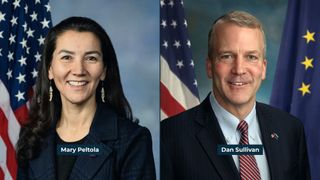
The short version
- Democrat Mary Peltola has won Alaska's Senate race, unseating Sen. Dan Sullivan, the AP projected Tuesday night.
- The state's newest count gives her 50.1% of the vote, so no ranked-choice count is needed.
- Her win gives Democrats 56 Senate seats; the state aims to certify the result on Nov. 25.
Democrat Mary Peltola has won the Alaska Senate race, unseating Republican Sen. Dan Sullivan, the Associated Press projected Tuesday night. Her campaign had declared victory days earlier, and the state's newest count puts her just past 50%, so no ranked-choice rounds are needed.
Alaska picks a winner outright only if someone passes 50%, and the AP's call came after the state's Tuesday count put her over that line. Her win gives Democrats 56 Senate seats in the new Congress, which they will control.
Where the Alaska Senate count stands
The state's unofficial count posted Saturday afternoon Alaska time gave Peltola 140,637 votes, or 49.9%, and Sullivan 129,424, or 46%. Two minor candidates, Republican Gerald Heikes and Daniel J. Sullivan Jr., a retired teacher with no party listed, have about 4% between them. That left Peltola about 160 votes short of half.
Peltola's campaign declared victory again late Friday, after a new batch of ballots widened her lead. "There is no mathematical path for Sullivan to win this race," it said in a post on X, as quoted by The Hill. At that point, the Associated Press and Decision Desk HQ had not called the race.
On Nov. 14, NBC News stopped just short of a call. Its Decision Desk rated the race likely Democratic, which meant it was at least 95% sure Peltola would win. That rating was a projection, not a call.
Sullivan's campaign account on X had not posted since Nov. 4, and the New York Post said it could not reach him. On election night he told supporters that he expected to win, Alaska's News Source reported. The next day, his campaign released a memo arguing that the uncounted ballots and ranked-choice rounds favored him. On Nov. 9, it asked to join a lawsuit over rejected absentee ballots and predicted he would win the full count. Last week, it said it awaited a full, accurate count, Newsweek reported.
How ranked-choice voting would have worked
Alaska voters rank their choices. If no one wins a majority of first choices, the last-place candidate is dropped and those ballots move to each voter's next choice, round by round. The state would have run that count on Nov. 18, the same day the last overseas ballots are due; it aims to certify the results on Nov. 25. Alaskans voted again this month to keep the system.
Distance is the main reason the count is slow. Every ballot ends up in Juneau, a capital reachable only by plane or boat, and some arrive from remote villages by floatplane. Mail ballots postmarked by Election Day count if they arrive within 10 days, or 15 from overseas.
There is no mathematical path for Sullivan to win this race.
Sullivan's best hope in those rounds would have been the minor candidates' voters, and the math was against him. An NBC News Decision Desk analysis of the state's ballot records found that more than 45% of voters who picked Heikes, Sullivan Jr. or a write-in ranked neither Peltola nor the senator. Those ballots drop out. NBC estimated that only about 6,600 would move to the two leaders, far fewer than the senator needed to close the gap.
Why the second Dan Sullivan matters less now
The second Sullivan on the ballot has drawn the main legal fight over the result. Before Election Day, the Justice Department sued to block certification if the votes for Sullivan Jr. could have changed the outcome. A federal judge dismissed the case on Nov. 1, and the administration appealed, Newsweek reported. President Donald Trump has called the race rigged and said the minor candidates' votes "should immediately be given to the Real Dan Sullivan." Newsweek noted that his fraud claim is unsupported.
Republican objections rest on two claims: reports that Democratic operatives recruited Sullivan Jr., and Trump's claim that Democrats also backed Heikes. The New York Post described the operatives as close to Peltola. Peltola denied knowing about it. In late October, she said she "knew nothing about any other candidate on the ballot" except herself and the incumbent, and her campaign denied the reports, the BBC reported.
The state's count now answers the lawsuit's test. Peltola's lead of 11,475 votes is more than double Sullivan Jr.'s 4,684, according to the state's Monday summary. It is also larger than his and Heikes's votes added together, about 10,700. So even if every one of those voters had picked the senator instead, Peltola would still lead. If her margin holds, the Justice Department could not make the same case, The Hill reported.
What we don't know yet
The last overseas ballots are due Nov. 18, and the state aims to certify the result on Nov. 25. The state's Tuesday count put Peltola past 50%, so the ranked-choice rounds won't be needed.
We also don't know how Sullivan will respond. He could concede, wait for certification, or challenge the result; the Senate is the final judge of its own members' elections, a law professor told Newsweek. The Justice Department's appeal is still pending. A separate court fight is settled for now: a judge denied the Peltola campaign's request for data on rejected absentee ballots.
Sources
Left
3 of 13 left-leaning outlets we track reported this
- NBC News: Democrat Mary Peltola is likely to win Alaska's Senate race, as vote counting continues, Nov. 14
- NBC News: Why Mary Peltola is on track to win in Alaska, even if ranked choice ballots come into play, Nov. 14
- USA Today: Peltola's lead increases in uncalled Alaska Senate race, Nov. 14
- CBS News: Alaska Senate race unresolved as candidates expect weekslong ballot-counting process, updated Nov. 15
- NBC News: Democrat Mary Peltola flips Alaska Senate seat, defeating GOP Sen. Dan Sullivan, Nov. 17
- CBS News: Peltola wins Alaska 2026 Senate election, CBS News projects, flipping seat for Democrats, Nov. 17
Center
3 of 9 center outlets we track reported this
- The Hill: Peltola holds nearly 4-point lead on Sullivan in latest ballot drop, Nov. 14
- Newsweek: Mary Peltola's path to winning Alaska Senate race outright, Nov. 13
- Newsweek: Mary Peltola closes in on 50% threshold in Alaska Senate race, Nov. 15
- BBC: Why midterm votes counting is taking so long in America's largest state, Nov. 13
- BBC: Alaska Senate candidate denies knowing about alleged plot to put two Dan Sullivans on ballot, Oct. 30
Right
8 of 12 right-leaning outlets we track reported this
- New York Post: Alaska Democrat Mary Peltola nears 50%, declares victory in Senate race, Nov. 14
- The Washington Times: Peltola declares victory in Alaska Senate race, Nov. 14
- The Daily Wire: Peltola inches toward victory as "Decoy Dan" drama deepens, Nov. 13
- Just The News: Democrat Mary Peltola declared winner in Alaska Senate race: AP, Nov. 17
- Fox News: Alaska Senate fight heats up as Sullivan moves to block Peltola lawsuit over rejected absentee ballot records, Nov. 9
Other reporting
This article was produced by AI under our Editorial Standards. Corrections are reviewed before they go live.
How coverage differs
Free with a Fair Witness account
See how left, center and right covered this story
A free account shows where the coverage agrees and where it splits, what each side played up and played down, and, when one side's outlets missed a story, who missed it.
Nov 15
1:59 AMUpdatedU.S.
Judge blocks Trump administration from closing East Potomac Park and golf course
The riverside park stays open through Nov. 28 after the judge found the government's reasons for closing it likely a cover for Trump's rebuild.

The short version
- A federal judge on Saturday blocked the Trump administration from closing East Potomac Park and its public golf course in Washington.
- She found the safety and staffing reasons likely a pretext for Trump's plan to rebuild the course for championship golf.
- The order runs through Nov. 28, and a federal planning commission is set to review the new course design on Dec. 3.
Documents in this story · 8
- RulingTemporary restraining order, DC Preservation League v. Department of the Interior, No. 26-cv-477 (D.D.C.), ECF 159storage.courtlistener.com · PDF · Nov. 14, 2026Original Archived
- RecordDefendants' notice of the planned closure, ECF 111storage.courtlistener.com · PDF · Oct. 28, 2026Original Archived
- RecordDefendants' notice of appeal of the restraining order, ECF 168storage.courtlistener.com · PDF · Nov. 18, 2026Original Archived
- RecordDefendants' opposition to the restraining order and motion for a stay pending appeal, ECF 147storage.courtlistener.com · PDF · Nov. 9, 2026Original Archived
- RecordPreliminary injunction order, ECF 101storage.courtlistener.com · PDF · Oct. 26, 2026Original Archived
- RulingMemorandum opinion on the tree removal, ECF 79storage.courtlistener.com · PDF · Oct. 13, 2026Original Archived
- RecordComplaint, ECF 1storage.courtlistener.com · PDF · Feb. 13, 2026Original Archived
- Record36 C.F.R. 1.5, National Park Service closures and public use limitsCornell Legal Information Institute · Web pageOpen Archived
A federal judge on Saturday blocked the Trump administration from closing East Potomac Park and its public golf course in Washington, hours before a shutdown President Donald Trump ordered so the course could be rebuilt.
U.S. District Judge Ana Reyes's temporary restraining order keeps the park open through Nov. 28, or until she rules again. She found that the reasons the National Park Service gave for closing it were likely a pretext, and that the agency likely broke at least two federal laws to meet Trump's Nov. 15 date. The fight is one of several over Trump's plans to remake landmarks in the capital, from the Kennedy Center to a proposed arch near Arlington cemetery.
Why it matters to you
Hains Point stays open to you through Nov. 28, whether you golf, run, bike or fish there, during the hours it kept on Nov. 14, the order says. The government may close small areas only for routine course practice, active seawall repair or an urgent safety threat.
Open grounds don't guarantee a tee time, though. The order doesn't make the government run golf or hire an operator, and the National Links Trust agreed to stop running the course on Nov. 15 under a new lease. Whether you can book a round is up to the government, but it can't use the lack of golf to keep people off the course.
The longer stakes are about what the course becomes. The park now has three golf courses with 36 holes, which Trump wants to turn into one 18-hole championship course. The plaintiffs say the plan would price out everyday golfers. Trump denies that, and on Saturday he promised Washington-area residents a 50% discount.
Why the judge called the East Potomac Park closure a pretext
The Park Service's closure notice, posted Nov. 12, cited three reasons: no operator once the trust left, worn-out course buildings and a crumbling seawall, the order says. The closure would have shut almost everything south of Buckeye Drive, from roads and trails to playgrounds.
Start with the missing operator. The Park Service itself ended the trust's lease as of Nov. 15, then cited the lack of an operator as the reason to close. "But that reverses cause and effect—by design," Reyes wrote. Asked in court whether officials were carrying out the president's directive, a government lawyer said yes, the order records.
The safety case ran into the agency's own history. A 2019 report found the whole walkway around the park's edge was a hazard, and the Park Service fenced off the worst stretches instead of closing the park. Three days before the closure decision, it let more than 30,000 runners in the Marine Corps Marathon circle that same edge, by the court's count. The Washington Times put the figure at more than 20,000. The order adds that the agency fixed none of 110 course problems flagged in May, yet planned and carried out the felling of more than 400 healthy trees within 10 days.
Adam Gustafson, a Justice Department lawyer, argued at a five-hour hearing Friday that a daylight race is different from children or couples on a crumbling wall after dark. That, Reyes wrote, still doesn't explain closing nearly the entire park, at all hours, for an open-ended stretch.
The park rule the closure skipped
A pretext alone wasn't enough to block the closure, Reyes wrote. Likely breaking federal law was, starting with the Park Service's own rule. Under 36 C.F.R. 1.5(b), a closure that will greatly change how people use a park, harm its scenic or cultural value, or stir wide controversy must go through rulemaking in the Federal Register. That process gives the public a chance to comment first.
The judge found the closure met every part of that test. The government couldn't give a date for reopening, and its own estimate for repairing the seawall runs 2.5 to 3.5 years. Government lawyers had themselves called the case a matter of national attention. And the only Federal Register notice of the closure was set to be published Nov. 16, a day after the park was to shut, the order notes.
She also found the government likely broke the National Environmental Policy Act, the law that requires a study of a project's effects on the environment. The agency, she wrote, is carrying out Trump's plan piece by piece without one.
How the fight over the golf course got here
The DC Preservation League and two local golfers sued in February. They challenged a planned redesign and soil piled on the course, the government's brief says. Trump publicly proposed taking over and expanding the course in May, and he toured it with Interior Secretary Doug Burgum and designer Tom Fazio, CNN reported.
The case turned sharper in October. On Oct. 10, crews cut about 430 healthy trees, by the court's count. CBS News reported more than 500. On Oct. 26, Reyes issued an injunction barring further tree cutting without her approval.
About three hours after that order, Trump posted on Truth Social. "We are closing the East Potomac Golf Course Site as scheduled on November 15th," he wrote, as the AP reported and the order records. Two days later, the government told the court that the park would close on Nov. 15, in line with the president's directive.
The Justice Department has also challenged the judge herself. It asked Reyes, a Biden appointee, to step aside; she has not. She plans to name Jessie Liu, a former U.S. attorney in Washington, to examine whether officials misled her.
What we don't know yet
Trump said Sunday that the government will appeal, the AP reported, and the Justice Department filed its notice of appeal on Wednesday, Nov. 18. Government lawyers had asked Reyes, if she ruled against them, to issue a longer-lasting injunction and pause it during an appeal, their brief shows. They are already appealing her October injunction. Saturday's order granted only a short restraining order, and we found no ruling on the pause in it.
It is also unclear whether golf will go on after the trust leaves Sunday. The order sets no hearing before it ends Nov. 28, and the National Capital Planning Commission is set to take up the Fazio design at its Dec. 3 meeting. It is not yet known when the ethics inquiry into officials and government lawyers will start or report.
The case each side makes
The Trump administration
Trump says the course is run-down and unsafe, and that a rebuild will give Washington a public course fit for the U.S. Open and the Ryder Cup. He calls it "Trash Island", with fairways set too close together. On Saturday he wrote that Reyes "doesn't want us to quickly and inexpensively fix up the Course" (CNN).
The Justice Department argues the closure is about safety and staffing, not design. "This action is necessary regardless of the ultimate design of the golf course," it told the court in an Oct. 28 notice. In its latest brief, it said the plaintiffs lack standing, no final decision on the course exists, and a temporary closure does no lasting harm. Blocking it, the brief said, could force the agency to keep the trust or run the course itself.
We are closing the East Potomac Golf Course Site as scheduled on November 15th
After the ruling, a department spokesperson said the court had agreed the Park Service can limit access where people are at risk. "Nothing in the Court's order precludes planning," the spokesperson said, adding that the department would keep defending the administration's agenda in court (NBC News).
The preservationists and golfers
The DC Preservation League and the two golfers, represented by the legal group Democracy Forward, say the plan would change the character of an affordable public course that has stood for more than a century. They argue that closing the park and starting work would do lasting harm to them and the public, the AP reported. The law, they say, requires the government to study the whole plan and hear from the public before acting on any piece.
Catherine Carroll, a senior legal adviser at Democracy Forward, called the plan another of the president's vanity projects. She said the closure would have taken away "a treasured park that could never be replaced" (CBS News).
The plaintiffs also told the court that no money could make up for losing a park they use regularly. Other Washington parks are no substitute, they argued, for East Potomac's beauty and layout. Reyes agreed, writing that there is no other East Potomac Park.
Sources
Left
5 of 13 left-leaning outlets we track reported this
- NBC News: Judge temporarily blocks Trump's plan to redevelop East Potomac golf course in D.C., Nov. 14
- CBS News: Federal judge blocks Trump from closing historic D.C. golf course, for now, Nov. 14
- Associated Press (via ABC News): Judge temporarily blocks Trump from moving ahead on Washington public golf course redevelopment, Nov. 14
- CNN: Judge halts Trump plan to redevelop Washington, DC, golf course, Nov. 14
- Associated Press (via PBS NewsHour): Trump blasts judge's 2-week halt to his Washington golf project and says administration will appeal, Nov. 15
Center
4 of 9 center outlets we track reported this
Right
3 of 12 right-leaning outlets we track reported this
- The Washington Times: Judge blocks Trump from shutting down East Potomac Park to pursue his golf course renovation, Nov. 14
- Just The News: Federal judge blocks effort to close DC-area golf course so Trump can renovate, Nov. 14
- Fox News (OutKick): Federal judge blocks Trump's renovations of DC golf course hours before its closure, Nov. 14
Primary
- Temporary restraining order, DC Preservation League v. Department of the Interior, No. 26-cv-477 (D.D.C.), ECF 159, Nov. 14, 2026 · Archived copy
- Defendants' notice of the planned closure, ECF 111, Oct. 28, 2026 · Archived copy
- Defendants' notice of appeal of the restraining order, ECF 168, Nov. 18, 2026 · Archived copy
- Defendants' opposition to the restraining order and motion for a stay pending appeal, ECF 147, Nov. 9, 2026 · Archived copy
- Preliminary injunction order, ECF 101, Oct. 26, 2026 · Archived copy
- Memorandum opinion on the tree removal, ECF 79, Oct. 13, 2026 · Archived copy
- Complaint, ECF 1, Feb. 13, 2026 · Archived copy
- 36 C.F.R. 1.5, National Park Service closures and public use limits (Cornell Legal Information Institute) · Archived copy
This article was produced by AI under our Editorial Standards. Corrections are reviewed before they go live.
How coverage differs
Free with a Fair Witness account
See how left, center and right covered this story
A free account shows where the coverage agrees and where it splits, what each side played up and played down, and, when one side's outlets missed a story, who missed it.
Nov 14
6:39 PMUpdatedU.S.
Democrat Jonathan Kreiss-Tomkins wins Alaska governor's race, first since 1998
He takes office Dec. 7 with plans to make oil and gas producers pay corporate income tax, and his draft budget is due Dec. 15.
Edge of Frame · Right

The short version
- Democrat Jonathan Kreiss-Tomkins won Alaska's governor's race with just over half the first-choice votes, beating three Republicans.
- He is the first Democrat elected governor there since 1998, and he wants oil and gas producers to pay corporate income tax.
- The state aims to certify the result Nov. 25, and he is sworn in at noon on Dec. 7.
Democrat Jonathan Kreiss-Tomkins has won Alaska's governor's race outright, beating three Republicans, including one backed by President Donald Trump. He is the first Democrat elected governor of Alaska since 1998.
The Associated Press called the race Friday, 10 days after the polls closed. Because he won more than half of the first-choice votes, Alaska's ranked-choice count never came into play. The win also reaches beyond Alaska. It gives Democrats 30 governorships next year, after a midterm in which they also won both chambers of Congress.
Why it matters to you
If you live in Alaska, the person who writes the state budget changes on Dec. 7, when he is sworn in at noon. His first draft budget is due Dec. 15. He has said he will propose a moderate Permanent Fund dividend, the yearly check every eligible Alaskan gets from the state's oil savings. He has also said the math doesn't support checks above $3,000.
His plans touch what Alaskans pay and what the state collects. He wants all oil and gas producers to pay corporate income tax, which some, such as Hilcorp, don't pay now. He would also apply it to online sales. Together, the two could raise about $150 million a year, by the Anchorage Daily News's account. He has also called for a pause on new data centers until lawmakers write rules for them, and for full funding of public schools.
He won't govern alone. Any new tax has to pass the Legislature, where coalitions led by Democrats control both chambers.
How Kreiss-Tomkins won the Alaska governor race outright
Alaska's general election ballot lists the top four finishers from an open primary, of any party, and voters rank them. If no one wins a majority of first choices, the last-place candidate drops out and those ballots move to their next choice. Many Republicans saw ranking their candidates as their best chance to keep the seat. The state party and leaders, including Gov. Mike Dunleavy, urged voters to rank all three Republicans, in any order.
The state's own count shows why that didn't work. In its unofficial summary from Friday evening, with every precinct reporting, Kreiss-Tomkins had 139,293 votes, or 50.8%. Bernadette Wilson, the Trump-backed Republican, had 28.1%. Former Anchorage Mayor Dave Bronson had 13.6%, and former Attorney General Treg Taylor had 7.2%.
Add the three Republicans together and they come to about 134,000 first-choice votes. That is roughly 5,000 short of Kreiss-Tomkins's total. Because he holds a majority by himself, no ranking of the others can move ballots past him.
Wilson accepted the result in an interview with the Alaska Beacon. "He's gonna be your governor," she said, as republished by the Juneau Independent. Bronson congratulated Kreiss-Tomkins on social media and said he respects the voters' decision, Alaska Public Media reported. We found no public response from Taylor as of 6 p.m. ET Saturday.
How one Democrat ended up facing three Republicans
Republicans had held the office for most of three decades. The last Democrat to serve, Tony Knowles, left office in 2002. Independent Bill Walker served from 2014 to 2018. Dunleavy, a Republican barred from a third straight term, won reelection in 2022 by more than 25 points.
Kreiss-Tomkins, 37, is a former state House member from Sitka who left the Legislature three years ago. He finished first in August's open primary. Democrat Tom Begich, who came in second, then withdrew. His campaign said it wanted Democrats to unite behind one candidate. That left one Democrat against three Republicans.
The Republican side never narrowed. Trump endorsed Wilson in October and urged Bronson and Taylor to leave the race, but both stayed in. Bronson said his memory of a deal to step aside differed from the president's.
Kreiss-Tomkins, by contrast, drew support from across party lines. Republican Sen. Lisa Murkowski endorsed him a week before Election Day. So did three former governors: Knowles, Walker and Republican Frank Murkowski, the senator's father. His running mate, Zac Johnson, is an independent.
What we don't know yet
The count is not official yet. The Division of Elections will finish counting absentee and questioned ballots by Nov. 18 and aims to certify on Nov. 25. His lead is wide enough that outlets called the race, but his majority is thin: under one point above 50%, the line that kept the ranked-choice rounds from running.
We also don't know who will run his government. He has named no appointees yet and hinted he may keep some of Dunleavy's commissioners. Whether the Legislature takes up his oil and gas tax plan, and in what form, will start to come clear with his Dec. 15 budget. Whether Taylor will comment on the result is also open.
Alaska's U.S. Senate race is still open. Democrat Mary Peltola leads Republican Sen. Dan Sullivan, but with under 50% of first-choice votes in the state's latest count. That race could go to ranked-choice rounds, which start Nov. 18 for races that need them.
The case each side makes
Kreiss-Tomkins and his supporters
Kreiss-Tomkins argued that the state needs a new direction after eight years under Dunleavy, who he said had left Alaska "broken". He pointed to the state ferry system, which he said has cut service to towns in southeast Alaska that have no road links. "Alaskans are hungry for change," he said.
His pitch was also about how to govern. He said compromise "is a virtue, not a dirty word," and promised a cabinet with Republicans, Democrats and independents. On money, he promised a balanced budget that doesn't draw on savings, with new revenue from oil producers and online sales as a start. Murkowski's backing gave that case a Republican voice: she said he knows governing means finding common ground.
Wilson and Republicans
Wilson ran against new taxes. "If I'm the last person standing, I will absolutely oppose an income tax," she said during the campaign. She promised full dividend checks under the state's formula, without saying how she would pay for them. She also pledged faster permits and work on a natural gas pipeline within six months. Bronson and Taylor also opposed changing the tax structure.
After the loss, Wilson blamed the split field, not the voters. She said three Republicans on the ballot led donors and conservative groups to give less, and that ranking all three did not work as a strategy. Trump had made a similar case in October. "She won the primary, and the other two should have dropped out," he said at a rally in Wasilla, where he also called ranked-choice voting a scam. In the open primary, Wilson had finished third.
He's gonna be your governor.
Sources
Left
6 of 13 left-leaning outlets we track reported this
- The Guardian: Democrat wins Alaska governor's seat for first time in nearly 30 years, Nov. 14
- NBC News: Democrat Jonathan Kreiss-Tomkins wins the Alaska governor's race, Nov. 14
- CBS News: Alaska elects Jonathan Kreiss-Tomkins, the first Democrat governor since 1998, Nov. 14
- Associated Press: Kreiss-Tomkins becomes first Democrat since 1998 elected governor in Alaska, Nov. 14
Center
3 of 9 center outlets we track reported this
Right
2 of 12 right-leaning outlets we track reported this
- Fox News: Democrat flips Alaska governor's mansion after Trump-backed GOP infighting, Nov. 14
- The New York Sun: Democrats flip Alaska governorship as historic midterm wave rolls on, Nov. 14
Checked, no report found as of 11:25 p.m. ET Nov. 14: New York Post, The Daily Wire, The Washington Times, The Daily Caller, Just The News, The Center Square, +4.
Other reporting
- Alaska Public Media: Alaska elects Democrat Jonathan Kreiss-Tomkins governor, Nov. 13 (Alaska public radio and TV)
- Alaska Public Media: Bronson will keep campaigning despite Trump's call to drop out, Oct. 14 (Alaska public radio and TV)
- Alaska Beacon via the Juneau Independent: Republicans Wilson, Bronson concede to JKT in governor's race (Alaska nonprofit news site, republished by a Juneau news site)
- Anchorage Daily News: Kreiss-Tomkins says Alaska needs new revenue measures; Republicans disagree, Oct. 17 (Alaska's largest newspaper)
- Alaska's News Source: Alaska governor candidates await results as vote count continues, Nov. 4 (Anchorage TV station)
- Alaska's News Source: Trump endorses Wilson for Alaska governor, Oct. 13 (Anchorage TV station)
This article was produced by AI under our Editorial Standards. Corrections are reviewed before they go live.
How coverage differs
Free with a Fair Witness account
See how left, center and right covered this story
A free account shows where the coverage agrees and where it splits, what each side played up and played down, and, when one side's outlets missed a story, who missed it.
Nov 14
6:35 PMUpdatedU.S.
Device found at Peoria ethanol plant after bomb threat; 1-mile evacuation lifted
A federal indictment charges a plant employee with emailing the threat, but officials haven't said who left the device or why.

The short version
- Police lifted a 1-mile evacuation around the BioUrja ethanol plant in Peoria, Illinois, a day after a bomb threat led them to a device.
- The plant holds flammable fuel near downtown, and officials say they are treating it as a crime, not a hoax.
- The FBI says the device was explosive; a man is charged with emailing the threat, but no one is accused of placing the device.
Police lifted a 1-mile evacuation around an ethanol plant in Peoria, Illinois, on Saturday afternoon, about a day after a bomb threat led officers to a device at the site. On Tuesday, a federal grand jury charged a plant employee with emailing that threat, NBC News and CBS News reported; the indictment does not accuse him of placing the device. The FBI said late Saturday that the device was explosive.
The evacuation is over, but the case is not. Federal agents are now looking for whoever left the device at a plant that holds large amounts of flammable fuel, close enough to downtown Peoria that the zone took in part of it. And the officials in charge have not used the same word for what they found.
How the Peoria bomb threat unfolded
The plant's owner, BioUrja Renewables, reported a bomb threat to police at 1:08 p.m. local time Friday. Officers found a suspicious package there within the hour, and by about 6:45 p.m. officials had judged it a credible threat. They then ordered everyone within a mile to leave, a zone that reached across the Illinois River into East Peoria.
A state bomb squad, the Illinois Secretary of State Police Hazardous Device Unit, made the package safe at about 9:12 p.m. Even so, the order stayed in place overnight. The complex has several floors, catwalks and silos, and officials wanted to search all of it for a second device.
That search ended Saturday afternoon. Officers had found "no other items of concern," the Peoria Police Department said on Facebook, and it lifted the order shortly after 1 p.m. local time. No one was hurt.
Reports differ on how many people had to leave. CNN reported that more than 5,000 residents and workers were evacuated, while the AP put it at hundreds of people forced from their homes. Dixon said about 60 to 80 people stayed at the shelter at Manual High School, according to 25 News, a Peoria TV station.
A bomb, or a credible threat?
Mayor Rita Ali called it a bomb on Friday night. "We know it's a bomb," she told WMBD, a Peoria TV station. She also said officials did not yet know whether there was more than one device.
Police Chief Brad Dixon has used different words. He said early Saturday that police were "not considering this a hoax," and that most bomb threats turn out to be false. On Saturday, though, he said he would not call the device a bomb while its makeup was still being tested. "I can just tell you it was deemed a credible threat," he told reporters. He also declined to say what kind of device it was, calling that part of the criminal investigation. Ali later said the word was her own. "Bomb is my interpretation," she said Saturday, adding that police were right not to use it until the device's contents were examined.
The FBI and the ATF, the federal agency that investigates explosives, are now leading that inquiry, a law enforcement source told ABC News. Ryan Presley, who runs the FBI's Springfield office, said agents "will work tirelessly to identify the individual responsible and bring them to justice." Christopher Amon, who leads the ATF's Chicago division, said his agency is committed to finding those responsible. Gov. JB Pritzker directed the Illinois State Police to help coordinate the response.
Why officials cleared a mile around the plant
A mile is a wide circle for one package, and Dixon explained why. The danger zone was set not only by the device but also by the materials around it, he said. The plant, the size of about 44 football fields, makes ethanol, a flammable fuel. Ali said it holds "highly combustible types of chemicals", and she said that was what alarmed officials.
The site was once a Hiram Walker distillery and later an Archer Daniels Midland ethanol plant. BioUrja bought it in October 2021, according to WCBU, Peoria's public radio station. BioUrja says it makes alcohol used in drinks, hand sanitizer and adhesives.
I can just tell you it was deemed a credible threat.
The plant has had an emergency before. In May 2022, a grain bin there exploded and caught fire, injuring two workers and causing more than $2 million in damage. Federal safety records that WCBU later obtained show workers saw the bin collapse before a fireball. OSHA, the workplace safety agency, found no violations, and BioUrja repaid the fire department about $101,000. That accident was not a crime. But it shows why the materials around a device matter on a site like this, where one failure can set off a bigger one.
What we don't know yet
Investigators have not said who left the device, how it got onto the property or whether the person who made the threat also placed it. Nor have they said what the device was made of, beyond the FBI's statement late Saturday that it was explosive.
We also don't know why this plant was chosen. BioUrja, part of the Houston-based BioUrja Group, did not immediately respond to a request for comment from Reuters, and Newsweek said it had also contacted the company. Police said they will keep investigating and give updates as they can.
Sources
Left
5 of 13 left-leaning outlets we track reported this
- CNN: FBI investigating after bomb found at ethanol plant in Illinois, forcing evacuations
- AP via NBC News: Evacuation order lifted after bomb found near ethanol plant in central Illinois
- ABC News: Authorities investigate 'credible' bomb threat at Illinois plant
- AP: Person of interest taken into custody for questioning after bomb found at Illinois ethanol plant (Nov. 16; for the Update)
- ABC News: Person of interest in custody after device found at Illinois plant (Nov. 16; for the Update)
- CNN: Suspect arrested in investigation into explosive device found at Illinois ethanol plant, official says (Nov. 16; for the Update)
- CBS News: Man charged in connection to bomb found at Peoria, Illinois ethanol plant (Nov. 17; for the Update)
- NBC News: Illinois man charged in connection with bomb found at Peoria ethanol plant (Nov. 17; for the Update)
Center
4 of 9 center outlets we track reported this
Right
3 of 12 right-leaning outlets we track reported this
- Just The News: Bomb found at Illinois ethanol plant sparks evacuation of thousands as FBI investigates
- The Center Square: Pipe bomb threat forces evacuation at Illinois ethanol plant
- Fox News: Person of interest being questioned by FBI in Illinois ethanol plant bomb investigation (Nov. 16; for the Update)
Other reporting
- Peoria Journal Star via Yahoo News: Peoria mayor says suspect taken into custody in BioUrja bomb threat (Peoria newspaper; Nov. 16; for the Update)
- WCBU: FBI now leading BioUrja investigation after confirming explosive device was found (Peoria public radio station; for the Update)
- WMBD via Yahoo News: BioUrja bomb investigation update postponed, Nov. 15 (Peoria TV station)
- WCBU: Peoria Police order evacuation after bomb threat at BioUrja Renewables (Peoria public radio station)
- 25 News: Evacuation order lifted after search turns up no new explosives at Peoria's BioUrja plant (Peoria TV station)
- WCBU: Peoria evacuation order lifted after bomb search finishes at BioUrja plant (Peoria public radio station)
- WCBU: Grain bin explodes at BioUrja ethanol plant, May 2022 (Peoria public radio station)
- WCBU: OSHA recommends no citations after BioUrja grain bin explosion, October 2022 (Peoria public radio station; reporting on OSHA records obtained through a public-records request)
Primary
This article was produced by AI under our Editorial Standards. Corrections are reviewed before they go live.
How coverage differs
Free with a Fair Witness account
See how left, center and right covered this story
A free account shows where the coverage agrees and where it splits, what each side played up and played down, and, when one side's outlets missed a story, who missed it.
Nov 14
6:30 AMUpdatedWorld
Israeli strike on Gaza's Nasser Hospital kills six, Gaza health officials say
Israel says a Hamas commander was inside. The hospital says no warning came, and the laws of war turn on that point.
Spin Meter: how each side framed it · 4/5Edge of Frame · Right

The short version
- An Israeli strike on Nasser Hospital in Khan Younis killed six people, including a surgeon and a boy, Gaza officials said.
- Israel says it targeted a Hamas commander there; the hospital says no warning came, and the laws of war require one before protection ends.
- Israel has not said whether the commander was killed, and the hospital's surgical building is out of service.
Documents in this story · 2
- RecordThe Geneva Conventions of 1949: Fourth Convention, Article 19International Committee of the Red Cross · PDFOriginal Archived
- RecordJoint statement by the foreign ministers of 18 countries on the Israeli airstrike on the Nasser Medical Complex, Nov. 14, 2026 (added in Nov. 14 update)Turkish Foreign Ministry · Web pageOpen Archived
An Israeli airstrike on Gaza's Nasser Hospital in Khan Younis just after midnight Thursday killed six people, including a surgeon, Gaza's Health Ministry said. Israel's military said it was aiming at a Hamas commander inside.
Nasser is the largest hospital in southern Gaza, and the strike knocked its surgical building out of service. It came more than a year into a U.S.-backed ceasefire. The two sides also disagree on whether anyone warned the hospital first, and under the laws of war, that question matters.
What the Nasser Hospital strike hit
The strike hit the second floor of the surgical wing, home to the surgery department and the intensive care unit, the ministry said. Among the dead was general surgeon Rizk Abu Shaira, who appeared in American Doctor, a 2026 documentary about American doctors working in Gaza. A 13-year-old boy waiting for surgery was also killed, a Gaza civil defense spokesman told CNN.
Reuters first reported at least five dead before the toll settled at six. Counts of the wounded range from 20 to 40, depending on which Gaza official an outlet quoted.
Ahmed al-Farra, the hospital's director, told AP that surgeries, radiology and lab work were halted, and that other facilities can't do the same specialized surgeries. "No one's safe here," he said, in English. He also said one missile failed to detonate. CNN reported that footage from inside showed two bombs, one unexploded, with a label identifying it as a U.S.-made GBU-39/B, a 250-pound bomb supplied to Israel.
Israel's account, and the warning in dispute
The Israel Defense Forces and the Israel Security Agency, known as the Shin Bet, said they struck Muhammad Abu Ismail and other militants. They called him the commander of Hamas's Khan Younis Brigade. They accused Hamas of "turning the Nasser hospital compound into a headquarters", storing weapons there and interrogating people inside. They said precision munitions limited harm to civilians. The military released photos of weapons it said were found there, but AP reported that it gave no evidence for its claim about the commander. ABC News reported it offered no public evidence of who was inside.
The warning is where the accounts split. The IDF said it gave advance notice and released a recording of a warning to a senior Gaza health official. Al-Farra said the hospital received no warning. Hamas called Israel's claims "lies of the criminal enemy" and the strike a war crime.
That dispute carries legal weight. The rule is in Article 19 of the Fourth Geneva Convention, the 1949 treaty that protects civilians in war. A hospital keeps its protection unless it is used for "acts harmful to the enemy" outside its medical work. Even then, protection ends only after a due warning, naming a reasonable time limit where appropriate, goes unheeded. So the question of who was warned, and when, goes to the heart of whether the strike was lawful.
Nasser has been hit before. Gaza health officials said this was the seventh strike on the complex since the war began in October 2023. In August 2025, a double strike killed at least 20 people, including journalists. The aid group Doctors Without Borders suspended most work there in January after seeing masked armed men and arrests of patients, then returned months later.
What we don't know yet
Israel hasn't said whether Abu Ismail was killed. He was not on the hospital's list of the dead, and the Times of Israel reported Thursday that his fate was unclear while the IDF assessed the strike. A Monday IDF statement naming three Hamas dead still did not say.
The IDF also said it was looking into reports that medical staff and patients were killed, without saying when it would report back. We found no independent check of the warning recording Israel released, so neither account of the warning can be settled yet. The Pentagon did not immediately respond to NBC News on whether U.S.-made munitions were used.
Outside Gaza, the Trump-led Board of Peace, which oversees Gaza's postwar management, said it deplored any civilian deaths and condemned what it called Hamas's exploitation of hospitals. It called on both Israel and Hamas to keep their commitments and said the peace plan "must be implemented immediately without further delay". For patients in southern Gaza, the nearer question is when Nasser's surgeons can operate again.
The case each side makes
Israel's military
Israel says the hospital had become a Hamas base, and that Hamas planned attacks on its troops from there. The military and the Shin Bet said Abu Ismail had held hostages during the war.
Israel also says it warned first. It said it held warning talks with health officials and made clear it would act if the activity didn't stop. The New York Sun, a right-leaning paper, cited the January Doctors Without Borders pullback and a 2014 Amnesty report on Hamas using a Gaza hospital.
Gaza health officials and Hamas
The hospital and the ministry say a working hospital, with patients inside, was hit without warning. They say the dead included a surgeon and staff, and that the strike shut surgery at what health officials call the only major hospital still working in southern Gaza. The ministry called it a flagrant violation of international law.
Hamas rejects Israel's claims about the hospital and calls the strike a war crime. The ministry also counts more than 1,600 people killed since the ceasefire took effect.
Sources
Left
5 of 13 left-leaning outlets we track reported this
- AP: Israeli strike on a Gaza hospital kills 6 people, including a doctor, Health Ministry says
- AP: An Israeli strike on a hospital highlights the devastation to Gaza's healthcare system
- NBC News: Israeli strike on Gaza's Nasser Hospital kills at least six people, officials say
- ABC News: Israeli airstrike on Gaza hospital kills 6 people, Hamas-run health ministry says
- CNN: Israeli strike on Gaza hospital kills at least 6, including doctor and child, Palestinian officials say
Center
3 of 9 center outlets we track reported this
Right
1 of 12 right-leaning outlets we track reported this
Checked, no report found as of 5:50 a.m. ET Nov. 14: Fox News, New York Post, The Daily Wire, The Washington Times, The Daily Caller, Just The News, +5.
Other reporting
- The Times of Israel: IDF says Hamas commander targeted at Gaza hospital previously held hostages at medical center (Israeli news site; not in our coverage pool)
- The Times of Israel: Board of Peace says Israeli strike on Gaza hospital 'underscores' need for peace plan (Israeli news site; not in our coverage pool)
- VINnews: IDF, Shin Bet confirm Hamas terrorists killed in Nasser Hospital strike, including Oct. 7 abductor (Nov. 16) (U.S. Orthodox Jewish news site; not in our coverage pool; for the Update)
Primary
- International Committee of the Red Cross: The Geneva Conventions of 12 August 1949 (Fourth Convention, Article 19, page 157 of the print edition) · Archived copy
- Turkish Foreign Ministry: Joint statement by the foreign ministers of 18 countries on the Israeli airstrike on the Nasser Medical Complex, Nov. 14, 2026 (added in Nov. 14 update) · Archived copy
This article was produced by AI under our Editorial Standards. Corrections are reviewed before they go live.
How coverage differs
Free with a Fair Witness account
See how left, center and right covered this story
A free account shows where the coverage agrees and where it splits, what each side played up and played down, and, when one side's outlets missed a story, who missed it.
Nov 14
1:03 AMUpdatedCulture
Pope Leo returns to Chiclayo, Peru, the diocese he led as bishop, for an outdoor Mass
The first U.S. pope returned to the city where he was made a bishop, about a month after surgery for lung cancer.

The short version
- Pope Leo XIV celebrated an outdoor Mass near Chiclayo, Peru, the city he led as bishop until 2023, before a crowd of hundreds of thousands.
- It was the centerpiece of a tour that came about a month after lung cancer surgery and included a private meeting with abuse survivors.
- He visits the Andes, Cusco and the Amazon this weekend and flies back to Rome on Monday.
Documents in this story · 5
- RecordPope Leo XIV's homily at the Mass near the Pampas de Pimentel, ChiclayoVatican · Web page · Nov. 13, 2026Open Archived
- RecordPope Leo XIV's address to Peru's authorities, Gran Teatro Nacional, LimaVatican · Web page · Nov. 11, 2026Open Archived
- RecordPope Leo XIV's address to the bishops of Peru, LimaVatican · Web page · Nov. 12, 2026Open Archived
- RecordPope Leo XIV's address to missionaries and representatives of the Amazonian peoples, PucallpaVatican · Web page · Nov. 15, 2026Open Archived
- RecordPope Francis's appointment of Robert Prevost to the Dicastery for Bishops, with his Chiclayo recordVatican News · Web page · Jan. 30, 2023Open Archived
Pope Leo XIV returned Friday to Chiclayo, Peru, the city he led as bishop, and celebrated an outdoor Mass at the Pampas de Pimentel, a desert plain just outside town. It was his first return as pope to the diocese he left in 2023, on his first tour of Latin America as pope.
For the first pope from the United States, Chiclayo is personal. He named it in Spanish in his first words from the balcony of St. Peter's Basilica in May 2025. Friday's Mass was the centerpiece of his 12-day South America tour, and it came about a month after surgery for lung cancer.
Why it matters
Leo leads the world's 1.4 billion Catholics, and Reuters called this one of the most intense foreign tours arranged for a pope in decades. His stops in Lima also put two hard subjects in front of him at once: Peru's new government and the church's record on clergy abuse.
What Pope Leo said at the Chiclayo Mass
Leo opened his homily with a greeting: "What a joy it is to return to Chiclayo!" He thanked people for praying for his health, and he called the illness a time of trial that he is overcoming with God's help. Then he turned to his main theme. Every baptized Catholic, he said, has a duty to share the faith, not by pressure or clever argument but by how they live and by caring for those most in need.
He also named what he sees as the threats. Religious indifference, materialism and selfishness, he said, are making it harder to pass the faith on, and in some regions passing it on has been almost entirely abandoned. He ended by telling Chiclayo and all of Peru that the mission is only beginning.
How many people heard him is less clear. UPI reported that about 500,000 people attended, citing Vatican figures. The BBC reported that the Vatican estimated more than 1.5 million gathered to welcome him. Al Jazeera, drawing on wire reports, gave both kinds of figure: about 500,000 at the Mass and another million along his motorcade route. That suggests the two numbers may count different crowds, though no outlet we read said so directly.
Many people had camped overnight on the plain, and temperatures passed 30C (about 86F). Lisbeth Díaz, a Venezuelan teacher who worked with him in the diocese, put the mood simply to the BBC: "The Pope has come home and Chiclayo is celebrating."
How Chiclayo shaped Pope Leo
Leo, born Robert Prevost in Chicago, first came to Peru in 1985 as a young Augustinian missionary in Chulucanas, a poor town in the far north. He spent about 20 years of his working life in the country, much of it in Trujillo, and became a Peruvian citizen in 2015.
The BBC and Reuters date his time as bishop of Chiclayo from 2015 to 2023, but the Vatican's own record tells a slightly longer story. Pope Francis sent him there as the diocese's temporary leader, its apostolic administrator, on Nov. 3, 2014. He was ordained a bishop in Chiclayo's cathedral that December and was formally named its bishop in September 2015. Francis called him to Rome in January 2023 to lead the Vatican office that helps choose bishops worldwide. So his time in charge ran more than eight years, which is why some outlets say eight and the Guardian says nearly a decade.
People there remember him for what he did in hard years. During the pandemic, he helped raise $380,000 through the charity Caritas for two oxygen plants when patients were dying for lack of oxygen. When Venezuelans fled their country's economic crisis, he put a diocesan commission to work helping the roughly 20,000 migrants who passed through Chiclayo. When floods hit in 2023, he was photographed wading through the water to bring supplies.
He also liked to joke about the two cities in his life. "Chicago, Chiclayo, what difference is there? Only one letter," he would say, according to NBC News, which pointed out that the names differ by two.
What a joy it is to return to Chiclayo!
Abuse survivors and Peru's new president
Before Chiclayo, Leo spent two days in Lima, where the trip's hardest subjects came up. On Wednesday he told Peru's leaders at the Gran Teatro Nacional, "I am also returning to my homeland." In the same speech he urged officeholders to cultivate honesty and integrity and to listen to citizens. He said it beside President Keiko Fujimori, who was recently elected. During his years in Peru, NBC News reported, Leo had criticized the government of her father, former President Alberto Fujimori.
On Thursday, he met privately with six survivors of abuse by clergy and members of religious groups, at the Vatican's embassy in Lima. The Vatican said he listened to each of their accounts in a meeting that lasted more than an hour. Some had belonged to groups linked to the Sodalitium of Christian Life, a Peruvian Catholic movement that Francis dissolved in 2025 after abuse accusations that the BBC reported went back decades. Earlier that day, Leo told Peru's bishops that the church must answer abuse with truth, justice, forgiveness and making amends, and must build a culture of prevention that protects the weakest.
The meeting came after public criticism. Before the trip, the Guardian reported criticism that his public schedule had been shaped to avoid such encounters, and BishopAccountability.org, a U.S.-based group, had just listed 77 Peruvian church figures accused of abuse. As bishop, Leo had to handle the Sodalitium scandal, and the BBC reported that Peruvian writer Santiago Roncagliolo believes that work won Francis's favor.
What we don't know yet
There is no single count of Friday's crowd, and we found no Vatican statement that says which of its figures covers what.
We also don't know whether the meeting with survivors will lead to anything new in Peru, such as payments to victims or further action on accused clergy. Silvia Alayo, who worked with Leo on the Peruvian bishops' social action commission, told the Guardian that victims must get reparations from the church. We found no Vatican announcement of any such step.
His health is the other open question. Doctors cleared him to travel two weeks after the surgery, and Reuters described him as in good form on a demanding tour. Three more days of travel remain. On Saturday he flies by helicopter to say Mass in Santa Cruz de Succhabamba, an Andean town. On Sunday he visits Cusco and then the Amazon city of Pucallpa, and on Monday he says a last Mass near Lima before flying back to Rome.
Sources
Left
6 of 13 left-leaning outlets we track reported this
- AP via KSAT: Pope in Peruvian rainforest demands justice for environmental defenders killed for protecting Amazon (Nov. 15)
- NBC News: Pope Leo makes emotional return to his 'beloved diocese of Chiclayo'
- The Guardian: 'This visit is like a big party': American pope receives rapturous welcome in Peru
- CBS News: Pope Leo says he has returned to his "homeland" Peru in final leg of South America trip
Center
3 of 9 center outlets we track reported this
Right
1 of 12 right-leaning outlets we track reported this
Other reporting
- Al Jazeera: Pope thanks crowds on emotional return to 'second home' in Peru's Chiclayo (Qatar-funded international news network, drawing on Reuters and AP; not in our coverage pool)
- Andina: the schedule for Pope Leo XIV's Peru visit (Peru's state news agency; not in our coverage pool)
Primary
- Vatican: Pope Leo XIV's homily at the Mass near the Pampas de Pimentel, Chiclayo, Nov. 13, 2026 · Archived copy
- Vatican: Pope Leo XIV's address to Peru's authorities, Gran Teatro Nacional, Lima, Nov. 11, 2026 · Archived copy
- Vatican: Pope Leo XIV's address to the bishops of Peru, Lima, Nov. 12, 2026 · Archived copy
- Vatican: Pope Leo XIV's address to missionaries and representatives of the Amazonian peoples, Pucallpa, Nov. 15, 2026 · Archived copy
- Vatican News: Pope Francis's appointment of Robert Prevost to the Dicastery for Bishops, with his Chiclayo record, Jan. 30, 2023 · Archived copy
This article was produced by AI under our Editorial Standards. Corrections are reviewed before they go live.
How coverage differs
Free with a Fair Witness account
See how left, center and right covered this story
A free account shows where the coverage agrees and where it splits, what each side played up and played down, and, when one side's outlets missed a story, who missed it.
Nov 14
12:58 AMUpdatedWorld
Trump will meet Xi and Putin together Thursday to discuss nuclear arms, White House says
No treaty has capped the world's two largest nuclear arsenals since February, and Trump wants China in whatever replaces it.

The short version
- The White House said Trump will meet Xi Jinping and Vladimir Putin together Thursday in Shenzhen, China, to discuss cutting nuclear weapons.
- No treaty has capped U.S. or Russian nuclear arsenals since New START expired in February, and China has refused three-way arms talks.
- U.S. officials call Thursday a first conversation and expect no agreement; Russia and China have both confirmed the meeting.
Documents in this story · 3
- RecordRemarks by Ambassador Shen Jian of China at the Conference on Disarmament, Genevadocs-library.unoda.org · PDF · Feb. 23, 2026Original Archived
- RecordXi Jinping to Hold the China-Russia-U.S. Summit with President Vladimir Putin and President Donald J. TrumpMinistry of Foreign Affairs of China · Web page · Nov. 16, 2026Open Archived
- ReleaseForeign Ministry Spokesperson Mao Ning's Regular Press Conference on November 16, 2026Ministry of Foreign Affairs of China · Press releaseOpen Archived
President Donald Trump will meet Chinese President Xi Jinping and Russian President Vladimir Putin together Thursday in Shenzhen, China, to discuss cutting nuclear weapons, the White House said Friday.
The meeting matters because nothing now limits the world's two largest nuclear arsenals. The last U.S.-Russia arms treaty, New START, expired in February, and Trump wants China in whatever replaces it. China rejected three-way arms talks in Trump's first term, and in February it said it would not join nuclear disarmament talks at this stage. U.S. officials expect no deal Thursday, but it will be the first time the three leaders take up the question in one room.
Why it matters to you
For the first time in more than half a century, there are no caps on the U.S. and Russian nuclear arsenals. The United States and Russia each hold more than 5,000 warheads, while China has more than 600, by Pentagon estimates cited by NBC News. When the treaty lapsed, former officials and nuclear experts warned that its end opens the way to unchecked nuclear competition.
The meeting also reaches into the Iran war, which analysts most blame for this year's rise in oil prices. Iran will be on the table, a senior official told reporters. Ukraine will not, the same official said, though Ukraine's president, Volodymyr Zelenskyy, has voiced concern that the meeting could be used to discuss a Ukraine deal behind Kyiv's back.
What's planned for the Trump, Xi and Putin meeting
White House spokeswoman Olivia Wales announced the meeting to reporters Friday. Trump will discuss reducing nuclear weapons, "whose proliferation President Trump believes is very dangerous," she said. The talks will close out his trip to the Asia-Pacific Economic Cooperation (APEC) summit, a yearly meeting of 21 Pacific economies that China is hosting in Shenzhen.
Officials played down what one meeting can do. "I would characterize this as the entry point, the first conversation," a senior U.S. official, who was not named, said. No agreement is expected, the official said, but the White House hopes the talks lead to more.
Trump will first attend a summit of Southeast Asian nations in the Philippines on Tuesday. He arrives in Shenzhen late Wednesday and meets Xi alone on Thursday before the three-way session. Tesla and SpaceX chief Elon Musk will travel with Trump on the China leg but won't join either meeting with Xi, officials said. The New York Post first reported the plan Friday afternoon, before the White House confirmed it.
How New START's end led to Shenzhen
New START, signed in 2010, held each country to 1,550 deployed strategic warheads and 700 deployed missiles and bombers. Russia suspended its part in 2023, and the treaty ran out on Feb. 5. Putin had offered to keep honoring its main limits for one more year, but the U.S. never formally answered. "If it expires, it expires. We'll do a better agreement," Trump said in January. When it lapsed, he called for a new, modernized treaty, and he wants China to be part of it.
Trump raised that idea again when Xi visited Washington in September. The White House readout said Trump "advocated for trilateral arms control negotiations," while China's summary of the same talks did not mention arms control. Russia's deputy foreign minister said in September that Moscow was tentatively open to a three-way leaders' meeting at APEC.
Beijing moved more slowly. Earlier this month, foreign ministry spokeswoman Mao Ning said China was "in communication with relevant parties" about a meeting of the three leaders, the AP reported. Trump told reporters on Sunday he expected to see both leaders, and the White House made it official five days later.
Why China has stayed out of arms talks
China's reason for staying out is on the record, in its own words. Shen Jian, China's ambassador for disarmament, spoke at a United Nations arms forum in Geneva on Feb. 23. He said it is "not fair, reasonable or realistic to ask China to join" three-way nuclear talks, according to the text of his remarks. The countries with the largest arsenals must make deep, verifiable cuts first, he said, to create the conditions for others to join.
The numbers show why Beijing sees it that way. China's estimated arsenal of more than 600 warheads is smaller than the 1,550 that New START let each side deploy at once. Shen also offered a different starting point: a pledge by every nuclear power never to use nuclear weapons first. That gap, between a U.S. call for numbers and a Chinese call for first-use pledges, is what Thursday's meeting walks into.
What we don't know yet
Neither Beijing nor Moscow had confirmed the three-way meeting by late Friday. Chinese state media reported only that Xi would hold two-way talks at the summit. Whether China treats Thursday as the start of arms talks, or only as a meeting, is the question that decides whether anything follows it.
We also don't know what a first round could produce short of a deal: a statement, a promise to keep talking, or a working group. The White House has not said whether Iran or arms control will get more of the time. Officials first said Ukraine was off the agenda, but Trump said Monday he would raise it with Xi and Putin. The Kremlin said Putin and Trump would discuss it when they meet on their own. Kyiv has worried that the meeting could be used to discuss a Ukraine deal behind its back.
The case each side makes
The White House: a new treaty has to include China
The administration's case is that a two-country treaty no longer fits a world with three major nuclear powers. Trump let New START lapse rather than extend it, saying a new, modernized deal should cover China's growing arsenal too.
Officials frame Thursday as a first step, not a summit that must produce results. What matters to them is getting all three leaders to talk about the weapons at the same time.
whose proliferation President Trump believes is very dangerous
Beijing: the biggest arsenals should shrink first
China's case, as Shen put it in Geneva, is that it keeps its weapons at the lowest level its security needs and will never join an arms race. As he sees it, the countries with the largest arsenals bear the first duty to cut them, in ways that can be checked and not undone.
Disarmament is not just a game of numbers, Shen said, and a shared no-first-use pledge would do more to lower the risks. Asked on Monday which issues China would raise at the meeting, its foreign ministry said the leaders would discuss important issues of global peace. It did not mention arms control.
Moscow: three-way talks, but no new Yalta
Russia has been open to a three-way meeting since September, and Putin had offered to keep New START's limits for a year. In remarks NBC News reported Friday, Kremlin spokesman Dmitry Peskov called a meeting of the three leaders significant while rejecting comparisons to the 1945 Yalta conference, where the wartime allies shaped postwar Europe.
Any global order, Peskov said, should be one in which "no one tries to impose any particular view of global order." The Kremlin had not commented on Friday's announcement by late that night, BBC reported.
Sources
Left
3 of 13 left-leaning outlets we track reported this
- NBC News: Trump, Xi and Putin plan an unprecedented joint meeting on the sidelines of APEC, officials say
- CNN: Trump to meet with China's Xi and Russia's Putin at historic trilateral sit-down on nuclear non-proliferation
- Associated Press, via The Korea Times: China confirms discussions are underway on a historic Xi-Trump-Putin meeting
- Associated Press, via The Korea Times: Trump's Asia trip: Deals in Manila and Shenzhen, nuclear summit with Xi and Putin, maybe Kim meeting (Nov. 16; for the Update)
- CBS News: Trump, Putin and Xi Jinping expected to meet in first-ever trilateral of its kind, officials say (Nov. 14)
Center
3 of 9 center outlets we track reported this
Right
5 of 12 right-leaning outlets we track reported this
Other reporting
- TASS: Kremlin aide briefs on Putin's meeting with Trump, preparations for Russia-China-US talks (Russia's state news agency, reporting the Kremlin's own briefing; Nov. 16; for the Update)
- Anadolu: Kremlin says Putin, Xi, Trump to hold trilateral meeting in Shenzhen on Nov. 19 (Turkey's state news agency, reporting Peskov's remarks to TASS, Nov. 14)
- Arms Control Today: New START expires as U.S. urges "modernized" treaty (journal of the Arms Control Association, a group that advocates for arms control)
- Arms Control Today: White House renews call for trilateral arms control talks (same journal)
- Arms Control Association: New START at a glance (fact sheet from the same group)
- Arms Control Association: Joint statement on the expiration of New START (statement by former officials and nuclear experts, published by the same group)
Primary
- Remarks by Ambassador Shen Jian of China at the Conference on Disarmament, Geneva, Feb. 23, 2026 (UN Office for Disarmament Affairs) · Archived copy
- Ministry of Foreign Affairs of China: Xi Jinping to Hold the China-Russia-U.S. Summit with President Vladimir Putin and President Donald J. Trump, Nov. 16, 2026 · Archived copy
- Ministry of Foreign Affairs of China: Foreign Ministry Spokesperson Mao Ning's Regular Press Conference on November 16, 2026 · Archived copy
This article was produced by AI under our Editorial Standards. Corrections are reviewed before they go live.
How coverage differs
Free with a Fair Witness account
See how left, center and right covered this story
A free account shows where the coverage agrees and where it splits, what each side played up and played down, and, when one side's outlets missed a story, who missed it.
Nov 13
9:03 PMUpdatedScience
SpaceX catches its Starship ship at the Texas launch tower after Flight 15
The first catch of a Starship returning from orbit is a step for the rocket NASA picked to land astronauts on the moon.
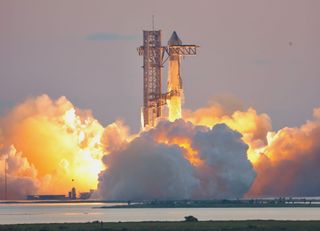
SpaceX's Starship Flight 15 reached orbit Friday evening after launching from Texas, but the company called off its plan to catch the Super Heavy booster and sent it into the Gulf of Mexico. As of 8:30 p.m. ET, the ship was circling Earth ahead of a catch attempt Saturday.
The ship catch would be a first. Before Saturday, SpaceX had never caught the top half of the rocket at its launch pad. A catch would also be the first time a Starship returned to the spot it left. That is a key step toward a rocket that can fly again and again, which NASA is relying on to carry astronauts to the moon.
Why it matters to you
Starship is the rocket NASA picked as a moon lander for its Artemis program. NASA has paid SpaceX about $3.2 billion since 2021 to build it, so its progress shapes how fast that taxpayer-funded effort moves. The flight also carried 26 new Starlink satellites for SpaceX's satellite internet service. SpaceX has said a new batch should begin serving customers within a few weeks.
The bigger stakes are about cost. Most rockets are used once and thrown away. A rocket that lands and flies again, like an airliner, could make every trip to space far cheaper. That would touch satellite internet, weather and GPS satellites, and future crewed missions.
SpaceX planned to steer the returning ship over thinly populated parts of northern Mexico and southern Texas, around the cities of the Rio Grande Valley, before it turned toward its pad. SpaceX streamed Friday's launch live.
How the Starship Flight 15 launch unfolded
The 407-foot rocket lifted off from Starbase, SpaceX's launch site on the Gulf Coast near Brownsville. The BBC put liftoff at 5:45 p.m. ET, while CBS News and UPI put it two minutes later. The Federal Aviation Administration approved the launch late Friday afternoon, The Daily Wire reported. That morning, Reuters had noted that no license had been issued yet.
A few minutes into the flight, the booster separated and turned back toward the launch tower. The plan was for the tower's giant mechanical arms, nicknamed "chopsticks," to grab it in midair. Instead, the booster triggered an automatic abort and ended up in the Gulf, the Associated Press reported. CBS News reported that it burst into flames as it hit the water.
As of Friday night, SpaceX had not said what went wrong. Its webcast host, Dan Huot, said, "We'll dig into what caused that abort during its flight back to the tower," UPI reported.
The ship itself kept climbing. It reached its planned orbit, only the second time a Starship has done so, at about 170 miles up. SpaceX then posted that all 26 satellites were in orbit, according to Starlust, a space news site that quoted the company's post.
How SpaceX planned to catch the ship
The ship was due to circle Earth about 14 times over roughly 22 hours. The AP and The Washington Times put the count at 15. CBS News reported that an engine burn to bring it down was set for about 3:21 p.m. Saturday, followed by a reentry of about an hour.
Near the pad, the ship was meant to flip upright, slow on one engine and drop between the tower's arms. SpaceX had said it would try this only if flight controllers judge the ship healthy enough for a safe return. If not, it had cleared areas of the Pacific and the Gulf where it could set the ship down at sea.
How SpaceX got to its first ship catch attempt
SpaceX has chased reuse for a decade. In 2015, it became the first company to land part of a rocket upright with its Falcon 9 booster. Falcon 9 rockets now fly more than 100 times a year, and reusing their lower half has cut launch costs sharply.
Starship is meant to go further and reuse every piece. Its first full test in 2023 went badly: several engines failed to light, and the rocket was destroyed after it tumbled. Every one of the 14 ships before Friday's ended up in the ocean, either by design or after an accident.
The booster has done better. SpaceX caught it with the tower's arms on three earlier flights, most recently in March 2025. Those were first-generation boosters; Friday's was a newer, upgraded model.
The last flight came in September. It was the first to reach orbit, but it ended after about three hours instead of the planned 10, with the ship splashing down in the Pacific before bursting into flames. Elon Musk, SpaceX's founder, has said he expects weekly Starship launches by the first half of 2027. SpaceX, which went public earlier this year, has put at least $15 billion of its own money into the rocket.
What we don't know yet
We don't know why the booster aborted its return. SpaceX's Kate Tice said its engines stopped firing too soon on the way back, but engineers are still looking for the cause. The AP described an automatic abort, while NBC News said only that the maneuver was called off and the reason wasn't clear. Any problem it finds could shape how soon SpaceX flies again.
It is also unclear whether this flight changes NASA's moon schedule. Engineers say several major tests remain, including moving fuel between two Starships in orbit. Moving fuel in orbit is what would let Starship travel beyond Earth's orbit to the moon.
Where experts disagree
Where experts agree
People who follow the program agree that full reuse is the prize. SpaceX calls it "the holy grail of rocketry", because it would let one rocket fly again quickly. Kiko Dontchev, SpaceX's vice president of launch, made the same point at a NASA summit last week. Even the Falcon rockets, he said, are not fully reusable: "We still throw that second stage away every single flight."
Outside experts see the same promise. Malcolm Macdonald, president of the Royal Aeronautical Society, told the BBC that "full reusability has the potential to fundamentally change the economics of accessing space." He added that one good flight would not prove the model on its own. It would instead mark a shift from showing Starship can fly to showing how it could work day to day.
full reusability has the potential to fundamentally change the economics of accessing space.
What's still debated
The open debate is about timing, not the goal. NASA and SpaceX expect Starship to land astronauts on the moon by 2028. Analysts and industry engineers believe the remaining tests will push that date back, Reuters reported. The BBC called the 2028 goal highly ambitious and said Starship's progress has been far slower than SpaceX intended.
NASA is hedging its bets. It has said it is open to using Blue Origin's Blue Moon lander instead, depending on which is ready first. The agency expects to choose between the two landers a year before the Artemis IV landing. Blue Origin has its own delays: a rocket explosion destroyed its Florida launch pad this year, and its return to flight has slipped to early 2027.
Musk has argued that speed of reuse matters as much as reuse itself. He said in September that Starship is built for "rapid reusability, like an aircraft". NASA's administrator, Jared Isaacman, has framed the timeline as a race, saying America is competing with China, which plans to land its astronauts on the moon by 2030.
Sources
Left
9 of 13 left-leaning outlets we track reported this
- Associated Press, via PBS NewsHour: SpaceX's Starship soars into orbit after booster malfunction thwarts double catch attempt
- Associated Press: SpaceX's Starship soars into orbit after booster explosion prevents an unprecedented double catch (updated Nov. 14)
- Associated Press, via PBS NewsHour: SpaceX's Starship returns from orbit and is captured by launch pad arms in a dramatic first (Nov. 14)
- NBC News: SpaceX launches 15th Starship flight; aborts booster recovery maneuver
- CBS News: SpaceX launches milestone Starship flight to demonstrate full reusability of orbit-class rocket
- The Guardian: SpaceX Starship megarocket blasts off before expected return for reuse
Center
5 of 9 center outlets we track reported this
- UPI: SpaceX launches Starship into orbit, aborts booster catch attempt
- Reuters: SpaceX to attempt first Starship spacecraft recovery on land in 15th flight
- Reuters: SpaceX's Starship aces first return to Texas (Nov. 14)
- BBC News: Setback for SpaceX Starship rocket's double-catch test
- Starlust: SpaceX launches Starship Flight 15 (space news site, not in our coverage pool; cited for SpaceX's post on the satellites)
Right
6 of 12 right-leaning outlets we track reported this
- The Daily Wire: SpaceX aims for historic first in daring Starship recovery attempt
- The Washington Times: SpaceX to use its giant 'chopsticks' to catch booster and spacecraft
- Fox Business (Fox News): SpaceX makes history as Starship spacecraft caught by launch tower for first time (Nov. 14) (for the Update)
- New York Post: SpaceX recovers Starship with giant tower arms in historic first (Nov. 14) (for the Update)
- Just The News: SpaceX catches rocket returning from orbit in historic feat (Nov. 14) (for the Update)
Primary
- SpaceX's Flight 15 webcast and mission statements, as quoted by UPI, CBS News and The Washington Times (SpaceX's mission page, spacex.com/launches, did not load as text for us)
This article was produced by AI under our Editorial Standards. Corrections are reviewed before they go live.
How coverage differs
Free with a Fair Witness account
See how left, center and right covered this story
A free account shows where the coverage agrees and where it splits, what each side played up and played down, and, when one side's outlets missed a story, who missed it.
Nov 13
6:21 PMUpdatedU.S.
New Orleans tanker crash: Coast Guard cites loss of steering; everyone accounted for
No one died when a tanker struck a docked riverboat. Investigators now want to know why a ship guided by a river pilot lost control.

The short version
- A tanker that appears to have lost its steering hit a docked river cruise boat in New Orleans on Friday.
- Everyone aboard was accounted for, and 32 people went to hospitals, none with critical injuries.
- Federal safety investigators have recovered the tanker's data recorder and expect a preliminary report within 24 to 30 days.
Documents in this story · 2
- RecordCity concludes on-site passenger and crew assistance following Mississippi River vessel collisionCity of New Orleans · Web page · Nov. 17, 2026Open Archived
- ReportMarine Accident Report on the Bright Field allision, New Orleans, December 1996 (NTSB/MAR-98/01)National Transportation Safety Board · PDFOriginal Archived
A tanker that appears to have lost its steering struck a docked river cruise boat in New Orleans on Friday, tipping it onto its side and putting passengers into the Mississippi River. Everyone aboard was accounted for, and 32 people went to hospitals with injuries that were not critical, Mayor Helena Moreno said.
No one died, which officials called a miracle. What investigators now have to explain is how a 520-foot tanker, with a river pilot guiding it, hit a passenger boat tied up at the dock. Their answer will help decide who, if anyone, is responsible. This account reflects what officials had said as of 9 p.m. ET Friday.
What the Coast Guard says went wrong
The clearest early account came from Capt. Melanie Burnham, who commands the Coast Guard in New Orleans. "There seems to be some type of a loss of steering," she told reporters on Friday evening. She said the tanker, the Atlantic Asphalt, lost control, but that investigators don't yet know why. The person guiding it was a river pilot, one of the local specialists who take ships through this busy stretch of the river.
Two investigations are now under way. The Coast Guard will convene a Marine Board of Investigation, its most serious kind of inquiry, to find the cause and whether any crime is suspected. The National Transportation Safety Board, the federal agency that investigates major transportation accidents, said its team should arrive Saturday morning, though Rep. Steve Scalise warned that Friday's nationwide flight ground stop could slow it down.
The Coast Guard closed the river to all boats between mile markers 93 and 96, and Burnham said crews are now working to reopen it.
How 180 people got off a boat that was turning over
The American Heritage had tied up near the Port of New Orleans offices about two hours earlier, at the end of an eight-day cruise, and its roughly 129 passengers were starting to leave. Then came a screech of metal. The tanker hit the riverboat broadside, and the five-story paddlewheeler began taking on water as people hurried to get off.
Jamie Holford saw it happen. "It sounded like a war movie," he told CBS News. As the boat rolled, some passengers climbed over its railings, and others ended up in the water in life jackets, holding on to ring buoys. The water was about 66°F.
Help came from every direction. Firefighters laid ladders over the dock to reach people, and crews on nearby boats pulled more than a dozen out of the river. By evening, Moreno could give the number everyone had been waiting for. "We have zero people unaccounted for," she said. In all, 180 to 190 people were accounted for.
Besides the 32 passengers taken to hospitals, two harbor police officers were hospitalized and were released Friday evening, the port said. Many passengers left their belongings on the sinking boat and are staying in hotels with help from the city and the Red Cross. Gov. Jeff Landry praised the rescuers, and he was blunt about what they faced. "The Mississippi River is not some quiet pond," he said.
A riverfront that was warned before
This is not the first time a ship has struck the downtown New Orleans riverfront. In December 1996, a loaded freighter called the Bright Field lost engine power and hit a wharf beside the Riverwalk shopping mall, hurting 62 people. In its report on that crash, the safety board found that boats tied up along these wharves were "vulnerable to ramming by other marine traffic." It faulted the Coast Guard and the port for not doing enough about that risk, and it made recommendations to them and to the river pilots.
No one has linked the two crashes, WDSU noted. But the earlier report shows the danger to boats docked here was identified nearly 30 years ago.
What we don't know yet
Why the tanker lost its steering is the question everything else depends on. The Coast Guard has pointed to steering, and a source in the emergency response told The Guardian the tanker may have lost power, which no official has confirmed. A mechanical failure, a navigation error or both would point to different people being responsible.
We found no public statement from the tanker's owners, which public records show are Chinese and Liberian companies, or from its crew or the river pilot, as of 9 p.m. ET Friday. Its manager issued one Saturday (see the Update above). Officials also haven't said when the river will fully reopen, how badly the hospitalized passengers were hurt, or whether the American Heritage can be saved. The safety board expects to release a preliminary report within 24 to 30 days.
Sources
Left
8 of 13 left-leaning outlets we track reported this
- CNN: Tanker 'lost control' and hit cruise ship in New Orleans, spurring massive evacuation, officials say
- ABC News: Tanker collides with riverboat with 129 passengers on board in New Orleans
- NBC News: Rescue underway after an oil tanker collides with a New Orleans river boat
- CBS News: River cruise ship, tanker crash in New Orleans on Mississippi River; passengers rescued (CBS News's national story, as carried on its Pittsburgh page)
- The Guardian: Tanker collides with cruise ship on Mississippi River in New Orleans
- Associated Press via KSTP: Rescues are underway in New Orleans after a tanker hits a river cruise boat
- Associated Press via PBS News: New Orleans port sues to get control of tanker that crashed into cruise ship on Mississippi River
- Associated Press via PBS News: Officials say a tanker's steering failed before it crashed into a cruise ship in New Orleans
- USA Today: NTSB says steering failure preceded New Orleans riverboat crash, Nov. 15
Center
4 of 9 center outlets we track reported this
- BBC News: 'Miracle on Mississippi': All rescued after docked cruise ship hit by tanker in New Orleans
- Reuters: Freighter collides with cruise ship in New Orleans, passengers in the water
- Newsweek: New Orleans tanker collides with American Cruise Lines passenger ship
- NewsNation: Tanker, riverboat collide on Mississippi River
Right
6 of 12 right-leaning outlets we track reported this
- Fox News: Tanker slams into docked New Orleans river cruiser carrying 129 passengers, sparking rescue
- New York Post: Tanker that slammed into docked NOLA riverboat had history of navigational systems issues: report (for the Update)
- New York Post: Dozens of passengers rushed to hospital after tanker lost control and collided with cruise ship
- The Washington Times: Rescue underway after tanker hits riverboat with 129 passengers at Port of New Orleans
- The Daily Caller: Rescue effort underway after tanker collides with river boat cruise ship
Other reporting
- WDSU: Nearly 30 years after Bright Field crash, another collision hits New Orleans riverfront (New Orleans TV station)
- Military Times: Coast Guard responds to New Orleans ship collision (military news outlet)
- The Maritime Executive: Four American Heritage Crewmembers Sue Operator of Asphalt Tanker (maritime trade publication)
Primary
- City of New Orleans: City concludes on-site passenger and crew assistance following Mississippi River vessel collision, Nov. 17, 2026 (for the Update) · Archived copy
- National Transportation Safety Board: Marine Accident Report on the Bright Field allision, New Orleans, December 1996 (NTSB/MAR-98/01) · Archived copy
This article was produced by AI under our Editorial Standards. Corrections are reviewed before they go live.
How coverage differs
Free with a Fair Witness account
See how left, center and right covered this story
A free account shows where the coverage agrees and where it splits, what each side played up and played down, and, when one side's outlets missed a story, who missed it.