


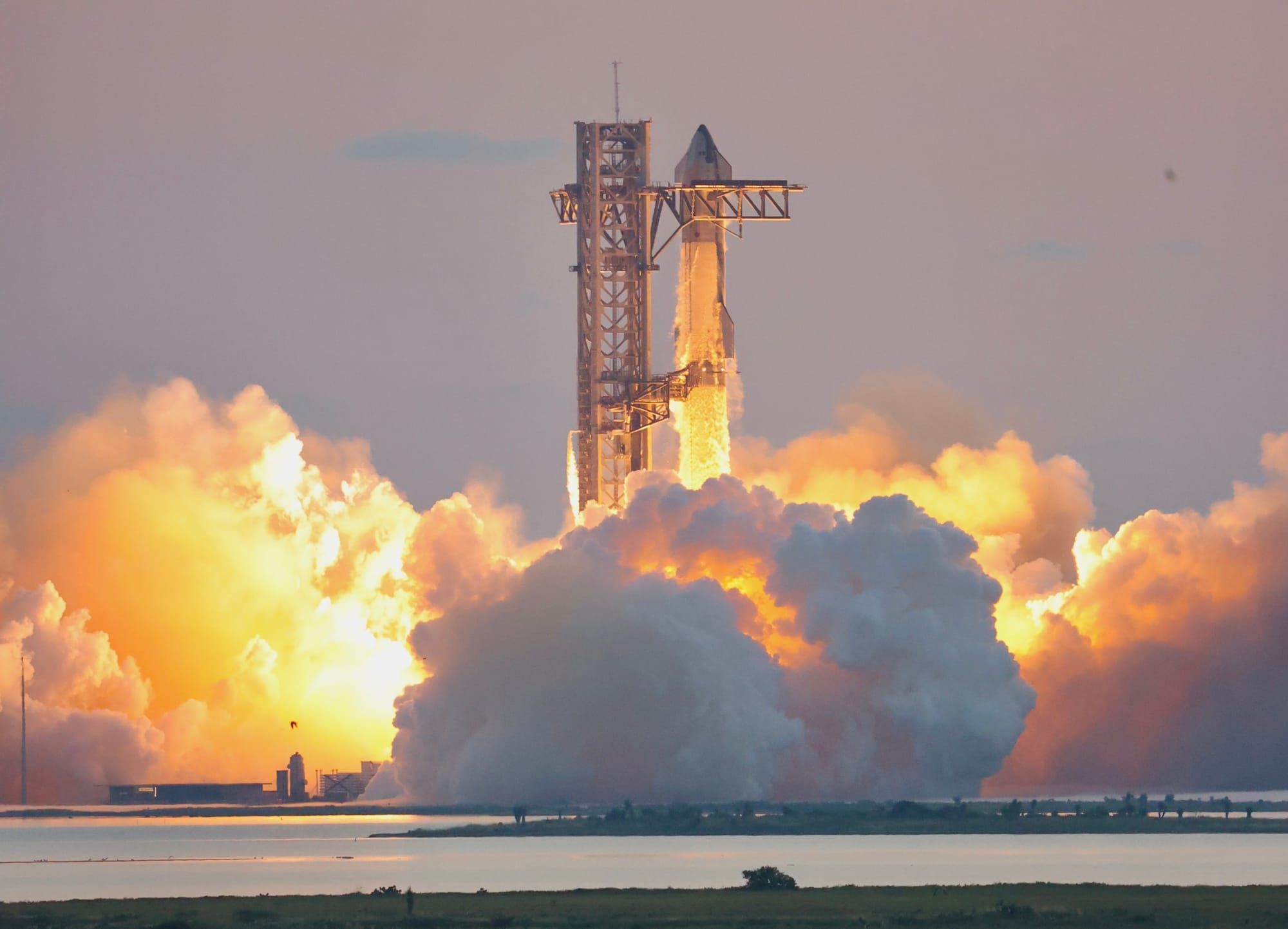
SpaceX catches its Starship ship at the Texas launch tower after Flight 15
The first catch of a Starship returning from orbit is a step for the rocket NASA picked to land astronauts on the moon.

Starship lifts off from Starbase in October 2024, on an earlier test flight that ended with the first booster catch. Photo, October 2024: Steve Jurvetson / Wikimedia Commons / CC BY 2.0
Who covered this
On this page · sections
SpaceX's Starship Flight 15 reached orbit Friday evening after launching from Texas, but the company called off its plan to catch the Super Heavy booster and sent it into the Gulf of Mexico. As of 8:30 p.m. ET, the ship was circling Earth ahead of a catch attempt Saturday.
The ship catch would be a first. Before Saturday, SpaceX had never caught the top half of the rocket at its launch pad. A catch would also be the first time a Starship returned to the spot it left. That is a key step toward a rocket that can fly again and again, which NASA is relying on to carry astronauts to the moon.
Why it matters to you
Starship is the rocket NASA picked as a moon lander for its Artemis program. NASA has paid SpaceX about $3.2 billion since 2021 to build it, so its progress shapes how fast that taxpayer-funded effort moves. The flight also carried 26 new Starlink satellites for SpaceX's satellite internet service. SpaceX has said a new batch should begin serving customers within a few weeks.
The bigger stakes are about cost. Most rockets are used once and thrown away. A rocket that lands and flies again, like an airliner, could make every trip to space far cheaper. That would touch satellite internet, weather and GPS satellites, and future crewed missions.
SpaceX planned to steer the returning ship over thinly populated parts of northern Mexico and southern Texas, around the cities of the Rio Grande Valley, before it turned toward its pad. SpaceX streamed Friday's launch live.
How the Starship Flight 15 launch unfolded
The 407-foot rocket lifted off from Starbase, SpaceX's launch site on the Gulf Coast near Brownsville. The BBC put liftoff at 5:45 p.m. ET, while CBS News and UPI put it two minutes later. The Federal Aviation Administration approved the launch late Friday afternoon, The Daily Wire reported. That morning, Reuters had noted that no license had been issued yet.
A few minutes into the flight, the booster separated and turned back toward the launch tower. The plan was for the tower's giant mechanical arms, nicknamed "chopsticks," to grab it in midair. Instead, the booster triggered an automatic abort and ended up in the Gulf, the Associated Press reported. CBS News reported that it burst into flames as it hit the water.
As of Friday night, SpaceX had not said what went wrong. Its webcast host, Dan Huot, said, "We'll dig into what caused that abort during its flight back to the tower," UPI reported.
The ship itself kept climbing. It reached its planned orbit, only the second time a Starship has done so, at about 170 miles up. SpaceX then posted that all 26 satellites were in orbit, according to Starlust, a space news site that quoted the company's post.
How SpaceX planned to catch the ship
The ship was due to circle Earth about 14 times over roughly 22 hours. The AP and The Washington Times put the count at 15. CBS News reported that an engine burn to bring it down was set for about 3:21 p.m. Saturday, followed by a reentry of about an hour.
Near the pad, the ship was meant to flip upright, slow on one engine and drop between the tower's arms. SpaceX had said it would try this only if flight controllers judge the ship healthy enough for a safe return. If not, it had cleared areas of the Pacific and the Gulf where it could set the ship down at sea.
How SpaceX got to its first ship catch attempt
SpaceX has chased reuse for a decade. In 2015, it became the first company to land part of a rocket upright with its Falcon 9 booster. Falcon 9 rockets now fly more than 100 times a year, and reusing their lower half has cut launch costs sharply.
Starship is meant to go further and reuse every piece. Its first full test in 2023 went badly: several engines failed to light, and the rocket was destroyed after it tumbled. Every one of the 14 ships before Friday's ended up in the ocean, either by design or after an accident.
The booster has done better. SpaceX caught it with the tower's arms on three earlier flights, most recently in March 2025. Those were first-generation boosters; Friday's was a newer, upgraded model.
The last flight came in September. It was the first to reach orbit, but it ended after about three hours instead of the planned 10, with the ship splashing down in the Pacific before bursting into flames. Elon Musk, SpaceX's founder, has said he expects weekly Starship launches by the first half of 2027. SpaceX, which went public earlier this year, has put at least $15 billion of its own money into the rocket.
What we don't know yet
We don't know why the booster aborted its return. SpaceX's Kate Tice said its engines stopped firing too soon on the way back, but engineers are still looking for the cause. The AP described an automatic abort, while NBC News said only that the maneuver was called off and the reason wasn't clear. Any problem it finds could shape how soon SpaceX flies again.
It is also unclear whether this flight changes NASA's moon schedule. Engineers say several major tests remain, including moving fuel between two Starships in orbit. Moving fuel in orbit is what would let Starship travel beyond Earth's orbit to the moon.
Where experts disagree
Where experts agree
People who follow the program agree that full reuse is the prize. SpaceX calls it "the holy grail of rocketry", because it would let one rocket fly again quickly. Kiko Dontchev, SpaceX's vice president of launch, made the same point at a NASA summit last week. Even the Falcon rockets, he said, are not fully reusable: "We still throw that second stage away every single flight."
Outside experts see the same promise. Malcolm Macdonald, president of the Royal Aeronautical Society, told the BBC that "full reusability has the potential to fundamentally change the economics of accessing space." He added that one good flight would not prove the model on its own. It would instead mark a shift from showing Starship can fly to showing how it could work day to day.
full reusability has the potential to fundamentally change the economics of accessing space.
What's still debated
The open debate is about timing, not the goal. NASA and SpaceX expect Starship to land astronauts on the moon by 2028. Analysts and industry engineers believe the remaining tests will push that date back, Reuters reported. The BBC called the 2028 goal highly ambitious and said Starship's progress has been far slower than SpaceX intended.
NASA is hedging its bets. It has said it is open to using Blue Origin's Blue Moon lander instead, depending on which is ready first. The agency expects to choose between the two landers a year before the Artemis IV landing. Blue Origin has its own delays: a rocket explosion destroyed its Florida launch pad this year, and its return to flight has slipped to early 2027.
Musk has argued that speed of reuse matters as much as reuse itself. He said in September that Starship is built for "rapid reusability, like an aircraft". NASA's administrator, Jared Isaacman, has framed the timeline as a race, saying America is competing with China, which plans to land its astronauts on the moon by 2030.
Sources
Left
9 of 13 left-leaning outlets we track reported this
- Associated Press, via PBS NewsHour: SpaceX's Starship soars into orbit after booster malfunction thwarts double catch attempt
- Associated Press: SpaceX's Starship soars into orbit after booster explosion prevents an unprecedented double catch (updated Nov. 14)
- Associated Press, via PBS NewsHour: SpaceX's Starship returns from orbit and is captured by launch pad arms in a dramatic first (Nov. 14)
- NBC News: SpaceX launches 15th Starship flight; aborts booster recovery maneuver
- CBS News: SpaceX launches milestone Starship flight to demonstrate full reusability of orbit-class rocket
- The Guardian: SpaceX Starship megarocket blasts off before expected return for reuse
Center
5 of 9 center outlets we track reported this
- UPI: SpaceX launches Starship into orbit, aborts booster catch attempt
- Reuters: SpaceX to attempt first Starship spacecraft recovery on land in 15th flight
- Reuters: SpaceX's Starship aces first return to Texas (Nov. 14)
- BBC News: Setback for SpaceX Starship rocket's double-catch test
- Starlust: SpaceX launches Starship Flight 15 (space news site, not in our coverage pool; cited for SpaceX's post on the satellites)
Right
6 of 12 right-leaning outlets we track reported this
- The Daily Wire: SpaceX aims for historic first in daring Starship recovery attempt
- The Washington Times: SpaceX to use its giant 'chopsticks' to catch booster and spacecraft
- Fox Business (Fox News): SpaceX makes history as Starship spacecraft caught by launch tower for first time (Nov. 14) (for the Update)
- New York Post: SpaceX recovers Starship with giant tower arms in historic first (Nov. 14) (for the Update)
- Just The News: SpaceX catches rocket returning from orbit in historic feat (Nov. 14) (for the Update)
Primary
- SpaceX's Flight 15 webcast and mission statements, as quoted by UPI, CBS News and The Washington Times (SpaceX's mission page, spacex.com/launches, did not load as text for us)
This article was produced by AI under our Editorial Standards. Corrections are reviewed before they go live.
How coverage differs
Free with a Fair Witness account
See how left, center and right covered this story
A free account shows where the coverage agrees and where it splits, what each side played up and played down, and, when one side's outlets missed a story, who missed it.
Keep reading
The newest stories in Science, then the rest of the site.
Newest · Science
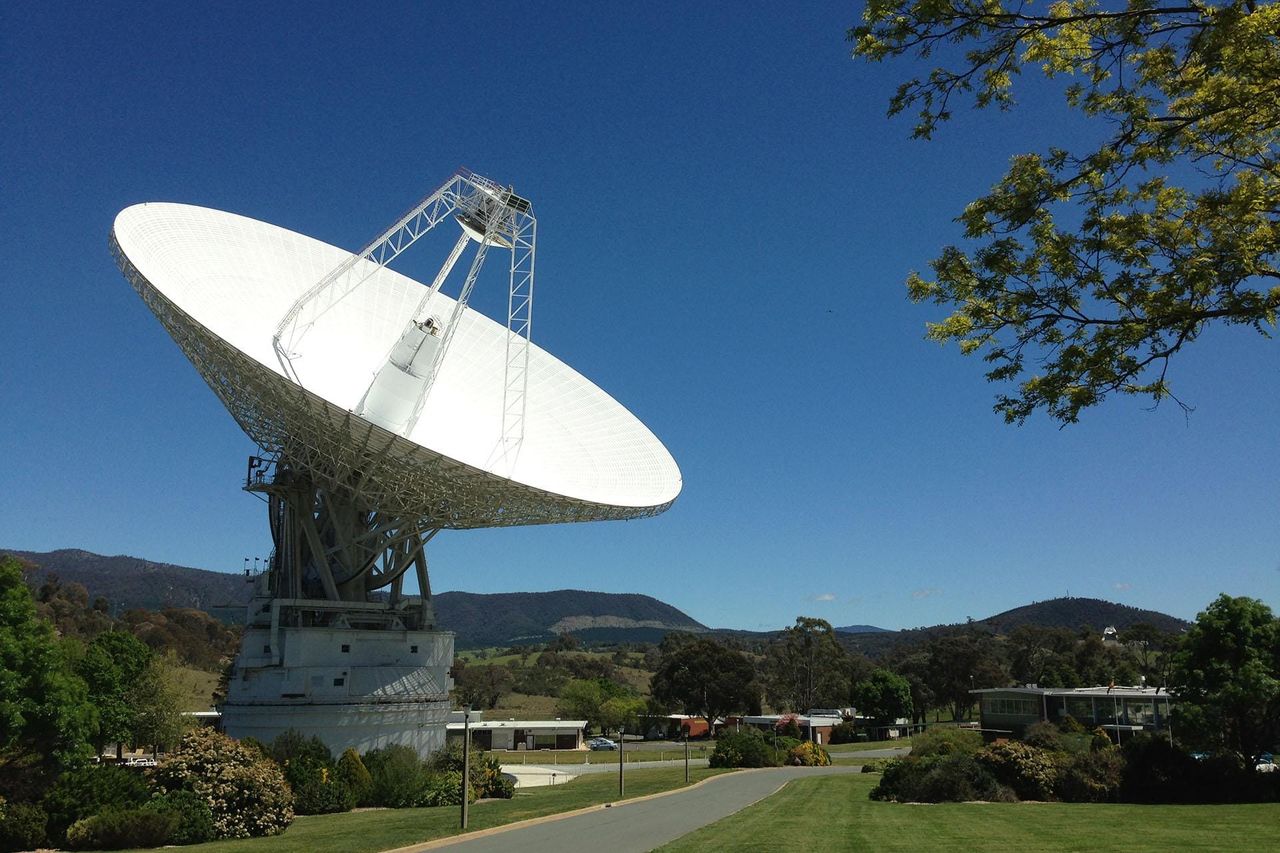
Voyager 1 is now one light-day from Earth by NASA's count, a first for any spacecraft
Radio signals now take a full day each way, so the first word from past the mark won't reach Earth until Thursday morning.
Latest
New stories and updates, newest first. Times are Eastern.
-
Nov 18
2:55 PMUpdated World
Part of Crimean Bridge collapses after Ukrainian strike as Russia hits Kyiv's bridges
Each side hit bridges it calls military routes, two days before Trump meets Putin and Xi in China.
-
Nov 18
11:14 AMUpdated World
Trump will meet Xi and Putin together Thursday to discuss nuclear arms, White House says
No treaty has capped the world's two largest nuclear arsenals since February, and Trump wants China in whatever replaces it.
-
Nov 18
11:14 AMUpdated U.S.
NSA's classified network goes down; White House says no sign of a cyberattack
The intelligence agency's internal system for sharing secrets failed in a week of U.S. tech outages, and Democrats want a briefing.
-
Nov 18
11:14 AMUpdated Technology
Apple outage: company says an internal update hit iCloud, Apple Pay and App Store
Many services were back by afternoon, but Apple's status page for app makers still listed key tools as down Tuesday evening.
-
Nov 18
9:15 AMNew Culture
Pope Leo says no to married priests for now, details his lung cancer surgery
His answer keeps on hold a 2019 proposal from Amazon bishops to make married deacons priests where communities wait years for one.
-
Nov 18
2:16 PMUpdated U.S.
Mullin defends flying government plane to LSU-Texas game a day after FAA ground stop
His department says he paid his way, but federal rules can set that at a coach fare, and no one has said what he paid.
-
Nov 18
2:15 PMUpdated World
Iran fires on U.S. air base in Kuwait and at Bahrain after U.S. strike on Qeshm
Iran's first attack on Kuwait in two months widens a weeklong exchange of fire, and Washington has not said how it will answer.
-
Nov 18
12:41 PMNew World
Britain hands Army officer accused of spying for Russia to U.S. military
The handover moves any prosecution to the United States, where officials have not said whether a military or civilian court would hear it.
Edge of Frame · Right
-
Nov 18
12:30 PMTop story U.S.
Garcia tells Vance, Trump's sons and others to preserve records for House probes
The letters map what Democrats plan to investigate once they take the House in January and gain the power to subpoena.
-
Nov 18
12:25 PMTop story U.S.
House Democrats nominate Hakeem Jeffries for speaker, 251-11, ahead of Jan. 3 vote
Eleven Democrats voted no in a count he asked for. His party's projected majority lets him lose almost 40 votes and still reach 218.
-
Nov 18
11:53 AMUpdated World
US Army soldier arrested in UK on suspicion of spying for Russia
The soldier, who has not been named or charged, was assigned to a NATO headquarters built to respond quickly to crises.
-
Nov 18
11:40 AMUpdated World
U.S. strikes Iran's Qeshm Island after third Iranian attack on Bahrain, officials say
It is the U.S. reply to Iranian attacks that ended a two-month lull, and Iran's next move will show whether the exchange keeps going.
-
Nov 18
11:39 AMUpdated U.S.
White House counsel warns Oversight Democrats their probes could be criminal
The letter escalates a fight over how far Congress can dig into the Trump administration once Democrats take over in January.
The Fair Witness Daily
Get each morning's Spin Meter in your inbox
The Daily leads with the Spin Meter, then the day's explainers. A free account also unlocks every Spin Meter on the site.
Free. Unsubscribe anytime. Already a member? Sign in