Second judge blocks Trump's new birthright citizenship order
The ruling covers children born through paid surrogacy or to some foreign government workers, ahead of an expected appeal over whom a president can exclude.

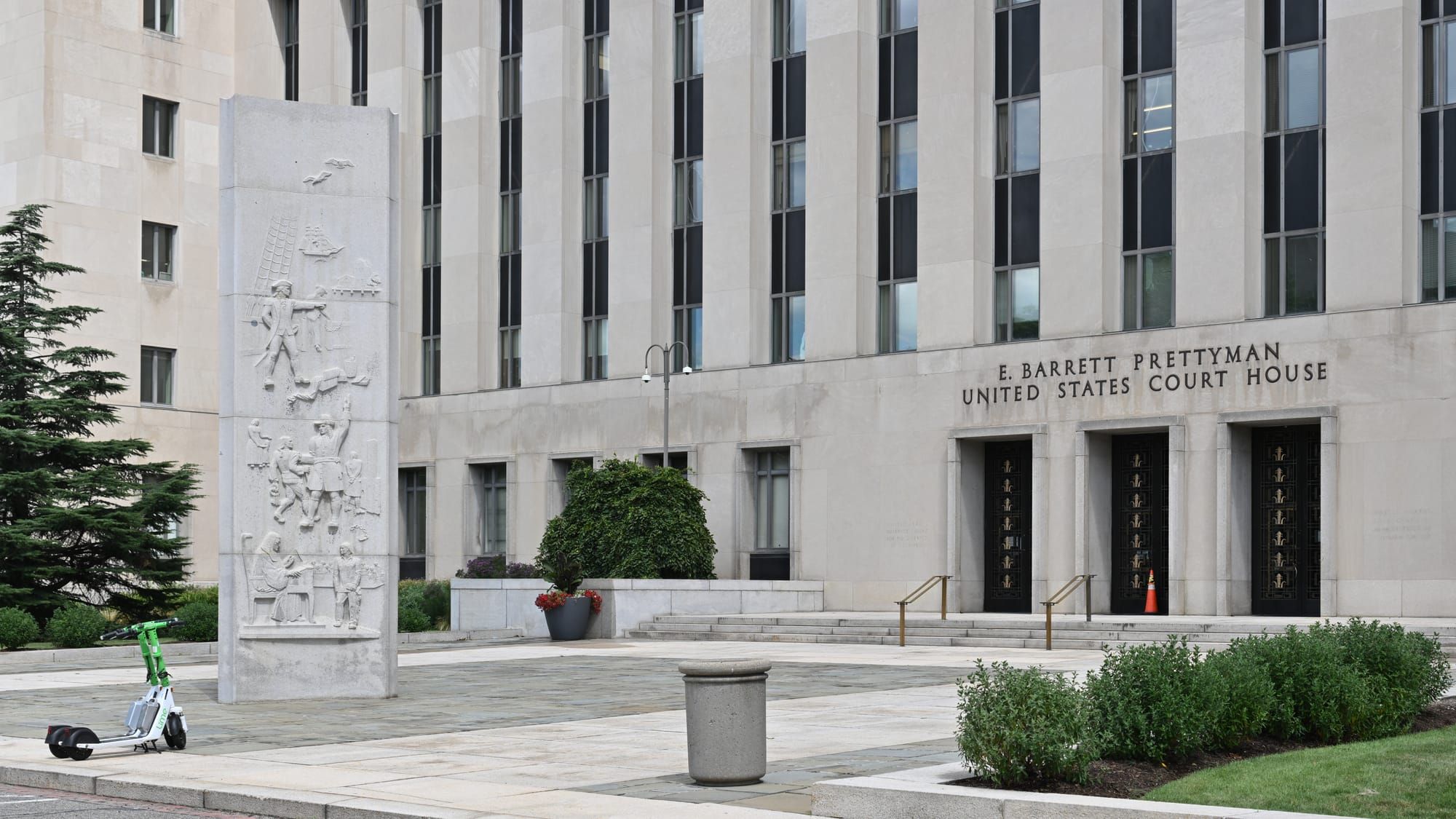
The E. Barrett Prettyman courthouse in Washington, home of the federal trial court where Judge Christopher Cooper ruled Wednesday. Photo, July 2026: G. Edward Johnson / Wikimedia Commons / CC BY 4.0
Who covered this
On this page · sections
The short version
- A federal judge in Washington blocked President Trump's August order denying citizenship to some U.S.-born children whose parents are not citizens.
- It means children born through paid surrogacy or to some foreign government workers can still get the same citizenship papers as other U.S.-born children.
- The administration is expected to appeal, and a Maryland judge's separate block on the same order still stands.
Documents in this story · 4
- RecordExecutive Order 14418, Continuing to Protect the Meaning and Value of American CitizenshipThe White House · Web page · Aug. 6Open Archived
- ReleaseFederal Court Blocks New President Trump Birthright Citizenship Executive OrderACLU · Press release · Nov. 25Open Archived
- ReleaseImmigrants' Rights Advocates File Federal Lawsuit Challenging New Trump Birthright Citizenship Executive OrderACLU · Press release · Sept. 28Open Archived
- RulingTrump v. Barbara: Supreme Court Holds Birthright Citizenship Executive Order 14160 UnconstitutionalCongressional Research Service (via EveryCRSReport) · Web page · Aug. 13Open Archived
A federal judge in Washington on Wednesday blocked President Donald Trump's second order limiting birthright citizenship nationwide, making him the second judge to stop it since August. Birthright citizenship is the rule that nearly every child born on U.S. soil is a citizen.
U.S. District Judge Christopher Cooper issued a classwide preliminary injunction, an order that stops the policy while the case goes on, in a 67-page ruling. It protects children of some foreign government workers, children born through paid surrogacy and children whose parents the administration links to terrorist groups or gangs. The order had come just weeks after the Supreme Court struck down Trump's first attempt, so Wednesday's ruling is the next test of how far a president can go after losing there.
Why it matters to you
The order tells federal agencies not to issue documents recognizing citizenship to children in the groups it names. Cooper's injunction bars the State Department, the Department of Homeland Security and the Social Security Administration from enforcing it against any child in the class. Those are the agencies that issue passports, handle immigration status and assign Social Security numbers.
The numbers are not small. Cooper wrote that thousands of children are born through birth tourism each year, and hundreds to employees of foreign governments and international groups. For parents in those groups, the ruling means their newborns keep the same papers any other American child gets, at least while the case goes on.
What Judge Cooper ruled on Trump's birthright citizenship order
Cooper first certified a broad class: "children who are or will be unlawfully denied citizenship" under the order. That lets one ruling cover families nationwide, not only the three families that sued. He also turned down the administration's request to pause his ruling while it appeals.
His reasoning leaned on the Supreme Court. "The merits in this case are clear-cut," he wrote, because the justices had twice held that all children born here are citizens, apart from a small handful not subject to U.S. law. That handful, he said, is three old groups: children of diplomats with full immunity, children of enemy forces occupying U.S. ground, and children born on foreign public ships. The order tried to add more, and Cooper wrote that "the President cannot carve out new exceptions to birthright citizenship" for children born here and subject to its laws.
He then took the order's groups one at a time. A parent's status as an alien enemy can't strip a child of citizenship, he wrote, because that old exception covers only hostile forces holding U.S. territory. Children born through surrogacy are under U.S. law from birth, he found, and the State Department recognized them as citizens before the order. Congress, he added, has authorized no new exceptions.
How the second order got to court
Trump's first order, signed on his first day back in office in 2025, denied citizenship to children whose parents were in the country illegally or temporarily. The Supreme Court struck it down on June 30 in Trump v. Barbara. Chief Justice John Roberts wrote that it violated the 14th Amendment's Citizenship Clause, and six justices agreed it was unlawful. The Court relied on its 1898 ruling in United States v. Wong Kim Ark, which held that a child born here to Chinese immigrants was a citizen.
Trump signed the second order, Executive Order 14418, on Aug. 6. Read in full, it has a limit that most reports left out. Every group it names applies only when neither parent is a citizen. Within that limit, it reaches children with a parent deemed an alien enemy, including members of designated terrorist groups; children of foreign government or international group employees; children whose parents paid for a mother's or surrogate's presence here to give birth; and children born in U.S. territories where no federal law grants citizenship. It gave agencies 30 days to issue guidance.
Courts moved first. On Sept. 2, Judge Deborah Boardman in Maryland blocked the order for children whose parents are in the country temporarily or without legal status, SCOTUSblog reported. The government issued its guidance two days later. On Sept. 28, the ACLU and three other groups filed Nathan v. Trump in Washington on behalf of people subject to the new order. Cooper's ruling reaches past that class to the order's other groups, so the administration must now overturn both rulings to enforce it.
Cooper is also the judge who blocked the Kennedy Center board's closure vote and Trump's name on the building, which we covered this month.
the President cannot carve out new exceptions to birthright citizenship
What we don't know yet
It is not yet known whether the administration will take Cooper's ruling to the U.S. Court of Appeals for the D.C. Circuit or straight to the Supreme Court. Fox News reported that the administration is expected to appeal and to ask to enforce the order in the meantime, but we found no appeal on file. Fox said it asked the Justice Department for comment. We found no public response from the Justice Department as of 5:45 p.m. ET Wednesday.
Nor is it clear whether either ruling covers the order's clause on children born in U.S. territories. The reports we read describe Cooper's class as children denied citizenship under the order, but none says whether that includes children born in the territories. Boardman's covers children of parents here temporarily or without legal status. The opinion itself should answer that, but it was not posted on a public court site we could open as of Wednesday evening.
The case each side makes
The White House
The administration says the order follows the Supreme Court rather than defying it. White House spokeswoman Lauren Bis said the order is "consistent with the holdings and analysis set forth by the Supreme Court." She also said the ruling came from an activist judge appointed by former President Barack Obama trying to block Trump's agenda.
Its legal theory builds on the exceptions the courts already accept. If children of diplomats are outside U.S. jurisdiction, the administration argues, the same should hold for a broader set of foreign government workers. If children of invading armies are excluded, it says, that should reach terrorists and gang members. And parents who arrange visas only to give birth here are, in its view, using fraud. The order itself calls citizenship "a priceless and profound gift" to be guarded from foreign actors.
The families and their lawyers
The plaintiffs say the Supreme Court has settled this. "Enough is enough," said Cody Wofsy, deputy director of the ACLU's Immigrants' Rights Project. The Court rejected efforts to narrow birthright citizenship in 1898 and again this year, he said, and the president must accept it as the law of the land.
They also say only the Constitution or Congress can draw these lines, not an executive order. "The president keeps trying to rewrite the Constitution by executive fiat," said Winnie Kao, senior counsel at the Asian Law Caucus, one of the groups that sued. She said the fight is a waste of taxpayer money. Scott Michelman, legal director of the ACLU of the District of Columbia, said the court had again found that the government cannot invent new exceptions to birthright citizenship.
How coverage differs
Fox News opened on Trump's past attacks on the judge; the left-leaning outlets opened on the judge's words against Trump. Only Reuters and Fox told readers the White House's case that the order follows the Supreme Court.
If you read the left 4 of 20 outlets
You got the judge, not the defense.
If you read the center 3 of 11 outlets
You saw both sides, in one place.
If you read the right 3 of 20 outlets
You met the judge before the ruling.
Sources
Left
4 of 20 left-leaning outlets we track reported this
Center
3 of 11 center outlets we track reported this
Right
3 of 20 right-leaning outlets we track reported this
Other reporting
Primary
- The White House: Executive Order 14418, Continuing to Protect the Meaning and Value of American Citizenship, Aug. 6 · Archived copy
- ACLU: Federal Court Blocks New President Trump Birthright Citizenship Executive Order, Nov. 25 · Archived copy
- ACLU: Immigrants' Rights Advocates File Federal Lawsuit Challenging New Trump Birthright Citizenship Executive Order, Sept. 28 · Archived copy
- Congressional Research Service (via EveryCRSReport): Trump v. Barbara: Supreme Court Holds Birthright Citizenship Executive Order 14160 Unconstitutional, Aug. 13 · Archived copy
This article was produced by AI under our Editorial Standards. Corrections are reviewed before they go live.
How coverage differs
Keep reading
The newest U.S. stories.
The Fair Witness Daily
Every morning around 7 a.m. Eastern, seven days a week.
Wednesday’s editionFree
In Wednesday’s Daily
Then the Spin Meter: one divided story, set side by side as the left, center and right told it.
Free. One email a day.
Unsubscribe in one click. Already a member? Sign in