Nov 19
6:15 AMUpdatedU.S.
South Florida flooding shuts Broward, Miami-Dade schools after up to 15 inches of rain
Forecasters say even an inch or two more rain could flood soaked neighborhoods Thursday, and Fort Lauderdale's king tides are due next week.

The short version
- Up to about 15 inches of rain flooded South Florida this week, closing roads, collapsing a synagogue roof and prompting emergency declarations in Broward County.
- Broward and Miami-Dade public schools are closed Thursday, and forecasters warn that even modest rain could flood already soaked neighborhoods.
- A flood watch runs until 7 p.m. Thursday, the threat should ease Friday, and Fort Lauderdale expects king tides Nov. 22 through 28.
Documents in this story · 6
- RecordFlood Watch, issued 2:51 a.m. ET Nov. 19National Weather Service Miami · Web pageOpen Archived
- RecordArea Forecast Discussion, 2:35 a.m. ET Nov. 19National Weather Service Miami · Web pageOpen Archived
- RecordFlash Flood Warning for northern Broward County, 1:16 p.m. ET Nov. 19National Weather Service Miami · Web pageOpen Archived
- RecordArea Forecast Discussion, 12:49 p.m. ET Nov. 19National Weather Service Miami · Web pageOpen Archived
- RecordDistrict home page (closure notices), checked 2:30 p.m. ET Nov. 19Broward County Public Schools · Web pageOpen Archived
- RecordA message from Mayor Dean J. Trantalis on king tidesCity of Fort Lauderdale · Web page · Sept. 4, 2026Open Archived
South Florida flooding closed public schools in Broward and Miami-Dade counties Thursday, after up to 15 inches of rain over two days swamped roads and homes and collapsed the roof of a Hollywood synagogue.
The heaviest rain may be over, but the danger isn't. As of 5:30 a.m. ET Thursday, the National Weather Service in Miami had a flood watch in place until 7 p.m. for the Miami-Dade, Broward and Palm Beach metro areas. Its forecasters wrote that in many places "the damage has already been done," so even 1 to 2 more inches could cause serious flooding.
Why it matters to you
If you live in Broward or Miami-Dade, check your route before you drive. "It's a historically significant rainfall event in the city," said Hollywood Mayor Josh Levy, who urged people to stay off the roads and skip trips they don't need. High water and stalled cars closed parts of Florida's Turnpike and Interstate 95 in Hollywood. Fort Lauderdale Fire Rescue sent high-water teams to evacuate stranded residents from flooded homes on Wednesday.
For families, Thursday is a second straight day without classes in Broward. The district's superintendent, Howard Hepburn, said flooding reached schools around Davie and Hollywood and cut off two bus depots, including one near Nova High School. "We're going to have to wait for the water to recede," he said. Reports differ on what comes after that: Fox Weather reported that both districts had canceled classes through the end of the week, while the announcements CBS News reported covered Thursday only.
How much rain fell, and why it kept coming
Every total so far is preliminary, and they vary by gauge. The weather service counted 15.3 inches in 24 hours in parts of Broward County, according to the latest version of the AP's story. Fox Weather's rain reports put Plantation at 15.32 inches and Hollywood at 15.21. AccuWeather's highest figure was 16.91 inches at Dania Beach, but several of its reports came from volunteer and home weather stations, and UPI called the totals unofficial.
Fort Lauderdale shows the scale. The city's average rainfall for the whole month of November is 4.8 inches. A single downpour that ended early Wednesday dropped 5.72 inches there, more than three times the daily record set in 1959.
The reason it kept coming is that the storms stayed put. The weather service's Miami office says strong winds off the Atlantic fed bands of storms that kept forming over the same places. Alejandra Garcia, a meteorologist there, said El Niño has upset Florida's usual dry season by steering low-pressure systems toward the southeastern United States. Fair Witness reported Nov. 9 that federal forecasters expect this El Niño to be among the strongest on record, with a wetter winter likely across the South.
It is also the second flood to shut Florida schools in less than a month. Early in November, king tides and extreme rain closed schools in four other Florida counties, including Brevard and St. Lucie.
Where the South Florida flooding hit hardest
In Hollywood, the city logged more than 300 calls for service overnight. Broward County declared a state of emergency at 7 a.m. Wednesday and closed its parks, libraries and government buildings. Fort Lauderdale and Hollywood declared their own emergencies.
At about 7 a.m. Wednesday, the roof of Temple Sinai of Hollywood collapsed into its sanctuary, the city's fire rescue spokesman told AccuWeather. No one was inside, and no injuries were reported. Building officials deemed it unsafe. The rabbi said the whole campus is closed, including a school and an early childhood center. The ark holding the Torah scrolls was not damaged, and neither was a scroll that survived the Holocaust. "It didn't feel like any kind of normal thing I've ever seen," said Rabbi Gideon Goldenholz.
Across the city, Memorial Regional Hospital suspended visitation on Wednesday. Rain also damaged a hospital's roof and flooded its hallways, the AP said in a later version that didn't name the hospital.
It's a historically significant rainfall event in the city.
What we don't know yet
Families don't yet know whether Broward and Miami-Dade schools will reopen Friday. How many homes and businesses flooded is also unclear: as of Thursday morning, we found no official count of damaged buildings or a cost estimate. Temple Sinai is hiring an engineer to see whether its school wing can reopen, since the roof fell on the sanctuary side.
The Miami forecast office expects the widespread flood threat to ease by Friday, with drier weather this weekend. Farther out, forecasters are watching a storm still taking shape. The National Hurricane Center expects a low to form near the northern Bahamas, and it could become a subtropical or tropical storm off the Southeast and mid-Atlantic coasts into early next week.
The water may not be done with Fort Lauderdale, though. The city's own calendar predicts king tides, among the highest tides of the year, from Nov. 22 through 28. The city warns that rain and high water tables can push tides even higher, so streets that are drying out this weekend could flood again at high tide next week.
Sources
Left
5 of 13 left-leaning outlets we track reported this
- Associated Press: Rainfall supercharged by El Niño causes road flooding, collapsed synagogue roof in south Florida, Nov. 18 (a later version ran in the New York Post, Nov. 19)
- CBS News (Miami): Miami-Dade public schools to close Thursday as flooding threat continues across South Florida, Nov. 18
- NBC News: Intense rain and flooding hits both U.S. coasts, causing major issues in Florida, Nov. 18
- CBS News: Photos, videos show devastating South Florida flooding that closed schools, forced evacuations, Nov. 19
Center
2 of 9 center outlets we track reported this
Right
2 of 12 right-leaning outlets we track reported this
- Fox Weather (Fox News): Flash flooding swamps Florida coastline as relentless showers bring weeklong threat to Sunshine State, updated Nov. 18
- The National Desk (report by Sinclair station WPEC): Heavy rain causes roof collapse at South Florida synagogue amid widespread flooding, Nov. 18
- Fox Weather (Fox News), via the New York Post: Torrential Florida rain prompts emergency declarations as dangerous flooding grows, Nov. 19
Primary
- National Weather Service Miami: Flood Watch, issued 2:51 a.m. ET Nov. 19 · Archived copy
- National Weather Service Miami: Area Forecast Discussion, 2:35 a.m. ET Nov. 19 · Archived copy
- National Weather Service Miami: Flash Flood Warning for northern Broward County, 1:16 p.m. ET Nov. 19 · Archived copy
- National Weather Service Miami: Area Forecast Discussion, 12:49 p.m. ET Nov. 19 · Archived copy
- Broward County Public Schools: district home page (closure notices), checked 2:30 p.m. ET Nov. 19 · Archived copy
- City of Fort Lauderdale: A message from Mayor Dean J. Trantalis on king tides, Sept. 4, 2026 · Archived copy
This article was produced by AI under our Editorial Standards. Corrections are reviewed before they go live.
How coverage differs
Free with a Fair Witness account
See how left, center and right covered this story
A free account shows where the coverage agrees and where it splits, what each side played up and played down, and, when one side's outlets missed a story, who missed it.
Nov 19
6:10 AMUpdatedWorld
Trump, Xi and Putin hold first three-way talks in Shenzhen; no nuclear deal announced
With no treaty now limiting U.S. and Russian arsenals, the three leaders opened far apart: Trump sought cuts, while Xi, by China's account, urged abolition.

The short version
- Trump, Xi and Putin held the first three-way meeting of the U.S., Chinese and Russian leaders on Thursday in Shenzhen, China.
- Trump pressed for nuclear cuts, but their joint declaration pledged only talks on nuclear risks, and no treaty now limits the U.S. and Russian arsenals.
- The declaration sets no date for those talks, and Trump heads home to Washington next.
Documents in this story · 2
- RecordChina-Russia-U.S. Heads of State Declaration toward Peace, full text as published by Xinhua, China's state news agencyenglish.news.cn · Web page · Nov. 19Open Archived
- RecordPresident Xi Jinping Meets with U.S. President Donald J. TrumpMinistry of Foreign Affairs of China · Web page · Nov. 19Open Archived
President Donald Trump, Chinese President Xi Jinping and Russian President Vladimir Putin held the first three-way meeting of their countries' leaders Thursday in Shenzhen, China. Trump pressed the other two to cut nuclear weapons. A joint declaration afterward promised talks on nuclear risks, not cuts.
That matters because no treaty now limits the two largest nuclear arsenals, and Thursday showed how far apart the three leaders start. Trump wants fewer weapons. Xi, by the account of China's state news agency, wants them abolished over time. Putin led with Ukraine.
What Trump, Xi and Putin said at the Shenzhen meeting
The session started more than two hours late, according to The Washington Times, at about 3:30 a.m. ET by the timing of Russia's state news agency TASS. Accounts of its length differ. TASS put it at about 90 minutes, while USA Today said about an hour. Only the opening remarks were public.
Trump made nuclear weapons his theme. The three countries are "uniquely positioned to discuss how to reduce the number of nuclear weapons on Earth," he said in his opening remarks. He also said the three should lower the risk that such weapons are ever used. Trump raised keeping Iran from getting a nuclear weapon, and said he would propose ways for the three to shield themselves from the International Criminal Court, which he accused of overreach.
Putin did not name nuclear arms in his public opening, The Washington Times reported. He listed food and energy security and fighting terrorism, and named a settlement in Ukraine as a shared interest. The three countries can help keep the peace if they work on the basis of "mutual respect, equality and a balance of interests," he said.
Accounts of Xi's opening differ. The Washington Times reported that he, too, left nuclear arms out, while the New York Post reported that he called for banning and destroying them to build a nuclear-free world. Xinhua, China's state news agency, reported that Xi called nuclear weapons "the Sword of Damocles that hangs over humanity" and said they should be completely prohibited and destroyed over time. He also set out four points for how major powers should deal with each other, starting with mutual respect, and urged channels for handling crises. Where Trump asked for fewer weapons, Xi, as Xinhua reported it, named an end point and gave no date for reaching it.
Trump's separate talks with Putin and Xi
Trump met each leader alone first. His talk with Putin lasted about 40 minutes, their first since the August 2025 summit in Alaska, and Trump greeted Putin as his friend. Kremlin aide Yuri Ushakov called the meeting "preparatory in nature, ahead of the trilateral summit," TASS reported.
Both sides said Ukraine took up most of it. On the war, Trump said, "I think things are happening." He told Fox News earlier that he would make no Ukraine deal without Kyiv, and U.S. envoys were meeting Ukrainian and European officials in Berlin the same day, The Washington Times reported.
uniquely positioned to discuss how to reduce the number of nuclear weapons on Earth
With Xi, Trump pressed to keep oil moving through the Strait of Hormuz and asked China to buy more from American farmers, The Washington Times reported. China's readout of that meeting says the two agreed to draft an action plan for what it calls "a constructive China-U.S. relationship of strategic stability." It quotes Trump saying the United States does not support Taiwan independence. It covers trade, drugs and AI, but not nuclear arms, Iran or Ukraine.
How the three-way meeting came about
Fair Witness reported last week that the White House planned the meeting as a first conversation, not a deal. New START, the last treaty limiting U.S. and Russian arsenals, expired in February. Trump wants China in its replacement, while China has said arms control should stay between the U.S. and Russia, which each hold more than 5,000 warheads to China's roughly 600. The meeting closed out a trip that began in Manila.
What we don't know yet
The joint declaration promises nuclear talks among the three countries but not when they start, who will lead them or whether cuts are on the table. We found no White House copy of it, or readout of the session, as of 8:25 a.m. ET Thursday. A second question will show whether Thursday starts arms talks at all: does the action plan China describes with the U.S. cover nuclear weapons, or only the wider relationship?
It is also unclear whether Putin and Trump moved any closer on Ukraine, since the Berlin talks with Ukrainian and European officials run separately. Trump is due to fly from Shenzhen to Washington after the meeting, and full accounts from each government have yet to come.
Sources
Left
8 of 13 left-leaning outlets we track reported this
- USA Today: 'He's my friend.' Trump, Putin, Xi meet for historic three-way talks
- NBC News: Trump pushes for three-way nuclear deal as Russia and China show little interest
- The Guardian: Xi Jinping rallies against protectionism as he welcomes Trump to Apec summit
- Associated Press, via PBS NewsHour: Kushner says Russia is 'comfortable' with NATO-like security guarantees for Ukraine to end war after Trump talks with Putin, Nov. 19 (for the Update)
- Politico: 'Come to Moscow,' Putin urges Europeans after Shenzhen summit, Nov. 19 (for the Update)
Center
7 of 9 center outlets we track reported this
- The Hill: Trump, Xi, Putin issue 4-point 'declaration toward peace' after summit (Nov. 19, after the meeting)
- BBC News: Trump, Putin and Xi release 'peace declaration' following unprecedented meeting
- Reuters: Trump's historic meeting with Xi, Putin headlines Asia trip
- The Hill: Republicans back Trump, Xi, Putin meeting but warn they are 'not our friends'
- UPI: Trump, Putin meet ahead of trilateral talks with Xi
Right
9 of 12 right-leaning outlets we track reported this
- New York Post: Trump knocks 'old school' diplomacy as he urges China and Russia to reduce nukes in opening trilateral remarks
- Fox News: Trump's China trip: Historic Xi-Putin talks, 'superintelligence' boast and other top moments
- The Washington Times: Trump, Xi and Putin show different priorities for China summit
Other reporting
- Xinhua: Xi makes four points on how major countries should get along with each other (China's state news agency; China is a party to the story)
- TASS: Putin, Trump, Xi conclude trilateral meeting after about 90 minutes (Russia's state news agency; Russia is a party to the story)
- TASS: Kremlin aide Ushakov delivers remarks on topics, outcomes of meeting between Putin, Trump (Russia's state news agency, reporting the Kremlin's own briefing)
This article was produced by AI under our Editorial Standards. Corrections are reviewed before they go live.
How coverage differs
Free with a Fair Witness account
See how left, center and right covered this story
A free account shows where the coverage agrees and where it splits, what each side played up and played down, and, when one side's outlets missed a story, who missed it.
Nov 18
9:35 PMUpdatedEconomy
Anthropic IPO priced at $83 a share, raising $81.3 billion before Nasdaq debut
Shares began trading Thursday, and a new Nasdaq rule could soon put them in index funds that many 401(k) savers already own.

The short version
- Anthropic sold 980 million shares at $83 each on Wednesday, above its planned range, raising about $81.3 billion.
- Outlets call it the largest stock debut on record, and its shares could soon reach index funds that many 401(k) savers own.
- Trading on the Nasdaq under the symbol ANT began Thursday, and the sale is expected to close Friday.
Anthropic priced its initial public offering, or IPO, at $83 a share on Wednesday, above the $70 to $78 range it set last week. It sold 980 million shares, up from a planned 825 million, raising about $81.3 billion.
That makes the Anthropic IPO the largest stock market debut on record, ahead of SpaceX's $75 billion sale in June, CNN reported. The shares began trading on the Nasdaq under the symbol ANT on Thursday, Nov. 19. Fair Witness reported last week on the price range and the risks in the company's filing.
Disclosure: Fair Witness's articles are researched and drafted by AI agents built on Anthropic's Claude. Anthropic has no role in our editorial decisions.
Why it matters to you
You may soon own a piece of Anthropic without buying a share. Many 401(k) accounts hold index funds tied to indexes such as the Nasdaq-100. A Nasdaq rule change in May allows “fast entry” to that index for some very large new listings, ABC News reported.
Anthropic also plans to set aside 20% of the offering for retail investors, people buying in their own brokerage accounts, CNN reported. The $83 price applies only to buyers in the offering. Thursday's opening price will be set by trading, and it can differ. SpaceX priced at $135 and opened at $150.
How the Anthropic IPO price beat its range
Reports point to heavy demand. One early investor told the BBC, on condition of anonymity, that the offering was more than 10 times oversubscribed. The New York Post cited bankers who put it at close to seven times. Neither figure comes from the company.
The sale came while tech stocks were falling. The Nasdaq Composite is down more than 10% from its record, and Nvidia shares are down 30% over the past month, a stretch that included its chief executive's resignation.
Chief executive Dario Amodei and his six fellow co-founders each plan to sell about $260 million in shares, The Guardian reported; the New York Post put it at about $250 million. They are set to ring Thursday's opening bell.
Why reports gave different totals
Outlets put the deal at $68 billion, $81.3 billion or $94 billion, and the details behind them explain why. Of the 980 million shares, Anthropic itself sold about 956 million, or about $79.4 billion. Existing shareholders sold the other 24 million, about $2 billion, which Anthropic doesn't receive.
The New York Post's $68 billion matches the 825 million shares Anthropic first planned to sell, priced at $83.
The total could still grow. The banks hold a 30-day option to buy up to 147 million more shares, worth about $12.2 billion. The BBC counted a $26 billion private sale of stock to reach $94 billion. That matters for the record claim, because outlets also measured SpaceX's June sale differently: CNN put it at $75 billion, while the Post put it at $86 billion.
State officials and Republicans raise concerns
Democratic state officials in Maryland, Illinois, Colorado, Connecticut and New Mexico wrote to Amodei and the board, Axios reported. They asked Anthropic to explain how it will manage the safety risks it has flagged, give public shareholders more say, and report how delaying a model could affect revenue.
One concern is control. Anthropic's co-founders hold 50.1% of the voting power while owning about 10% of the company's fully diluted shares. With public pensions at stake, Maryland Comptroller Brooke Lierman said: "Innovation cannot come at the expense of accountability and transparency." We found no public response from Anthropic to the letter as of 9 p.m. ET Wednesday.
Some Republicans raised a different worry. An unnamed Trump administration official and other Republican insiders told the New York Post the IPO will make the founders rich enough to fund Democratic causes. The Amodeis have given almost entirely to Democrats, the Post reported, while the company's political action committee gives to both parties. The Post's story carried no response from the founders.
What Anthropic tells investors
The founders wrote that investors should understand AI's promise, its risks, and how the company may act differently from a company that only chases profit. In the company's roadshow video, Amodei said "we can create an age of miracles" if AI is built right, while the risks are carefully handled.
The numbers cut both ways. Anthropic's revenue grew nearly 14-fold to $16.3 billion in the first half of this year, while its net loss reached $80.7 billion. Analyst Yang Wang of Counterpoint Research told the BBC the question is whether the business "can keep pace" as hundreds of billions of dollars in obligations come due.
What we don't know yet
Anthropic's shares opened well above $83 on Thursday, then slipped; where they settle is still open. When the sale closes on Friday, the final prospectus should list the exact proceeds.
We also don't know whether the banks will buy the extra 147 million shares, or when Anthropic would join the Nasdaq-100. Anthropic hasn't said whether it will answer the state officials' letter.
Sources
Left
5 of 13 left-leaning outlets we track reported this
- CNN: Anthropic's $83 IPO price puts it on track for a record-breaking debut on Wall Street. Here's what it means
- ABC News: Anthropic announces price of $83 per share for IPO
- The Guardian: Anthropic sets share price at $83 for stock market debut, above expected range
- Axios: Democrats demand transparency ahead of Anthropic's $1T debut
Center
3 of 9 center outlets we track reported this
Right
2 of 12 right-leaning outlets we track reported this
- Fox Business: Anthropic prices IPO at $83 a share, blowing past target range: report
- New York Post: Anthropic to go public at $83 per share with jaw-dropping $1.5 trillion valuation
- New York Post: Republicans fret Anthropic IPO will enrich far-left donors
- New York Post: Should you rush to buy Anthropic stock? Here's what experts say, Nov. 19 (for the Update)
This article was produced by AI under our Editorial Standards. Corrections are reviewed before they go live.
How coverage differs
Free with a Fair Witness account
See how left, center and right covered this story
A free account shows where the coverage agrees and where it splits, what each side played up and played down, and, when one side's outlets missed a story, who missed it.
Nov 18
3:08 PMUpdatedU.S.
House Democrats seek Cantor Fitzgerald's Nvidia records in Lutnick probe
The letter shows how the House's incoming Democratic chairs plan to test whether Lutnick's handling of Megaspeed was shaped by his family firm's Nvidia stake.
The short version
- Three House Democrats asked Cantor Fitzgerald, the firm Howard Lutnick's sons now run, for its Nvidia trading records and talks with Commerce.
- They want to know whether the stake shaped Lutnick's decision not to blacklist Megaspeed; Cantor denies it, and Commerce says he followed his ethics agreement.
- The firm's first answers are due Dec. 1, and Democrats take the House majority in January.
Documents in this story · 5
- LetterLetter from Reps. Raskin, Meeks and Kamlager-Dove to Cantor Fitzgerald, Nov. 17, 2026House Judiciary Democrats · PDFOriginal Archived
- ReleaseRanking Members Raskin, Meeks and Kamlager-Dove probe whether Lutnick's family finances shaped his response to the NVIDIA spy scandalHouse Judiciary Democrats · Press release · Nov. 18Open Archived
- RecordJoint statement of the Department of Commerce and the Department of Justice on Megaspeed investigationJustice Department · Web page · Nov. 17Open Archived
- RecordChairman Guthrie Requests Briefings from Nvidia and Department of Commerce Over Megaspeed and National Security ConcernsHouse Energy and Commerce Committee · Web page · Nov. 18Open Archived
- ReleasePress release naming Jeffrey I. Kessler, Under Secretary of Commerce for Industry and SecurityBureau of Industry and Security · Press release · Sept. 29, 2025Open Archived
Three senior House Democrats have asked Cantor Fitzgerald, the investment firm Commerce Secretary Howard Lutnick's sons now run, for every Nvidia trade it has made since January 2024. They want to know whether the firm's stake in the chipmaker shaped Lutnick's decision not to blacklist Megaspeed, a Singapore cloud company suspected of moving restricted chips to China.
The letter, dated Tuesday and released Wednesday, comes from Reps. Jamie Raskin of Maryland, Gregory Meeks of New York and Sydney Kamlager-Dove of California. Raskin and Meeks are in line to chair the Judiciary and Foreign Affairs committees in January, and Lutnick's role in the Nvidia scandal could become a major focus for them next year, HuffPost reported. Cantor calls the influence claims baseless, and Commerce says Lutnick has kept to his ethics agreement.
What the Democrats asked Cantor Fitzgerald for
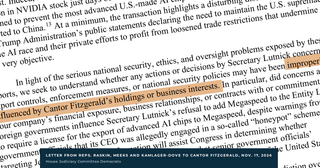
The letter went to Brandon Lutnick, Cantor's chairman, who took over the firm when his father joined the Cabinet last year. It asks whether Lutnick's choices on export controls, the rules on which chips can be sold abroad, were "improperly influenced by Cantor Fitzgerald’s holdings or business interests."
The requests go well beyond stock trades. The Democrats want Cantor's messages about chip export rules and smuggling, its talks with Commerce officials, and its dealings in China and Southeast Asia back to January 2020. They also ask whether anyone who handled the Nvidia trades used apps such as Signal, WhatsApp or Telegram to reach Commerce.
The firm has until 5 p.m. on Dec. 1 to send its first documents and to confirm in writing that it is preserving its records.
Why Cantor's Nvidia stake is at the center
Lutnick ran Cantor from 1996 and moved his stake into trusts for his adult children when he joined the administration in February 2025. At that time, the Democrats wrote, Cantor reportedly held more than 3.5 million Nvidia shares worth over $1.3 billion. By the Democrats' account, the firm cut those holdings nearly in half while officials were looking at Megaspeed, and still held about $310 million in Nvidia stock at the end of March.
That stake matters because of Megaspeed. Fair Witness reported last week that Treasury Secretary Scott Bessent said four agencies wanted Megaspeed on the government's trade blacklist, while Lutnick's department, which decides, held off. The Democrats argue that delay propped up Nvidia's stock price while Cantor sold. They also cite a New York Times report that Lutnick pushed to weaken rules for Southeast Asian data centers, some of which are Cantor clients.
Their core question is whether the secretary acted "to make money for his adult children and Cantor Fitzgerald." They say the answers could also show if Congress needs new ethics laws.
The letter itself shows what it can and can't do. Its factual case rests on news reports listed in its footnotes, and its main question holds only if those reports are right. Raskin and Meeks signed as ranking members, the top members of the minority party. They sent copies to the Republican chairmen, Reps. Jim Jordan and Brian Mast. For now they can only ask; their party takes the House majority in January. The letter also reaches past Cantor, asking for any records of President Donald Trump's own Nvidia investments.
improperly influenced by Cantor Fitzgerald’s holdings or business interests
What Cantor and Commerce say
Cantor disputes the Democrats' account of its Nvidia shares. A spokesperson said the firm holds no material proprietary position in Nvidia, meaning no big bet with its own money. It said its shares offset trades it made for clients, and its holdings fell as those clients closed out. Its work for data centers in Asia is routine banking, the spokesperson said: "Allegations suggesting that work influenced government decisions are baseless." Cantor also said it has no role in export or blacklist decisions.
The Commerce Department said the secretary has "fully complied with the terms of his ethics agreement," including every rule on selling assets and stepping aside, Reuters reported. Earlier, a department spokesperson told The New York Times that Lutnick doesn't discuss department matters with his sons. And on Tuesday, Commerce and the Justice Department said Commerce opened its Megaspeed investigation in 2024 and that Justice now leads a criminal case.
Republicans are pressing Lutnick too. Sen. Tim Scott, who chairs the Banking Committee, wants him to testify in public and said subpoenas are possible, Reuters reported.
What we don't know yet
Cantor hasn't said whether it will hand over any documents by Dec. 1, or only confirm that it is keeping them. Because the request comes from the minority, it is not clear the firm will answer before Democrats take control in January.
The trading records would answer the main question: when Cantor sold Nvidia shares, and whether the sales were for clients, as the firm says. Lutnick is scheduled to testify before Congress next month. Whether he is asked about Cantor there, before any records arrive, is the next test.
Sources
Left
4 of 13 left-leaning outlets we track reported this
- HuffPost: Democrats Launch Investigation Into Howard Lutnick's Role In Nvidia Scandal, Nov. 18
- The Guardian: Democrats demand answers from Howard Lutnick about Nvidia and his family's business, Nov. 18
- Politico: Democrats on House Judiciary and Foreign Affairs probing Lutnick family's role in Nvidia scandal, Nov. 18 (headline only; text unavailable)
Center
2 of 9 center outlets we track reported this
Right
2 of 12 right-leaning outlets we track reported this
- New York Post: Dems probe Lutnick son's ties to Nvidia, stock trades in China 'spy' scandal investigation, Nov. 18
- The Washington Times: Democrats probe whether Lutnick's Nvidia moves were linked to sons' business interests, Nov. 18
- The New York Sun: Meeks Says Subpoenas 'On the Table' for Huang, Lutnick in New Congress, Nov. 18 (for the Update)
Primary
- House Judiciary Democrats: Letter from Reps. Raskin, Meeks and Kamlager-Dove to Cantor Fitzgerald Chairman Brandon Lutnick, Nov. 17 (PDF) · Archived copy
- House Judiciary Democrats: Ranking Members Raskin, Meeks and Kamlager-Dove probe whether Lutnick's family finances shaped his response to the NVIDIA spy scandal, Nov. 18 · Archived copy
- Justice Department: Joint statement of the Department of Commerce and the Department of Justice on Megaspeed investigation, Nov. 17 · Archived copy
- House Energy and Commerce Committee: Chairman Guthrie Requests Briefings from Nvidia and Department of Commerce Over Megaspeed and National Security Concerns, Nov. 18 (for the Update) · Archived copy
- Bureau of Industry and Security: press release naming Jeffrey I. Kessler, Under Secretary of Commerce for Industry and Security, Sept. 29, 2025 (for the Update) · Archived copy
This article was produced by AI under our Editorial Standards. Corrections are reviewed before they go live.
How coverage differs
Free with a Fair Witness account
See how left, center and right covered this story
A free account shows where the coverage agrees and where it splits, what each side played up and played down, and, when one side's outlets missed a story, who missed it.
Nov 18
12:35 PMUpdatedWorld
Iran fires on U.S. air base in Kuwait and at Bahrain after U.S. strike on Qeshm
Iran's first attack on Kuwait in two months widens a weeklong exchange of fire, and Washington has not said how it will answer.
Edge of Frame · Left

The short version
- Iran fired drones at a Kuwaiti air base that hosts U.S. forces and at Bahrain early Wednesday, after a U.S. strike on Qeshm Island.
- It was Iran's first attack on Kuwait in more than two months, pulling a second country that hosts U.S. troops into the fight.
- The U.S. hasn't said whether it will strike back, and Iran's army chief warned that any new attack would get a harsher answer.
Iran fired drones at a U.S. air base in Kuwait and at Bahrain early Wednesday, local time, widening its Gulf attacks a day after the U.S. struck Iran's Qeshm Island. Kuwait and Bahrain said their air defenses stopped the attacks.
It was the first attack on Kuwait in more than two months, and it pulls a second country that hosts U.S. troops into the fight. Fair Witness reported Tuesday that U.S. jets hit a Revolutionary Guard missile site on Qeshm after Iran's third drone attack on Bahrain since Friday. Iran says its recent attacks answer U.S. drone surveillance flights and a strike on Iranian communications towers.
Why it matters
President Donald Trump has sent mixed signals, calling new strikes highly unlikely while sending thousands more troops and a third aircraft carrier, which briefly made three in the region; the U.S. military has since gone back to two carriers in the region. For your wallet, the effect so far is small: Brent crude, the global benchmark, slipped slightly to about $93 a barrel Wednesday, as the International Energy Agency said supply now exceeds demand.
What Iran says it hit at Kuwait's Ali Al Salem Air Base
Iran's army said its drones targeted U.S. Patriot air defense systems and drone and missile launch platforms at Ali Al Salem Air Base. Press TV, Iran's state-run English-language channel, carried the army's claim that the strike destroyed Patriot systems and launch pads. No other source we read confirmed any damage.
Kuwait tells it differently. Its army said on X that explosions people heard were air defenses intercepting hostile drones, and it did not report any damage or casualties. Its foreign ministry condemned the repeated attacks as "criminal," saying they threatened the country's security.
The base has been hit hard before. Earlier in the war, Iran struck Ali Al Salem at least 30 times and damaged or destroyed at least 15 aircraft hangars, the AP reported. The war began when the U.S. and Israel attacked Iran in late February.
Iran also warned of more. Its army chief, Maj. Gen. Amir Hatami, said that if attacked again, Iran will answer "in a stronger, more crushing way and without geographic limitations."
What Resolution 2817, cited by Kuwait, demands of Iran
Kuwait's foreign ministry answered in legal terms. It said the attacks broke U.N. Security Council Resolution 2817 and reserved its right to self-defense, Gulf News, a Dubai newspaper, reported.
The Security Council adopted it on March 11 by a 13-0 vote, with China and Russia abstaining. Its text "demands the immediate cessation of all attacks by the Islamic Republic of Iran" on six Gulf states and Jordan. It also affirms their right to self-defense under the U.N. Charter.
What it leaves out matters as much. It names no sanctions, no deadline and no way to enforce the demand, and its last line only keeps the matter on the council's agenda. So Kuwait is pointing to a finding that Iran broke international law, not to a penalty.
The Gulf Cooperation Council, the six-nation regional bloc, blamed Iran for the escalation, and Saudi Arabia condemned the attacks. Qatar, which has mediated indirect talks between Iran and the U.S., called them a dangerous escalation.
Bahrain's fourth attack in six days, and a missing sailor
Bahrain, home to the U.S. Navy's Fifth Fleet, has now reported four attacks in six days. Early Wednesday, its Interior Ministry sent two alerts telling people to take shelter, then an all-clear. Its military said it stopped a number of attacks but gave no word on damage or casualties.
The fighting has reached the shipping lanes too. The UAE's state oil company, ADNOC, said one crew member is missing and 11 were hurt after one of its tankers was attacked Tuesday in the Strait of Hormuz. Iran said two tankers and a gas carrier hit naval mines.
U.S. Central Command, which runs American forces in the Middle East, did not immediately respond to Fox News Digital, and the U.S. military did not immediately respond to the AP. We found no public response from Central Command on the Kuwait attack as of 11:55 a.m. ET Wednesday. On Tuesday, after the Qeshm strike, an official said the command "remains highly vigilant and fully postured to protect Americans across the region."
demands the immediate cessation of all attacks by the Islamic Republic of Iran
What we don't know yet
Will the U.S. strike back for the attack on Kuwait, as it did after Iran's third attack on Bahrain? Central Command hasn't said, and Trump's mixed signals leave it open.
We also don't know what, if anything, the drones hit; no independent account has settled Iran's claim against Kuwait's. ADNOC said a search for its missing sailor was under way.
Peace talks are deadlocked. Whether Iran's next move is another drone launch or a return to talks will decide if this week's exchange keeps widening.
Sources
Left
2 of 13 left-leaning outlets we track reported this
- Associated Press, via HuffPost: Iran Widens Gulf Attacks, Firing On A US Air Base In Kuwait And At Targets In Bahrain, Nov. 18
- Associated Press: Iran widens Gulf attacks, firing on a US air base in Kuwait and at targets in Bahrain, Nov. 18
- Associated Press: US military returns to 2 aircraft carriers in the Middle East, Nov. 18
- CNN: Iran widens Gulf attacks after US strikes missile launch site, Nov. 17–18 (headline only; text unavailable)
Checked, no report found as of 8:30 p.m. ET Nov. 18: NBC News, The Guardian, HuffPost, Vox, CBS News, ABC News, +5.
Center
4 of 9 center outlets we track reported this
- BBC News: Kuwait says it repelled first Iranian attack in two months after US strikes island, Nov. 18
- UPI: Iranian forces target U.S. military facilities in Kuwait amid escalation, Nov. 18
- NewsNation: Iran fires on US base in Kuwait and Bahrain after US strikes missile site, Nov. 18
- The Hill: Iran attacks US air base in Kuwait, Nov. 18
Right
3 of 12 right-leaning outlets we track reported this
- Fox News: Iran targets US air base in Kuwait after US defensive strikes amid criticism from Gulf states, Nov. 18
- Fox News: Iran warns Bahrain monarchy its survival is at risk amid push to 'evict' US Fifth Fleet, Nov. 18
- The Washington Times: Iran expands counterstrikes following U.S. attack on missile site, Nov. 18
Other reporting
Primary
- U.N. Security Council: Resolution 2817 (2026), S/RES/2817, Mar. 11 · Archived copy
- U.N. Photo: Security Council adopts Resolution 2817 (vote record), Mar. 11 · Archived copy
- Kuwait army General Staff post on X, Nov. 18, as quoted by Fox News above
- Kuwait foreign ministry statement, Nov. 18, as reported by the AP and Gulf News above
- Bahrain Defence Force and Interior Ministry statements, Nov. 18, as reported by the AP and BBC News above
- Iranian army statement and Maj. Gen. Amir Hatami's remarks, Nov. 18, as reported by BBC News and Press TV above
- Statement by a U.S. official on the Qeshm strike, Nov. 17, as quoted by Fox News above
This article was produced by AI under our Editorial Standards. Corrections are reviewed before they go live.
How coverage differs
Free with a Fair Witness account
See how left, center and right covered this story
A free account shows where the coverage agrees and where it splits, what each side played up and played down, and, when one side's outlets missed a story, who missed it.
Nov 18
12:30 PMUpdatedU.S.
Garcia tells Vance, Trump's sons and others to preserve records for House probes
The letters map what Democrats plan to investigate once they take the House in January and gain the power to subpoena.

The short version
- Rep. Robert Garcia sent 12 letters telling Vice President JD Vance, Trump's sons and others close to the president to preserve their records.
- They map the probes Democrats plan once they control the House in January, from the family's crypto venture to the Epstein files.
- Garcia set replies for Nov. 27 and Dec. 2, but Democrats can't compel answers until the new Congress meets.
Documents in this story · 6
- LetterRep. Robert Garcia's letter to Attorney General Todd Blanche, Nov. 18, 2026House Oversight Democrats · PDF · Nov. 18Original Archived
- ReleaseIncoming Oversight Chairman Robert Garcia launches document preservation lettersHouse Oversight Democrats · Press release · Nov. 18Open Archived
- LetterGarcia letter to Vice President JD VanceHouse Oversight Democrats · PDF · Nov. 18Original Archived
- LetterGarcia letter to Donald Trump Jr.House Oversight Democrats · PDF · Nov. 18Original Archived
- LetterGarcia letter to Bureau of Prisons Director William K. Marshall III and Warden Tanisha HallHouse Oversight Democrats · PDF · Nov. 18Original Archived
- Statute18 U.S.C. § 2071, Concealment, removal, or mutilation of recordsLegal Information Institute · Web pageOpen Archived
Rep. Robert Garcia, the likely next chair of the House Oversight Committee, told Vice President JD Vance, Trump's sons and others close to President Trump on Wednesday to preserve their records.
The 12 letters map what Democrats plan to investigate, from the Trump family's crypto business to the Jeffrey Epstein files. On their own, the letters carry no legal force. Democrats can't force anyone to hand over papers until they take control of the House in January. "This is just the beginning," Garcia said in a statement.
What Garcia wants each of Trump's allies to keep
The letters to the president's sons focus on World Liberty Financial, the family's crypto business. Garcia also asked Donald Trump Jr. about his wedding party, which Russian businessman Umar Kremlev paid for. Kremlev has said Trump Jr. repaid him, and the couple called it a gift from a friend. Jared Kushner, Trump's son-in-law, was asked about his investment firm, Affinity Partners, and his work as a U.S. negotiator in Middle East and Russia talks.
Four letters deal with the Epstein files. Vance and former chief of staff Susie Wiles were asked about White House Situation Room meetings on the files that The New York Times described in June. Attorney General Todd Blanche was asked about the release of the files and the move of Ghislaine Maxwell, Epstein's convicted accomplice, to a prison camp in Texas. One letter went to both the federal prisons director and the camp's warden, so the 12 letters reached 13 people.
Three more letters, to White House chief of staff Stephen Miller, former Homeland Security Secretary Kristi Noem and her former adviser Corey Lewandowski, cover immigration enforcement. Noem and Lewandowski also face questions about contracts. Former Ambassador Kimberly Guilfoyle was asked about alleged pay-to-play tied to her post. The head of the Trust for the National Mall was asked about gifts for the new White House ballroom. Many of the letters repeat earlier requests, The Hill reported.
What Garcia's preservation letters can and can't do
Garcia signed the letters we read as ranking member, the committee's top Democrat, with a copy to the current Republican chairman, James Comer. The letters lean on House Rule X, which lets the committee look into "any matter" at any time. For a private citizen such as Trump Jr., that is the only authority the letter cites.
Some letters to officials go further. The one to Blanche cites the Federal Records Act, which requires agencies to keep records of public business. It warns that officials who don't "may face criminal penalties, including fines and up to three years of imprisonment." That is the maximum under a federal law against willfully destroying records. Some letters also set dates before Democrats take power: the prisons director has until Nov. 27, and Vance and Blanche until Dec. 2.
Those deadlines can't be enforced yet, and Reuters said the letters are not evidence of wrongdoing. Democrats have gotten similar demands of their own. Fair Witness reported last week that White House counsel Will Scharf warned Garcia his probes could be criminal, and a federal prosecutor in Texas has sent records demands to Democrats, including Sen. Elizabeth Warren.
This is just the beginning.
Oversight or retribution: what each side says
The White House said Trump is willing to work with anyone. But spokeswoman Lauren Bis said Democrats who pursue "sham investigations and radical left policies" are working against the American people. The White House has also said the president has no conflicts because his assets are in a trust his children run. Republicans say the probes are about political retribution, not the cost of living.
Two recipients answered through a lawyer and a spokesman, The Daily Wire reported. Kushner's lawyer, Chad Mizelle, said Kushner served without pay and called any claim of personal gain "categorically false." A Lewandowski spokesman said the case against him rests on a misleading narrative. Lewandowski has not been charged and has denied wrongdoing. We found no public response from Vance, Donald Trump Jr., Eric Trump or the other recipients as of 11:35 a.m. ET Wednesday.
Garcia's side rests on the election. He said Democrats are fighting to end what he called the administration's self-dealing, misconduct and abuse. The letters say voters gave Democrats "a sweeping mandate to root out corruption," and he says the probes will lead to new laws.
What we don't know yet
No one who got a letter has said whether they will answer by the Nov. 27 and Dec. 2 dates. The White House has told agencies they need its approval before agreeing to testify on Capitol Hill, so officials may wait for that word.
We also don't know which probe comes first in January, or how soon subpoenas follow. Republicans haven't picked Garcia's counterpart on the committee, though Reps. Brandon Gill and Pat Fallon of Texas want the job. The first of those answers is due the day after Thanksgiving.
Sources
Left
8 of 13 left-leaning outlets we track reported this
- CBS News: Top Oversight Democrat sends letters to 12 people close to Trump ahead of future investigations, Nov. 18
- The Guardian: Democrat orders Trump allies to preserve records, paving way for sweeping investigations, Nov. 18
- Associated Press: House Democrat targets Trump family and top officials in early steps toward investigations, Nov. 18
Center
3 of 9 center outlets we track reported this
Right
5 of 12 right-leaning outlets we track reported this
- Fox News: House Dems target Trump family, JD Vance in sweeping new investigation push, Nov. 18
- New York Post: House Dems target Trump family, JD Vance in sweeping new investigation push, Nov. 18
- The Daily Wire: Top Democrat Gives Preview Of His Party's Priorities In Ominous Warning To Trump Officials, Nov. 18
Primary
- House Oversight Democrats: Incoming Oversight Chairman Robert Garcia launches document preservation letters, Nov. 18 · Archived copy
- House Oversight Democrats: Garcia letter to Attorney General Todd Blanche, Nov. 18 · Archived copy
- House Oversight Democrats: Garcia letter to Vice President JD Vance, Nov. 18 · Archived copy
- House Oversight Democrats: Garcia letter to Donald Trump Jr., Nov. 18 · Archived copy
- House Oversight Democrats: Garcia letter to Bureau of Prisons Director William K. Marshall III and Warden Tanisha Hall, Nov. 18 · Archived copy
- 18 U.S.C. § 2071, Concealment, removal, or mutilation of records (Legal Information Institute) · Archived copy
This article was produced by AI under our Editorial Standards. Corrections are reviewed before they go live.
How coverage differs
Free with a Fair Witness account
See how left, center and right covered this story
A free account shows where the coverage agrees and where it splits, what each side played up and played down, and, when one side's outlets missed a story, who missed it.
Nov 18
6:49 AMUpdatedU.S.
Mullin defends flying government plane to LSU-Texas game a day after FAA ground stop
His department says he paid his way, but federal rules can set that at a coach fare, and no one has said what he paid.

The short version
- Homeland Security Secretary Markwayne Mullin flew a government plane to the LSU-Texas game the day after the FAA's nationwide ground stop.
- DHS says the law requires him to fly government planes and he pays for personal trips, but rules can set that at a coach fare.
- No one has said what he repaid or whether the trip was approved in advance, and Democrats take the Senate in January.
Documents in this story · 6
- RecordMullin's full "Squawk Box" interview (video)CNBC · Web page · Nov. 17Open Archived
- RecordReimbursement to the Government for Government aircraft travel (Legal Information Institute)41 CFR 301-10.264 · Web pageOpen Archived
- RecordAuthorization of Government aircraft travel (Legal Information Institute)41 CFR 301-10.262 · Web pageOpen Archived
- RecordDefinitions of "full coach fare" and "required use travel" (Legal Information Institute)41 CFR 300-3.1 · Web pageOpen Archived
- RecordSigns contract to build four U.S. Coast Guard Arctic Security CuttersBollinger Shipyards · Web page · Dec. 29, 2025Open Archived
- RecordFinalizes U.S. Coast Guard contract to begin production on the Arctic Security Cutter programBollinger Shipyards · Web page · July 2Open Archived
Homeland Security Secretary Markwayne Mullin took a government plane to the LSU-Texas football game on Saturday, the day after the FAA's nationwide ground stop. On Tuesday he defended the trip on CNBC. "We still got to live our life," he said.
The trip, first reported by the New York Post, came while airlines were still canceling thousands of flights. It also put Mullin in the stadium box of a shipbuilding executive whose company holds a $2.2 billion contract with his department. His department says he flew by the rules and paid for the trip himself. But those rules can set the payment at the price of an airline ticket, and no one has said what he paid.
Why it matters
Taxpayers own the planes that cabinet officers like Mullin must fly, and federal travel rules decide how those officers' personal trips are approved and how much of the cost comes back. The questions about this trip turn on those rules, on its timing and on whose box he sat in.
How Mullin's government plane trip to the LSU game unfolded
The FAA lifted the nationwide ground stop at 8:15 p.m. ET Friday, Nov. 13, after more than four hours. That evening, Mullin had stood beside Transportation Secretary Sean Duffy at a White House briefing, telling Americans they faced no immediate threat.
On Saturday afternoon he attended the Secretaries' Cup, the yearly game between the Coast Guard and Merchant Marine academies, at Audi Field in Washington. Then he flew to Baton Rouge, Louisiana, for the night game at Tiger Stadium. That day, nearly 7,000 flights were canceled as airlines worked through the backlog, the Post reported.
Mullin spent part of the game in the private box of Ben Bordelon, chief executive of Bollinger Shipyards, a Louisiana company that has worked with the department for decades. Bordelon played football at LSU, and his son plays on the current team, USA Today reported. Bollinger did not respond to a request for comment from the Post.
What Mullin told CNBC
Mullin answered questions about the trip on CNBC's "Squawk Box" on Tuesday morning, pressed by host Joe Kernen. "We would have never went if the airways weren't completely open," he said, adding that they had been open for 21 hours.
He flies government planes, he said, because he must stay in contact around the clock, every day of the year. House Majority Leader Steve Scalise of Louisiana gave him the tickets, he said, and he paid for them. A source familiar with the matter told ABC News he paid full market value. The trip itself came about, he said, because his 12-year-old great-niece, an LSU fan, had never been to a game.
On Bordelon, Mullin said he had never met or spoken with him before that night, and that the shipbuilding deal predates him. "That contract was awarded before I was secretary," he said.
His department backed him. Mullin is "required by law to travel on a government airplane," a spokesperson said, to keep secure communications and to be ready to keep the government running in an emergency. Any flight not tied to his job, the spokesperson said, he pays for himself, and he follows all ethics rules.
What the travel rules require him to repay
The rules behind that statement are federal regulations, and they draw a line most reports didn't explain. An official like Mullin is a "required use" traveler: someone who needs a government plane for 24-hour secure communications, security or a national emergency.
When such an official takes a wholly personal trip, the official must pay "the full coach fare for the entire trip." That is the price of a coach seat on a scheduled airline, as the rules define it, not the cost of flying a government jet and its crew. If a trip mixes work and personal stops, the official pays only the extra coach fare the personal part added.
The rules also say each required-use trip should be approved in advance, in writing, by the agency's top lawyer or a deputy. For an agency head like Mullin, the exception is when the president has already decided that all of his travel, or certain kinds of it, counts as required use. Nor is it clear that the trip was wholly personal. Mullin told CNBC that "we actually had an issue that we had to deal with at the same time," USA Today reported. He didn't say what it was or how it tied to the trip.
Whose contract it was
Mullin's account of the contract matches the record, with one addition. Bollinger announced in December 2025 that it would build four Arctic Security Cutters, icebreaking ships for the Coast Guard. Mullin became secretary in March.
The final contract terms came on July 2, 2026, after Mullin took office, and Bollinger's announcement quoted him praising the program. The Bollinger deal is worth $2.2 billion for four ships, part of $3.3 billion for six cutters with a Finnish builder, gCaptain reported. Reports differed on the number. The Post described the $2.2 billion contract as one for six icebreakers, while Fox News said four.
We would have never went if the airways weren't completely open.
What we don't know yet
No one has said what Mullin paid for the flight or whether DHS counted the trip as wholly personal, the two answers that decide what the rules required. DHS also hasn't said whether its top lawyer approved the trip in advance, or whether a standing order covers all of Mullin's travel. Bollinger hasn't commented either.
It is also unclear whether any lawmaker will ask the department's inspector general to review the trip. Senate Democrats are pressing the administration for answers on the ground stop itself, the AP reported, and Democrats take the Senate majority in January, when they could call hearings.
The case each side makes
Mullin and DHS: a required plane, a paid-for trip
Mullin's case is that he broke no rule and that a cabinet officer still has a family life. The law requires him to fly government planes, he paid for the trip and the tickets, and he flew only after the airspace had been open for most of a day. "We still have family, friends," he said, but also work to do every day.
On Bordelon, his case is that there was no tie between them. He said he had never met or talked with Bordelon before the game, and the contract was first awarded under a previous secretary. His department says he follows all ethics requirements.
Schumer: a sign of corruption
Senate Democratic leader Chuck Schumer said the trip shows what voters rejected in this month's midterms. He wrote on social media that the "arrogance and stink of corruption" were a big reason Republicans lost, The Oklahoman reported.
The paper reported that he also promised Democrats would clean up this kind of conduct when they take over Congress. We found no other named lawmaker's statement on the trip as of 5:45 a.m. ET Wednesday.
Sources
Left
6 of 13 left-leaning outlets we track reported this
- ABC News: Mullin defends taking government plane to LSU-Texas game after nationwide ground stop, Nov. 17
- USA Today: Mullin flew to football game less than 24 hours after FAA ground stop, Nov. 17
- The Guardian: Markwayne Mullin defends private-jet trip to football game as millions hit by flight delays, Nov. 17
- Associated Press (via PBS NewsHour): Mullin defends use of government plane to attend football game after ground stop, Nov. 17
- CNN: Markwayne Mullin flew to a football game while Americans struggled with FAA ground stop, Nov. 17 (headline only; text unavailable)
Center
2 of 9 center outlets we track reported this
Right
6 of 12 right-leaning outlets we track reported this
- New York Post: Markwayne Mullin took his government plane to LSU-Texas game as thousands were stranded in FAA ground stoppage, Nov. 17
- Fox News: Mullin took government plane to LSU-Texas football game with Americans stranded in wake of FAA outage, Nov. 17
- The Daily Caller: Markwayne Mullin defends taking government jet to LSU game while Americans were stranded, Nov. 17
Other reporting
Primary
- CNBC: Mullin's full "Squawk Box" interview (video), Nov. 17 · Archived copy
- 41 CFR 301-10.264: Reimbursement to the Government for Government aircraft travel (Legal Information Institute) · Archived copy
- 41 CFR 301-10.262: Authorization of Government aircraft travel (Legal Information Institute) · Archived copy
- 41 CFR 300-3.1: Definitions of "full coach fare" and "required use travel" (Legal Information Institute) · Archived copy
- Bollinger Shipyards: Signs contract to build four U.S. Coast Guard Arctic Security Cutters, Dec. 29, 2025 · Archived copy
- Bollinger Shipyards: Finalizes U.S. Coast Guard contract to begin production on the Arctic Security Cutter program, July 2 · Archived copy
This article was produced by AI under our Editorial Standards. Corrections are reviewed before they go live.
How coverage differs
Free with a Fair Witness account
See how left, center and right covered this story
A free account shows where the coverage agrees and where it splits, what each side played up and played down, and, when one side's outlets missed a story, who missed it.
Nov 17
9:26 PMUpdatedTechnology
Officials see no sign of cyberattack behind week of tech outages; lawmakers want answers
The intelligence chief blames a rush of security upgrades, but lawmakers in both parties want a fuller account of why so much failed at once.
The short version
- The nation's intelligence chief said Tuesday he sees no sign that a coordinated or state-sponsored cyberattack caused the past week's tech outages.
- The failures hit email, flights, banking and Apple Pay, and lawmakers in both parties say the government owes the public a fuller account.
- We found no briefing for Congress scheduled after Wednesday's House hearing, and several companies and the FAA have yet to publish full reviews.
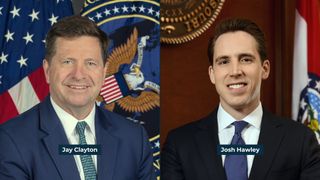
The nation's intelligence chief said Tuesday he sees no sign that a coordinated or state-sponsored cyberattack caused the past week's tech outages, which hit everything from Microsoft email and air traffic control to Apple.
Director of National Intelligence Jay Clayton blamed something more ordinary: a rush of security patches and system upgrades that didn't come back as planned. That answer hasn't satisfied lawmakers in both parties. Sen. Josh Hawley, a Missouri Republican, told HuffPost that Congress should get a comprehensive briefing, and House Democratic leader Hakeem Jeffries has asked for one.
Why it matters to you
These failures reached ordinary routines. Customers of several of the biggest banks reported outages Monday, and Friday's ground stop led to some 12,000 canceled flights, Newsweek reported. Whether they share a cause decides what comes next: a hunt for an attacker, or a slower look at how companies and agencies test their upgrades.
Homeland Security Secretary Markwayne Mullin said he expects more disruptions like these as new technology rolls out. He urged companies to warn customers before scheduled system updates. If a bank, airline or app you rely on posts an update notice, it can make sense to finish payments or check-ins before it starts.
Why officials see no cyberattack behind the tech outages
Clayton spoke Tuesday on Fox Business. "We do not see the indicia of a coordinated cyberattack," he said, using a formal word for signs. He added that officials saw no sign of state-sponsored activity either. He said officials could be fairly confident because they know what such attacks look like and have looked for them before.
His explanation pointed to repairs, not attacks. Once weaknesses in computer systems are found, he said, institutions take systems down to patch and upgrade them, and some don't come back as expected. He called the wave of upgrades a good-news story, because so many organizations now see it is time to upgrade.
The FBI also clarified a warning on Tuesday. A post by its Dallas office about an AI hacking tool called ARTEX, the bureau said, rested on an advisory from Friday, Nov. 13. It had issued no new warning since.
What the FBI's AI warning actually says
We read that advisory, a 13-page FBI alert. It describes ARTEX as an open-source tool that hackers have turned into a way to "automate multiple phases of cyber intrusions at machine speed." Its examples are break-ins and stolen data, including the personal information of about 67,000 people taken from South Korean financial firms.
The alert does not mention outages or knocking services offline. It is about getting into networks, and its first advice to organizations is to shrink the parts of their systems exposed to the internet. That matters for reading the week. The alert about AI hacking landed just as systems were failing, but it describes a different kind of harm.
What each company and agency blamed
Each failure has its own official explanation so far, and none blames an outside attacker. Microsoft traced its outage, which began Thursday and lasted into Saturday, to an update it made in July. On Friday, the FAA halted flights nationwide for about four and a half hours. Transportation Secretary Sean Duffy tied it to a router that overloaded the network during an upgrade, though he said the root cause is still unclear and he hasn't ruled out a hack.
On Monday, Chase blamed an internal software bug for delayed transactions, and United cited a technology problem. On Tuesday, the NSA said its classified network slowed during routine maintenance, and Apple said an internal update caused its outage. Chase and United said they saw no evidence of a cyberattack.
Was the week unusual? Partly. Downdetector, a site that collects user complaints, logged nearly 6 million U.S. reports in the seven days ending Nov. 16, its highest weekly total in a year. But an analyst at its parent company, Ookla, said the past 30 days had three large outages, against a typical five.
Why lawmakers in both parties want a briefing
Doubt came from both parties. Hawley told HuffPost he did not really believe the routine explanations, though he said he had no private or confidential information behind his view. He wants a full briefing, ideally unclassified. Sen. Mark Warner of Virginia, the Intelligence Committee's top Democrat, said the failures look like coincidence so far, but that at some point the coincidences pile up.
Jeffries said he talked with Duffy and still had no clear path forward. "It's unclear if it's all infrastructure related, or whether there's some malignant activity," he said. Republican Reps. Mike Lawler and Nancy Mace also called for a briefing on X. So did a voice from outside Congress: former White House press secretary Karoline Leavitt urged the White House to be transparent, then praised its choice to put Clayton on television.
The White House has played the week down. Asked in Manila about the outages, President Donald Trump said, "Things like that happen. It's fine." Vice President JD Vance said Monday that the White House does not see a crisis coming.
What we don't know yet
No one has yet shown whether the failures were truly separate or whether a shared tool, vendor or kind of update links any of them. The root cause of the FAA failure is still under investigation, and Chase, United and Apple haven't published full reviews of what went wrong. Those reviews are where a common thread would show up.
It is also unclear when Congress will get its briefing. We found none scheduled, and it isn't clear whether one would be open to the public, as Hawley wants. Sen. Mike Rounds, a South Dakota Republican, said one session probably couldn't cover finance, tech and aviation together. Clayton's remarks were spoken, not written: we found no written assessment on his office's newsroom page as of 9 p.m. ET Tuesday.
The case each side makes
The case that these were separate upgrade failures
Clayton's case rests on what officials have looked for and not found. In his account, organizations everywhere are racing to fix weak spots, and that much change at once breaks things. "This is just an upgrade in patching, an upgrade in systems," he said. Mullin said on CNBC that new technology is straining old systems, but that "it has nothing to do with cyberattacks."
Some engineers outside government make a similar point. Liz Fong-Jones, a technical fellow at the software company Honeycomb, told Axios the outages were cascading failures, where one small fault backs up everything around it. "There's very little that these incidents have in common, actually," she said. Sen. Andy Kim, a New Jersey Democrat, said companies are patching more often than before to guard against AI-driven attacks.
We do not see the indicia of a coordinated cyberattack.
The case that Congress needs answers now
Hawley's case is about the pattern and who gets to judge it. Banks, airlines, air traffic control and the NSA failed within days of each other, he said, and "that is quite a coincidence." He wants lawmakers briefed in a setting where they can then tell the public what they learned.
Others make the case on the government's readiness. Warner pointed to cuts at the FBI under Director Kash Patel, including in counterespionage work, as a possible weak spot, while saying no link had been seen. Jeffries said Congress needs to meet with the administration to know what steps to take. Even if every failure turns out to be separate, Kim told HuffPost, people shouldn't simply accept these disruptions.
Sources
Left
6 of 13 left-leaning outlets we track reported this
Center
4 of 9 center outlets we track reported this
- Reuters: Trump shrugs off spate of US outages, says 'things like that happen'
- The Hill: Skepticism grows within GOP over tech failures
- Newsweek: Trump Says He's Not Worried About Outages Affecting Banks, FAA: 'It's Life'
- The Hill: Trump says people stockpiling food, water amid outages should 'relax', Nov. 18 (for the Update)
Right
5 of 12 right-leaning outlets we track reported this
- Just The News: DNI Jay Clayton, FBI downplay prospect of cyberattacks amid major outages
- The Daily Wire: Trump's Intel Chief Delivers Clear Message On Cyberattack Fears
- The Washington Times: Homeland Security secretary warns AI upgrades could be driving tech outages
- Fox Business (counts as Fox News): video of Jay Clayton on "The Claman Countdown," Nov. 17
Other reporting
This article was produced by AI under our Editorial Standards. Corrections are reviewed before they go live.
How coverage differs
Free with a Fair Witness account
See how left, center and right covered this story
A free account shows where the coverage agrees and where it splits, what each side played up and played down, and, when one side's outlets missed a story, who missed it.
Nov 17
6:39 PMUpdatedTechnology
Apple outage: company says an internal update hit iCloud, Apple Pay and App Store
Many services were back by afternoon, but Apple's status page for app makers still listed key tools as down Tuesday evening.

The short version
- Apple said an internal update it made caused Tuesday's outages of iCloud sign-in, Apple Pay, the App Store and other services.
- Users filed thousands of complaints about iCloud sign-outs and Apple Pay, and Apple said the cause was not a cyberattack.
- Apple's status page for app makers still listed App Store Connect, the tool they use to manage apps, as down Tuesday evening.
Apple said an internal update it made, not a cyberattack, caused Tuesday's Apple outage, which signed people out of iCloud and disrupted Apple Pay, the App Store and other services. By afternoon, the company said many of its systems were running again.
Some took much longer. Apple's own status page listed iCloud sign-in as disrupted for some users until 4:15 p.m. ET. As of 6 p.m. ET, its page for app makers showed App Store Connect, the tool they use to manage their apps, still down for all of them.
Why it matters to you
A sign-out from iCloud on Tuesday may have been Apple's fault, not a problem with your password. Apple's status page shows whether sign-in is affected, so check it before you start resetting your account. A card in your wallet is a backup if your phone payment fails at a register.
How the Apple outage spread
Trouble began late Tuesday morning. Users said their iPhones and Macs logged them out of iCloud, then failed to verify them when they tried to sign back in. Others reported trouble activating devices or getting the App Store to load and download apps.
Apple Pay drew even more reports than iCloud. Downdetector, a site that collects complaints from users, logged about 2,300 Apple Pay reports in the U.S. around 12:20 p.m. ET. Reports about iCloud peaked near 1,800, though both figures count complaints, not people affected.
At first, Apple's status page told a calmer story. It listed services as working even as complaints mounted, UPI reported. Around 1 p.m. ET, it flagged iCloud sign-in, saying "All users are affected," and by 1:02 p.m. it had added an AppleCare outage.
Then Apple gave its explanation. In an emailed statement, the company said "an internal update caused some outages this morning" and that it was working to bring the rest back.
What Apple's status pages show
Apple's status records, read directly, give the clearest timeline we found. The consumer page dates the trouble to 11:15 a.m. ET, when AppleCare purchases on devices stopped working for all users. The App Store outage ran from 11:45 a.m. to 3 p.m. ET. iCloud sign-in had problems, and iCloud Mail and iCloud.com were slow, until 4:15 p.m. Apple's tools for schools and businesses had problems from 1:40 to 5 p.m.
The developer page shows the longest damage on the business side. App Store Connect went down at 11:50 a.m. ET and was still listed as out at 6 p.m. ET. The Developer ID Notary Service, which checks Mac apps before they can be shared, was listed as out until 7:10 p.m. ET.
One gap stands out. Apple's page has a line for Apple Pay, but it listed no problem with it on Tuesday, even though Apple Pay drew more user reports than iCloud did. Apple hasn't explained the difference.
an internal update caused some outages this morning
The latest in a string of tech failures
Apple's outage followed a week of U.S. tech failures. A Microsoft 365 outage knocked out Outlook last week, and an FAA ground stop halted flights Friday. On Monday, United Airlines delayed departures and a Chase software bug slowed payments. The NSA's classified network went down Tuesday too.
Companies and officials have said the Microsoft, FAA, United and Chase failures weren't linked to cyberattacks. Apple's own trouble isn't new either. It confirmed a separate iCloud outage on Nov. 10 that hit Mail, Calendar and sign-in, The Washington Times reported.
What we don't know yet
What did Apple's internal update change, and why did it reach so many services at once? Apple hasn't said. The answer would show whether one change can knock out sign-in, payments and app sales together.
We also don't know how many people were affected, or why Apple's developer page listed App Store Connect as down until Wednesday when it now dates the fix to Tuesday evening. Reports that some Apple stores and offices had technical problems are unconfirmed by Apple. The status pages should show the next change first.
Sources
Left
5 of 13 left-leaning outlets we track reported this
Center
3 of 9 center outlets we track reported this
Right
7 of 12 right-leaning outlets we track reported this
This article was produced by AI under our Editorial Standards. Corrections are reviewed before they go live.
How coverage differs
Free with a Fair Witness account
See how left, center and right covered this story
A free account shows where the coverage agrees and where it splits, what each side played up and played down, and, when one side's outlets missed a story, who missed it.
Nov 17
6:32 PMUpdatedWorld
U.S. strikes Iran's Qeshm Island after third Iranian attack on Bahrain, officials say
It is the U.S. reply to Iranian attacks that ended a two-month lull, and Iran's next move will show whether the exchange keeps going.
The short version
- U.S. fighter jets struck a Revolutionary Guard missile launch site on Iran's Qeshm Island on Tuesday, U.S. military officials said.
- It was the U.S. reply to Iran's three drone attacks on U.S. targets in Bahrain since Friday, which ended a two-month lull.
- We found no response to the strike from Iran's foreign ministry or Revolutionary Guard by early Tuesday evening, and no Central Command announcement.
U.S. fighter jets struck a Revolutionary Guard missile launch site on Iran's Qeshm Island on Tuesday, two U.S. military officials told Fox News. The officials called it self-defense, and it came hours after Iran's third drone attack on U.S. targets in Bahrain in five days.
The strike is the U.S. answer to attacks that ended a roughly two-month lull in Iran's strikes on its Gulf neighbors. Bahrain is home to the U.S. Navy's Fifth Fleet, and Iran's drones since Friday have been aimed at U.S. radars there. That makes Iran's answer to this strike the thing to watch, because it will show whether the exchange stops here or the war starts up again.
What U.S. officials said about the Qeshm strike
Everything the U.S. has said so far comes from officials who didn't give their names. "The strike was in response to IRGC aggression targeting U.S. personnel and assets," one said in a statement reported by Fox News. The IRGC is Iran's Islamic Revolutionary Guard Corps, its most powerful military force. A U.S. military official gave Reuters the same account and no more detail. An official also said the jets used precision munitions on the site.
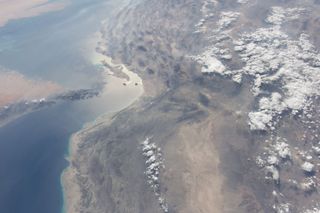
The target matters because of where it sits. Qeshm is the biggest island in the Persian Gulf, and Stars and Stripes describes it as central to Iran's efforts to control shipping through the Strait of Hormuz.
On the Iranian side, a local official, Ahmad Nafisi, said the strike caused no damage to homes, businesses or infrastructure, according to the Associated Press. Iranian media described the target as an air defense missile launcher, Iran International, a London-based Persian-language channel, reported. We found no public response from Iran's foreign ministry or the Revolutionary Guard to the strike as of 5:45 p.m. ET Tuesday.
Iran's leaders have warned about Qeshm before. After a reported U.S. strike on the island on Nov. 2, parliament speaker Mohammad Bagher Ghalibaf said any U.S. mistake would open "a new battlefield in the war."
Iran's third attack on Bahrain in five days
Tuesday's drones were aimed at a radar at Bahrain's Sheikh Isa Air Base, Iran's military said. Bahrain said its air defenses stopped them. U.S. Central Command, which runs American forces in the Middle East, said in a post on X that the drones were "intercepted without any damage to U.S. equipment or injury to American personnel."
Iran had targeted an early-warning radar in Bahrain on Friday and a radar at a U.S. helicopter base on Sunday. Fair Witness reported Sunday's attack and Bahrain's appeal to the U.N. Security Council. Iran says it is hitting back for U.S. attacks on its communications towers and for U.S. drone flights over its territory. Its Revolutionary Guard warned that using regional bases against Iran "will not go unanswered."
Qatar, which has been mediating between the two sides, condemned Iran's attacks as a breach of Bahrain's sovereignty. The attack came as a third U.S. aircraft carrier, the USS Theodore Roosevelt, arrived in the region.
The strike was in response to IRGC aggression targeting U.S. personnel and assets.
How the Qeshm strikes became public without an announcement
When U.S. forces hit Qeshm in June, Central Command said so itself. It put out a public release saying U.S. forces had carried out "self-defense strikes on an Iranian military ground control station on Qeshm Island." That was during a ceasefire, and the command named the target and said no Americans were hurt.
This month, U.S. word of the strikes has come only through officials and the president. When U.S. jets hit Qeshm on Nov. 2, the command issued no statement, and officials said they kept the strikes quiet so as not to signal a return to full-scale fighting. President Donald Trump later called that strike a "minor attack, it wasn't a war." Tuesday's strike follows the same pattern: the self-defense wording came from officials who weren't named, and we found no release from the command as of 5:45 p.m. ET. CNN wrote that the strikes appear similar to others near the strait that U.S. officials have called defensive, not a major escalation.
What we don't know yet
We don't know whether Iran will hit back for the Qeshm strike. Its Revolutionary Guard has struck back after earlier U.S. strikes, and another drone attack on Bahrain would tell you the exchange is still running. We also don't know what was hit on Qeshm, beyond the officials' description and a local official's word that homes, businesses and infrastructure weren't damaged.
Trump's next decision may matter more. CNN reported that he is still weighing whether to resume full combat if Iran rejects U.S. demands, with Democrats set to take control of Congress in January. Whether Central Command will put its name to Tuesday's strike, and when, is also open.
Sources
Left
2 of 13 left-leaning outlets we track reported this
- CNN: US carries out 'self-defense' strikes on Iranian missile launch site, Nov. 17
- Associated Press: A 2-month lull ends with Iran's third strike on US targets in Bahrain, Nov. 17
- Associated Press, via HuffPost: Iran Widens Gulf Attacks, Firing On U.S. Air Base In Kuwait And At Targets In Bahrain, Nov. 18
- ABC News: Iran live updates: Tehran warns US against 'miscalculation,' tanker hit in strait, Nov. 18
- Associated Press, via the New York Post: US launches attack on Iran's Qeshm Island in retaliation to regime's 'aggression', Nov. 17
- Axios: Trump to Axios: I'm "not rushing into a decision" on Iran, Nov. 19 (for the Update)
Center
3 of 9 center outlets we track reported this
- Reuters: US strikes Iranian missile launch site on Qeshm Island, US official says, Nov. 17
- BBC News: Kuwait says it repelled first Iranian attack in two months after US strikes island, Nov. 18
- The Hill: Iran attacks US air base in Kuwait, Nov. 18
- UPI: Iran targets U.S. radar facility in Bahrain; U.S. denies damage, Nov. 17
Right
5 of 12 right-leaning outlets we track reported this
- Fox News: US carries out self-defense strike on IRGC missile launch site on Qeshm Island, Nov. 17
- Fox News: Bahrain intercepts Iranian drones targeting US radar after 2-month lull in Gulf strikes, Nov. 17
- The Washington Times: Iran expands counterstrikes following U.S. attack on missile site, Nov. 18
- Just The News: US conducts self-defense strike on Iranian missile launch site on Qeshm Island, Nov. 17
- The National Desk: Iran targets US radar facility in Bahrain in third attack in recent days, Nov. 17
Other reporting
- Stars and Stripes (the military's independent newspaper): US quietly strikes Iranian island in Strait of Hormuz as Trump weighs next steps, Nov. 3
- Euronews (European broadcaster): Iran warns of "new battlefield" after reported US strike on Qeshm, Nov. 3
- Iran International (London-based Persian-language channel): US strikes Qeshm Island after Iran drone attack on American base in Bahrain, Nov. 17
Primary
- U.S. Central Command: U.S., Partner Forces Defend Against Aggressive Iranian Behavior, June 2, 2026 (DVIDS) · Archived copy
- U.S. Central Command post on X on the Bahrain drones, Nov. 17, as quoted by The National Desk and UPI above
- Statement by a U.S. military official on the Qeshm strike, Nov. 17, as quoted by Fox News and CNN above
- Islamic Revolutionary Guard Corps statement on the Bahrain attacks, as quoted by the AP above
- Qatar foreign ministry statement on X, Nov. 17, as reported by Fox News above
This article was produced by AI under our Editorial Standards. Corrections are reviewed before they go live.
How coverage differs
Free with a Fair Witness account
See how left, center and right covered this story
A free account shows where the coverage agrees and where it splits, what each side played up and played down, and, when one side's outlets missed a story, who missed it.
Nov 17
6:28 PMUpdatedEconomy
Nvidia beats forecasts in its first earnings report since Jensen Huang's exit
The AI chipmaker's sales doubled, but investors still don't know who will lead it, and the SEC is reportedly investigating.
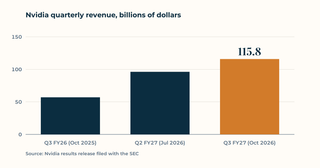
The short version
- Nvidia's quarterly sales doubled from a year ago to $115.8 billion, beating forecasts, in its first report since Jensen Huang resigned as CEO.
- Nvidia is one of the world's most valuable companies, and many index funds and 401(k) plans hold its stock.
- Huang is set for an interview with three House committees on Dec. 1, and Nvidia still has only an interim CEO.
Documents in this story · 3
- ReleaseResults release for the third quarter of fiscal 2027, filed with the SEC as an exhibit to Form 8-KNvidia · Press release · Nov. 17Open Archived
- RecordNVIDIA Announces Financial Results for Third Quarter Fiscal 2027Nvidia · Web page · Nov. 17Open Archived
- RecordNVIDIA Board of Directors Establishes National Security and Export Control Oversight CommitteeNvidia · Web page · Nov. 17Open Archived
Nvidia's quarterly sales doubled from a year ago to $115.8 billion, beating Wall Street's forecasts in the chipmaker's first earnings report since Jensen Huang resigned as chief executive. Its forecast for the next quarter, $130 billion, also came in above analysts' estimates.
The numbers landed on a day that showed how much is still unsettled at the company. Interim CEO Colette Kress, who is also still chief financial officer, said in the release, "Our momentum is real." Hours earlier, the board had created a new committee to oversee export controls. And minutes before the results came out, reports surfaced that the Securities and Exchange Commission is investigating the company.
Why it matters to you
Nvidia is one of the most valuable companies in the world, worth roughly $3.8 trillion before Tuesday's report. If you own a stock index fund or a 401(k), you very likely own a piece of it. Its shares had fallen 24% since the start of November as the Huang scandal added to worries about the tech industry. That made these results a test for a big part of many retirement accounts.
The first answer was calm. The stock rose about 2% in after-hours trading, according to Axios, and CBS News later put the gain at nearly 4%. Shareholders also get a date: Nvidia will pay its next dividend of 25 cents a share on Dec. 23 to everyone who holds the stock on Dec. 2.
Data centers drove Nvidia's earnings
Almost all of the money came from one place. Sales of chips and systems for data centers, the warehouse-sized computer farms that run AI, reached $107.6 billion, up 110% from a year earlier. That is about 93 cents of every dollar Nvidia took in. Kress said its newest chip system, Vera Rubin, was off to a very fast start, and the company called its rollout the fastest in its history.
Analysts had expected nearly $109 billion in revenue, according to FactSet, so Nvidia beat that by nearly $7 billion. Profit rose 105% to $65.3 billion. Nvidia kept about 75 cents of every sales dollar after the cost of making its products.
The forecast carries two details worth reading closely. Nvidia said it is counting on no data center sales in China, where U.S. export rules limit what it can sell. And its release notes that the quarter it is forecasting includes an extra week, so the $130 billion is not a like-for-like comparison with the quarter just reported.
Why Nvidia's profit per share is $2.70 or $2.68
The reports we read that gave Nvidia's profit per share put it at $2.68, but its release gives two figures, and both are right. It reports $2.70 under standard accounting rules, known as GAAP, and $2.68 on an adjusted basis that leaves out some items. Analysts had expected about $2.48, according to the data firm LSEG. By either measure, Nvidia beat.
The two-cent gap tells you something about how Nvidia now makes money. The biggest item the adjusted figure strips out is about $1.8 billion in gains on shares Nvidia owns in other companies. Smaller costs, such as a legal settlement, run the other way. Over the first nine months of Nvidia's fiscal year, such gains came to about $25.5 billion, up from $3.4 billion a year earlier.
Those stakes have grown fast. Nvidia's holdings in companies whose shares don't trade publicly rose from about $22 billion in January to about $66 billion at the end of October. Nvidia has put billions into cloud providers, suppliers and AI startups, Reuters reported. Investors want to know whether the next CEO will keep financing customers, a practice critics call circular, Reuters said.
A board without Huang, and a reported SEC probe
Huang resigned on Nov. 12 after reports of extramarital affairs, including one with a woman U.S. officials reportedly believe is a Chinese intelligence asset. On Tuesday he said in his first statement that he would return as CEO if the board asked. The board's chair, Harvey Jones, said Tuesday that it does not intend to reinstate him, Reuters reported.
The board also set up a National Security and Export Control Oversight Committee, led by director Suzanne Nora Johnson. It will oversee the company's export compliance and meet at least four times a year. Jones said Nvidia is "committed to working constructively with government and industry partners." The move came a day after the Commerce Department issued a rule meant to close a route Chinese firms could use to reach top U.S. chips abroad.
Our momentum is real.
The SEC has opened a civil investigation of Nvidia, The Wall Street Journal reported Tuesday afternoon, according to Axios. The New York Post, citing its own sources, said the probe will focus on whether Nvidia's disclosures misled investors. An SEC spokesperson declined to comment, and Nvidia did not immediately respond to Axios's request for comment.
What we don't know yet
The SEC has not confirmed any investigation, and we don't know whether or how Nvidia will answer the reports. If they are right, it is not yet clear which disclosures the agency is examining or how long that could take.
Tuesday's earnings call began at 5 p.m. ET, after this article was first written; the Update note above has what Jones and Kress said on it. Tech analyst Gene Munster predicted on X that it would be the call "we'll likely get the least information from," Axios reported. Axios said it was watching for any new detail on the CEO search or the investigations. Beyond the call, Huang's transcribed interview with three House committees, set for Dec. 1, may be the next time anyone hears his account under questioning.
Sources
Left
4 of 13 left-leaning outlets we track reported this
- CBS News: Nvidia records strong growth in first earnings report without Jensen Huang, Nov. 17
- The Guardian: Nvidia doubles quarterly revenue in first earnings since Jensen Huang's resignation, Nov. 17
- Axios: Nvidia posts strong earnings amid Jensen Huang exit, reported SEC probe, Nov. 17
- Axios: "We will remain thoughtful": Nvidia says it will continue to backstop AI ecosystem, Nov. 17
Center
2 of 9 center outlets we track reported this
- Reuters: Nvidia forecasts quarterly revenue above estimates in first report since Huang's exit as CEO, Nov. 17
- Reuters: Nvidia board says it does not intend to reinstate Jensen Huang as CEO, Nov. 17
- The Hill: Nvidia reports strong third quarter after Huang departs, Nov. 17
- Reuters: Nvidia stops shipping US-approved AI chips to China, Nov. 18
- The Hill: Huang agrees to testify before Senate Banking panel, Nov. 17
Right
2 of 12 right-leaning outlets we track reported this
- Fox Business: Nvidia releases quarterly earnings after Jensen Huang's resignation as CEO, Nov. 17
- New York Post: Nvidia projects $130B in Q4 earnings as chip giant exceeds expectations despite Jensen Huang scandal, Nov. 17
- New York Post: SEC probing Nvidia after Jensen Huang's shock exit over sex scandal with alleged Chinese spy: sources, Nov. 17
Primary
- Nvidia: results release for the third quarter of fiscal 2027, filed with the SEC as an exhibit to Form 8-K, Nov. 17 · Archived copy
- Nvidia: NVIDIA Announces Financial Results for Third Quarter Fiscal 2027, Nov. 17 · Archived copy
- Nvidia: NVIDIA Board of Directors Establishes National Security and Export Control Oversight Committee, Nov. 17 · Archived copy
This article was produced by AI under our Editorial Standards. Corrections are reviewed before they go live.
How coverage differs
Free with a Fair Witness account
See how left, center and right covered this story
A free account shows where the coverage agrees and where it splits, what each side played up and played down, and, when one side's outlets missed a story, who missed it.
Nov 17
3:22 PMUpdatedU.S.
NSA's classified network goes down; White House says no sign of a cyberattack
The intelligence agency's internal system for sharing secrets failed in a week of U.S. tech outages, and Democrats want a briefing.
The short version
- The National Security Agency's classified internal network went down Tuesday, and officials said they saw no evidence of a cyberattack.
- It is the system NSA staff use to share secrets, and it failed during a week of outages that grounded flights and slowed banks.
- CBS reported the network back up Wednesday evening; the Daily Wire, citing Fox News, said Thursday it was still partly down; the NSA hasn't said.
The National Security Agency's classified internal network went down Tuesday, and officials said they saw no evidence of a cyberattack. CBS News reported the network back up Wednesday evening; The Daily Wire, citing Fox News, said Thursday it was still partly down.
The network is how people inside the nation's largest intelligence agency share classified information with each other. It failed at the end of a week in which outages grounded flights, slowed banks and knocked out email. Officials say there is no sign a coordinated cyberattack caused any of them. Even so, Democrats in Congress want the administration to explain them.
How the NSA network outage unfolded
CNN first reported the outage Tuesday morning, citing people familiar with the matter. The system is known as NSA Net, or NSANet. The agency told staff to arrive at staggered times while it worked out how big the problem was.
The schedule, called "Code Gray," applied to non-emergency staff at the agency's headquarters at Fort Meade, Maryland. The agency didn't want large numbers of employees logging on at once while the network was struggling, sources told CBS News. Fox News put that number at tens of thousands of employees. CBS News also reported that some work was being shifted to other NSA sites around the country.
A person familiar with the matter described an "intermittent outage" to Fox News. That person said the agency had not lost critical communications and had backup facilities to keep working.
What officials say caused it
The fullest explanation so far came in a statement that Newsweek and CBS News attributed to an NSA spokesperson and NBC News to a U.S. official. "The National Security Agency experienced temporary degradation during scheduled routine maintenance," the statement said. It added that some internal systems were affected but that critical work continued, backed by several layers of redundancy.
Other accounts point the same way. Two sources told CBS News the outage came from routine system patching, the regular installing of software fixes, though they said the exact circumstances were unclear. The Wall Street Journal reported that a software patch temporarily disabled the system, according to Just The News. NBC News, citing two people and a senior U.S. cybersecurity official, reported no sign of an attack and no sign the outage affected the NSA's work. Still, a source told The New York Times that the network had been unstable for weeks, UPI reported.
White House spokesperson Lauren Bis told Newsmax, "We see no evidence that this was a cyberattack," and said there was no crisis, UPI reported. Homeland Security Secretary Markwayne Mullin spoke about the week's outages as a whole. "I can tell you with complete certainty that we are not under attack," he said, Just The News reported. President Donald Trump, asked about the outages during his trip to the Philippines, said, "It's life, it's life."
When the NSA's network failed in 2000
On Jan. 24, 2000, the NSA's systems at Fort Meade went down, and it took about 72 hours to rebuild them. The agency said then that the failure did not affect intelligence collection but did slow the processing of it.
A few weeks later, the director at the time, Lt. Gen. Michael Hayden, described the failure in a speech at American University. "Due to a software anomaly, our aging communications infrastructure failed," he said. Recovery took thousands of work hours and $1.5 million, he said.
This time, officials have pointed to routine maintenance. But Emily Harding, a former CIA analyst now at the Center for Strategic and International Studies, told NBC News that government systems are outdated and need investment. She also said their backups mean an outage like this won't stop security work.
Democrats press for a briefing on the string of outages
House Democratic Leader Hakeem Jeffries of New York wants the administration to brief Congress on all of the recent failures. He asked for classified briefings for the Gang of Eight, the top congressional leaders and intelligence committee heads, and for rank-and-file members of both parties. "These developments are troubling," he said at a press briefing in the Capitol on Tuesday. He said it was unclear whether the failures were all about infrastructure or whether something hostile was involved.
Lawmakers across Capitol Hill are asking for a briefing, Politico reported. A Microsoft outage cut off Outlook last Thursday, and the FAA ordered a nationwide ground stop Friday. A software bug at Chase and a United Airlines outage followed Monday.
We see no evidence that this was a cyberattack.
The administration's answer so far is that the failures are separate. On Monday, Mullin said the government's cybersecurity agency had found the earlier outages unrelated, the Daily Caller reported. Jeffries said a conversation with Transportation Secretary Sean Duffy left him without firm answers about the cause.
What we don't know yet
The NSA hasn't said whether NSANet is fully working again, or when staff will return to normal hours. A New York Post headline updated Tuesday afternoon said the network was back up, but its story doesn't say so. How long the network was down is unclear too. The agency did not immediately respond to requests for comment from Reuters and Politico. Its statement to Newsweek gave no time for a full return to service.
Nor is it clear whether shifting tasks to other sites slowed any intelligence work. We found no public response from the White House to Jeffries' request for briefings as of 5:15 p.m. ET Tuesday.
Sources
Left
4 of 13 left-leaning outlets we track reported this
- CNN: Highly classified US national security communications network goes down, sources say
- CBS News: NSA's classified internal network goes down, sources say
- NBC News: Classified NSA network went down, but no indication it was an attack, sources say
- CBS News: National Security Agency network outage linked to software vulnerability (for the Update)
- CNN: NSA outage hits key facility for Middle East intel operations as agency resorts to workarounds, sources say (for the Update)
- Politico: Lawmakers want answers from the Trump administration on recent tech outages
Center
4 of 9 center outlets we track reported this
- Newsweek: NSA Network, Apple Services Reported Offline as Mass Outages Continue
- UPI: Reports: Highly classified National Security Agency network goes down
- Reuters: Highly classified US national security communications network is down, CNN reports
- The Hill: Jeffries demands high-level briefing on rash of recent outages
- The Hill: Mullin, Clayton face bipartisan grilling over tech outages (for the Update)
Right
7 of 12 right-leaning outlets we track reported this
- Fox News: NSA's highly classified communications network disrupted by widespread outage
- Fox Business: Jay Clayton says no cyberattack behind tech outages (for the Update)
- The Daily Wire: Outage Hits NSA's Classified Communications System For Third Straight Day, Nov. 19 (for the Update)
- New York Post: Classified US communication network back up after outage hit system
- The Daily Caller: NSA's classified network goes dark as US systems crumble
- Just The News: NSA outage was just a software update, WSJ report
Other reporting
- Al Jazeera, Qatar government-funded news network: NSA attributes US network outage to routine 'maintenance' activities (for the Update)
- Government Executive (2000), federal workforce news site: NSA confirms "serious computer problem"
- Route Fifty (2000), government technology news site, from Government Computer News: NSA puts system back online
This article was produced by AI under our Editorial Standards. Corrections are reviewed before they go live.
How coverage differs
Free with a Fair Witness account
See how left, center and right covered this story
A free account shows where the coverage agrees and where it splits, what each side played up and played down, and, when one side's outlets missed a story, who missed it.