Nov 12
3:10 PMUpdatedTechnology
Nvidia CEO Jensen Huang resigns; CFO Colette Kress named interim chief
The co-founder of one of the world's most valuable companies is out, and Congress still wants answers about the alleged Chinese spy link.
Documents in this story · 4
- RecordNvidia Form 8-K filed with the SECsec.gov · Web page · Nov. 12Open Archived
- RecordNVIDIA Announces CEO TransitionNvidia · Web page · Nov. 12Open Archived
- RecordA Message to Our CompanyJensen Huang · Web page · Nov. 8Open Archived
- RecordStatement From the Independent Members of the NVIDIA Boardnvidianews.nvidia.com · Web page · Nov. 10Open Archived
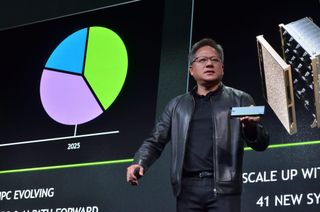
Nvidia CEO Jensen Huang has resigned, effective immediately, and chief financial officer Colette Kress is now interim CEO, the company told federal regulators on Thursday, Nov. 12.
Huang co-founded the chipmaker in 1993 and ran it for 33 years. Four days before the announcement, he admitted an affair with a woman U.S. officials reportedly believe is a Chinese intelligence asset. Then, the day before the announcement, came a report of a second affair, with an Nvidia executive. The question now is less whether Huang stays than what his departure means for the company, its investors and Washington's fight with China over AI chips.
Why it matters to you
Nvidia is one of the most valuable companies in the world, with a market value that has topped $4 trillion. If you own a stock index fund or a 401(k), you very likely own a piece of it. Its shares swung hard on Thursday, and shares of several companies Nvidia has invested in fell with them.
The company also sits at the center of national security policy. The U.S. limits the sale of Nvidia's best chips to China, and Huang pushed to keep access to the Chinese market. Who leads Nvidia next could shape that fight.
Two dates are worth watching. Nvidia still plans to report quarterly earnings on Tuesday, Nov. 17, its first chance to speak to investors without Huang. And a House committee chair says Huang has agreed to answer lawmakers' questions, possibly as soon as next week.
How Nvidia announced Jensen Huang's resignation
The board accepted Huang's resignation on Wednesday, Nov. 11, according to the filing, which went to the Securities and Exchange Commission (SEC) the next morning. Huang gave up all three of his roles: president, CEO and board member. The filing gives no reason for his exit, and the company's press release does not mention the investigation either.
Kress, who has been chief financial officer since 2013, will keep that job while she serves as interim CEO. The board will look at candidates inside and outside the company for the permanent role. It also named Harvey C. Jones, a former CEO of the software firm Synopsys and a director since 1993, as its first-ever chair.
Jones spoke for the board. "The Board has full confidence in Colette and the leadership team," he said, adding that he expects the company's work to go on without interruption. The board also thanked Huang for his contributions.
The Board has full confidence in Colette and the leadership team.
Was Huang pushed out?
The record says he resigned. But news reports say the board was moving to remove him. The board met Wednesday night to weigh whether to oust him, CNN reported. The Wall Street Journal had reported that the board was preparing to oust him. Both accounts can be true at once. Huang was not quoted in the company's announcement, and we found no public statement from him about his resignation.
How the scandal built over five days
The trouble began with reports that U.S. intelligence had linked Huang to Alice Huang, a former executive at Megaspeed, a Singapore company that bought Nvidia chips. The two are not related. U.S. officials believe she is a Chinese spy, according to several reports, and Megaspeed is under criminal investigation over claims that it smuggled chips into China. China calls the spy claim a smear.
On Sunday, Nov. 8, Nvidia's board opened an investigation, and Huang wrote to employees admitting an affair. "There is no excuse for what I did. I am deeply sorry," he wrote. Two days later, the board's independent members hired Joon H. Kim, a former acting U.S. attorney in Manhattan, and his law firm to lead the review.
Then the story turned. On Wednesday, The New York Times reported that Huang also had an affair with Kimberly Powell, Nvidia's vice president of health care, who reported to him, Reuters noted. The Times cited five people who worked at Nvidia, and such a relationship appears to break the company's code of conduct, NBC News reported. Neither Nvidia nor Powell answered NBC's requests for comment. The board met that same day.
What the resignation set off
Investors reacted fast. Nvidia shares fell 13% when trading opened, The Guardian reported, and as much as 16% at one point, according to NBC News. Then they recovered part of the loss. By midday they were down nearly 5%, CBS News reported. Several Wall Street analysts cut their price targets for the stock.
In Washington, the pressure did not let up. Rep. Brian Mast, a Florida Republican who chairs the House Foreign Affairs Committee, said Huang will meet lawmakers. "He has agreed to come," Mast said, adding that the date is still being worked out. He also said he would issue a subpoena, a legal order to appear, if talks broke down.
President Donald Trump, who had defended Huang, offered his own pick for the job. He wrote on social media that former Apple CEO Tim Cook was the "only one man to take his place". Nvidia has not said who it is considering.
What we don't know yet
We don't know whether Alice Huang is in fact a Chinese agent, or whether she got any secrets. Her role with China's spy service is unclear, and the claim rests on officials who have not spoken on the record. Attorney General Todd Blanche said Nov. 12 that the Justice Department had not reached a conclusion and that the FBI is investigating. The board's investigation has released no findings, and neither the filing nor the announcement says whether it will continue now that Huang is gone.
We also don't know who will run Nvidia for the long term, or how its plans will change. The first clues may come with the earnings report on Nov. 17. Huang's meeting with Congress, if it happens, could also show what he knew and when.
The case each side makes
Huang's backers: a loss for American AI
Huang's supporters say the company and the country are losing a rare leader. Trump said on Sunday that Huang had "done an amazing job for our country" and had told him he did not know the woman was a spy. Shaun Maguire, a partner at the venture firm Sequoia, wrote that "Jensen is irreplaceable for America's AI leadership", and Elon Musk agreed.
In their view, the cost lands on the U.S. in its race with China. Before the resignation, analyst Dan Ives warned that without Huang as CEO, China could gain significant ground on the U.S.
Huang's critics: the questions don't end here
Critics in both parties say the resignation does not settle what happened. Sen. Elizabeth Warren, a Massachusetts Democrat, said Huang and the board "still owe Congress answers about the company's compliance" with export controls. In her view, his departure does not clear him or the company.
Republicans want answers too. Mast's committee expects Huang to testify behind closed doors by Thanksgiving, and Senate Majority Leader John Thune said he expects some follow-up from Congress. For these critics, the issue is what China may have learned, not who runs Nvidia.
Sources
Left
- NBC News: Nvidia CEO Jensen Huang resigns after reports of extramarital relationships
- CNN: Nvidia CEO Jensen Huang resigns, CFO Colette Kress to serve as interim leader
- The Guardian: Jensen Huang resigns as Nvidia CEO after alleged affairs
- CBS News: Nvidia CEO Jensen Huang resigns in wake of affair with woman suspected of spying for China
- ABC News: House and Senate Republicans call on Howard Lutnick, Jensen Huang to testify about Nvidia
- Axios: Bessent questions did Nvidia "goose" earnings with suspect China chip sales (Nov. 15)
- CBS News: Trump says he "would not mind" if Nvidia reinstated Jensen Huang (Nov. 16) (for the Update)
- NBC News: Trump says he 'wouldn't mind' if Jensen Huang returned as Nvidia CEO (Nov. 16) (for the Update)
- The Guardian: Elon Musk joins 165,000 others calling for Nvidia to bring back Jensen Huang in open letter (Nov. 16) (for the Update)
- Politico: Nvidia board not weighing Huang's return as CEO (Nov. 16) (for the Update)
- Politico: 'It's a horrible idea': Republicans shut down talk of Jensen Huang's return (Nov. 16) (for the Update)
- CBS News: Nvidia's board of directors is against bringing back Jensen Huang as CEO (Nov. 16) (for the Update)
- CNN: Jensen Huang says he would be 'honored' to be reinstated as Nvidia CEO in new statement (Nov. 17) (for the Update)
- NBC News: Jensen Huang agrees to House interview on Nvidia's sales to China (Nov. 17) (for the Update)
- Politico: Jensen Huang is open to returning to Nvidia as CEO (Nov. 17) (for the Update)
Center
- Reuters via Yahoo News: US Justice Department has not concluded Alice Huang was Chinese spy, Blanche says (Nov. 12)
- Reuters: Musk says Nvidia will lose 'critical' deals without Jensen Huang (Nov. 14)
- Reuters via The Globe and Mail: Jensen Huang resigns as Nvidia CEO, threatening AI boom and raising questions about U.S. chip sales
- The Hill: Nvidia stock falls nearly 15 percent after Huang resigns (headline only; text unavailable)
- CNBC: Nvidia and Jensen Huang live updates (live page; cited for facts and lawmakers' quotes; not in our coverage pool)
- Reuters: Ex-Nvidia CEO misled top lawyer on affair with Chinese businesswoman, sources say
- Reuters: Bessent says Nvidia must 'go outside the company' to find new CEO (Nov. 15)
- Reuters: Jensen Huang discusses comeback as Nvidia CEO with allies, FT reports (Nov. 15) (for the Update)
- BBC: Elon Musk joins 'Bring Jensen Back' campaign to reinstate the ex-Nvidia boss (Nov. 16) (for the Update)
- The Hill: Nvidia's board not considering return of Huang as CEO (Nov. 16) (for the Update)
Right
- The New York Sun: Top Nvidia shareholders urge board to consider Jensen Huang's return (Nov. 14)
- Fox Business: Nvidia CEO Jensen Huang resigns amid investigation into relationship with alleged Chinese spy
- New York Post: Who is Colette Kress, Nvidia's interim CEO replacing Jensen Huang?
- The Washington Times: Who is Collette Kress? The Nvidia CFO takes over following Jensen Huang's resignation (headline only; text unavailable)
- The Daily Wire: America's Chip King Quits Over Affair Claims And The Fallout Hits More Than Home
- The Daily Caller: Jensen Huang Agrees To Testify Before Congress Over Relationship With Alleged Chinese Spy
- Fox Business: Bessent calls for Nvidia leadership shake-up amid China chip scandal, urges outside CEO (Nov. 15)
- Just The News: Trump says former Nvidia CEO Huang's affairs didn't create national security risk, defends Lutnick (Nov. 16) (for the Update)
- Fox Business: Jensen Huang says he is willing to return as Nvidia CEO, saying 'I own my mistakes completely' (Nov. 17) (for the Update)
- The Washington Times: Jensen Huang agrees to appear before Capitol Hill committees (Nov. 17) (for the Update)
This article was produced by AI under our Editorial Standards. Corrections are reviewed before they go live.
How coverage differs
Free with a Fair Witness account
See how left, center and right covered this story
A free account shows where the coverage agrees and where it splits, what each side played up and played down, and, when one side's outlets missed a story, who missed it.
Nov 12
12:23 PMUpdatedU.S.
Treasury Secretary Bessent moves to a military base after reported Iranian threats
The official running America's economic campaign against Iran now lives on a base, a sign the war's risks have reached Washington.
Spin Meter: how each side framed it · 2/5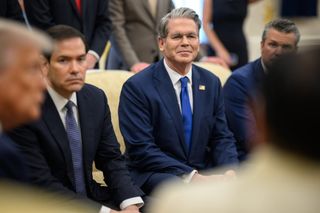
Documents in this story · 3
- PostEsmaeil Baqaei, Iran Foreign Ministry spokesman, post on Xx.com · Post on X · Nov. 11Open Archived
- RecordRemarks by Secretary Bessent on Operation Economic OutcastU.S. Treasury · Web page · Aug. 24Open Archived
- ReleaseIran says US seeking to portray itself as victim with claims of threat against BessentPress TV (owned by the Iranian state) · Press release · Nov. 12Open Archived
Treasury Secretary Scott Bessent has moved from his Washington home to a military base after threats from Iran, the Treasury Department confirmed this week. An official declined to say when he moved.
The move matters because Bessent runs the U.S. effort to choke off Iran's economy, and U.S. officials have concluded that Iranian plotting against officials like him has reached a more advanced stage. But the details of the threat still rest on unnamed sources, and accounts differ on what set off the move. Iran's government calls the reports disinformation.
Why it matters to you
The war with Iran has now lasted more than eight months. It weighed on last week's midterm elections, which Democrats won in both chambers. Threats against top officials are one more sign the conflict has not stayed overseas, even as President Trump calls the war effectively over.
There is a closer-to-home lesson, too. Unnamed sources quoted by ABC, CBS and NBC News blame press coverage that let people find his house. That debate, over how much the press should show about where officials live, could shape what you read about public figures.
What we know about the Bessent military base move
The New York Times first reported the move on Nov. 10, citing three unnamed people. They said U.S. officials had concluded that Iranian plotting against current and former officials had reached a more advanced stage, and that threats against Bessent fed that view. How serious those threats were was not clear.
The Treasury's response pointed straight at Tehran. A spokesperson said Bessent "will not be deterred by the Iranian regime's threats," The Hill reported. A senior administration official went further. That official told Fox News the threats had reached "more than an advanced stage."
will not be deterred by the Iranian regime's threats
Was it Iran, or a newspaper photo?
Here the accounts split. A source told CBS News that worries grew after The Wall Street Journal ran an online photo that let people pinpoint his Georgetown home. A source gave NBC News the same account and added, "The news media has an obligation to act responsibly amid growing threats." ABC News heard that a media report about where his home was raised the concern, without naming the paper. The Hill said the Journal's story, with an aerial photo of the house, ran in January 2025.
The Associated Press told it differently. Its source said the move was partly due to media reports that helped reveal his address, and the AP story did not tie the move directly to Iran. Both things can be true at once: a known address makes any threat more dangerous.
How we got here: Bessent's economic war on Iran
The U.S.-Israeli war with Iran began on Feb. 28. Trump says the fighting is effectively over, but a U.S. naval blockade of Iran's ports remains. Bessent leads the money side of the fight. On Aug. 24 he launched "Operation Economic Outcast," which aims to "sever every economic lifeline that sustains this tyrannical regime," he said. In recent months, the Treasury has sanctioned Iran's aviation, oil, auto and rail industries.
Warnings about Iranian plots have grown along the way. National intelligence chief Jay Clayton told Secretary of State Marco Rubio in a memo that Iran had stepped up efforts to target Americans, CBS News reported. CBS dated the warning to last month, while the BBC dated it to September. On Nov. 10, federal prosecutors unsealed charges against three men in plots by Iran-backed operatives, including a planned assault on a British air base. Iran denied a role. In 2024, prosecutors charged a man they called a Revolutionary Guard operative in an alleged plot to kill Trump.
Bessent is not alone on a base. Rubio and Defense Secretary Pete Hegseth live at Fort McNair in Washington. White House chief of staff Stephen Miller moved in late 2025, before the war began, for reasons not tied to Iran. On Nov. 12, Fox News reported that Attorney General Todd Blanche has lived on a base for months, and that not every move stems from the same threats.
What we don't know yet
We don't know what the threat against Bessent actually was. The Treasury has not described it, and the details come from people who spoke without their names. That matters because the reason shapes the response: a specific plot calls for more security, while a broad risk tied to a public address calls for something else. We found no announced plan for Congress to be briefed.
We also don't know how long he will stay, or whether more officials will follow. The Wall Street Journal has not said anything publicly about the claim that its photo put him at risk. NBC News said it asked the paper for comment.
The case each side makes
The Trump administration
The administration says the threats will not change its course, and that its pressure on Iran is working. A Treasury spokesperson said the sanctions campaign and the naval blockade are together collapsing Iran's economy. Bessent himself has said the sanctions are meant to "economically asphyxiate this regime."
Officials also say the danger is real. Announcing the new charges, Manhattan U.S. Attorney Jamie McDonald said the threat from Iran and the groups it backs is not hypothetical. U.S. intelligence has also warned that Iran stepped up its efforts to target Americans, CBS News reported. In this view, moving officials onto bases is simply prudent.
Iran's government
Iran says the story is invented. Foreign Ministry spokesman Esmaeil Baqaei wrote on X on Nov. 11 that the U.S. was running "a coordinated disinformation campaign built around fabricated headlines of 'Iranian terrorism'". His post did not name Bessent. Press TV, which is owned by the Iranian state, presented it as Tehran's answer to the reports.
In Tehran's view, Washington is the attacker trying to look like the victim. Baqaei's post said the U.S. and Israel had killed Iranian officials and scientists during the war. Iran has also denied plotting attacks against American officials on U.S. soil before.
Sources
Left
- NBC News: Treasury Secretary Scott Bessent moves to a military base amid Iranian threats, Nov. 12
- ABC News: Treasury Secretary Scott Bessent moved to a military base, sources say, Nov. 11
- CBS News: Bessent relocates from D.C.-area home to military base after Iranian threats, Nov. 11
- Associated Press via WECT: Bessent moves to military base over safety concerns, an AP source says, Nov. 11
- Associated Press via Anchorage Daily News: US charges 3 men with plotting terror attacks, including planned assault on UK air base, Nov. 10
- The Guardian (AFP copy): US Treasury chief Scott Bessent moves to military base after Iranian threats, Nov. 11
Center
- BBC News: US Treasury Secretary Scott Bessent relocated after alleged Iranian threats, Nov. 11
- The Hill: Bessent moved to military base after Iranian threats, Nov. 11
- Newsweek: Third Trump cabinet member moves to military base amid Iran threats: Report, Nov. 11
- Reuters: US Treasury's Bessent says he won't be cowed by death threats, Nov. 13
Right
- Fox News: Bessent moved to military base as Iran threats exceed 'advanced stage,' official says, Nov. 11
- Fox News: Another Trump heavyweight revealed to be living on military base, Nov. 12
- Washington Examiner: Bessent moves to military base due to Iranian assassination threat, Nov. 11
- The Daily Wire: Scott Bessent moves to military base after Iranian threats against his life, Nov. 11
Primary
- Esmaeil Baqaei, Iran Foreign Ministry spokesman, post on X, Nov. 11 · Archived copy
- U.S. Treasury: Remarks by Secretary Bessent on Operation Economic Outcast, Aug. 24 · Archived copy
- Press TV (owned by the Iranian state): Iran says US seeking to portray itself as victim with claims of threat against Bessent, Nov. 12 · Archived copy
This article was produced by AI under our Editorial Standards. Corrections are reviewed before they go live.
How coverage differs
Free with a Fair Witness account
See how left, center and right covered this story
A free account shows where the coverage agrees and where it splits, what each side played up and played down, and, when one side's outlets missed a story, who missed it.
Nov 11
8:47 PMUpdatedU.S.
Hegseth's group reprimanded by Army sentinel at Tomb of the Unknown Soldier
A guard's call for silence at a solemn war memorial drew wide notice because it came in a hard week for the defense secretary.

Documents in this story · 3
- StatuteConduct within Army National Military CemeteriesCode of Federal Regulations, 32 CFR 553.33 · Web pageOpen Archived
- RecordTomb of the Unknown SoldierArlington National Cemetery · Web pageOpen Archived
- RecordGuarding the Tomb of the Unknown SoldierU.S. Army · Web page · May 19, 2022Open Archived
An Army sentinel at the Tomb of the Unknown Soldier told Defense Secretary Pete Hegseth's group to keep silent on Veterans Day, after someone laughed as they posed for photos, video shows.
The Pentagon quickly said the soldier did the right thing. Still, the moment spread fast because of where and when it happened: at a war memorial, on the day set aside to honor veterans, and one day after the House shelved an effort to impeach Hegseth.
Why it matters to you
The Tomb belongs to the public. It sits in Arlington National Cemetery, where anyone can visit and watch the guard. Federal rules ask every visitor, including people taking part in a ceremony, to observe "proper standards of decorum and decency" there. Those rules also bar disrespectful or disorderly conduct. That is why the guard's words on Wednesday were the same ones any tourist can hear.
The episode also matters as a sign of the pressure on Hegseth. Democrats, who won control of both chambers of Congress last week, have promised to investigate how he runs the military. How the new Congress handles oversight of the Pentagon is something you can follow through your own members of Congress.
What the sentinel told Hegseth's group at the Tomb of the Unknown Soldier
The moment came just after the national Veterans Day ceremony. President Donald Trump left the memorial around 12:28 p.m. after laying a wreath, and Hegseth's group began posing for photos on the memorial steps about a minute later. The group included Hegseth, his wife, Jennifer, and several of his top aides.
As the group broke up, someone laughed out loud. The sentinel on duty turned toward them and called out, "All visitors will maintain an atmosphere of silence and respect at all times." A camera feed set up for the president's wreath-laying caught the exchange. Hegseth did not respond. He glanced over his shoulder and kept walking up a set of stairs.
Who laughed?
That part is not clear. CBS News reported that it is unclear who laughed or whether Hegseth made any noise. The Washington Examiner wrote that it appeared to be a woman in the group, but did not name her. No report we read identified the person, and we will not guess.
The chief Pentagon spokesman, Sean Parnell, sent a statement to several outlets. In it, he said Hegseth and the department have always honored the sacrifices of service members. He also backed the guard, saying a soldier "correctly and respectfully reminded everyone to maintain decorum." No report we read described any disciplinary action over the episode.
a soldier correctly and respectfully reminded everyone to maintain decorum.
Why the Tomb's guards speak up
The Tomb has held an unknown soldier from World War I since Nov. 11, 1921, which is why Veterans Day ceremonies center on it. Unknowns from World War II and the Korean War were added in 1958. Soldiers first guarded it in 1926, during the day only, and the guard became round-the-clock in 1937. Since 1948, the job has belonged to the 3rd U.S. Infantry Regiment, known as the Old Guard.
The post is hard to earn. Sentinels train in the cemetery's history, its ceremonies and strict standards of conduct. Part of the job is keeping the plaza quiet, and they do it often. In a 2022 Army interview, one sentinel said guards speak to the crowd about two or three times a day. Most of the time, he said, visitors are talking or joking without noticing how loud they are. "It's usually just them being oblivious," he explained.
Put simply, Hegseth's group heard the same command as any other visitor. It is the one given to anyone who breaks the quiet, ABC News reported. What made Wednesday different was the audience, and the cameras.
A hard week for Hegseth
The timing drew attention because of what came just before. On Tuesday, the House voted 211-204 to send Rep. Thomas Massie's impeachment charges to committee, ending that effort for now. Massie, a Kentucky Republican, had forced the vote over the Iran war and other actions. Hours before it, Hegseth dismissed the effort at a rare Pentagon news conference and defended his record.
Trump has stood by him. The president has said he would back Hegseth even if he were impeached. Democrats, though, have not let go. House Democratic leader Hakeem Jeffries, who is expected to become speaker in January, has signaled that his party will keep trying to remove Hegseth.
What we don't know yet
We don't know who laughed, and the Pentagon has not said. That matters mainly for fairness: several people were in the group, and the reports we read do not show that Hegseth himself made a sound. A clearer video or a statement from someone in the group could settle it.
We also don't know whether Hegseth will speak about it. We found no comment from Hegseth himself in the reports we read; the Pentagon's statement came from his spokesman. Finally, it is not yet clear whether Democrats will raise the episode when they take over Congress in January, or whether it fades as a single awkward moment.
The case each side makes
The Pentagon: a soldier doing his job
The Pentagon's view is that the system worked. A soldier saw a lapse, spoke up, and did it the right way. Parnell praised the soldier for acting correctly and with respect, and said Hegseth and the department will keep honoring service members' sacrifices.
Supporters of that view can point to the Army's own account of the job. Guards correct visitors several times a day, and most of those visitors mean no harm. On that reading, Wednesday was routine: the guard did what the Old Guard trains its sentinels to do, and his superiors backed him.
Democrats pressing Hegseth
We found no lawmaker or veterans group on record about the Tomb episode in the reports we read. The case Hegseth's opponents make is the broader one. Massie's charges argued that the Iran war lacked approval from Congress, among other counts. Democrats have promised to investigate how Hegseth runs the military, and they have not ruled out another impeachment push.
Jeffries put it plainly after Tuesday's vote. "This is not the end of it. It's just the beginning," he said. For Democrats, Wednesday's video lands as one more image in a fight that will move to their side of the Capitol in January. If any of them speaks on the record about it, we will add their words.
Sources
Left
- NBC News: Pete Hegseth and others reprimanded by guard at the Tomb of the Unknown Soldier, Nov. 11
- CNN (via Yahoo): Hegseth, advisers told to maintain silence near Tomb of the Unknown Soldier, Nov. 11
- HuffPost: Soldier rebukes Hegseth's group for laughing during visit to Tomb of the Unknown Soldier, Nov. 11
- ABC News: Hegseth's group admonished at Tomb of the Unknowns during Veterans Day visit, Nov. 11
- Al Jazeera and AP: Hegseth entourage reprimanded by guard at Tomb of the Unknown Soldier, Nov. 12
- AP via PBS NewsHour: Hegseth presents award to soldier who scolded him and his aides at Tomb of the Unknown Soldier, Nov. 12 (added in the Nov. 12 update)
Center
- Reuters (via Yahoo): Guard appears to rebuke Hegseth's delegation at Tomb of the Unknown Soldier, Nov. 11
- Newsweek: Hegseth's group warned by guard over conduct at Tomb of Unknown Soldier, Nov. 11
- CBS News: Hegseth's group reprimanded for making noise at Tomb of the Unknown Soldier, Nov. 11 (not on our outlet panel or Secondary list; cited for facts only)
- CBS News: House blocks Massie's effort to impeach Hegseth, Nov. 10 (not on our outlet panel or Secondary list; cited for facts only)
- BBC News: Hegseth and team reprimanded by Army guard at solemn war memorial (headline only; page blocked)
- The Wall Street Journal: Hegseth and Aides Are Reprimanded During Veterans Day Event (headline only; page blocked)
- Military.com: Hegseth Awards Joint Medal to Tomb Guard Who Told His Group to Be Silent at Arlington on Veterans Day, Nov. 12 (military news site, not in our coverage pool; cited for facts only; added in the Nov. 12 update)
Right
- Fox News: Army sentinel sharply reprimands Hegseth's group at Tomb of the Unknown Soldier on Veterans Day, Nov. 11
- Washington Examiner: Arlington guard scolds Hegseth's entourage for laughing near Tomb of the Unknown Soldier, Nov. 11
- New York Post: Army guard scolds Pentagon officials, including Pete Hegseth, heard laughing at Tomb of the Unknown Soldier (headline only; page blocked)
This article was produced by AI under our Editorial Standards. Corrections are reviewed before they go live.
How coverage differs
Free with a Fair Witness account
See how left, center and right covered this story
A free account shows where the coverage agrees and where it splits, what each side played up and played down, and, when one side's outlets missed a story, who missed it.
Nov 11
5:43 PMUpdatedU.S.
White House counsel warns Oversight Democrats their probes could be criminal
The letter escalates a fight over how far Congress can dig into the Trump administration once Democrats take over in January.
Documents in this story · 3
- LetterLetter to Rep. Robert Garcia, Nov. 9 (PDF posted by CBS News)White House counsel Will Scharf · PDFOriginal Archived
- ReleaseRanking Member Robert Garcia statement on new White House counsel threatsHouse Oversight Democrats · Press release · Nov. 11Open Archived
- ReleaseIncoming Oversight Chairman Robert Garcia statement after Democrats secure majorityHouse Oversight Democrats · Press release · Nov. 3Open Archived
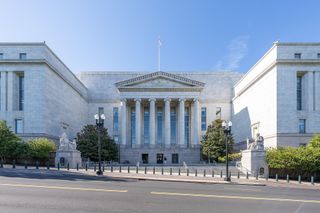
The White House counsel has warned House Oversight Democrats that some of their planned probes of the Trump administration "may cross the line into blatant criminality."
The letter, from White House counsel Will Scharf, went to Rep. Robert Garcia of California, who is set to chair the House Oversight Committee in January. It is the latest move in a fight that could shape the last two years of President Trump's term. Democrats won control of both chambers last week, and with it the power to issue subpoenas, which are legal orders to hand over records or testify. Garcia answered on Wednesday that Congress does not need the White House's permission to investigate.
Why it matters to you
Congressional oversight is how voters learn what the government does with their money and power. The Oversight Committee is the House's main investigative panel. Garcia's agenda could include Trump family business deals, crypto ventures and corporate donations for the White House ballroom. How much of that work goes ahead, and how fast, may now depend on a legal fight over what counts as a proper investigation.
For now, this is a war of words. The new Congress takes over in January, so watch for the committee's first subpoenas and for whether the administration refuses them. If it does, courts could end up deciding where the line is, as they did in Trump's first term.
What the White House counsel's letter says
The three-page letter is dated Nov. 9, though the file name of the copy CBS News posted says Nov. 10. Scharf opens by citing Supreme Court rulings that say congressional probes must serve a legitimate legislative purpose. In other words, Congress may investigate to write laws, but not to punish people or act as a prosecutor.
He then argues that Democrats have already shown a different motive. The letter points to posts after the election, including one from Rep. Emily Randall of Washington, who said Democrats would be "passing out subpoenas like candy." It also cites Garcia's own election-night post telling administration officials to lawyer up. From those remarks, Scharf concludes that future probes would aim to harass rather than legislate.
The most pointed part comes near the end. Threats meant to scare officials out of public service could be criminal, Scharf writes, and unlawful subpoenas may warrant further investigation. The letter does not name a law that Democrats would break. ABC News noted that it is unclear how those statements could break federal criminal law.
may cross the line into blatant criminality
How Garcia and Democrats answered
Garcia responded in a statement on Wednesday. "It appears Donald Trump has something to hide," he said. He argued that Congress's power comes from Article I of the Constitution, the part that sets up the legislative branch, and that Democrats would not be deterred by what he called baseless threats. A spokeswoman for committee Democrats said in a post on X that the committee had not yet received the letter.
House Democratic leader Hakeem Jeffries, who is expected to become speaker in January, called the letter outrageous and legally wrong. The legal threat drew skepticism, too. Molly Nixon, a senior fellow at the Cato Institute, a libertarian think tank, called it "incredibly unlikely" that a court would back criminal charges over a subpoena vote. She noted that the Constitution's Speech or Debate Clause shields lawmakers from being sued or charged for their legislative work.
How the fight over oversight got here
The clash began on election night. Garcia's committee office put out a statement of two words: "Lawyer up." In a post, he said Democrats were ready to take on what he called the Trump crime family. His committee has already sent letters about the business dealings of Trump's son-in-law, Jared Kushner, and about texts from former Ambassador Kimberly Guilfoyle.
The White House answered over the weekend. On Saturday, Trump said on Truth Social that he was ordering the Justice Department to look into Democrats' threats, and he gave no evidence. He called their conduct "extortion at the highest level." On Sunday, Attorney General Todd Blanche said criminal probes of Democrats were possible. He said lawmakers cannot go around threatening administration officials.
The White House had been preparing for this. Trump named Scharf, his former staff secretary and one of his lawyers in the federal election case, as counsel in August, a move the Washington Examiner tied to expected Democratic investigations. The legal ground is also familiar. In Trump's first term, House Democrats subpoenaed his financial records, and the Supreme Court ruled in 2020 that such subpoenas must serve a legitimate legislative purpose. That case, Trump v. Mazars, is one Scharf cites. Probes by both parties have rarely been stopped by courts, NBC News noted, pointing to Republican Chairman James Comer's investigations of Hunter and James Biden.
What we don't know yet
The biggest open question is whether the Justice Department will act on Trump's order. Blanche left the door open at first. Four days later, he said there are no criminal investigations into what lawmakers have said. But he also backed a Texas prosecutor who told a Democratic senator to keep records of his probe. Any case would have to get past the Speech or Debate Clause, so watch for whether the department names a specific law or target.
We also don't know how the White House will treat the committee's requests once Democrats take over in January. A flat refusal could send the fight to court, which could take months or years. And it is not yet clear which probes Garcia will open first, or whether Democratic leaders will rein in members whose words the letter cites.
The case each side makes
The White House and its allies
The administration argues that it is defending limits the Supreme Court has already set. In its view, Congress may investigate to write laws, but not to punish people or act as a prosecutor. Scharf's letter says Democrats' own words, from telling officials to lawyer up to promising subpoenas like candy, show their goal is to harass officials. That, it argues, is the very motive the Court has called improper.
Trump and Blanche frame the issue as protecting people who serve. Trump has said Democrats are threatening officials with impeachment and other punishment. Blanche put it more bluntly: lawmakers "are not allowed to just go around threatening existing members of the administration." He has also said the department will defend officials who face Democratic probes. In their view, people who serve shouldn't face threats of prosecution for carrying out the president's policies.
Garcia and House Democrats
Democrats argue that oversight is a core job of Congress, not a favor granted by the White House. Garcia's statement says Congress has wide latitude to investigate because that power is part of the power to make laws. He says voters chose Democrats to root out corruption and abuse, and that threats from the president's lawyers won't deter them.
They also argue that the threat itself is the bigger danger. Garcia said the administration keeps trying to weaponize the government against Congress. Jeffries said "A Democratic Congress is going to be a check and balance" on the executive branch. In their view, treating subpoenas as possible crimes would make it hard for any Congress to check any president.
Sources
Left
- NBC News: White House warns congressional Democrats: Investigating us may be a crime, Nov. 11
- HuffPost: White House Threatens Oversight Democrats With Criminal Investigation, Nov. 11
- ABC News: Top White House lawyer warns Democrats that threats of oversight could be criminally probed, Nov. 11
- Associated Press (via KUTV): Trump and his Justice Department stand defiant as Democrats ready an investigative blitz, Nov. 8
- NBC News: DOJ has no 'investigations into words' of Democrats, Todd Blanche says, Nov. 12 (for the Update)
- CNN: The Trump team's hypocrisy reaches new levels with warning letter to Democrats (headline only; page blocked)
- The Guardian: Democrat says Trump has 'something to hide' after White House threatens oversight efforts (headline only)
Center
- Reuters (via Yahoo News): White House tells Democrats that investigating Trump administration could be criminal, Nov. 11
- CBS News: White House counsel warns House Democrats' investigations could be criminal, Nov. 11 (not on our outlet panel; cited for facts)
- The Hill: White House pushes back on Democrats, saying investigations could 'cross the line' into crime (headline only; page blocked)
Right
- Fox News: Top Dem on committee fires back after White House counsel warns against overreach amid investigation threats, Nov. 11
- The National Desk (via CBS12): White House warns House Democrats against 'blatant criminality' with probes, Nov. 11
- Washington Examiner: Trump installs loyalist Will Scharf as White House counsel ahead of potential Democratic investigations, Aug. 11
- Washington Examiner: White House warns House Democrats not to harass staff with oversight investigations (headline only; page paywalled)
- New York Post: White House blasts Democrats planning Trump admin probes: 'Will not be extorted and will not be cowed' (headline only; page blocked)
- The Washington Times: White House says proposed Dem probes may be 'blatant criminality' (headline only; page blocked)
Primary
- White House counsel Will Scharf: letter to Rep. Robert Garcia, Nov. 9 (PDF posted by CBS News) · Archived copy
- House Oversight Democrats: Ranking Member Robert Garcia statement on new White House counsel threats, Nov. 11 · Archived copy
- House Oversight Democrats: Incoming Oversight Chairman Robert Garcia statement after Democrats secure majority, Nov. 3 · Archived copy
This article was produced by AI under our Editorial Standards. Corrections are reviewed before they go live.
How coverage differs
Free with a Fair Witness account
See how left, center and right covered this story
A free account shows where the coverage agrees and where it splits, what each side played up and played down, and, when one side's outlets missed a story, who missed it.
Nov 11
10:57 AMUpdatedU.S.
Sanders and Slotkin say they won't back Schumer for Senate Democratic leader
Two sitting senators now say they won't back Chuck Schumer, testing whether the new Democratic majority keeps its leader of nearly a decade.
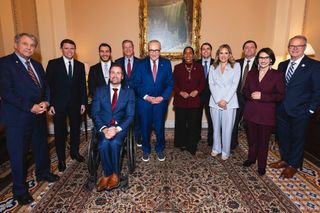
Sens. Bernie Sanders and Elissa Slotkin said Tuesday that they will not back Chuck Schumer to stay on as Senate Democratic leader, speaking at a joint Capitol news conference.
Their break matters because of timing. Democrats won the Senate last week, and the person they choose to lead it will become majority leader in January. Several incoming senators had already said they want someone else. Unlike those newcomers, Sanders and Slotkin already serve in the Senate. Schumer, who says he is confident he will win, needs a majority of the caucus to keep the job.
Why it matters to you
The Senate majority leader decides which bills reach the floor and when. Whoever wins this race will shape what the new Democratic Senate tries to pass in the last two years of President Donald Trump's term. Schumer says the caucus is united on lowering costs, ending corruption and ending the war. Sanders wants bolder moves on health care and inequality, while Slotkin wants a plan with results in the first 100 days.
The race could also shape how the Senate works day to day. Sanders said he has not decided whether he supports ending the filibuster, the rule that lets 41 senators block most bills, NBC News reported. He also said he worries about protecting the rights of the minority party.
The date to watch is the leadership vote itself. Reports differ on when it will happen, from later this month to December. If you want to tell your senators what you think, the weeks before that vote are when they will be making up their minds.
What Sanders and Slotkin said about Schumer
Sanders, a Vermont independent who caucuses with Democrats, opened with praise. He said he has known Schumer for more than 30 years and likes him. Then he said "the time is now for change," and that he would not support Schumer for re-election as leader, NBC News reported.
The time is now for change.
Slotkin, a Michigan Democrat, took a different route. She did not rule Schumer out, and she said she is not seeking the job herself. Instead, she said she would oppose any candidate who doesn't show a clear plan. "I'm a no until and unless I see that from anyone," she said, MS NOW reported.
She also urged colleagues to think about withholding a quorum, the number of members who must be present for a vote to count, if only one candidate runs, MS NOW reported. Slotkin wants newer senators to get more of a voice in leadership.
Who might run against Schumer?
No one has formally entered the race. Both senators pointed to Sen. Chris Van Hollen of Maryland as a possible challenger, MS NOW reported. Van Hollen said Monday that "we shouldn't have a coronation" and that he is listening, the Daily Wire reported. By Tuesday, he said he was calling his colleagues. Earlier, he had said he was weighing a 2028 run for president instead.
How the race for Senate Democratic leader began
Schumer has led Senate Democrats since 2017, including four years as majority leader, from 2021 to 2025. This year, Democrats gained at least seven Senate seats, with races in Alaska and Mississippi still being counted. We covered those results in our story on how Democrats won control of Congress.
Schumer helped recruit some of the winners, including Sherrod Brown in Ohio and Roy Cooper in North Carolina. But his favored candidates lost primaries in Michigan and Maine to progressives who went on to win. One of those winners, Abdul El-Sayed of Michigan, is among the progressives pushing for new leadership.
By Nov. 4, five senators-elect had said they would oppose him in the closed-door vote, Fox News reported. They included Troy Jackson of Maine, Peggy Flanagan of Minnesota and Adam Hamilton of Kansas. At that point, no sitting Democratic senator had publicly opposed him.
Across the aisle, Senate Republicans re-elected John Thune as their leader on Tuesday, the same day House Republicans chose Jim Jordan.
What we don't know yet
The biggest unknown is whether anyone will actually challenge Schumer. Until a challenger enters, he is the clear favorite, NBC News reported, and Slotkin's quorum idea has not been tested. If Van Hollen enters, the race becomes a real choice. He has not formally announced a challenge.
We also don't know the count. Schumer needs a majority of the caucus, and some new senators have not committed either way.
Finally, the date is unsettled. The AP said the vote is expected later this month, while NBC News said next month and Roll Call said December. We will know more when Senate Democrats set a schedule.
The case each side makes
Those who want new leadership
Sanders argues that "the time is now for change," as he put it, and that the party needs bolder answers on health care, inequality and the war with Iran. He credits Schumer's fundraising, but says many others did the grassroots work, MS NOW reported. He and Slotkin reject the idea that an open contest would weaken the party, and Sanders says it could give the country a televised debate on its future.
Slotkin's case is about results, not one person. She wants any leader to show a concrete plan for the first 100 days and give newer senators a voice. Van Hollen adds that no one should win by default. He has also accused Schumer and the party's Senate campaign arm of siding with the crypto industry and AIPAC against some primary candidates, Roll Call reported.
Schumer and his supporters
Schumer argues that he just led Democrats to a large win and that the caucus is united. He said he is "confident I will be elected majority leader," Roll Call reported. He says the focus should be on delivering. "If we don't deliver, all this will go away," he said, Fox News reported.
His backers point to the results. Sen. Kirsten Gillibrand of New York, who ran the party's Senate campaign arm, said "this caucus is grateful for the work of Senator Schumer," the AP reported. Sen. Ruben Gallego of Arizona said the two have had differences but that it is time to unify. Brown, Ohio's senator-elect, said yes when asked if he backs Schumer, and Sen. Mark Kelly said the agenda matters more than who leads.
Sources
Left
- NBC News: Bernie Sanders says he won't support Chuck Schumer for Senate majority leader, Nov. 10
- Associated Press (via PBS News): Bernie Sanders won't support Schumer for Senate Democratic leader, Nov. 10
- CNN: Bernie Sanders says he won't back Sen. Schumer for Democratic leader (headline only; page blocked)
- The Guardian: Bernie Sanders says he will not back Schumer for Senate Democratic leader (headline only; page blocked)
Center
- Newsweek: Schumer, Jeffries odds rise despite Democrats' push for leadership change (headline only; page blocked)
- Newsweek: Bernie Sanders announces he won't support Chuck Schumer for majority leader (headline only; page blocked)
- The Hill: Sanders, Slotkin won't back Schumer as Senate Democratic leader (headline only; page blocked)
- Roll Call: Rift grows among Senate Democrats over who will lead in majority, Nov. 10 (not on our outlet panel or Secondary list; cited for facts only)
- MS NOW: Sanders, Slotkin won't back Schumer for Senate Democratic leader, Nov. 10 (not on our outlet panel or Secondary list; cited for facts only)
- Spectrum News: Sen. Sanders says he will not support Sen. Schumer as majority leader, Nov. 10 (not on our outlet panel or Secondary list; cited for facts only)
Right
- Fox News: Schumer's grip on power slips as Dems begin to revolt against him, eye new leadership, Nov. 9
- Fox News: Chuck Schumer after sweeping Democratic midterm victories: 'I'll be re-elected as majority leader', Nov. 4
- The Daily Wire: Schumer's victory lap hits roadblock inside his own party, Nov. 10
- Washington Examiner: Opposition to Schumer leading Senate grows amid calls for a new generation from Democrats (headline only; page not reached)
- The Washington Times: Senate Democrats call for new leadership grows, but the uprising lacks a champion (headline only; page blocked)
Primary
- C-SPAN: Sen. Bernie Sanders holds news conference, Nov. 10 (video of the Sanders–Slotkin news conference; blocked to automated readers, so quotes are taken from the news reports above)
This article was produced by AI under our Editorial Standards. Corrections are reviewed before they go live.
How coverage differs
Free with a Fair Witness account
See how left, center and right covered this story
A free account shows where the coverage agrees and where it splits, what each side played up and played down, and, when one side's outlets missed a story, who missed it.
Nov 11
7:48 AMUpdatedU.S.
Kennedy family asks court to block Trump's arch near Arlington cemetery
Nine relatives of President Kennedy want to join the court fight over a 250-foot arch that a judge has paused until Dec. 3 at the latest.

Documents in this story · 7
- RulingKennedy family motion to intervene, Lemmon v. Trump and District of Columbia v. National Park ServiceD.D.C. · PDF · Nov. 10Original Archived
- RecordStatement by Rory Kennedy and Maxwell Kennedy and summary of the proposed complaintDemocracy Defenders Fund · Web page · Nov. 10Open Archived
- RulingLemmon v. Trump, No. 26-cv-544 (D.D.C.), Temporary restraining order, Nov. 5Dkt. 110 · PDFOriginal Archived
- RulingLemmon v. Trump, Memorandum opinion, Nov. 5Dkt. 111 · PDFOriginal Archived
- RulingLemmon v. Trump, Joint status report proposing a schedule, Nov. 9Dkt. 113 · PDFOriginal Archived
- RulingLemmon v. Trump, D.C. and Virginia motion for a preliminary injunction, Nov. 10Dkt. 117 · PDFOriginal Archived
- RulingLemmon v. Trump, Defendants' motion to dismiss, April 28Dkt. 31 · PDFOriginal Archived
Nine members of the Kennedy family asked a federal judge on Tuesday to let them join the lawsuits against President Donald Trump's arch, a 250-foot monument planned near Arlington National Cemetery. They filed a motion to intervene, a request to become plaintiffs in cases already underway.
The family's move adds a new kind of claim to a fight that has run since February. Earlier challengers argued mainly that Congress never approved the arch. The Kennedys say the arch would block the view of the Kennedy graves and cast shadows across the cemetery. A judge has already paused construction, and she has extended that pause to Dec. 3 at the latest while she decides on a longer block.
Why it matters to you
The arch would rise on public land at the entrance to Arlington National Cemetery. Memorial Circle, the traffic circle where it would stand, has been open green space for more than 85 years. If you drive between Virginia and Washington, the work could touch you, too. The judge found that construction would bring real costs to the District, including staff time to manage detours and crashes.
The money question is still open. How much the arch would cost, and who would pay, remains unclear. That could soon get more attention: Democrats won control of Congress last week, and the AP noted the White House's building projects could face closer oversight there. You can follow it in our midterm coverage.
The dates to watch are close. Under a schedule both sides proposed, the government's answer to the challengers is due Nov. 16 and their replies Nov. 18. The court's pause now runs through Dec. 3 unless the judge rules sooner.
What the Kennedy family asked the court for in the Trump arch lawsuit
The nine are children and grandchildren of Robert F. Kennedy and Edward M. Kennedy. They include Rory Kennedy, Kerry Kennedy, Kathleen Kennedy Townsend, Joseph P. Kennedy II and Joseph P. Kennedy III. Seven of Robert Kennedy's living children signed on, all but Health Secretary Robert F. Kennedy Jr., who serves in Trump's Cabinet.
Their filing describes the arch as more than twice as tall as the Lincoln Memorial, about the height of a 25-story office building. It would sit on the line between the Lincoln Memorial and the cemetery, a view the filing says was designed to stand for the nation's reunion after the Civil War. The family says the arch would also block the view of the Kennedy graves and the JFK Eternal Flame from Arlington Memorial Bridge. It would "permanently cast a shadow over the graves of servicemen and women," the motion says.
This is where early reports split. Some outlets said the family filed a new lawsuit. The court papers show the family asked to join two existing cases and attached its own proposed complaint. That complaint names Trump, Interior Secretary Doug Burgum, the National Park Service and others. It asks the court to set aside the government's approval of the arch.
How the arch fight reached court
Trump announced the arch in October 2025, and the White House ties it to the nation's 250th birthday. In February, three Vietnam War veterans and an architectural historian sued, arguing that Congress never approved it. On Oct. 31, Washington, D.C., and Virginia filed their own suit, and U.S. District Judge Tanya Chutkan joined the two cases.
The government's answer rests on a century-old law. Justice Department lawyers argue that a 1925 act let a commission build two tall columns topped by statues on the island where the circle sits. The columns were never built, but "the statutory authority to build them remains," the government wrote. In its view, that power covers an arch, too.
Things moved fast on Nov. 5. The Interior Department issued its final approval, and the National Capital Planning Commission, which reviews federal building in the capital, voted 8-4 to approve the plans. Its chairman, Mark Paoletta, called it a "national disgrace" that no memorial arch stood there yet. Just over an hour after the hearing ended, Chutkan issued a 14-day order barring any digging, demolition or road closures for the arch.
In her opinion, Chutkan found that the arch likely breaks a 1986 law requiring Congress to approve new memorials in the capital. She was blunt about the government's reading of the 1925 act. "The sheer improbability that a 100-year-old statute would contain authority" for the arch, she wrote, shows how far the government had to stretch.
Would the arch shade the Kennedy graves?
The shadow claim is disputed, and the numbers depend on who did the math. A Washington Post 3D model found the arch's shadow could touch graves on 284 days a year, mostly before the cemetery opens. The veterans group VoteVets estimated it would reach the Kennedy family plot on 17 mornings a year. The Interior Department says its own modeling shows only a small area shaded during open hours, for less than two weeks a year.
What we don't know yet
The first open question is whether Chutkan lets the family in. The other plaintiffs take no position, and the government asked the judge to deny it on Nov. 18. The family says it won't seek to delay any deadlines, which courts weigh when deciding such requests.
The bigger question is what happens after the pause ends. Both sets of challengers have asked for a longer block while the case goes on. We also don't know what the arch would cost or who would pay for it, a question the new Congress could take up.
The case each side makes
The Kennedy family and other challengers
The family says the fight is about protecting a sacred place. "This action is about protecting sacred spaces that belong to the American people," Rory Kennedy and Maxwell Kennedy said in a statement. Their lawyers, from the group Democracy Defenders Fund, argue that only Congress can approve a structure this large on that land.
This action is about protecting sacred spaces that belong to the American people.
The legal case rests on the same point the judge found likely: no law passed by Congress allows this arch. The family adds a personal stake, since President Kennedy and his brothers Robert and Edward are buried at Arlington. And in the government's own review, the Park Service said the arch's harm to historic properties cannot be fully avoided at that site.
The Trump administration
The White House says the arch is meant to honor the heroes buried at Arlington. White House spokesman Davis Ingle called the family's move unfortunate and said courts should not be "abused to politicize a structure designed to unite our nation." He has called the arch a tribute to 250 years of American greatness, and he said the government expects to be fully vindicated.
On the law, the administration argues that Congress approved a grand monument on that spot in 1925. It says the government may change that design, and that disliking it doesn't give opponents grounds to sue. The government has also told the court the arch would bring national defense benefits, in sworn statements from two Cabinet secretaries.
Sources
Left
- NBC News: Kennedy family members seek to block construction of Trump's arch, Nov. 10
- AP via NBC Los Angeles: Kennedy family members ask judge to block Trump's Arlington memorial arch, Nov. 10
- AP via PBS NewsHour: Trump says the towering arch he wants to build might be dedicated to military veterans, Nov. 11 (added in the Nov. 12 update)
- AP via WBTV: Federal judge orders 14-day delay on any work beginning on Trump's monumental arch, Nov. 6
- CNN: Kennedy family sues to block Trump's arch, Nov. 10 (headline only; page not read)
- The Guardian: Kennedys sue to block Trump's gilded arch, saying it would 'cast shadow' over JFK grave site, Nov. 11 (headline only; page not read)
Center
- Newsweek: Trump's arch sparks backlash over shadows on veterans' graves, October
- The Hill: Kennedy family members join legal fight over Trump's arch, Nov. 10 (headline only; page blocked)
- The Wall Street Journal: Kennedy Family Joins Effort to Block Construction of Trump's Arch, Nov. 10 (headline only; paywalled)
- BBC News: Kennedys sue to block Trump's arch, arguing it would cast shadow on JFK's grave, Nov. 11 (headline only; page blocked)
- CBS News: Kennedy family members join lawsuit to block Trump's triumphal arch, Nov. 10 (not on our panel or Secondary list; cited for facts, counts toward no group)
- CBS News: Judge blocks construction on Trump's 250-foot arch for now, Nov. 6 (not on our panel or Secondary list; cited for facts, counts toward no group)
Right
- Washington Examiner: Kennedys sue to block Trump arch, Nov. 10 (opening read; rest paywalled)
- The National Desk via Local 12: Kennedy family sues Trump administration to halt 250-foot triumphal arch, Nov. 10
- Fox News: Lawyer says 250-foot Trump arch disrupts historic sightlines cherished by veterans, Sept. 19
- The Washington Times: Relatives of President Kennedy join lawsuit to stop Trump's triumphal arch, Nov. 10 (headline only; page blocked)
Primary
- Kennedy family motion to intervene, Lemmon v. Trump and District of Columbia v. National Park Service (D.D.C.), Nov. 10 · Archived copy
- Democracy Defenders Fund: statement by Rory Kennedy and Maxwell Kennedy and summary of the proposed complaint, Nov. 10 · Archived copy
- Lemmon v. Trump, No. 26-cv-544 (D.D.C.), Temporary restraining order, Nov. 5 (Dkt. 110) · Archived copy
- Lemmon v. Trump, Memorandum opinion, Nov. 5 (Dkt. 111) · Archived copy
- Lemmon v. Trump, Joint status report proposing a schedule, Nov. 9 (Dkt. 113) · Archived copy
- Lemmon v. Trump, D.C. and Virginia motion for a preliminary injunction, Nov. 10 (Dkt. 117) · Archived copy
- Lemmon v. Trump, Defendants' motion to dismiss, April 28 (Dkt. 31) · Archived copy
This article was produced by AI under our Editorial Standards. Corrections are reviewed before they go live.
How coverage differs
Free with a Fair Witness account
See how left, center and right covered this story
A free account shows where the coverage agrees and where it splits, what each side played up and played down, and, when one side's outlets missed a story, who missed it.
Nov 10
11:38 PMUpdatedWorld
US Army soldier arrested in UK on suspicion of spying for Russia
The soldier, who has not been named or charged, was assigned to a NATO headquarters built to respond quickly to crises.
Documents in this story · 7
- RecordMember of US army arrested as part of Counter Terrorism Policing investigationMetropolitan Police · Web pageOpen Archived
- StatuteNational Security Act 2023UK legislation · Web pageOpen Archived
- RecordEssex man jailed for seven years for offering to spy for Russia, Nov. 2025Counter Terrorism Policing · Web pageOpen Archived
- RecordKremlin spokesman Dmitry Peskov's on-record words, July 2026The Defense Post, with AFP · Web pageOpen Archived
- RecordMI5 chief Ken McCallum's on-record words, Oct. 2026Euronews (not on our panel) · Web pageOpen Archived
- RecordKremlin spokesman Dmitry Peskov's on-record wordsCNBC (not on our panel) · Web page · Nov. 11, 2026Open Archived
- RecordKremlin denies having ties to American soldier arrested in U.K. for spyingThe Moscow Times (independent; not on our panel) · Web page · Nov. 11, 2026Open Archived
British counterterrorism police arrested a 41-year-old U.S. Army soldier near Gloucester, England, on Tuesday, on suspicion of spying for Russia. He has not been named or charged.
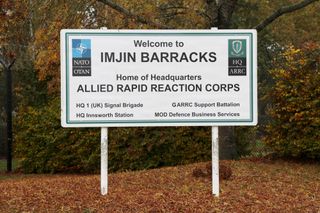
The case matters because of where he worked. A NATO official said he was assigned to the Allied Rapid Reaction Corps, a NATO headquarters built to respond quickly to crises. The head of U.S. Army Counterintelligence Command said the soldier had been trusted with sensitive information. An arrest is not a charge, and nothing has been proven in court.
Why it matters to you
If the allegations hold up, secrets shared among the United States and its NATO allies may have reached Russia. That could affect the safety of American troops in Europe and the plans meant to protect them. It is also a test of how well the U.S. and Britain catch spies inside their own ranks. The FBI, the U.S. Army and British police worked together on the arrest.
The next date to watch is about two weeks away. Under Britain's law, police can hold him for up to 14 days without a charge, so by around Nov. 24 he should be charged or released. If you serve or have family in the military, the Army asked anyone who sees something suspicious to report it to their local counterintelligence office.
What police say the U.S. Army soldier is suspected of
Police say he was arrested under two parts of the National Security Act 2023. One covers obtaining or sharing protected information. The other covers helping a foreign intelligence service. Officers searched two places in Gloucestershire, and he is being held at a London police station.
The police statement was brief but direct about the country involved. The Metropolitan Police, which leads Counter Terrorism Policing in London, said: "The country to which the allegations relate is Russia."
The country to which the allegations relate is Russia.
Police also said the case is not linked to any other counterterrorism investigation. That matters because U.S. bases in Britain have faced other recent security scares. In September, police arrested men outside RAF Fairford, a base the U.S. uses for strikes on Iran, and prosecutors later charged two men suspected of helping Iran, which Iran denies.
Who is the soldier?
Officials have not released his name, and we are not naming him. The Army calls him a senior soldier. Reports differ on his rank: a U.S. official told the AP that he is an officer, and another told CNN he is a field-grade officer, which means a major, lieutenant colonel or colonel. Three people familiar with the case told NBC News he worked at the corps' headquarters at Imjin Barracks, just outside Gloucester. We found no lawyer or relative speaking for him in public.
How Britain came to treat Russia as its top spying threat
Britain passed the National Security Act in 2023 to counter espionage and foreign interference. It has already led to at least one prison sentence. Last November, an Essex man was jailed for seven years under the same section on helping a foreign intelligence service, after he offered to spy for Russia.
Britain's spy-catchers put Russia at the top of their list. In October, the head of MI5, Britain's domestic security service, called Russia "aggressor number one" and said Moscow was paying criminals to do its work. The AP has counted more than 210 cases of sabotage and other hostile acts across Europe that Western officials blame on Russia since it invaded Ukraine.
The arrest also came on the same day that U.S.-led peace talks between Russia and Ukraine restarted in Abu Dhabi after a nine-month pause.
What we don't know yet
We don't know what information the soldier is suspected of sharing, or whether any of it reached Russia. The police statement does not say, and the answer will shape how serious the damage could be. We also don't know whether he will be charged in Britain, in the United States, or at all. The 14-day limit on holding him means we should learn more within two weeks.
Russia has now answered: on Wednesday the Kremlin denied any link to the case. We found no one speaking for the soldier, so his side of the story is not yet known.
The case each side makes
British and U.S. authorities
Investigators say the arrest shows the strength of the partnership between British and U.S. law enforcement. Police called it a significant arrest built on close teamwork between the two countries. Deputy Assistant Commissioner Vicki Evans of Counter Terrorism Policing said the allegations are "serious and our investigation is very much ongoing."
U.S. officials framed it as a warning. FBI Director Kash Patel said the agency "has no tolerance for anyone who breaks their oath" to the United States. Brig. Gen. Sean Stinchon, who leads Army Counterintelligence Command, said the case shows "insider threats are real and persistent."
Russia
On Wednesday, the Kremlin said it had no connection to the case. The Kremlin has also long rejected British claims that it spies on or attacks Britain. In July, after Britain and the European Union sanctioned Russian military intelligence officers over efforts to cause disruption in Europe, Kremlin spokesman Dmitry Peskov said: "These accusations are always baseless, they are never substantiated."
Moscow also says London is quick to blame it. After British police arrested three men last year on suspicion of helping Russian intelligence, the Kremlin said Britain blames Russia for anything bad that happens there. Al Jazeera, which reported that, is funded by Qatar's government.
Sources
Left
- NBC News: Senior U.S. Army soldier arrested in U.K. on suspicion of assisting Russian intelligence
- Associated Press via The Philadelphia Inquirer: U.S. soldier assigned to NATO unit arrested in Britain on suspicion of spying for Russia
- CNN via KRDO: US Army soldier arrested in UK on suspicion of espionage related to Russia
- Al Jazeera (funded by the government of Qatar): UK police arrest three men on suspicion of spying for Russia, Oct. 2025
- The Guardian: UK counter-terrorism police arrest senior US soldier with alleged links to Russia (headline only; page blocked)
- USA Today: US Army officer accused of spying for Russia identified, Nov. 12, 2026
Center
- BBC via Yahoo: US Army soldier suspected of spying for Russia arrested in UK
- Reuters via Defense News: US soldier arrested in UK for suspected 'espionage' for Russia
- The Wall Street Journal: Senior U.S. Soldier Is Arrested in U.K. Over Allegations of Spying for Russia (headline only; page blocked)
Right
- Fox News: Senior US Army soldier arrested in UK over suspected Russia-linked espionage
- Washington Examiner: US soldier arrested in UK as part of Russian espionage investigation
- The Washington Times: Senior U.S. Army soldier arrested in Britain accused of passing secrets to Russia (headline only; page blocked)
- New York Post: US Army soldier arrested in UK on Russian espionage charges (headline only; page blocked)
Primary
- Metropolitan Police: Member of US army arrested as part of Counter Terrorism Policing investigation · Archived copy
- UK legislation: National Security Act 2023 · Archived copy
- Counter Terrorism Policing: Essex man jailed for seven years for offering to spy for Russia, Nov. 2025 · Archived copy
- The Defense Post, with AFP: Kremlin spokesman Dmitry Peskov's on-record words, July 2026 · Archived copy
- Euronews (not on our panel): MI5 chief Ken McCallum's on-record words, Oct. 2026 · Archived copy
- CNBC (not on our panel): Kremlin spokesman Dmitry Peskov's on-record words, Nov. 11, 2026 · Archived copy
- The Moscow Times (independent; not on our panel): Kremlin denies having ties to American soldier arrested in U.K. for spying, Nov. 11, 2026 · Archived copy
This article was produced by AI under our Editorial Standards. Corrections are reviewed before they go live.
How coverage differs
Free with a Fair Witness account
See how left, center and right covered this story
A free account shows where the coverage agrees and where it splits, what each side played up and played down, and, when one side's outlets missed a story, who missed it.
Nov 10
12:24 PMUpdatedTechnology
Nvidia board investigates CEO Jensen Huang over alleged Chinese spy link
The company behind most of the world's AI chips now faces national security, legal and investor questions about the man who built it.

Documents in this story · 4
- RecordNvidia Board of Directors statementnvidianews.nvidia.com · Web page · Nov. 8Open Archived
- RecordJensen Huang's message to Nvidia employeesnvidianews.nvidia.com · Web page · Nov. 8Open Archived
- ReleaseMoolenaar, Mast and Crawford seek briefing from Jensen HuangHouse Select Committee on China · Press releaseOpen Archived
- RecordNVIDIA Sets Conference Call for Third-Quarter Financial ResultsNvidia · Web page · Oct. 28Open Archived
Nvidia's board opened an independent investigation on Nov. 8 into reports that CEO Jensen Huang was targeted by a foreign intelligence effort. The scandal now reaches from the company's boardroom to Congress and the White House.
The same day, Huang told employees he had had an affair. U.S. intelligence agencies believe the woman is a Chinese spy, NBC News reported, and China denies it. Since then, lawmakers in both parties have demanded answers, shareholders have sued, and President Donald Trump has said the FBI is looking into the matter, without saying what it is examining.
Why it matters to you
Nvidia makes the chips that run most artificial intelligence (AI) tools, and it is worth nearly $4.5 trillion. If you own an index fund or a 401(k), you probably own some of it, and its stock fell on the news.
The case also touches national security. The U.S. limits sales of Nvidia's best chips to China. Lawmakers want to know whether national security was put at risk through the head of the company that makes them.
Three dates are worth watching. Huang has until Nov. 11 to answer a request to brief Congress. Nvidia reports quarterly earnings on Nov. 17. And Nov. 18 is the date lawmakers proposed for a closed-door briefing.
What the allegation is
The New York Times reported on Oct. 29 that U.S. intelligence had found Huang had a close relationship with Alice Huang, a Chinese citizen and an executive at Megaspeed, a data center company in Singapore. The Times said she was passing information to Beijing, the AP reported. The two are not related.
Megaspeed is one of Nvidia's biggest customers. It bought more than $4.8 billion in Nvidia chips over two years, according to the Times. China's Foreign Ministry called the spy claim unproven and a smear against China, NBC News reported. None of the reports we read included a comment from Alice Huang herself.
What did Nvidia and Huang say?
Huang had earlier described his dealings with her as normal business, NBC reported. On Nov. 8, he wrote to staff: "I was unfaithful to my wife." He apologized and said he backs the review.
The board said a committee of independent directors, working with outside lawyers, will run the investigation. It said it has "no reason to believe that either national security or NVIDIA secrets were compromised." Huang remains CEO during the review.
…no reason to believe that either national security or NVIDIA secrets were compromised.
How Megaspeed was already under scrutiny
The scandal did not come out of nowhere. Megaspeed had already been probed on suspicion that it helped get restricted Nvidia chips into China, CNBC reported. The Justice Department is now investigating the company for suspected chip smuggling to China, NBC reported, citing one person familiar with the matter. The department declined to comment.
Megaspeed denies wrongdoing. It has called earlier reporting "misleading" and said inspections by the Commerce Department's export-control office found no violations, according to CNBC. That leaves two separate questions in play: whether a Nvidia customer broke U.S. export rules, and whether one of its executives was gathering information on Nvidia's chief for Beijing.
What did Trump say?
Trump spoke with Huang on Nov. 9. He said Huang had no idea the woman was a spy and that he believes him. He also said: "I know the FBI is looking into it, in terms of something else." Trump wants Huang to stay on as CEO.
How investors and Congress reacted
Nvidia stock fell about 4% on Nov. 9, erasing roughly $190 billion in value, Reuters reported. NBC put the loss at nearly $200 billion. The drop came days after AI stocks led the market's worst day since April 2025.
That evening, shareholders filed a proposed class action, a lawsuit on behalf of many investors, in federal court in San Jose. They say Nvidia misled them by hiding the relationship and its risks.
In Congress, three House Republican committee chairs, John Moolenaar, Brian Mast and Rick Crawford, asked Huang for a joint, closed-door briefing. Democrats want answers too: House Democratic leader Hakeem Jeffries called for a full briefing.
What we don't know yet
We don't know what the FBI is examining. Trump gave no details, and the FBI has not commented in the reports we read. Nor do we know whether Alice Huang is in fact a spy: the claim rests on unnamed officials cited in news reports, and public reporting has not shown what information, if any, she obtained.
We also don't know whether anything leaked. The board has not said when its review will end, and it has released no findings. The next clues may come Nov. 17, when Nvidia reports earnings, and Nov. 18, if Huang agrees to brief Congress.
The case each side makes
Huang's defenders
Nvidia's board says it sees no sign that secrets or security were harmed, and it has put independent directors and outside lawyers in charge of the review. Huang admitted a personal failing and promised to cooperate fully.
Trump has stood by him. He called Huang an honorable man who has done an amazing job for the country, the Daily Wire reported. He also said Huang is suffering and that the public would hear about it if there were a problem, the Washington Examiner reported. In his telling, Huang did not know who the woman was.
Huang's critics
Lawmakers say the reports raise serious security concerns about China's access to U.S. technology. Sens. Elizabeth Warren, a Democrat, and Jim Banks, a Republican, urged Congress to act.
Investors make a related case. The shareholders who sued say they deserved to know the risks before the story broke. In an opinion entry on Fox News' live page, one writer argued that Huang owes the country an apology.
Sources
Left
- NBC News: Nvidia opens investigation after CEO Jensen Huang's affair with alleged Chinese spy
- NBC News: Trump says FBI is investigating Nvidia CEO Jensen Huang's relationship with alleged Chinese spy
- CNN: Nvidia is in peril. Can it survive without Jensen Huang? (headline only; page blocked)
- The Washington Post: Nvidia board to investigate CEO over relationship with suspected Chinese spy (headline only; page blocked)
- Associated Press via The Atlanta Journal-Constitution: Nvidia investigates whether CEO Jensen Huang was targeted by Chinese spy
Center
- Reuters via BNN Bloomberg: Nvidia, CEO Huang sued over disclosures related to suspected Chinese spy
- CNBC: What is Megaspeed? The Nvidia chip buyer in the spotlight (cited for facts; not on our outlet panel)
Right
- The Daily Wire: Trump weighs in on America's top chip boss caught in suspected spy scandal
- Washington Examiner: Trump says Jensen Huang is definitely suffering as FBI probes affair with suspected spy
- Fox News live page: Nvidia shareholders sue over CEO Jensen Huang's alleged Chinese spy ties as Trump confirms FBI probe (includes opinion)
Primary
- Nvidia Board of Directors statement, Nov. 8 · Archived copy
- Jensen Huang's message to Nvidia employees, Nov. 8 · Archived copy
- House Select Committee on China: Moolenaar, Mast and Crawford seek briefing from Jensen Huang · Archived copy
- Nvidia: NVIDIA Sets Conference Call for Third-Quarter Financial Results, Oct. 28 · Archived copy
This article was produced by AI under our Editorial Standards. Corrections are reviewed before they go live.
How coverage differs
Free with a Fair Witness account
See how left, center and right covered this story
A free account shows where the coverage agrees and where it splits, what each side played up and played down, and, when one side's outlets missed a story, who missed it.
Nov 10
12:23 PMUpdatedWorld
Russia-Ukraine peace talks resume in Abu Dhabi, with no deal yet
The first U.S.-mediated talks in nine months began Tuesday, but the two sides remain far apart on land, a ceasefire and Europe's role.

Documents in this story · 5
- RecordZelenskyy's on-record wordsKyiv Independent (independent Ukrainian news site) · Web pageOpen Archived
- RecordIran war stalls Ukraine-Russia peace talksKyiv Independent · Web pageOpen Archived
- RecordZakharova's and Peskov's on-record wordsTASS (Russian state news agency) · Web pageOpen Archived
- RecordRubio's on-record wordsTASS (Russian state news agency) · Web pageOpen Archived
- RecordPutin's meeting with Witkoff and KushnerKremlin transcript (in Russian) · Web page · Nov. 12Open Archived
Russia and Ukraine began U.S.-mediated peace talks in Abu Dhabi on Tuesday, their first round in nine months. The first day ended without an announced deal, and talks are set to continue Wednesday.
The return to the table is a sign that the Trump administration is pushing again to end Europe's biggest war since World War II, now four and a half years old. But the gaps that sank the last round are still there: who keeps the land Russia has taken, whether the fighting stops first, and whether Europe gets a seat.
Why it matters to you
A deal, or a failure, could change what the United States promises Ukraine and what penalties Russia faces. Sanctions, penalties such as limits on trade meant to pressure a country, are part of the bargaining. An unnamed U.S. official said they could be eased over time and put back if Moscow broke a deal.
The talks also touch on America's own commitments. The same official said Washington has asked Russia to accept a "NATO-like" security guarantee for Ukraine, a promise of help if Russia attacks again. President Donald Trump has not decided what the U.S. itself would pledge.
Talks resume Wednesday, and Trump and Russian President Vladimir Putin may meet at a summit in China, though nothing is set.
What happened on day one
The first day ran about four hours. Reports differ slightly: Kyiv's side said more than four hours, the AP said nearly four, and Russia's state news agency TASS said about four and a half.
U.S. envoys Steve Witkoff and Jared Kushner, Trump's son-in-law, mediated. Rustem Umerov, the head of Ukraine's foreign intelligence service, led Kyiv's team, and Vladimir Medinsky, a Putin aide who has led Russia's negotiators since the first talks in 2022, led Moscow's. Kushner said he saw "some good ideas" for bridging the gaps, the AP reported.
Secretary of State Marco Rubio called the day "very productive" but gave no details, and he said much work remains. Ukrainian President Volodymyr Zelenskyy, who did not attend, called the talks "constructive and quite substantive" and named freeing prisoners a priority. A senior Ukrainian official said the two sides discussed a large prisoner swap, with details to come, the AP reported.
constructive and quite substantive
Why is Europe not at the table?
Officials from Britain, France, Germany, Italy, NATO and the European Commission came to Abu Dhabi anyway. They held separate meetings with Ukraine and the U.S., CNN reported.
Russia wants it kept that way. Kremlin spokesman Dmitry Peskov said the talks would stay three-way: Russia, Ukraine and the U.S. Foreign Ministry spokeswoman Maria Zakharova called the European presence a "publicity stunt," TASS reported. Rubio said the U.S. hopes to bring Europeans in eventually.
How the talks stalled, and why they restarted
These talks pick up where three earlier rounds left off. U.S.-brokered meetings in Abu Dhabi in late January and early February produced a swap of prisoners of war but no breakthrough on land. A third round in Geneva in mid-February ended after Zelenskyy accused Russia of stalling, Reuters reported.
Then the war with Iran began on Feb. 28, and Washington's attention shifted to the Middle East. The next Ukraine round, meant to tackle the future of Russian-occupied land, never happened, the Kyiv Independent reported. Nine months later, the U.S. is trying again.
Where do the sides stand?
Russia wants Ukraine to leave four regions it claims and to drop its bid to join NATO. Zelenskyy rejects giving up land, and Kyiv wants an immediate ceasefire. The fighting has not paused for diplomacy: overnight before the talks, Ukraine's air force said Russia launched about 160 drones, while Russia said it shot down 155 Ukrainian ones.
What we don't know yet
Most important, we don't know whether anything will come of this round. No ceasefire, land deal or guarantee has been announced, and Russia gave no immediate comment on what was discussed.
We also don't know whether land is truly negotiable. An unnamed U.S. official told Reuters that both leaders might give some ground, but a senior Ukrainian official denied that Kyiv would. And Trump has not decided what guarantee Washington itself would give. Wednesday's session, and whether a Trump-Putin meeting gets scheduled, will be the next signs.
The case each side makes
Ukraine
Kyiv argues that the fighting must stop before anything else. It wants an immediate ceasefire, and Zelenskyy rejects giving up land.
Kyiv's deeper worry is a repeat. Zelenskyy says Ukraine needs real tools to stop the war from starting again once it ends. European Commission President Ursula von der Leyen has said that wider security talks should follow a ceasefire, not come before it.
Russia
Moscow argues that the war cannot end until its security concerns about NATO are settled. It wants a broad security plan for Europe first, an approach Foreign Minister Sergei Lavrov called absolutely reasonable. Russia sees NATO as a threat, the AP noted.
Lavrov rejected a ceasefire before a wider settlement. Peskov said the talks focus on security guarantees, TASS reported, and Medinsky said he hoped they would advance peace in the interests of both peoples.
Sources
Left
- ABC News: Russia, Ukraine and US meet for Abu Dhabi talks
- CNN via KTVZ: Ukraine peace talks to restart after 9 months
- Associated Press via NBC News: Russia and Ukraine hold nearly 4 hours of U.S.-mediated talks in Abu Dhabi
- Associated Press via PBS NewsHour: same report, updated Nov. 10
- NPR: Russia and Ukraine hold nearly 4 hours of U.S.-mediated talks in Abu Dhabi
- Associated Press via WBAL-TV: Russia and Ukraine agree to large exchange of prisoners of war, officials in Abu Dhabi say, Nov. 11
- Associated Press via Georgia Public Broadcasting: U.S. envoys meet with Putin in the Kremlin after Ukraine talks in Abu Dhabi, Nov. 12
Center
- Reuters via Yahoo: US attempts new peace push
- Reuters via Yahoo: Kushner says US working toward 'largest prisoner exchange' of Russia's war in Ukraine, Nov. 12
- BBC via Yahoo: US envoys head to meet Zelensky after talks with Putin in Moscow, Nov. 12
- Reuters via GV Wire: "Difficult" Ukraine peace talks end after Zelenskiy says Russia stalling, Feb. 18
- Euronews: Abu Dhabi peace talks end with prisoner exchange agreement as US envoys prepare to meet Putin, Nov. 11 (European news channel; not on our panel or Secondary list; cited for facts, counts toward no group)
- Türkiye Today: Putin tells US envoys foreign troops in Ukraine would restart war, Nov. 12 (Turkish English-language news site; not on our panel or Secondary list; cited for one fact, counts toward no group)
- Kyiv Post: Europe to join Ukraine peace talks after US-Putin meeting, Nov. 13 (Ukrainian English-language news site; not on our panel or Secondary list; cited for facts, counts toward no group)
Right
Primary
- Kyiv Independent (independent Ukrainian news site): Zelenskyy's on-record words · Archived copy
- Kyiv Independent: Iran war stalls Ukraine-Russia peace talks · Archived copy
- TASS (Russian state news agency): Zakharova's and Peskov's on-record words · Archived copy
- TASS (Russian state news agency): Rubio's on-record words · Archived copy
- Kremlin transcript (in Russian): Putin's meeting with Witkoff and Kushner, Nov. 12 · Archived copy
This article was produced by AI under our Editorial Standards. Corrections are reviewed before they go live.
How coverage differs
Free with a Fair Witness account
See how left, center and right covered this story
A free account shows where the coverage agrees and where it splits, what each side played up and played down, and, when one side's outlets missed a story, who missed it.
Nov 10
12:23 PMUpdatedU.S.
Hegseth impeachment: House faces a vote forced by a Republican
A Republican lawmaker has forced the House to decide whether to impeach Defense Secretary Pete Hegseth over the Iran war, and the first vote could come Tuesday evening.

Rep. Thomas Massie, a Kentucky Republican, filed eight articles of impeachment against Defense Secretary Pete Hegseth on Monday, forcing the House to take up the Hegseth impeachment within two legislative days. The first vote was scheduled for about 5:30 p.m. Tuesday.
Impeachment is a formal charge, like an indictment; it does not by itself remove anyone from office. As of 5 p.m. Eastern time Tuesday, no vote had been held, and we do not know how it will turn out. What makes this one unusual is who is pushing it: a Republican, a week after his party lost control of Congress, against a member of his own party's Cabinet.
Why it matters to you
The charges center on the war with Iran, which began in February and has pushed gas above $4 a gallon. HuffPost reported that the war's effect on gas prices contributed to Republican losses in last week's elections; that is HuffPost's reading.
Beyond the politics, the vote is a test of how much power Congress claims over war. The Constitution gives Congress the power to declare war, and a 1973 law, the War Powers Resolution, limits how long a president can keep troops in combat without Congress's approval. Massie says Hegseth broke three provisions of that law.
Watch two things. First, the House vote, which could come as soon as Tuesday evening. Second, whether other Republicans join Massie. If most Democrats back the measure, Massie would need only a few Republicans to impeach Hegseth, the AP reported. Impeachment would send the case to the Senate, where removal takes two-thirds of senators.
What Massie filed
Massie filed a resolution with eight articles of impeachment, his office says, and the full text is on his website. Three articles say the Iran war broke U.S. war powers law. One says Hegseth ignored laws meant to protect civilians. Another covers strikes on suspected drug boats in the Caribbean and the eastern Pacific, which Massie calls illegal killings.
The rest reach beyond Iran. One says Hegseth retaliated against Sen. Mark Kelly, an Arizona Democrat, over a video about unlawful orders. Two cover the seizure of Venezuela's leader, Nicolás Maduro, and strikes in Yemen. These are Massie's allegations; they have not been tested in court or in a Senate trial.
How does the vote work?
Massie filed the measure as "privileged," which means House leaders must act on it within two legislative days, NBC News reported. Leaders can ask members to table it, which means setting it aside, or send it to a committee. Either would likely end it.
If a majority defeats those motions, the House must vote on impeachment itself, which also takes a majority. Massie has said that if it gets that far, he will ask the House to vote on each of the eight articles separately, so members can vote their conscience on each charge, CNN reported.
How we got here
The U.S. and Israel attacked Iran on Feb. 28, according to an AP timeline, and the war has continued on and off since, without a vote by Congress to authorize it. Massie says Hegseth has fought it for more than 90 days without Congress's approval.
This is Massie's second try. He filed a similar resolution in September, the Daily Wire reported. Speaker Mike Johnson then called an early recess, and the resolution expired before a vote, NPR reported. Massie filed again on Monday, the Washington Examiner reported.
Massie lost his primary this year to a Trump-backed challenger, the AP reported, and he is leaving Congress when his term ends. Democrats filed their own articles against Hegseth in April, CBS News reported, but they never reached a vote.
How did Hegseth and Trump respond?
At a Pentagon briefing Tuesday, Hegseth called the effort a farce and a stunt and said the operations were lawful, NBC reported. He said none of the charges amount to high crimes or misdemeanors, CBS News reported.
President Trump called Massie a loser, and the White House formally opposes the effort, CNN reported. Johnson said he expects the House to defeat the push.
What we don't know yet
We don't know the result of the vote, or how many Republicans will back impeachment. NBC said no Republican other than Massie had publicly committed to it. Fox News reported that several House Republicans privately think it could pass, and some GOP sources told CNN they were preparing for a Senate trial. Even Republicans who have criticized Hegseth aren't all on board: Rep. Don Bacon of Nebraska signaled Tuesday that, despite his concerns, he wouldn't support impeachment, CNN reported. Those are different readings, and none of them is a vote count.
Attendance may matter, too. Some members who lost their elections may skip votes, Fox reported, which changes the math in a closely divided House. And even if the House impeaches, we don't know whether the Senate would hold a full trial before the new Congress takes over in January. Sen. Thom Tillis, a North Carolina Republican, said he would likely vote to convict if it comes to the Senate, NBC reported.
The case each side makes
Supporters of impeachment
Massie argues that the Iran war is unlawful because Congress never approved it, and that impeachment is the tool the Constitution gives the House when an official breaks the law. "The House of Representatives must act," he said in announcing the vote. He says Hegseth has fought the war for more than 90 days without approval, and that President Trump should replace him.
The House of Representatives must act.
Democrats largely agree. House Democratic leader Hakeem Jeffries supports impeachment, the AP reported, though Democratic leaders are not pressuring members on how to vote. Massie has also warned that his effort is a much gentler version of what will come when Democrats take control of Congress next year.
Opponents of impeachment
Hegseth argues that every strike and operation was lawful and ordered by the president, and that disagreement over policy is not a high crime. He has called the effort a political spectacle and described Massie as "disgruntled."
Johnson said impeaching a Cabinet member during fighting would be "a terrible, terrible look." Rep. Warren Davidson, an Ohio Republican, opposes it too, Fox News reported, calling it an effort to blame Hegseth for Congress's own failure to act on war powers.
Sources
Left
- HuffPost: Thomas Massie triggers impeachment vote against Pete Hegseth
- NBC News live blog: Hegseth decries House impeachment threat
- CNN live updates: Hegseth impeachment efforts, Nov. 10
- NPR: Thomas Massie files articles of impeachment against Defense Secretary Pete Hegseth, Nov. 9
- Associated Press via PBS NewsHour: Massie moves to force a vote to impeach Hegseth, Nov. 9 (updated Nov. 10)
- Associated Press via WTOP: A timeline of the Iran conflict
- Associated Press via ABC7: gasoline above $4 a gallon
Center
- The Hill: Massie kicks off Hegseth impeachment
- CBS News: Hegseth decries impeachment effort as "political spectacle" (not on our outlet panel; cited for facts)
- CBS News live updates: Congress picks leaders, Hegseth faces impeachment vote, Nov. 10 (not on our outlet panel; cited for facts)
- CBS News: House Democrats file articles of impeachment against Hegseth (not on our outlet panel; cited for facts)
Right
This article was produced by AI under our Editorial Standards. Corrections are reviewed before they go live.
How coverage differs
Free with a Fair Witness account
See how left, center and right covered this story
A free account shows where the coverage agrees and where it splits, what each side played up and played down, and, when one side's outlets missed a story, who missed it.
Nov 9
8:45 PMUpdatedU.S.
Democrats win control of both chambers of Congress in 2026 midterm elections
For his last two years, President Trump will have to work with a Congress run by the other party, and that changes what can pass.
Democrats won control of both the House and the Senate in the Nov. 3 midterm elections. The Associated Press called both chambers for Democrats on election night.
That ends Republican control of Washington. For the last two years of his term, President Donald Trump will have to work with a Congress led by the other party. The size of the wins has also set off a debate in both parties about what voters were saying.
Why it matters to you
A bill has to pass both the House and the Senate to become law. Starting in January, Democrats will decide which bills get a vote. Trump can still veto bills, and Democrats are unlikely to have the two-thirds majorities needed to override him, so the two sides will have to make deals or very little will pass.
Some of those deals touch your wallet. The government's money runs out on Dec. 11 unless Congress acts, The National News Desk reported. Democratic leaders say their first goal is to make health insurance cheaper by restoring tax credits that expired last year, NBC News reported; we explain what that could mean in our story on 2027 ACA premiums.
Democrats also plan to look into the Iran war, which has pushed gas above $4 a gallon. With control of committees comes the power to hold hearings and issue subpoenas, so expect much more scrutiny of the administration starting next year.
How big the Democratic wins were
Democrats needed to gain four Senate seats and three House seats to take control, the AP reported. They did much better than that. By Nov. 4, they had taken seven Senate seats and more than two dozen House seats from Republicans, without losing any seats they already held.
The seven Senate seats were in Kansas, Iowa, Texas, Ohio, Maine, North Carolina and South Carolina, NBC News reported. In Texas, Democrat James Talarico beat Republican Ken Paxton and will be the state's first Democratic senator since 1993, the AP reported.
With Mississippi called and Alaska still uncalled, Democrats will hold at least 55 Senate seats and Republicans 44, CBS News reported. In the House, a party needs 218 of the 435 seats to control it, and CNN projected on Nov. 5 that Democrats will win more than 250.
Which races are still being counted?
One Senate race, in Alaska, has not been called, and the Democrat is ahead there.
Mississippi took more than a week. Colom's lead over Hyde-Smith held as officials reviewed affidavit ballots, cast by voters whose registration or ID couldn't be confirmed on the spot, Newsweek reported. The AP called the race for Colom on Nov. 11, and Hyde-Smith conceded that night.
In Alaska, Peltola leads Republican Sen. Dan Sullivan with about a quarter of the expected vote still out as of Nov. 9, ABC News reported. Alaska counts slowly because it accepts some mail ballots up to 15 days after the election. If no one tops 50%, the state's ranked-choice system adds rounds of counting, which can't begin before Nov. 18, according to Quartz.
How we got here
Republicans entered the election holding the White House and both chambers, defending a 53-47 Senate majority, the AP reported. Most forecasters had rated even Mississippi's Senate race as safely Republican, Mississippi Today reported.
Voters were unhappy. In the AP's survey of voters, about three in four said they were angry or unhappy with how things are going, the AP reported. They pointed to the economy, the Iran war, government corruption and AI data centers. Gas prices above $4 and paychecks that trail prices, which we covered in our October jobs report story, were part of that mood.
What did the leaders say?
Trump wrote online that he was not on the ballot and that Republicans would have won if he had been, the AP reported. Vice President JD Vance blamed the war with Iran. "The reason we lost is the war," he wrote on X, The National News Desk reported.
The reason we lost is the war.
Hakeem Jeffries, who leads House Democrats, is running for speaker, the top job in the House. He has said his first goal for 2027 is to bring back the health insurance tax credits that ended last year, NBC reported.
What we don't know yet
We don't know who wins in Alaska, or exactly how big the House majority will be. Alaska's count could run past Nov. 18 if ranked-choice rounds are needed, and the result there could still change.
We also don't know whether Trump and the outgoing Congress will agree on government funding before it runs out on Dec. 11. Nor do we know how Democrats will use their new power to look into the Iran war. Their first moves in January will show whether they lead with health costs, oversight or both.
The case each side makes
Democrats
Democrats argue that voters rejected the direction of the country and the people running it. They point to the AP's survey, in which about three in four voters said they were angry or unhappy. And they point to wins like Texas, which will have its first Democratic senator since 1993.
Their leaders say the message was about costs. Jeffries and other leaders plan to use their new power to lower health costs first, by restoring the expired insurance tax credits. They also plan to hold the administration to account on the Iran war.
Republicans
Republicans argue that the losses came from one issue and from history, not from their ideas. Vance pointed to the war and the higher prices that came with it. An analysis in The Federalist made the same argument and noted that the president's party has lost House seats in almost every midterm since 1938.
Trump's case is narrower still: he says the party lost because he was not on the ballot. In this view, the results say little about conservative policy and more about one costly war and the usual pull of a midterm against the party in power.
Sources
Left
- NBC News live updates, Nov. 4
- CNN: Democrats projected to win over 250 House seats, Nov. 5
- ABC News: Alaska 2026 live midterm results, Nov. 9
- Associated Press via Spectrum News: Democrats win control of Senate, House
- Associated Press via WDBO: Will Mississippi send a Black Democrat to the US Senate?
- Associated Press via PBS NewsHour: Scott Colom wins Senate election in Mississippi, Nov. 11
- CBS News: Democrat Scott Colom wins Mississippi Senate race in upset, Nov. 11 (cited for facts; not on our outlet panel)
- Associated Press via PBS NewsHour: Alaska judge rules Peltola campaign's ballot data request 'not reasonable', Nov. 12
- Associated Press via ABC7: gasoline above $4 a gallon
Center
- The Hill: Peltola holds lead after latest Alaska Senate vote drop, Nov. 12
- Newsweek: Mississippi race could hinge on affidavit ballots, Nov. 10
- Alaska Beacon: Peltola extends lead over Sullivan, Nov. 9 (local; cited for facts; not on our outlet panel)
- Mississippi Today: Mississippi Senate election too close to call, Nov. 3 (local; cited for facts; not on our outlet panel)
- Quartz: Peltola leads Sullivan with count unfinished, Nov. 10 (cited for one fact; not on our outlet panel)
Right
- Fox News: Colom topples Hyde-Smith in Mississippi, Nov. 11
- Fox News: Peltola campaign loses in court on rejected absentee ballots, Nov. 12
- The National News Desk: Vance blames Iran war for GOP midterm losses
- The National News Desk: Trump meets Qatar's prime minister; government funding deadline, Nov. 9
- The Federalist (analysis): The best and worst explanations for Republicans' midterm losses
Primary
- AP race calls and the AP's voter survey, as published by the AP (above)
- Hyde-Smith's concession video on X, as quoted by Fox News (above)
- Vance's post on X and Trump's Truth Social post, as quoted by the outlets above
This article was produced by AI under our Editorial Standards. Corrections are reviewed before they go live.
How coverage differs
Free with a Fair Witness account
See how left, center and right covered this story
A free account shows where the coverage agrees and where it splits, what each side played up and played down, and, when one side's outlets missed a story, who missed it.
Nov 9
8:44 PMUpdatedWorld
Trump calls Iran war 'effectively over' after meeting Qatar's prime minister
No deal is signed, the U.S. blockade stays, and Iran rejects his account, but oil prices dipped on hopes the nine-month war is winding down.
"Iran militarily is effectively over," President Donald Trump told reporters Monday, speaking hours after meeting at the White House with Qatar's prime minister, who has been carrying messages between Washington and Tehran.
But no peace deal has been reached, the U.S. naval blockade of Iran's ports is staying in place, and Iran's leaders reject Trump's account. The Strait of Hormuz, the narrow waterway that carries much of the world's oil, is still not open to normal traffic. For now, the shooting has slowed, but the dispute behind the war has not been settled, and the next move depends on talks that have stalled before.
Why it matters to you
The war has pushed U.S. gas prices above $4 a gallon, the AP reported. Oil prices fell Monday on hopes of a deal. Gas prices usually follow oil, though with a lag, so a lasting drop in oil could eventually show up at the pump, while a breakdown in talks could push prices back up.
The war also shapes what happens in Washington. Voter frustration over the eight-month war and the fuel prices that came with it shadowed last week's elections, the AP reported, and Democrats take control of Congress in January. They plan to look into the war's cost and how it was run, The National News Desk reported. Lawmakers in both parties have also questioned whether the war needed Congress's approval, a fight now playing out in an impeachment push against Defense Secretary Pete Hegseth.
What Trump said, and what he didn't
Trump met Qatar's prime minister, Sheikh Mohammed bin Abdulrahman bin Jassim Al Thani, on Nov. 9. Afterward, he made a surprise visit to the White House briefing room. He said the U.S. is keeping the status quo and that Iran's leadership has been decapitated, the AP reported. He added that he still wants a long-term solution to make sure Iran's nuclear program is defanged. He also wrote that new U.S. strikes were quite unlikely, Axios reported.
He gave no sign of pulling back. Trump offered no hint of a drawdown of the thousands of U.S. troops in the waters off Iran, the AP reported. The U.S. military has also carried out limited strikes on Iran at least twice in the past week. He said U.S. forces would hold their positions because Gulf countries prefer the status quo, according to Al Jazeera, which is funded by the government of Qatar, the mediator in these talks.
The message from his own team has been more cautious. A day earlier, Secretary of State Marco Rubio said a breakthrough was not close and called Iran's demands unrealistic, The National News Desk reported. Reuters, previewing the meeting, reported no imminent deal to end the war.
Iran militarily is effectively over.
What is Iran offering?
Iran says it could reopen the Strait of Hormuz within two days. In return, it wants the U.S. Navy to stop blocking its ports, the U.S. to lift economic penalties called sanctions, and fighting to stop across the region, Al Jazeera reported. Iran has also demanded concrete U.S. action before nuclear talks can advance, Fox News reported, as Washington reviews a nuclear proposal Tehran sent through Qatari mediators. Qatar and Pakistan are carrying messages between the two sides.
How did oil prices react?
The price of Brent crude, a global benchmark for oil, fell about 1.8% on Monday to $96.52 a barrel, and U.S. crude fell to $89.65, The National reported. The National is owned by Abu Dhabi's ruling family; the United Arab Emirates is one of the Gulf states Trump said wants the status quo.
How the war got here
The war began on Feb. 28, when Israel and the U.S. attacked Iran and killed Supreme Leader Ali Khamenei and other top officials. Iran struck back and asserted control over the Strait of Hormuz, according to an AP timeline.
A ceasefire in April did not settle it. After U.S.-Iran talks in Pakistan failed on April 12, Trump announced a blockade of Iranian ports the next day. In June, he announced an interim deal, and the U.S. waived oil sanctions. That deal collapsed in July, when Iran was accused of striking ships in the strait; the U.S. struck dozens of targets, put sanctions back and declared the ceasefire over, the AP timeline shows. Since then, fighting has been sporadic while mediators, led by Qatar, have tried to restart talks.
What we don't know yet
We don't know whether Iran will accept U.S. limits on its nuclear program, or which side will give ground first. Trump says he still wants a long-term fix for the nuclear program, and Iran says the U.S. must act first.
We also don't know when the Strait of Hormuz will open to normal shipping, which matters most for oil and gas prices. And we don't know whether Congress will limit money for the war. Government funding runs out Dec. 11, and Hegseth is pushing Congress for at least $350 billion in defense funding.
The case each side makes
The Trump administration
The White House argues that military pressure worked and now gives the U.S. the upper hand in talks. Trump says the fighting is effectively over, Iran's leadership has been badly weakened, and U.S. forces will hold their positions while talks go on. Axios described his approach as choosing to squeeze Iran economically rather than strike again, keeping the blockade as leverage.
Vice President JD Vance has been leading the Iran talks in recent weeks. He has said the U.S. wants talks to continue but that Iran must accept firm limits on its nuclear program, Radio Free Europe/Radio Liberty reported. RFE/RL is funded by the U.S. government.
Iran
Iran's leaders say they are open to talks but will not bargain under pressure. Mohsen Rezaei, a top security official, called Trump's claims a distraction, and President Masoud Pezeshkian said Iran will not give in to force, Al Jazeera reported.
Tehran's position is that any deal must end the blockade and the sanctions, and that the U.S. must act first before nuclear talks can advance, as Fox News reported.
Critics in Congress
Some lawmakers in both parties say the war was fought without Congress's approval. Republican Rep. Thomas Massie filed articles of impeachment against Defense Secretary Pete Hegseth largely for that reason, The National News Desk reported.
Sources
Left
- Associated Press via WPBF: Trump after meeting with Qatari PM says he believes war with Iran is militarily "effectively over," Nov. 9
- Axios: Trump says new Iran attacks "quite unlikely," Nov. 9
- Associated Press via WTOP: A timeline of the Iran conflict and talks aimed at ending it
- Associated Press via ABC7: gasoline above $4 a gallon
- Al Jazeera (funded by the government of Qatar): After meeting Qatar PM, Trump calls Iran war "effectively over" militarily, Nov. 9
- Al Jazeera (funded by the government of Qatar): Iran pushing accelerated plan for ceasefire talks with US, Nov. 2
Center
- Reuters via U.S. News: Trump to meet Iran war mediator Qatar, no imminent deal seen, Nov. 9
- Reuters via Yahoo News: Rubio says no need for major combat operations against Iran given US economic campaign, Nov. 10
- The National (owned by Abu Dhabi's ruling family): Oil edges lower as Trump plays down prospect of new US attacks on Iran, Nov. 9
- Radio Free Europe/Radio Liberty (funded by the U.S. government): Vance on the U.S. military option and Iran talks
Right
Primary
- Statements by Trump, the Qatari prime minister, Rubio and Iranian officials, as reported by the outlets above
Added in the Nov. 11 update (cited for facts; not on the panel or Secondary list)
This article was produced by AI under our Editorial Standards. Corrections are reviewed before they go live.
How coverage differs
Free with a Fair Witness account
See how left, center and right covered this story
A free account shows where the coverage agrees and where it splits, what each side played up and played down, and, when one side's outlets missed a story, who missed it.